


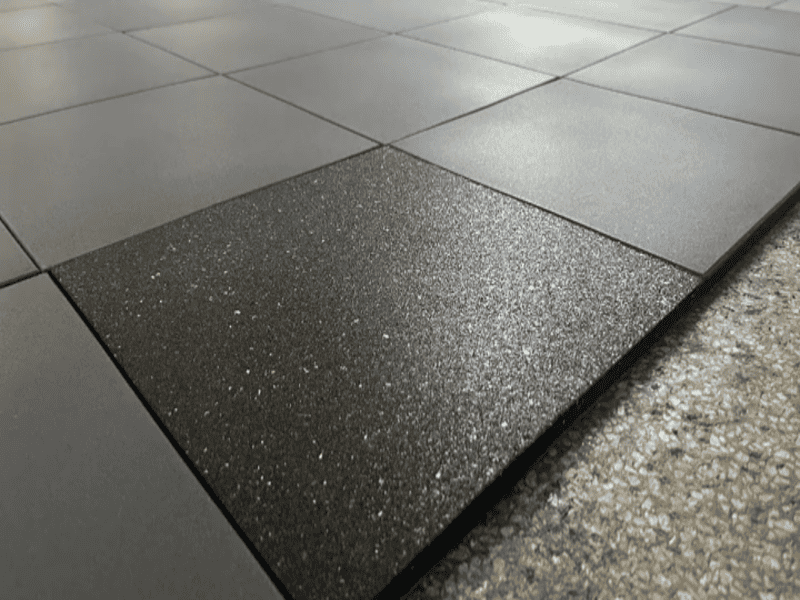
White bloom on rubber gym flooring is caused by paraffin wax migrating from inside the rubber matrix to the surface.
As a quality control manager with years of hands-on factory experience, I see this issue often. Many gym owners call me in a panic because they think their new black floor is ruined or covered in mold. This chalky or powdery white film is actually a completely normal chemical process called rubber blooming. It happens because compounding ingredients move to the top layer of the material over time. This process does not mean your flooring is defective, and you can fix it completely with the right cleaning method.
Let us look deeper into why this happens from a manufacturing and material science standpoint. When we mix raw rubber compounds in the factory, we add specific protective agents like paraffin wax to the blend. Rubber is highly sensitive to external elements like oxygen and ozone. Without these additives, the rubber would dry out, lose its flexibility, and crack under heavy gym use. The wax is designed to slowly move to the exterior layer to create a shield. When temperature shifts or high humidity hit your gym, it speeds up this natural migration. Brand new gym floors or low-traffic areas under heavy racks show the most bloom because no foot traffic is there to naturally rub the wax away.
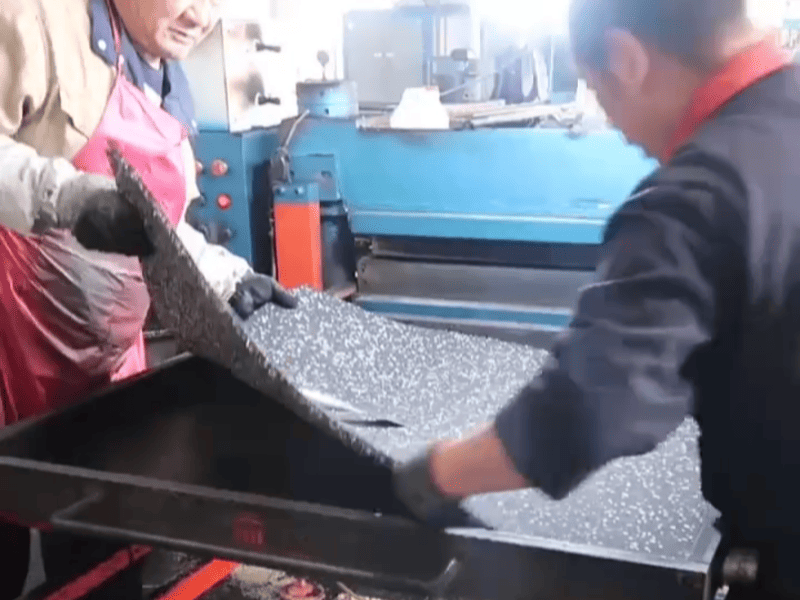
You need to know exactly what is on your floor before you start cleaning it so you do not use the wrong chemical.
What Exactly is "White Bloom" on Rubber Flooring?
Rubber bloom is the physical or chemical migration of solid compounding ingredients to the surface of the rubber material.
| Feature | Description | Material State |
|---|---|---|
| Primary Cause | Migration of internal paraffin wax or sulfur due to environmental triggers. | Physical or chemical movement |
| Appearance | Dull, white, gray, or chalky film that feels slightly waxy or greasy. | Surface coating only |
| Structural Impact | Zero structural damage; it actually protects the base material from ozone. | Harmless to durability |
When we design high-density rubber tiles or mats, we must balance long-term durability with surface aesthetics. Wax bloom is the most common type of haze you will see in a commercial or home gym. This occurs when the paraffin wax reaches its saturation point within the rubber matrix and pushes its way out. The second and less common type is sulfur bloom, which looks like a yellowish-white crust. Sulfur bloom happens if the rubber is under-cured during the vulcanization process at the factory. In my career on the production line, I have set strict quality checks on press temperatures and cure times to prevent sulfur bloom. If your floor has a standard wax bloom, it is simply doing its job to protect the polymer chains from breaking down.
Key Industrial Differences in Rubber Surface Changes
| Technical Parameter | Wax Bloom | Sulfur Bloom |
|---|---|---|
| Material Origin | Paraffin or microcrystalline wax additions | Free unreacted sulfur cross-linking agents |
| Factory Root Cause | Normal migration for ozone protection ($O_3$) | Improper vulcanization time or low temperature |
| Surface Texture | Smooth, greasy, rubs off with light friction | Rough, crystalline, harder to wipe away |
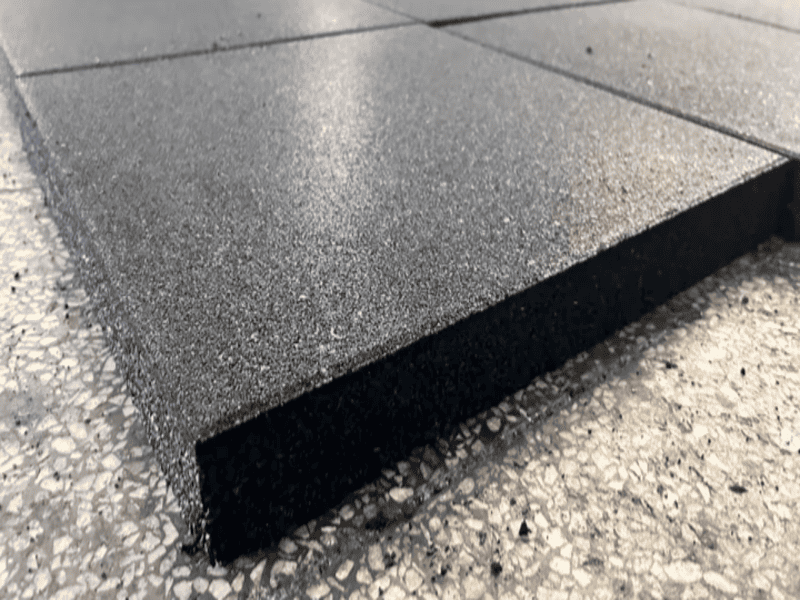
Now that you know the difference between these factory processes, let us explore the precise environmental triggers that cause this to happen in your gym.
The Root Causes: Why Does Rubber Bloom Happen?
Rubber bloom happens because internal waxes move to the surface to form a shield against oxygen and ozone damage.
| Environmental Factor | Impact on Rubber Flooring | Preventative Action |
|---|---|---|
| Ozone Exposure | Causes polymer cracking and oxidation | Wax layer acts as a sacrificial barrier |
| Heat Fluctuations | Forces internal oils and waxes to expand outward | Keep gym temperature stable |
| Low Surface Friction | Allows wax to accumulate without disturbance | Regular buffing and high foot traffic |
To understand this fully, you must look at the science of ozonolysis. Ozone ($O_3$) in the air attacks the double bonds in rubber molecules, which makes the gym mats brittle. To stop this degradation, manufacturers intentionally blend anti-ozonants and waxes into the raw rubber compound. This wax is less dense than the rubber, so it naturally rises to the top to form a microscopic barrier against air and UV light. Temperature changes act like a pump that pushes this wax out much faster. High humidity also draws out water-soluble compounds from the backing of the mats. Furthermore, if you place heavy equipment on a brand-new floor, the wax builds up because there is no friction from shoes to wear it down.
How Environmental Triggers Change Rubber Properties
| Trigger Mechanism | Material Reaction | Visual Outcome |
|---|---|---|
| Thermal Expansion | Rubber pores open and reject excess compound | Heavy white streaks on mats |
| Moisture Trapping | Water carries soluble salts to the top layer | Cloudy gray patches |
| Static Loading | Constant pressure forces additives out of the matrix | Ring-shaped white marks under weights |
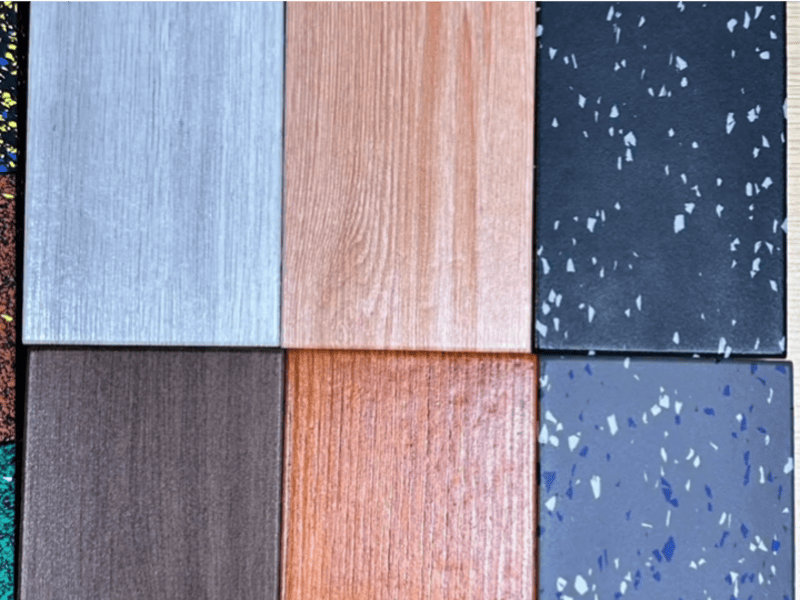
Before you begin the deep cleaning process, you must verify that the white film is definitely wax and not a more dangerous problem.
Crucial Diagnostic: Is It Bloom, Mold, or Hard Water?
You can identify rubber bloom by its greasy texture and the way it temporarily disappears when wiped with a specialized cleaner.
| Visual & Physical Signs | Likely Diagnosis | How to Test |
|---|---|---|
| Chalky, waxy, rubs off slightly greasy, has a uniform or streaky appearance. | Rubber Bloom | Wipe with a cloth dipped in WD-40 or a specialized rubber cleaner. If it disappears instantly but returns days later, it’s bloom. |
| Fuzzy, patchy, dark spots mixed with white, smells musty. | Mold / Mildew | Wipe with a diluted bleach or vinegar solution. If it goes away and smells clean, it was mold (usually caused by trapped subfloor moisture). |
| White rings, crusty texture, concentrated where water spills/mopping occurs. | Hard Water / Soap Residue | Scrape gently. If it flakes like lime, it’s mineral buildup from hard tap water or using too much soap. |
Misdiagnosing your floor issue leads to wasted money and ruined materials. I have seen clients use harsh chlorine bleach on a simple wax bloom, which only dried out the rubber and made the blooming worse. Mold feels fuzzy and leaves dark spots underneath the tile where moisture stays trapped. Hard water looks like white rings and leaves a crusty deposit because minerals stay behind after tap water evaporates. Wax bloom feels smooth and slightly greasy to the touch. If you wipe the floor with a specialized rubber cleaner and the black color returns instantly but gets hazy a few days later, you are dealing with a standard wax bloom.
Material Analysis of Floor Contaminants
| Contaminant Type | pH Reaction | Soluble Agent |
|---|---|---|
| Paraffin Wax (Bloom) | Neutral (pH 7) | Hydrocarbons / Degreasers |
| Fungal Growth (Mold) | Acidic (pH 5-6) | Fungicides / Vinegar |
| Calcium Carbonate (Scale) | Alkaline (pH 8-9) | Mild Organic Acids |
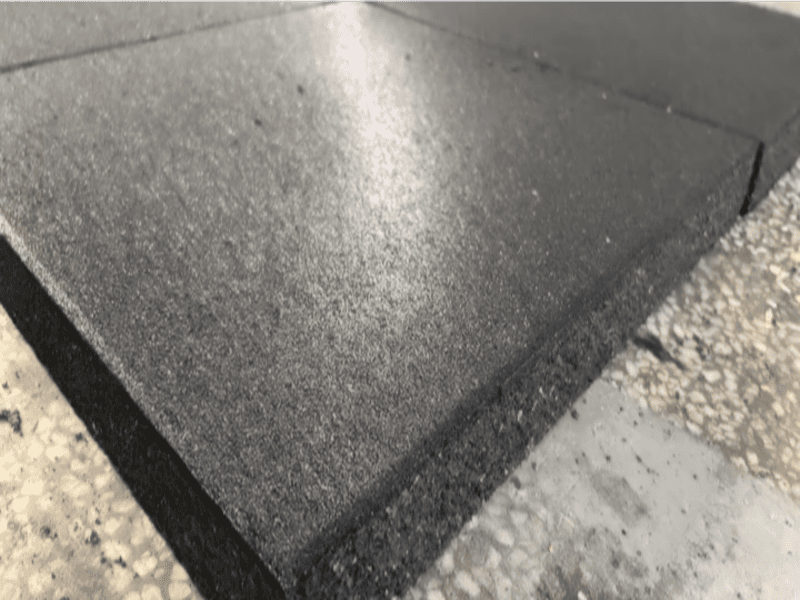
Once you are sure that your gym floor has a wax bloom, you can follow my factory-approved restoration protocol to clean it up.
How to Get Rid of White Bloom (Step-by-Step Restoration)
Get rid of white bloom by scrubbing the floor with a pH-neutral degreaser and using mechanical agitation to strip the wax.
| Cleaning Step | Equipment Needed | Main Goal |
|---|---|---|
| 1. Dry Prep | Soft-bristle broom or vacuum | Remove loose grit and dust |
| 2. Chemical Application | pH-neutral degreaser + warm water | Break down the waxy bonds |
| 3. Mechanical Scrub | Nylon floor pad or buffer machine | Lift the wax out of the rubber texture |
| 4. Extraction | Wet/dry vacuum or autoscrubber | Remove dirty water before it dries |
Standard dish soap or cheap floor cleaners will fail because they leave a film that traps the wax on the surface. First, vacuum the entire floor to remove loose dirt. Next, mix a specialized pH-neutral degreaser with warm water and apply it to the floor. The warm water helps soften the paraffin wax. Do not just use a mop; you need mechanical agitation to strip the wax out of the tiny pores of the rubber. For a home gym, use a stiff nylon hand brush. For a large commercial gym, rent a floor buffer machine with a red or blue nylon pad. Finally, you must use a wet vacuum to suck up the dirty water immediately. If you let the water air-dry, the dissolved wax will settle right back onto the rubber. For very stubborn spots, you can use a cloth dampened with a tiny amount of mineral spirits to cut through the heavy wax build-up.
Factory Cleaning Protocol Specifications
| Cleaning Phase | Tool Speed / Type | Chemical Dilution Ratio |
|---|---|---|
| Agitation Phase | 175 RPM Floor Machine / Red Pad | 2 to 4 ounces per gallon of water |
| Rinse Phase | Double-mopping or Autoscrubber | Pure clean water only |
| Detailing Phase | Microfiber cloth for corners | Direct spot application |
Cleaning the bloom away solves your current problem, but you also need a long-term plan to manage this natural material process.
Long-Term Maintenance: Can You Stop Blooming Permanently?
You cannot stop blooming permanently until the internal wax supply runs out, but you can manage it with climate control and sealants.
| Management Strategy | Ease of Implementation | Long-Term Effectiveness |
|---|---|---|
| HVAC Climate Control | Medium | Keeps wax migration slow and stable |
| Regular Floor Buffing | Easy | Wears away the wax through daily use |
| Polyurethane Sealing | Hard | Blocks the wax completely with a clear coat |
You must understand that blooming will continue until the excess wax inside the rubber mat naturally depletes. This process usually takes a few months of regular cleaning and daily gym use. To control it, keep your gym climate stable. Set your HVAC system and dehumidifiers to prevent sudden heat spikes, which stops the wax from pumping outward. Regular foot traffic and friction from workouts will naturally polish the wax away over time. If you want a permanent fix, you can apply a specialized single-component polyurethane sealer made for rubber floors. This clear coating seals the pores, locks the bloom underneath, and gives the floor a clean matte or gloss finish that is much easier to wash.
Maintenance Schedule for High-Density Rubber Floors
| Frequency | Action Item | Target Issue |
|---|---|---|
| Daily | High-filtration vacuuming | Remove abrasive dust and gym chalk |
| Weekly | Damp mop with pH-neutral cleaner | Prevent light wax accumulation |
| Quarterly | Deep mechanical scrub and extraction | Strip back deep wax migration |
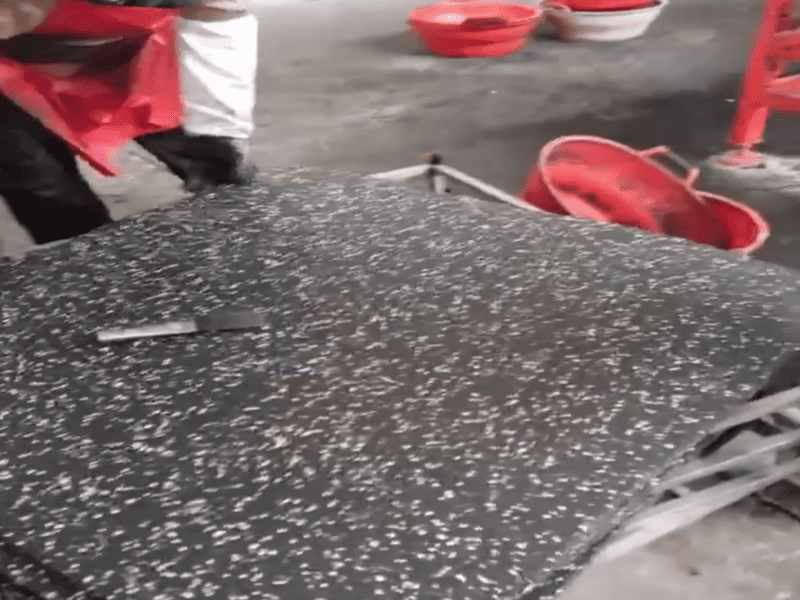
Managing these steps will ensure your facility always looks professional, safe, and clean for your clients.
Conclusion
White bloom is a natural protective feature of high-quality rubber floors, not a manufacturing defect. With proper pH-neutral cleaning and mechanical scrubbing, you can easily restore your gym floor to its clean, black appearance.
Need expert guidance on sourcing or maintaining heavy-duty rubber flooring for your commercial project? Send me a private message today to get technical support, material specifications, and factory-direct solutions for your facility!