


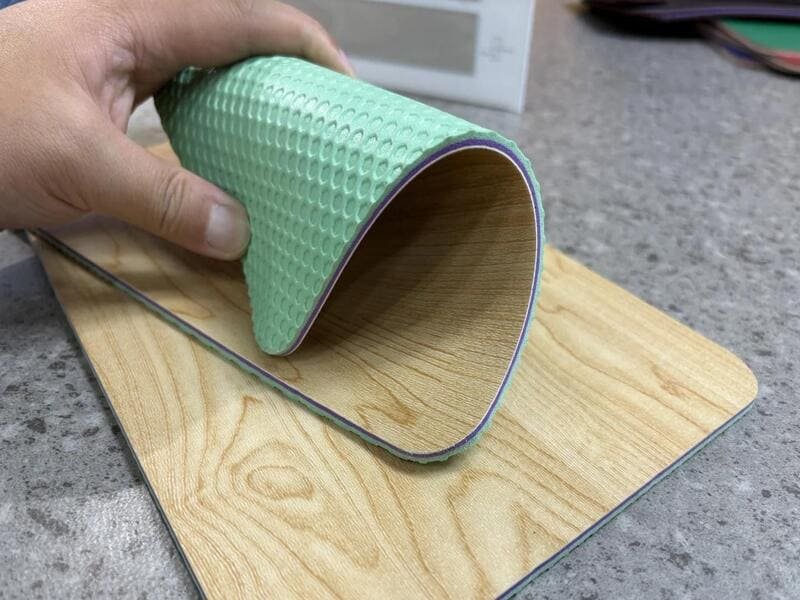
A PVC badminton court usually becomes slippery because of dust and grit, cleaner or polish residue, sweat or surface moisture, worn surface texture, or dirty and unsuitable footwear. If a clean, dry court still feels slippery, the flooring’s surface treatment and friction performance should be checked rather than assuming it is only a maintenance problem.
I have spent years on the production floor engineering PVC sports vinyl, and slip complaints are one of the most common calls I get from facility managers. In many cases, slipperiness comes from contamination, moisture, maintenance practices, or footwear rather than from a manufacturing defect. However, if a properly cleaned and dry court still feels consistently slippery, the surface condition and friction performance should be checked. This matters because sports flooring is not designed to be as grippy as possible. Too little friction is unsafe, but too much grip is also undesirable on a sports floor, since it raises stress on knees and ankles during pivots and stops. What you want is controlled, consistent traction, and when that balance breaks down, it usually traces back to one of six causes.
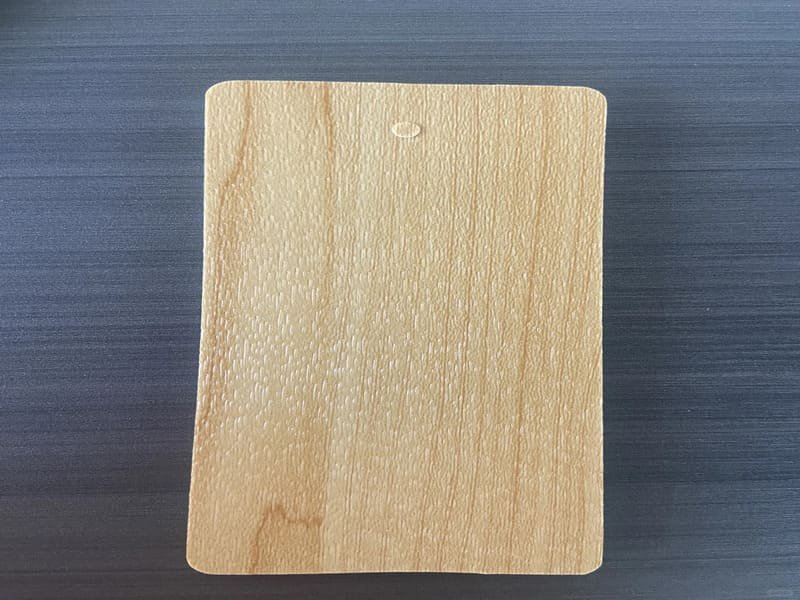
Before you call in a resurfacing crew, use the quick diagnosis below to narrow down what’s actually happening on your court.
Quick Diagnosis: Why Is Your Badminton Court Slippery?
Match your symptom to the most likely cause below. Where it’s slippery and when it started tells you more than a general cleaning pass ever will.
| Symptom | Most Likely Cause |
|---|---|
| Whole court suddenly feels slippery | Dust, cleaner residue, or moisture |
| Slippery right after cleaning | Detergent residue or incorrect dilution/rinse |
| Only high-traffic zones are slippery | Surface texture wear |
| Worse on humid or rainy days | Moisture or condensation |
| Only certain players complain | Footwear condition or mismatch |
| New court has always felt slippery | Surface treatment, installation residue, or friction performance |
The Six Core Causes of Lost Traction
| Cause | What Happens | Typical Trigger |
|---|---|---|
| Dust and grit | Fine particles form a lubricating layer | Outdoor debris tracked in on shoes |
| Cleaner, wax, or polish residue | Film coats the surface texture | Wrong products or incomplete rinsing |
| Sweat or surface moisture | Reduces contact friction at the shoe-floor interface | Intense play, condensation |
| Worn surface texture | Micro-texture and surface treatment flatten over time | Years of heavy foot traffic |
| Unsuitable or dirty footwear | Sole fails to key into the surface texture | Outdoor shoes, worn rubber compounds |
| Flooring or installation issues | Friction performance was never correct to begin with | Installation residue, incompatible surface treatment |
Once you know which category fits, the fix usually falls into one of two buckets: something you can correct today, or a maintenance and policy change that prevents it from coming back.
How Do You Fix a Slippery PVC Court Today?
Remove dust and residue with the right cleaning process, wipe up sweat and moisture immediately, and control shoe contamination at the entrance. Avoid adding any product the flooring manufacturer hasn’t approved.
| Quick Fix | Action | Why It Works |
|---|---|---|
| Dry and wet mop routine | Dust mop, then scrub with a manufacturer-approved cleaner | Removes the film that blocks surface contact |
| Sweat and moisture removal | Wipe wet spots immediately, let the area dry | Restores contact friction between sole and surface |
| Shoe contamination control | Use clean indoor-only court shoes and entrance mats | Reduces grit reaching the playing surface |
Why the Wrong Products Make Things Worse
Household soaps, waxes, polishes, and general-purpose cleaners can leave a film that changes the friction characteristics of a sports floor. Some aggressive products may also affect the factory-applied surface treatment. Start with the manufacturer-recommended cleaner, which is often neutral for routine maintenance, but stronger products should only be used when specifically permitted by the flooring manufacturer for stubborn soiling. Do not apply wax, polish, grip spray, or traction coatings unless the flooring manufacturer specifically approves them for that product, since these can shift the surface into a friction range it wasn’t designed for.
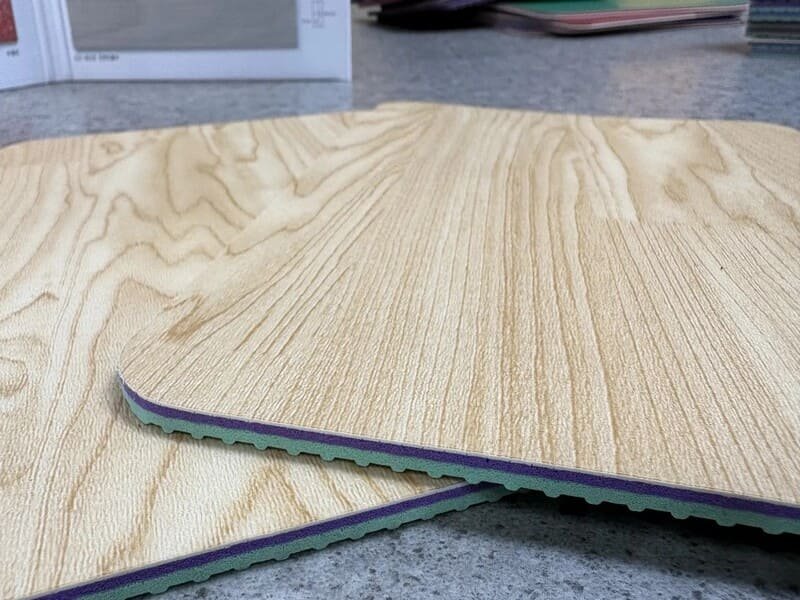
Quick fixes solve today’s problem. Preventing the issue from returning requires a maintenance and policy shift.
What Long-Term Maintenance Keeps a PVC Court from Getting Slippery?
A consistent sweeping and scrubbing schedule, clean indoor-only footwear, effective entrance mats, and stable indoor conditions keep PVC courts safe over the long term.
| Strategy | Frequency | Purpose |
|---|---|---|
| Dry sweeping | Daily | Prevents dust film accumulation |
| Manufacturer-approved cleaner scrubbing | Follow manufacturer schedule | Removes embedded grit and residue |
| Mechanical deep clean | Based on actual usage load | Restores full surface friction |
| Footwear enforcement | Ongoing | Blocks outdoor soles and debris |
| Entrance/barrier mats | Continuous | Captures dust, grit, and moisture at the door |
| Indoor climate monitoring | Continuous | Reduces condensation risk |
Why Condensation Is a Dew Point Issue, Not a Fixed Humidity Number
Condensation can form whenever the court surface temperature falls below the dew point of the surrounding air. This can happen during rapid temperature changes, high humidity, or aggressive air-conditioning, especially over a cool slab. There is no universal relative humidity percentage at which a PVC court suddenly becomes slippery, since it depends on how the surface temperature relates to the air’s dew point, not humidity alone. The practical fix is to maintain stable HVAC conditions, monitor surface temperature and humidity when problems occur, and remove any visible moisture before play resumes rather than chasing a fixed percentage.
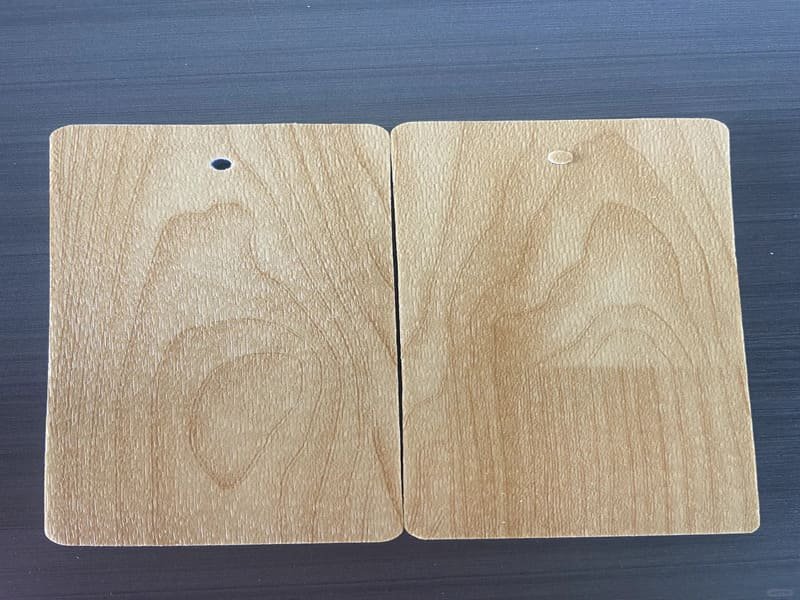
Why Footwear Choice Still Matters
Clean, indoor-only badminton or court shoes generally provide more predictable traction than worn, dusty, or outdoor-used footwear, since consistent rubber condition matters more than any single label. A non-marking sole prevents black scuff marks on the floor, but that’s a different property from traction, so don’t treat "non-marking" as a stand-in for "grippy." Look for clean, indoor-only court shoes with a suitable rubber outsole in good condition.
Maintenance buys years of safe play, but every surface has a service life. Eventually you have to decide whether to restore or replace.
Should You Resurface or Replace a Worn PVC Badminton Court?
Compare worn zones against low-traffic areas, and inspect texture, surface treatment, and friction performance rather than relying on appearance alone. Replace when the surface is damaged or friction can no longer be restored.
Assessing Wear Beyond a Quick Fingertip Check
A fingertip comparison between a heavy-traffic zone, like the service line, and a low-traffic zone near the sideline is a reasonable first screening step. But it’s only a starting point. If the two areas feel noticeably different, follow up with a visual inspection of the texture and surface treatment, and if the floor stays slippery after correct cleaning and drying, a professional friction test tells you far more than appearance alone.
Repair vs. Replacement
A professional deep clean may restore traction if contamination is the cause. A renewal coating should only be considered if the flooring manufacturer offers or approves a compatible sports-floor restoration system that preserves the required friction characteristics, since not every PVC sports floor is designed to be recoated. Replacement becomes the right call when the wear surface is physically damaged, the original texture or surface treatment has been substantially lost, the floor no longer meets the required friction performance, or seams and substructure have failed beyond practical repair.
How Can You Tell Whether the Flooring Itself Is Too Slippery?
If a court stays slippery after proper cleaning, drying, and testing with clean indoor shoes, its friction performance should be measured against recognized sports flooring standards rather than judged by feel.
If the court remains slippery after it has been properly cleaned, rinsed, dried, and tested with clean indoor court shoes, it’s worth having its friction performance measured rather than guessing. EN 14904 evaluates indoor sports-floor friction using the EN 13036-4 pendulum test under dry conditions, with a specified mean Pendulum Test Value in the 80 to 110 range. BWF-approved synthetic badminton flooring also incorporates friction and slip-resistance requirements as part of certification. If your court has never felt right since installation, this is a more useful next step than repeated cleaning attempts.
Conclusion
Court safety comes from correct daily maintenance, the right cleaning process, and checking friction performance before wear becomes a hazard.
If your facility is still dealing with a slip issue after adjusting cleaning and footwear policy, feel free to send me a direct message — I’m happy to walk through your surface condition and friction performance data and help you figure out whether restoration or a manufacturing-side upgrade makes more sense for your court.