


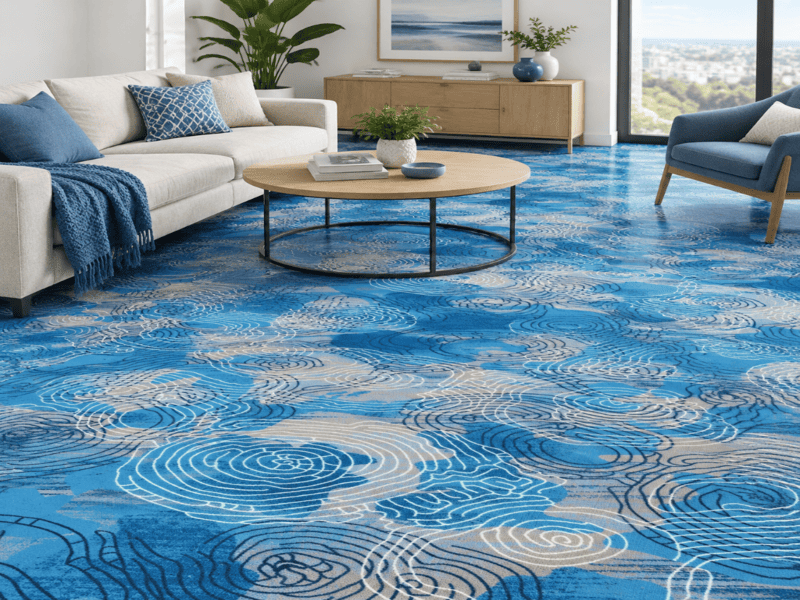
Pattern repeat matters because large spaces show many planks at once, so repeated visuals are easy to spot. More unique plank designs help LVT patterned vinyl flooring look more natural and support the look of your brand.
A while ago, a designer showed me a wood-look LVT sample for a hotel lobby. On her desk, it looked great. Every grain line and knot looked real. But the lobby was about 5,000 sq. ft., and once the floor went in, the same visuals showed up again and again. The floor started to look like a printed pattern instead of wood. The problem was pattern repeat. A sample shows you one plank, so it cannot show you how often a design appears across a whole floor. In a small room, walls, doors, and furniture hide most repeats. In a large commercial space, the eye sees the floor in one wide view. Guests walk along long, open sightlines, and they notice the same dark knot or the same grain line more than once. When that happens, the floor loses the feel of natural material. That can change how people see the whole space, from a hotel lobby to a retail showroom.
So what is pattern repeat, and how do you check it before you buy? Let me start with how the floor is made.
What Is LVT Pattern Repeat?
In LVT flooring, pattern repeat describes how often the same printed visual appears across planks or tiles. Makers often state it as the number of unique plank designs. More unique visuals usually lower the chance of noticeable repetition.
Unique Plank Visuals and the Real Repeat
Traditional LVT often uses a printed decorative film laminated into the flooring structure. Some newer products use digital printing to create designs directly on the core, which can allow more unique plank visuals. The number of unique visuals is the number most suppliers give you. It is useful, but it is not the same as a fixed loop. A product may have six unique plank designs, and that does not mean the floor repeats every six planks. It also does not mean every carton holds a perfect mix. For example, if a collection has five unique plank designs, a 15-plank carton may contain repeated visuals. The exact mix depends on how the factory packs the cartons. That is why installers should check more than one carton instead of assuming each box is equal. In my work with custom and bulk LVT orders, I always ask for the unique visual count for the exact SKU. The table below shows how I think about it. These ranges are illustrative comparisons, not official industry grades or guaranteed performance levels.
| Unique Plank Visuals | Practical Consideration |
|---|---|
| 4–6 | Needs careful layout planning |
| 7–10 | Gives more visual variety |
| 11–15 | Gives installers more options to separate repeats |
| More than 15 | Can reduce repetition further, depending on the design |
Now you know what the number means. Next, let me show you why size changes how a repeat looks.
Why Do Large Spaces Show Repeats More?
Large spaces show much more floor at one time, with few things to break the view. The eye picks up repeated planks fast. Long sightlines, a zipper effect, and strong lighting all make repeats easier to see.
The Scale Effect in Open Commercial Spaces
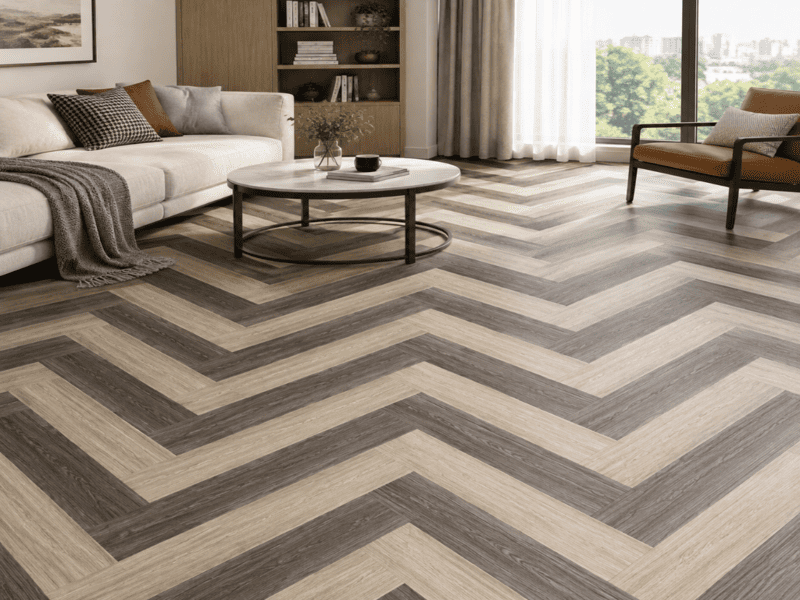
In a lobby, an open-plan office, or a retail showroom, the eye takes in a large area of floor with no walls or furniture in the way. That is the first problem. The second is what I call the zipper or checkerboard effect. When the brain sees one odd detail, like a dark knot in oak or a bold vein in marble, again and again every few feet, it can read the floor as fake. People may not know why a floor feels cheap, but they feel it. The third problem is light. Large spaces often have floor-to-ceiling windows or strong architectural lighting. Light that crosses the surface at a low angle can show identical planks and repeated embossed texture more. A pattern that looks fine in a soft-lit office can look very different in a hotel lobby with glass walls. The table below shows how the same floor can behave in two kinds of spaces.
| Factor | Small Room | Large Commercial Space |
|---|---|---|
| Sightline length | Short, broken by furniture | Long and open |
| Visible flooring at once | Small area | Large area |
| Lighting | Often soft and even | Often strong, sometimes from the side |
| Chance of a visible repeat | Lower | Higher |
A floor that looks repetitive is a design problem. It can also become a cost problem.
What Can a Visible Repeat Cost You?
A visible repeat can weaken your brand image, upset the client, and in some cases lead to costly rework. It can also flatten the nature-inspired look an architect worked to create.
Brand, Budget, and Design Intent
Think about a luxury hotel or a high-end boutique. The floor is the largest surface a guest walks on. If it feels synthetic, the whole space can feel less polished. That is the first cost. The second cost is rework. When a client dislikes the pattern after install, the team has to decide what to do. Sometimes a local fix is enough. But on a large glued-down floor, the fix can mean new material, new labor, and lost business while the space is closed. I have seen how stressful that is for everyone on the job. The third cost is lost design intent. An architect may spend months on a biophilic design, which uses nature-inspired materials to create a calm, organic feel. A repetitive floor can weaken that feel quickly. None of this means every short-variety floor will fail. It means the risk grows with the size of the space and the visibility of the design, so it is better to check early than to fix late.
The print is only part of the story, though. Other features can make a floor look fake too.
What Else Makes LVT Look Fake Besides the Print?
Three more features matter: embossed texture, shade variation, and plank size. A repeating texture, flat color, or very wide planks can make a floor look artificial, even when the print has plenty of variety.
EIR, Shade Variation, and Plank Format
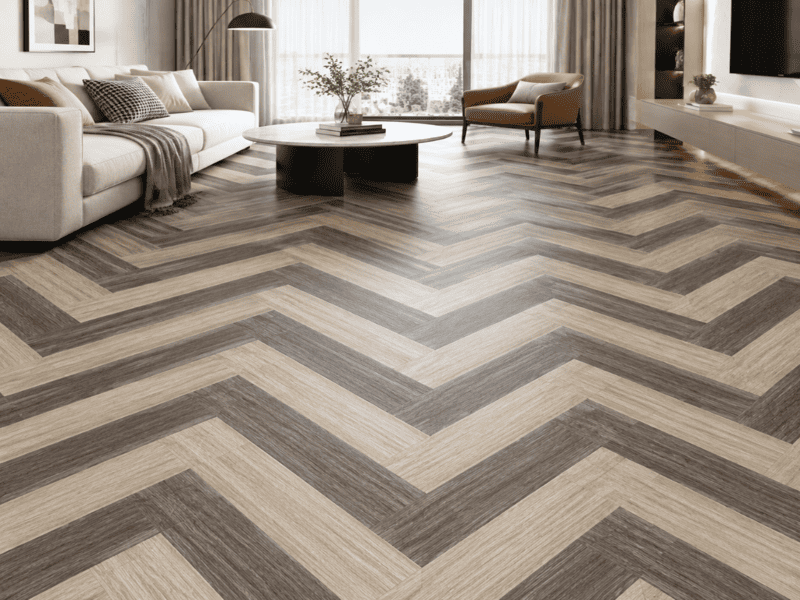
First, look at the surface texture. EIR means embossed in register. The texture lines up with the printed grain, so the floor feels closer to real wood under your hand. Repeated embossed textures can also affect the floor’s natural appearance, especially under directional lighting, so ask about both the print and the texture. Second, look at shade variation. Natural wood and stone change in color from piece to piece. Some manufacturers use V1 to V4 ratings, where V1 means very little change and V4 means strong change. Not every maker uses this scale, so ask how a supplier rates its own products. Planks with the same color and the same grain look fake. Planned color shifts look real. Third, look at plank size. A wide, long plank, like 9" x 60", covers more floor, so each visual takes up more space and stands out more. The table below puts these three features side by side.
| Feature | What to Ask | Why It Matters |
|---|---|---|
| EIR texture | Does the texture match the print, and does it repeat? | Repeated texture can show in directional light |
| Shade variation | Does the supplier use a V1–V4 scale or another rating? | More variation often looks more natural |
| Plank size | What is the plank size and the number of unique visuals? | Large planks make repeats easier to see |
Now you know what to look at. So how do you put it into a spec?
How Do You Specify the Right LVT for a Large Space?
Ask for the exact number of unique plank visuals, then match it to the space. For large, open areas, I prefer at least 10 when available. Always approve the final choice with a large-area mockup.
A Practical Spec Checklist
Here is how I approach large commercial jobs. For large, open areas, I prefer LVT collections with at least 10 unique plank visuals when available. For high-visibility lobbies and showrooms, 15 or more can give more design flexibility. These are my own selection preferences, not industry standards. Area alone does not decide the right number. Wood grain with strong knots, wide planks, strong lighting, and long viewing distance can all raise the risk. Pattern type also matters. Wood visuals show repeats the most, because the grain is so distinct. Subtle stone, concrete, or abstract woven patterns hide repeats much better in large areas. Finally, do not rely on a single 6-inch sample. Ask for room-scene visuals or a large mockup, and make the final call from that. The table below lists the factors I weigh.
| Factor | What to Check | Effect on Repeat Risk |
|---|---|---|
| Pattern type | Wood, stone, concrete, or abstract | Wood with strong knots shows repeats most |
| Plank size | Standard or wide format | Wider planks show each visual more |
| Lighting | Soft, strong, or side light | Strong side light shows repeats more |
| Viewing distance | Close walk-through or long open view | Long open views show patterns over a wider area |
A good spec is a start. The next step is to check what the supplier will actually ship.
How Can Buyers Verify LVT Pattern Repeat Before Ordering?
Ask the supplier to confirm the number of unique plank visuals for the exact SKU. Request photos of all designs, review a large-area mockup, and confirm design consistency and batch compatibility across all project phases.
A Pre-Order Verification Checklist
Before you place a large commercial LVT order, ask the supplier to confirm the number of unique plank visuals for the exact SKU. A collection name is not enough, because colors in the same line can differ. Next, request photos that show all available designs, not just one sample plank. For high-visibility projects, review a large-area mockup under the lighting you plan to use on site. Then confirm design consistency and batch compatibility across all project phases, and check whether enough material from the same production lot is available. This matters on phased jobs, where later shipments may come from a different run. Finally, ask how cartons are packed, so your installer knows what to expect. These steps take little time, and they turn a vague idea into a clear approval. The table below gives a simple checklist you can send to your supplier.
| Request | What to Confirm |
|---|---|
| Unique visual count | The number for the exact SKU |
| Photos of all designs | Every plank visual, not one sample |
| Large-area mockup | Review under the planned lighting |
| Consistency and batch compatibility | Design and shade match across all phases, and how much material from one lot is available |
| Carton packing | How visuals are spread across cartons |
Even a verified product needs a careful install. That is where the installer comes in.
Why Does the Installer Matter for Pattern Repeat?
The installer decides how well the variety in the product shows on the floor. Mixing planks from several boxes breaks up identical pieces, and spreading out distinct planks keeps strong features apart.
The Box Shuffle and Job Site Habits
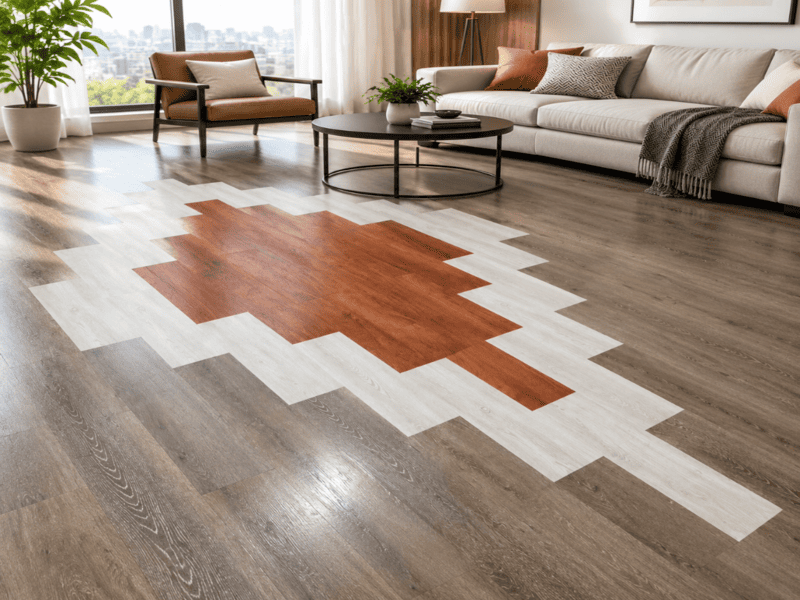
On one project, we used LVT with a good number of unique visuals. The crew still pulled planks from one box at a time, and we saw matching planks side by side within the first hour. We stopped, changed the process, and fixed it. That is the box shuffle rule. Even a varied product can look repetitive if the planks come from one carton. A good practice is to open several cartons at a time, often three to five, and mix the planks before install. Always follow the manufacturer’s installation guide, check batch numbers, and plan the layout before you start. Dry laying a section helps the crew spot repeats early. Installers should also look for planks with strong features, like a dark knot or a bold vein, and place them far apart across the room. This takes a little more time, but it costs far less than rework. The table below lists the key steps.
| Step | Action | Why |
|---|---|---|
| Follow the guide | Use the manufacturer’s installation instructions | Keeps the install within product requirements |
| Check batches | Confirm batch numbers match | Avoids shade shifts between runs |
| Open several cartons | Mix planks from three to five boxes | Spreads the available visuals |
| Dry lay | Place planks before bonding | Lets the crew spot repeats early |
| Separate distinct planks | Spread out strong knots and veins | Keeps the same feature from landing close together |
Conclusion
LVT with more visual variety helps large commercial spaces look natural. The right choice depends on design, lighting, layout, and budget.
About the Author: I am a flooring contractor and manufacturing specialist with years of hands-on experience in custom and bulk LVT patterned vinyl flooring. I work with designers, architects, and product teams on print design, plank variety, texture, and design optimization for commercial projects across many industries.
Planning a large commercial LVT project? Send me a direct message. I can help you check unique plank visuals, share large-format mockups, and send commercial-scale samples so you can review the real result before you order.