


Select anti-slip vinyl flooring by checking technical ratings like a Pendulum Test Value of 36 plus or an R11 ramp rating.
As a quality control inspector with years of experience on the factory floor, I see how raw materials change into finished goods every day. I know that a beautiful vinyl floor can turn into a dangerous skating rink the moment water gets on it. This is a huge risk for business owners who face big liability costs, and for homeowners who want to protect young children or elderly parents. My job is to test these floors under wet conditions to make sure they actually grip. Slip-resistant vinyl floors like luxury vinyl tiles, rigid core planks, and sheet vinyl offer the best balance of total water resistance and safety. In this guide, I will give you the exact framework to choose the correct slip-rated vinyl floor for your project so you do not waste money on the wrong materials.
You need to know how to read factory specification sheets to avoid buying bad materials, so let us look at the actual safety test standards.
Why Do Slip Resistance Ratings Matter for Wet Floors?
Slip resistance ratings show exactly how a vinyl floor performs under wet conditions so you can buy the right product.
Factory spec sheets contain a lot of technical words that confuse buyers. In our testing lab, we focus on two main global standards to measure slip risk. The first is the Pendulum Test which uses a swinging dummy foot to measure friction. A Pendulum Test Value of 36 or higher means the floor has a low slip potential when wet. The second test is the German Ramp Test which gives an R-rating from R9 to R13 based on the angle where a person slips.
Understanding Factory Slip Test Standards
| Test Method | Rating Scale | Minimum Requirement for Wet Floors | Main Application Area |
|---|---|---|---|
| Pendulum Test (BS 7976-2) | PTV 0 to 70+ | PTV 36+ (Low Slip Risk) | Commercial and Public Spaces |
| Oil-Ramp Test (DIN 51130) | R9 to R13 | R11 or R12 | Commercial Kitchens & Wet Zones |
| Barefoot Ramp Test (DIN 51097) | Class A, B, C | Class B or C | Showers and Pool Surrounds |
I constantly tell our product development partners that an R9 or R10 rating is not safe for floors that stay wet. For real wet areas, you must look for R11 or R12 ratings on the specification sheet. If people will walk without shoes, look for a Class B or Class C rating. Choosing anything less is a major safety mistake.
Now that you know the ratings, you must look at your room to see how much water it will actually get.
How to Assess Your Specific Wet Floor Environment?
You must look at the types of moisture and the traffic patterns in your room to pick the right vinyl floor.
Every wet room has different safety needs. A floor that works well in a home bathroom might fail completely in a busy industrial workplace. As a quality control specialist, I divide wet floors into three distinct risk groups based on my field observations. Low-risk zones only get accidental spills, medium-risk zones get frequent wetness, and high-risk zones stay wet or greasy all day long.
Wet Floor Risk Categories and Material Needs
| Risk Level | Common Examples | Main Liquid Hazard | Recommended Vinyl Spec |
|---|---|---|---|
| Low Risk | Home Kitchens, Entryways | Water Spills, Muddy Shoes | Standard LVT / R10 Rating |
| Medium Risk | Public Restrooms, Home Bathrooms | Frequent Water, Soap Residue | SPC Planks / PTV 36+ / R11 |
| High Risk | Commercial Kitchens, Locker Rooms | Constant Water, Cooking Grease | Safety Sheet Vinyl / R12 / Class C |
Our engineering team always studies these environment factors before we start a custom production run. For instance, commercial kitchens need a high R12 rating because cooking oil mixes with water on the floor. If you install a low-rated residential SPC plank in a commercial kitchen, the surface will fail quickly and cause accidents.
Once you know your risk level, you can examine the actual physical construction features of the vinyl material.
What Physical Features Make Vinyl Flooring Truly Anti-Slip?
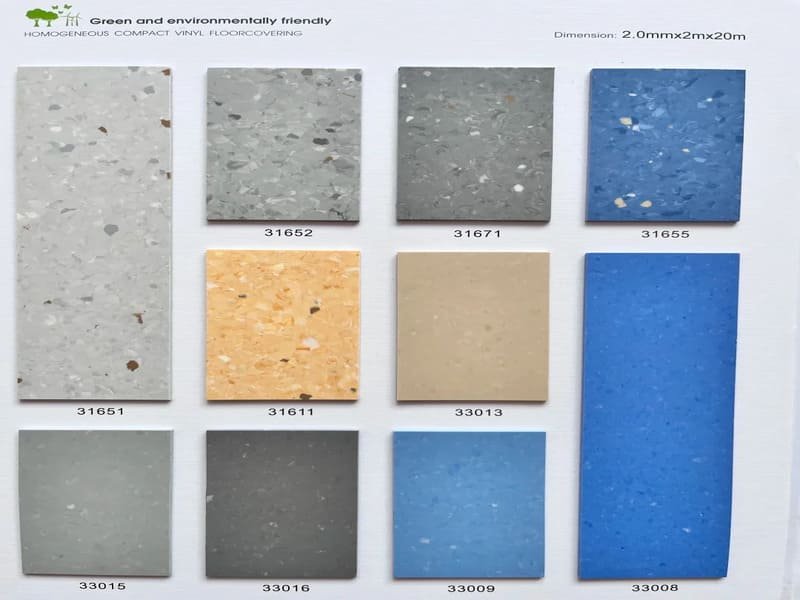
True anti-slip vinyl uses deep physical surface textures and embedded hard particles to create mechanical grip.
A vinyl floor needs specific factory features to stay safe when wet. Visual textures that only look like wood do not provide real grip. The floor must have physical embossing that you can feel with your hand. In our manufacturing plant, we press deep textures into the wear layer to create small channels that push water away from shoes.
Technical Construction Matrix for Safety Vinyl
| Feature | Technical Specification | Engineering Purpose | Performance Benefit |
|---|---|---|---|
| Wear Layer | 20mil (0.5mm) to 28mil (0.7mm) | Protects the anti-slip pattern | Long-term wear resistance |
| Inlaid Particles | Quartz or Silicon Carbide | Adds sharp friction points | Permanent anti-slip grip |
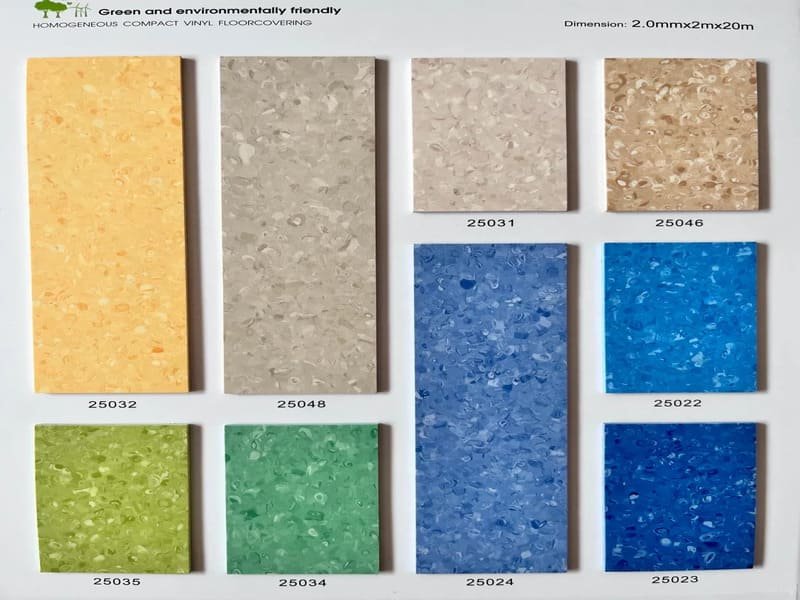
| Format Type | Heterogeneous Sheet Vinyl | Eliminates open joints and seams | 100% water-tight security |
We also make safety sheet vinyl by mixing sharp particles like quartz or aluminum oxide directly into the plastic wear layer. These particles act like tiny sandpaper grains that hold shoes tight even when the floor is flooded. If you choose planks instead of sheet vinyl, you must use a strong sealant on the click joints to stop water from leaking into the subfloor.
Many buyers still make common mistakes during procurement because they do not understand material science.
What Hidden Buying Traps Must You Avoid?
Avoid the mistake of thinking that a waterproof vinyl floor is automatically a slip-resistant floor.
The biggest mistake I see buyers make is confusing the words "waterproof" and "slip-resistant". A standard rigid core SPC plank will not swell or rot when wet, but its surface can still be as slippery as ice. Another major problem is balancing grip with cleaning ease. Floors with very deep textures provide excellent slip resistance, but they also trap dirt and mop strings easily.
Trade-Offs in Safety Flooring Design
| Material Selection Choice | Technical Challenge | Quality Control Solution | Engineering Recommendation |
|---|---|---|---|
| Deep Embossed Surface | Traps dirt and soap residue | Add a factory PU coating | Use for public restrooms |
| Heavy Inlaid Particles | Rough texture ruins flat mops | Use cylindrical brush machines | Use for heavy commercial kitchens |
| Smooth Economy Vinyl | Low wet friction performance | Avoid completely in wet zones | Use only for dry bedrooms |
As an inspector, I check how easy a floor is to clean before we approve it for mass production. If a customer buys an aggressive safety floor but cannot clean it, grease will build up and ruin the slip resistance anyway. You must also prepare your concrete subfloor perfectly so water does not pool in low spots.
Choosing the right material is only half the battle because poor maintenance can ruin a good safety floor over time.
How Do You Maintain Slip Resistance Long-Term?
Maintain safety by using correct cleaning chemicals and mechanical scrubbing brushes to remove grease films.
A safety floor will lose its slip resistance if you do not wash it correctly. Standard dish soaps and oil-based cleaners leave a thin, invisible film on top of the vinyl wear layer. This film fills the small textured grooves and turns a safe floor into a hazard. In our testing lab, we see slip ratings drop by half when floors have dirty soap buildup.
Maintenance Protocol for Anti-Slip Vinyl
| Cleaning Step | Equipment to Use | Chemical Type | Critical Warning |
|---|---|---|---|
| Daily Soil Removal | Microfiber dust mop or vacuum | Neutral pH floor cleaner | Do not use regular dish soap |
| Deep Scrubbing | Cylindrical brush machine | Alkaline degreaser | Do not use floor wax or polish |
| Rinsing Process | Wet vacuum or clean squeegee | Pure clean water | Remove all dirty water completely |
You cannot just drag a wet flat mop across a heavily textured safety floor. The rough surface will just shred the mop fabrics and leave dirt behind. You must use a deck brush or a mechanical scrubbing machine to agitate the dirt out of the textured valleys, then vacuum the dirty water away completely.
Let us summarize everything into a quick actionable framework that you can use for your next purchase.
What Is the 5-Step Checklist for Buying Anti-Slip Vinyl?
Use this five-step quality control checklist to verify ratings and choose the correct vinyl format.
To make your buying process easy, I have created a direct framework based on our factory quality assurance methods. Take these five simple steps to your flooring supplier to make sure you get the exact material specification you need without overspending.
The 5-Step Material Selection Framework
- Identify the liquid type: Determine if your floor will face clear water, soapy moisture, or thick cooking grease.
- Check the footwear type: Find out if users will walk with rubber-soled shoes, work boots, or bare feet.
- Verify the spec sheet: Demand written proof of a Pendulum Test Value of 36 plus or an R11 rating from the supplier.
- Choose the floor format: Pick seamless sheet vinyl for commercial wet zones, or choose thick SPC planks for light residential use.
- Match your cleaning tools: Ensure your maintenance team has the right scrubbing machines or deck brushes to clean the specific texture.
By following this checklist, you will avoid buying low-quality flooring and ensure your installation stays safe for years.
Conclusion
Modern anti-slip vinyl floors keep people safe without sacrificing great interior style. Never guess on safety, so always ask your manufacturer for official wet-test certification documents.
If you are planning a commercial project or need custom anti-slip vinyl manufacturing solutions with certified PTV 36 plus or R11 ratings, please send me a private message today. Let us work together to find the perfect technical solution for your wet floors.