


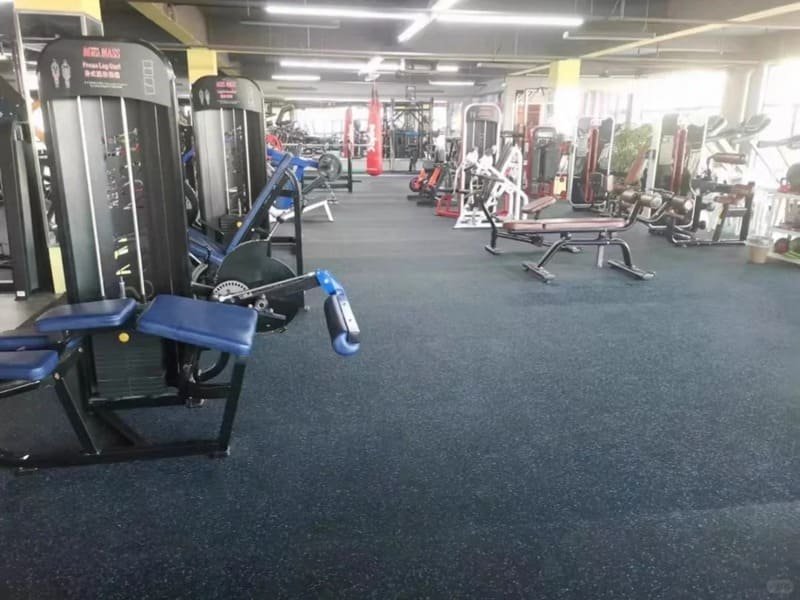
To level concrete for rubber flooring, you must perform a mechanical grind of high spots, repair dynamic cracks with isolation membranes, and apply a system-matched primer before pouring a high-compressive strength (4,000+ PSI) self-leveling underlayment. The final surface must achieve a flatness of 1/8 inch over 10 feet to ensure seamless rubber integration.
As a dedicated rubber flooring contractor, I have seen countless projects fail not because of the rubber quality, but because of subfloor negligence. Rubber is a unique material; it has "elastic memory." Unlike rigid tile or hardwood, rubber will eventually telegraph every minor imperfection from the concrete beneath it. If you have a 1/16-inch pebble or a slight ridge from a poor pour, it will appear as a bump on your gym floor within weeks. Achieving a professional-grade installation requires moving beyond "eyeballing" the floor and adopting a rigorous, data-driven Standard Operating Procedure (SOP). This guide details the technical requirements for moisture mitigation, substrate bonding, and precision leveling to ensure your subfloor is structural, dry, and glass-smooth.
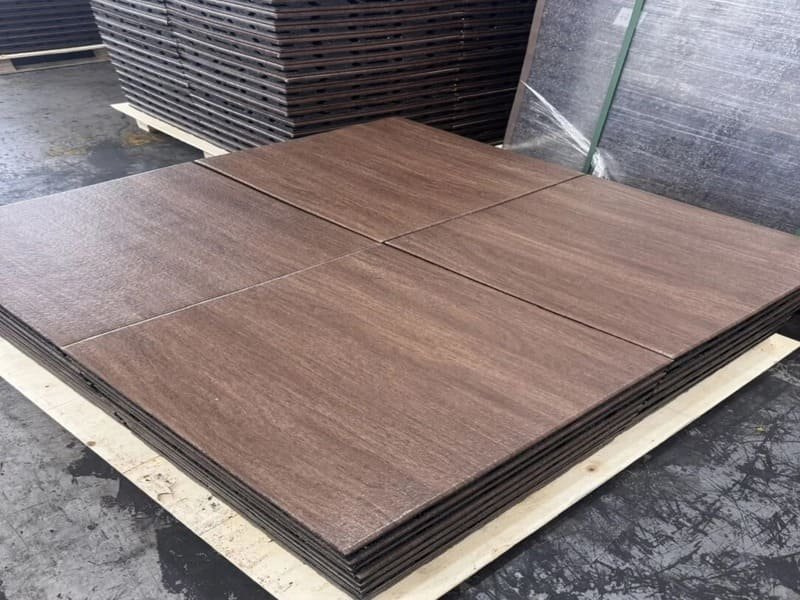
A flawless pour is impossible without an exhaustive pre-project audit. You must quantify the "unseen" variables of your concrete slab before committing to a leveling system.
How do you perform a professional assessment of the concrete slab?
Assessment requires standardized testing: a flatness check using a 10-foot straightedge (ASTM F710) and a moisture vapor emission rate (MVER) test. For rubber, concrete must show less than 3 lbs per 1,000 sq. ft. via Calcium Chloride or below 75-80% Relative Humidity (RH) per ASTM F2170 to prevent adhesive failure.
| Test Category | Industry Standard | Requirement for Rubber | Technical Purpose |
|---|---|---|---|
| Flatness | ASTM F710 | 1/8" (3mm) in 10ft (3m) | Prevents seam gaps and "telegraphed" bumps. |
| Moisture (RH) | ASTM F2170 | < 75% – 80% RH | Prevents osmotic blistering and mold growth. |
| Absorbency | Water Drop Test | Absorbs in < 60 seconds | Confirms the slab is porous enough for bonding. |
| Surface Profile | ICRI CSP 3 | Similar to fine sandpaper | Ensures mechanical grip for the underlayment. |
In my experience, many installers rely on a simple plastic sheet test for moisture. While helpful for a quick check, it does not provide the numerical data required by rubber adhesive manufacturers to honor a warranty. Because rubber is non-porous, any moisture vapor rising through the concrete becomes trapped. This leads to "osmotic blistering," where the adhesive re-emulsifies and the rubber loses its bond. Furthermore, you must check for "Laitance"—a weak, milky layer on the concrete surface. If your concrete is power-troweled to a high sheen, the leveling compound will not stick. You must mechanically grind the surface to achieve a Concrete Surface Profile (CSP) of 3, which feels like medium-grit sandpaper, to ensure the primer can penetrate the pores.
Strategic Management of Cracks and Joints
Understanding the difference between a "settling crack" and an "expansion joint" is the hallmark of a professional contractor. Static cracks (hairline) can usually be cleaned and filled with a high-modulus epoxy. However, Dynamic cracks or Control Joints—the deep grooves cut by engineers to allow for slab movement—must be treated with extreme caution. Never fill a moving expansion joint with rigid self-leveling underlayment. If the slab shifts, the rigid leveler will crack, and that fracture will migrate directly through your rubber flooring. Instead, I use a crack isolation membrane or a specialized polyurethane expansion joint filler that allows for 25% movement while remaining flush with the floor.
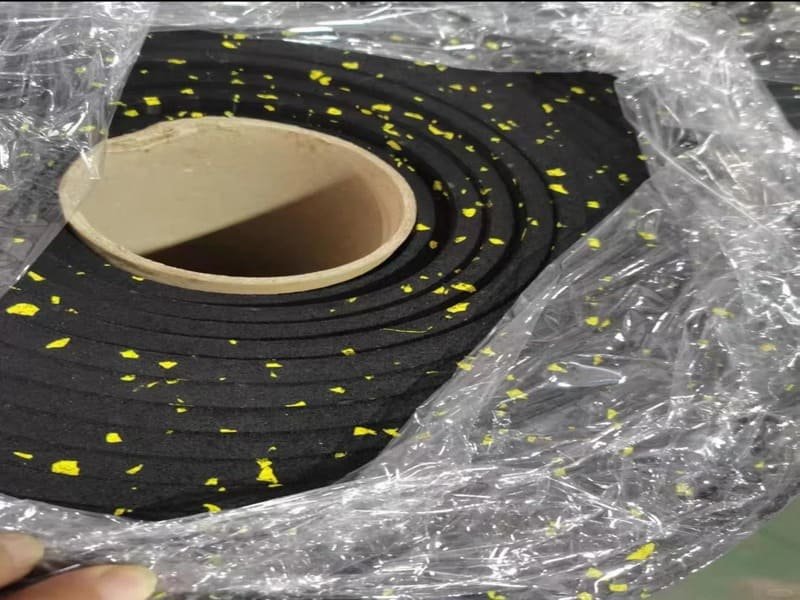
Once the slab is tested and the joints are protected, the actual leveling phase begins. This is a time-sensitive operation where product compatibility is paramount.
What is the comprehensive SOP for concrete leveling execution?
The execution follows a strict 5-step sequence: 1. Mechanical grinding of high spots; 2. Crack isolation/filling; 3. Application of a system-matched primer; 4. High-speed mixing and pouring of SLU; 5. Spiked rolling to remove air. Each step must adhere to the manufacturer’s Technical Data Sheet (TDS).
| Step | Action | Critical Technical Detail | Tool Requirement |
|---|---|---|---|
| 1. Prep | Grinding | Remove oil, wax, and curing compounds. | 7" Angle Grinder w/ Cup Wheel |
| 2. Prime | Priming | Seals pores to prevent "outgassing" pinholes. | Soft-push broom or nap roller |
| 3. Mix | Mixing | Mix 2 bags at once to keep up with setting time. | 15-gal barrel & Hi-torque mixer |
| 4. Pour | Raking | Set gauge rake to 1/8" higher than lowest point. | Adjustable Gauge Rake |
| 5. Roll | De-airing | Break surface tension to flatten the mix. | Spiked Roller (Plastic or Metal) |
The "System Approach" cannot be overstated. If you select a specific brand of self-leveling underlayment (SLU), you are legally and technically tethered to their specific primer. The primer acts as the "bridge" between the old concrete and the new compound. If you apply SLU to a dry, unprimed slab, the concrete will suck the water out of the mix too quickly, causing the leveler to "flash dry" and crack. During the pour, I always implement a "Two-Person Rule." One person is the dedicated mixer, focused entirely on water-to-powder ratios (measured to the ounce). The second person is the placer, managing the "wet edge." If you stop pouring for even five minutes, the previous batch will begin to set, creating a "cold joint" ridge that is nearly impossible to sand out later.
Mastering Thickness and Flow
When leveling for rubber flooring, the goal is often "feathering" the edges. Most cementitious levelers have a minimum thickness of 1/8 inch to maintain structural integrity. If you try to spread it too thin, it will lose its strength and turn to dust under the weight of gym equipment. If your floor has deep "birdbaths" (low spots) exceeding 1.5 inches, you must perform a "two-lift" pour. Pour the first layer to fill the bulk of the hole, let it cure for 24 hours, re-prime, and then perform the final finish pour. This prevents excessive shrinkage and internal stress within the curing cement.
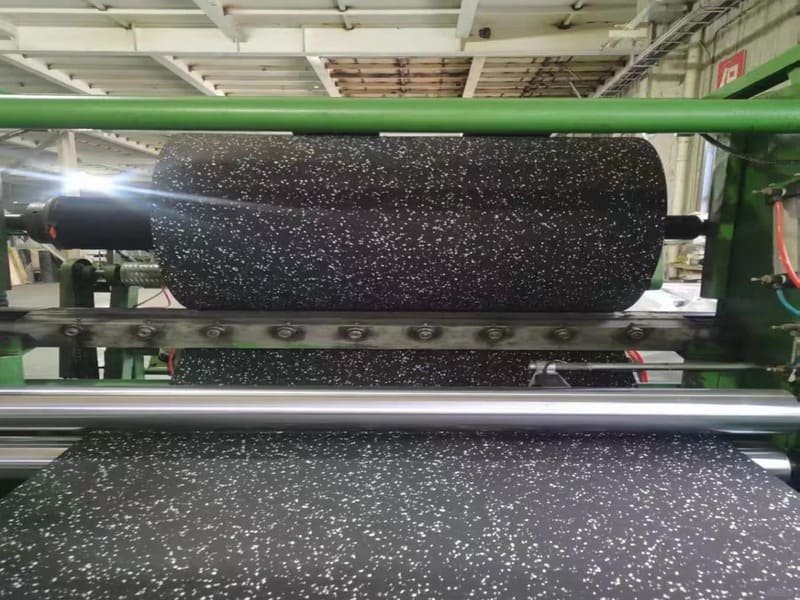
The job does not end when the pour is finished. The curing phase determines the ultimate longevity of the bond.
How do you manage post-leveling care and installation readiness?
You must allow the SLU to cure for 24–72 hours before rubber installation. Readiness is determined by the "Mat Test" or a moisture meter. Before applying adhesive, the surface must be mechanically sanded to remove any "laitance" from the leveler and HEPA-vacuumed to a "white glove" clean standard.
| Curing Stage | Timeframe | Operational Constraints |
|---|---|---|
| Initial Set | 2–4 Hours | Do not touch; avoid all drafts/wind. |
| Walkable | 6–12 Hours | Light foot traffic only; keep shoes clean. |
| Sandable | 24 Hours | Use 60-grit sandpaper to remove drips/ridges. |
| Install Ready | 24–72 Hours | Must meet adhesive manufacturer’s moisture spec. |
I always advise clients to keep the HVAC system off or set to a very low flow during the first 4 hours of drying. Forced air can cause the surface to dry faster than the bottom, leading to "spider-cracking" or "curling" at the edges. Once the floor is dry, I conduct a "White Cloth Test." I wipe a section of the floor with a dark cloth; if white dust appears, the floor is too dirty for adhesive. For rubber flooring, especially thin rolls (8mm or less), any tiny pebble or dried drip of leveler will act like a knife, eventually cutting through the rubber from the bottom up. A final pass with a pole sander and an industrial HEPA vacuum is the only way to ensure the adhesive creates a 100% surface-area bond.
Troubleshooting and Product Selection
If you encounter "pinholes" after the leveler dries, it means your primer application was insufficient, and air escaped from the concrete. For rubber installations, these must be skim-coated with a high-performance "feather-finish" patch. When choosing your leveling compound, always look for Compressive Strength. For home gyms, 3,000 PSI is sufficient. For commercial weight rooms where 100lb dumbbells are dropped, I insist on 5,000 PSI levelers. Using a residential-grade "soft" patch under heavy rubber will result in the patch pulverizing into dust over time, leading to a "squishy" floor and eventually total adhesive failure.
Conclusion
Leveling concrete for rubber is a technical discipline that requires strict adherence to moisture standards and mechanical bonding principles. A subfloor that is flat, dry, and dust-free is the only way to ensure that your rubber seams stay tight and your investment lasts for decades.
If you are currently selecting materials and need a technical comparison between specific self-leveling brands or adhesive compatibility for your project, feel free to send me a private message.