


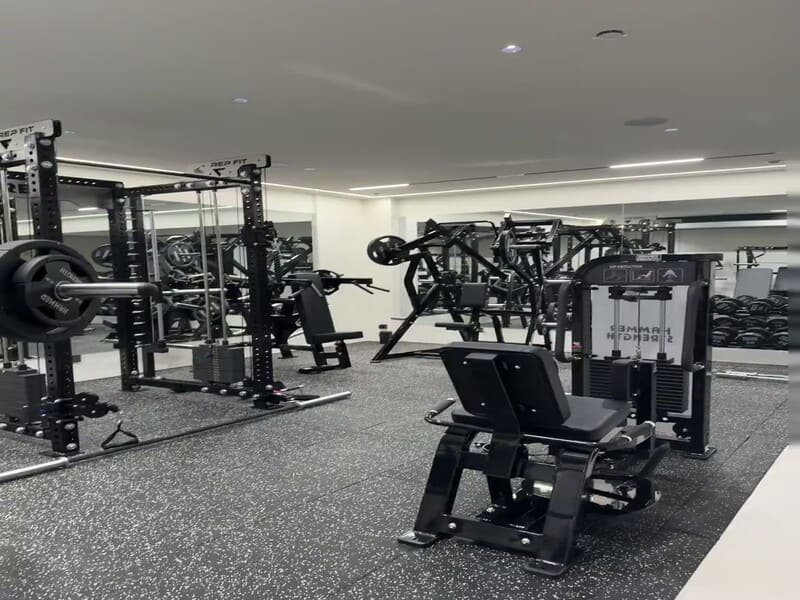
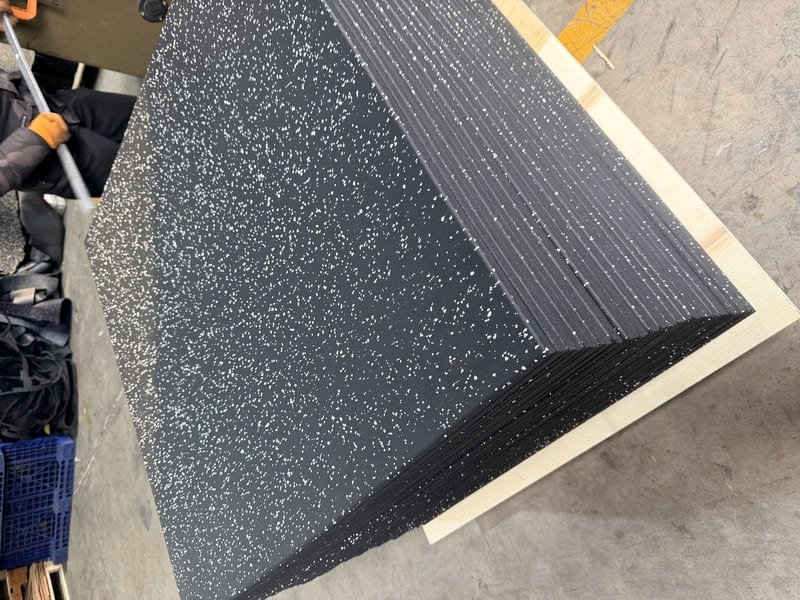
High-density, vulcanized SBR rubber is the superior choice for commercial gyms because it offers the necessary Shore A hardness to resist heavy equipment loads, protects concrete subfloors from impact fractures, and provides a non-porous surface for hygiene. It is the only material capable of sustaining long-term commercial abuse.
Why is it the "Best"? (The Technical Summary)
As a Quality Control Specialist, I evaluate flooring based on failure points. High-density rubber wins because it:
- Protects Subfloors: Dissipates kinetic energy from dropped weights, preventing concrete cracks.
- Resists Indentation: Shore A 60-75 hardness prevents permanent compression from heavy racks.
- Ensures Hygiene: Vulcanization creates a non-porous surface that repels sweat and bacteria.
- Reduces Liability: Provides consistent high-traction footing to prevent slip-and-fall accidents.
- Lowers OPEX: Extreme durability reduces the frequency and cost of replacement.
Is this for everyone?
Let’s be precise. If you are setting up a low-traffic home yoga corner or a light bodyweight studio, you do not need commercial-grade high-density rubber; cheaper foam might suffice. In fact, understanding why high-density rubber flooring is not always the better choice for every environment can save you unnecessary costs on home setups. However, if you are operating a Commercial Gym, CrossFit Box, or Hotel Fitness Center where members pay for access and heavy weights are used, high-density rubber is not an option—it is a mandatory structural requirement to protect your facility.
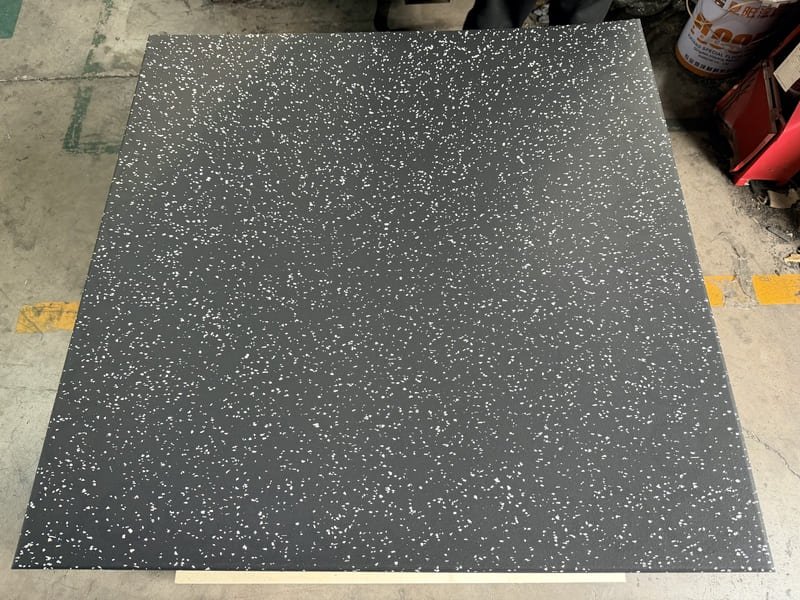
To understand why rubber is the standard, we must look at what happens when you choose the wrong material.
What is "High-Density" Rubber vs. The Alternatives?
High-density rubber is engineered to withstand compression. Unlike EVA foam or PVC, which permanently deform under load, vulcanized rubber returns to its original shape. You must avoid residential-grade materials in a commercial setting.
In the lab, we perform “compression set” testing to see how rubber density and shore hardness affect gym performance under extreme conditions. We place a heavy load on the material for 24 hours and measure how much it recovers.
- EVA Foam (Puzzle Mats): These are meant for playrooms, not gyms. Under a heavy treadmill or rack, the air pockets in the foam collapse permanently. They also tear easily under the friction of sneakers.
- PVC (Plastic): While durable, it is often too hard and slippery when wet. It offers poor shock absorption for weights.
- Bonded Crumb Rubber: This is the "budget" rubber. It is porous. Over time, the glue bond fails, and the floor starts to crumble (shedding black dust).
- Vulcanized High-Density Rubber: This is the gold standard. It is "baked" into a solid sheet. It does not crumble, it does not absorb sweat, and it rebounds instantly after impact.
| Material | Shore A Hardness | Durability | Moisture Resistance | Best Application |
|---|---|---|---|---|
| High-Density Rubber | 65-75 (Optimal) | Extreme | Waterproof (Non-porous) | Commercial Weight Rooms |
| EVA Foam | 20-35 (Too Soft) | Low | Waterproof | Home Yoga / Kids Play |
| PVC | 90+ (Too Hard) | High | Waterproof | Garages / Workshops |
| Bonded Crumb | Varies | Medium | Porous (Absorbs Sweat) | Budget Home Gyms |
Once you confirm rubber is the correct material, you must choose the format that fits your maintenance budget.
Why Format Dictates Lifespan: Rolls vs. Tiles
Rolls provide a seamless aesthetic ideal for large cardio zones but require professional glue-down installation. Interlocking tiles are superior for free weight areas due to their modularity, allowing for rapid "spot replacement" of damaged sections.
My job involves analyzing long-term wear patterns. A common failure in commercial gyms is using rolls in heavy lifting zones. While rolls look sleek with fewer seams, they are structurally unforgiving. If a sharp object or a dropped barbell gouges a rolled floor, repairing it is a nightmare; you must cut out a section and patch it, leaving ugly seams.
In contrast, Interlocking Tiles (typically 1m x 1m) function as independent modules. When a user drops a 60kg dumbbell and cuts the floor—which will happen—you can replace that single tile in ten minutes for roughly $50. For cardio areas, rolls are fine. But for any zone involving heavy iron, modular tiles are the only logical choice to control Operational Expenditures (OPEX).
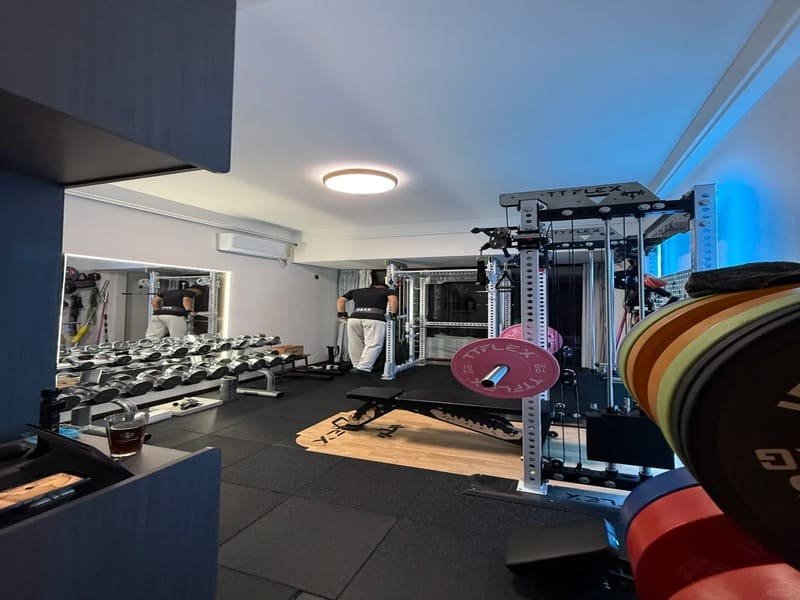
Format solves maintenance, but thickness solves the physics of impact.
What Thickness Do You Actually Need?
You must match flooring thickness to the impact load. Specify 8mm for cardio areas, 12-20mm for general free weights to prevent rebound, and specialized 40mm+ platforms for Olympic lifting zones to dissipate maximum kinetic energy.
Thickness is not about cushion; it is about deceleration. When a weight hits the floor, the energy must go somewhere. If the rubber is too thin, the force transfers directly to the concrete subfloor.
- 8mm: This is a "scratch guard." It protects the subfloor from abrasion but offers near-zero impact protection. Use this only for cardio lanes.
- 12mm – 20mm: The commercial standard for dumbbell zones. This thickness can absorb the shock of weights up to roughly 40-50kg without bottoming out.
- 40mm+ Systems: For Olympic lifting (Cleans, Snatches), a single layer of rubber is insufficient. You need a platform system. These often combine a dense rubber base with a wood insert. The rubber compresses to absorb shock, while the wood provides stability. Under-specifying thickness here is the fastest way to crack your building’s foundation.
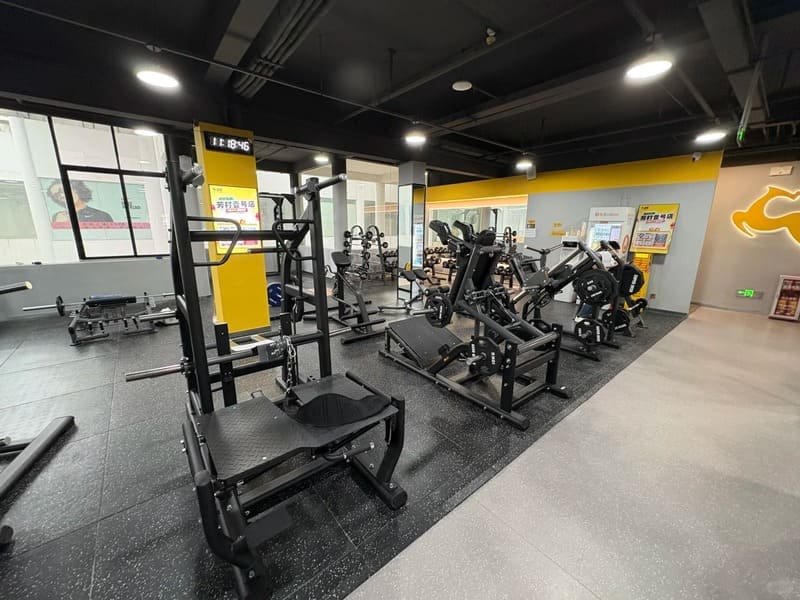
Technical specs protect the facility, but customization builds the business brand.
Why Customization is a Business Asset
Custom flooring elevates a facility from a generic gym to a premium brand. Inlaid logos offer permanent durability compared to surface paint, while embedded functional markings like agility ladders improve the utility of training zones.
In our production facility, we use water-jet cutting technology to create "Inlaid" logos. This is distinct from printing. We cut the logo shape out of the base tile and insert a colored rubber piece of the exact same shape, chemically bonding them.
The result is a logo that runs through the entire thickness of the floor. It cannot wear off, peel, or fade under foot traffic, unlike surface paint which degrades within months. Beyond logos, we engineer functional designs. Instead of using floor tape that peels up, we embed meter markers, agility ladders, and compass designs directly into the flooring or turf. This adds tangible value to the member experience and creates a visually striking environment that members are eager to share on social media.
While rubber dominates the floor, functional training requires specific alternatives.
What About Non-Rubber Zones? (LVT & Turf)
For sled tracks, specify artificial turf with a face weight over 50oz and a padded backing. For locker rooms and lobbies, Luxury Vinyl Tile (LVT) with a 20mil+ wear layer and R10 slip rating ensures durability and safety.
Rubber is not a universal solution. In functional zones, sleds create high friction heat that can melt standard rubber.
- Artificial Turf: You must verify the "Face Weight". A weight under 40oz will look sparse and wear flat. I recommend 50oz+ with a high Dtex (yarn thickness) to resist crushing. Crucially, ensure it has a 5mm foam backing to absorb the impact of plyometric jumps.
- LVT (Locker Rooms): The "Wear Layer" is the critical metric. Residential LVT uses a 6-12 mil layer; commercial gyms require 20 mil (0.5mm) or 28 mil (0.7mm) to withstand mud, grit, and 24/7 foot traffic. Always check the slip resistance rating—R10 is the minimum for wet areas.
Even the best materials raise questions regarding maintenance and installation.
FAQ: Common Technical Questions
Clean high-density rubber with pH-neutral cleaners to preserve the binder. Allow 24-48 hours for acclimation before installation to prevent gaps from expansion, and never install directly over carpet.
Q: How do I clean high-density rubber?
Never use harsh solvents or acidic solutions. These attack the binder, causing the floor to crumble. Use a simple pH-neutral cleaner with a mop or auto-scrubber.
Q: Does rubber flooring expand?
Yes. Rubber reacts to temperature. You must unroll it in the room for 48 hours before installation. Installing cold rubber immediately will result in gaps opening up later as it contracts.
Q: Can I install it over carpet?
No. Rubber requires a rigid substrate (concrete/wood). Installing over carpet creates instability. When a user lifts a heavy weight, the carpet compresses, causing the user to lose balance. It is a safety hazard.
Conclusion
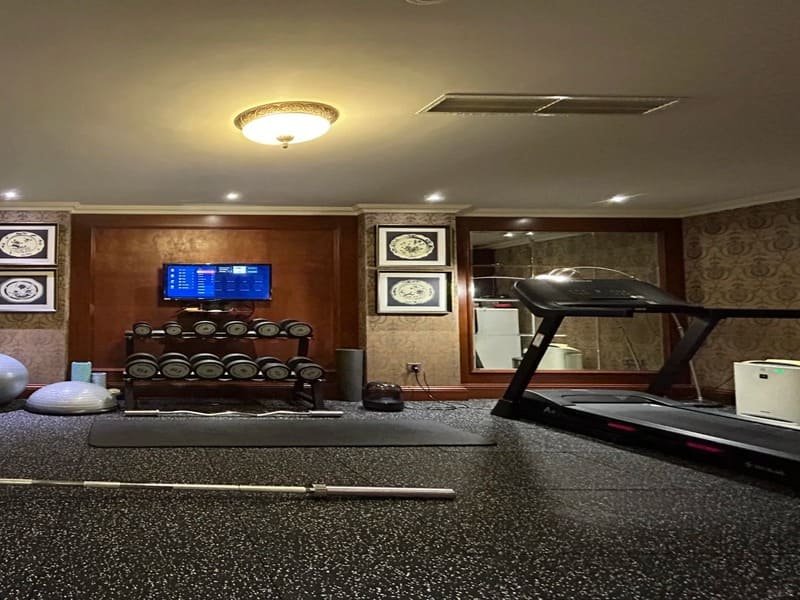
Flooring is a capital asset, not a consumable expense. Choosing high-density rubber protects your subfloor, equipment, and members from day one.
Need a technical review of your floor plan?
Don’t guess on specs. My team can provide a free material sample kit or review your gym layout to recommend the exact density and thickness you need. Contact us to discuss your project.