


The ideal gym flooring thickness depends entirely on your specific training intensity: 4-6mm for yoga, 8-10mm for general fitness and light free weights, and 15-25mm+ for heavy powerlifting or Olympic lifting. Choosing the correct thickness ensures safety, protects your subfloor, and prevents unnecessary spending.
As a production engineer, I often see customers make a critical mistake: they assume thicker always means better. This is not true. In my years designing flooring molds and optimizing rubber curing processes, I have seen 20mm soft foam tiles fail under a squat rack where 8mm dense rubber rolls succeeded. The decision starts with your use case. If you are setting up a home gym for general fitness, buying 1 inch of flooring is engineering overkill and a waste of budget. Conversely, deadlifting 400lbs on a standard 6mm yoga mat is a recipe for cracked concrete. You must match the impact energy (the weight dropped) with the material’s energy absorption capacity. It is about finding the engineering "sweet spot" where the material is thick enough to disperse shock but thin enough to provide a stable, non-compressible surface for your lifts.
Why Thickness Alone Is Misleading (The Density Factor)?
Thickness is meaningless without considering density. A high-density 8mm rubber roll (approx. 950kg/m³) offers far superior protection than a low-density 1/2-inch foam tile, which is why understanding how rubber density and shore hardness affect gym performance is vital for long-term durability. High density prevents the material from "bottoming out" under heavy loads.
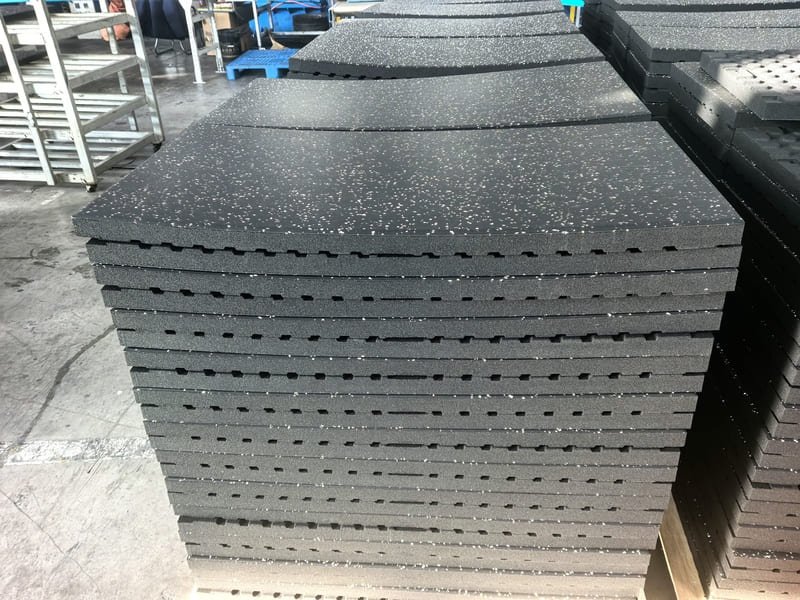
In the factory, we control the density of rubber flooring by adjusting the ratio of rubber granules to the polyurethane binder and the pressure applied during the molding process. This is the difference between a "sponge" and a "tire." If you buy a cheap, thick foam mat, it has low density. When you step on it with a heavy barbell, the material compresses completely until your foot effectively hits the hard floor underneath. We call this "bottoming out." In this scenario, the extra thickness provides zero protection.
For gym flooring, you want high density. Vulcanized rubber or high-pressure molded crumb rubber resists compression. This ensures that even at just 8mm or 10mm thick, the material maintains its structure under load. It provides a stable platform for your feet, which is critical for joint safety. If your floor is too soft (too much "squish"), your ankles will roll during squats. Focus on density first, then thickness.
The Thickness Guide by Activity?
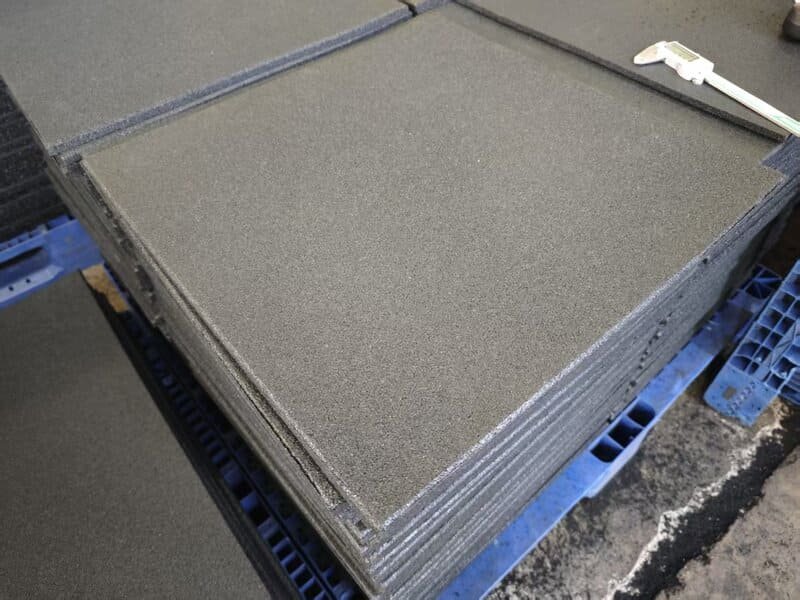
For Yoga and Pilates, use 4-6mm PVC or TPE mats. For functional fitness and home gyms, 8-10mm rolled rubber is the standard. For heavy lifting and Olympic drops, use 15-25mm (or thicker) high-impact rubber tiles to safely disperse kinetic energy.
Let’s break this down from a manufacturing and application perspective.
- Yoga & Light Bodyweight (The "Comfort" Zone): Here, we look for 4mm to 6mm. We use materials like PVC or TPE because they are closed-cell foams. They provide a barrier against cold floors and cushion your knees. You do not need impact protection here; you need grip and hygiene.
- Functional Training & Home Gyms (The “Versatile” Zone): This is where most home gyms live. 8mm (approx. 5/16”) to 10mm rolled rubber is the gold standard; however, for specialized needs like choosing OCR gym flooring, you may need to adjust these parameters for high-impact stability. In production, we roll these from large cylinders of recycled rubber. An 8mm roll is tough enough to handle dropped dumbbells up to roughly 50-60 lbs without damaging the subfloor. It is seamless and easy to clean.
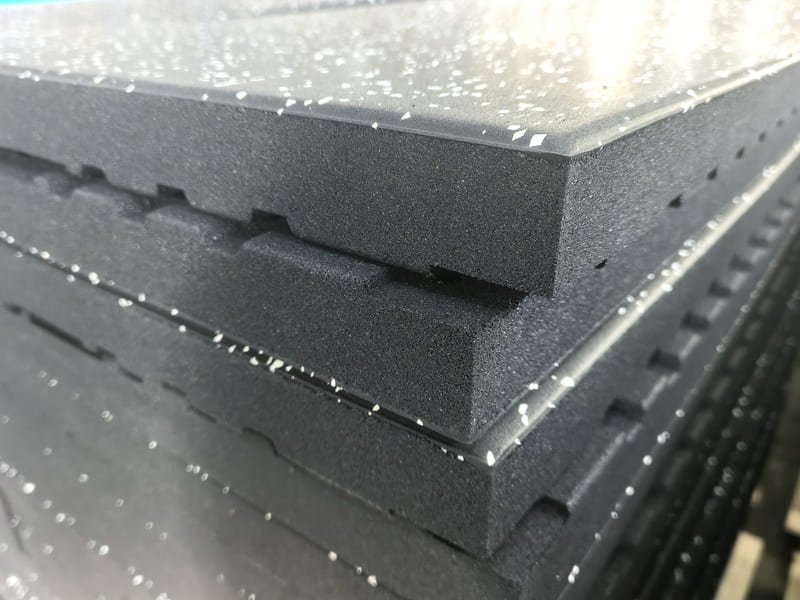
- Heavy Lifting & Olympic Drops (The "Impact" Zone): Once you start dropping barbells from hip or overhead height, you generate massive force. You need 15mm to 25mm+ (1/2" – 1"). We manufacture these as tiles, often with a specific "waffle" or "footed" design on the bottom. This design creates air pockets that allow the tile to flex and disperse the shockwave horizontally, rather than driving it straight down into your foundation.

Does Your Subfloor Change the Rules?
Yes, your subfloor dictates the necessary buffer. Concrete is durable and works well with standard 8mm rolls. Hardwood and tile are fragile, requiring thicker (12mm+) mats or dual-layer systems to prevent impact damage. Carpet requires thick interlocking tiles to create a stable, rigid surface.
As an engineer, I treat the floor as a complete system, not just a top layer.
- Concrete: This is the best base. It is rigid and strong. You can use 8mm rubber rolls here comfortably. The rubber protects the concrete from chipping and protects your equipment.
- Hardwood/Tile: These are delicate. A dropped weight sends a shockwave through thin rubber that can crack ceramic or dent wood without tearing the rubber itself. If you must build on these, I recommend a "sandwich" approach or thicker 15mm-20mm tiles. You need distance to dissipate that energy before it reaches the fragile finish.
- Carpet: This is a headache for stability. If you put a roll over carpet, it will bunch up and shift. You need interlocking tiles that are at least 10mm-15mm thick. The interlocks create a single, heavy floating raft that sits on top of the carpet fibers without sliding around.
Quick Summary Table?
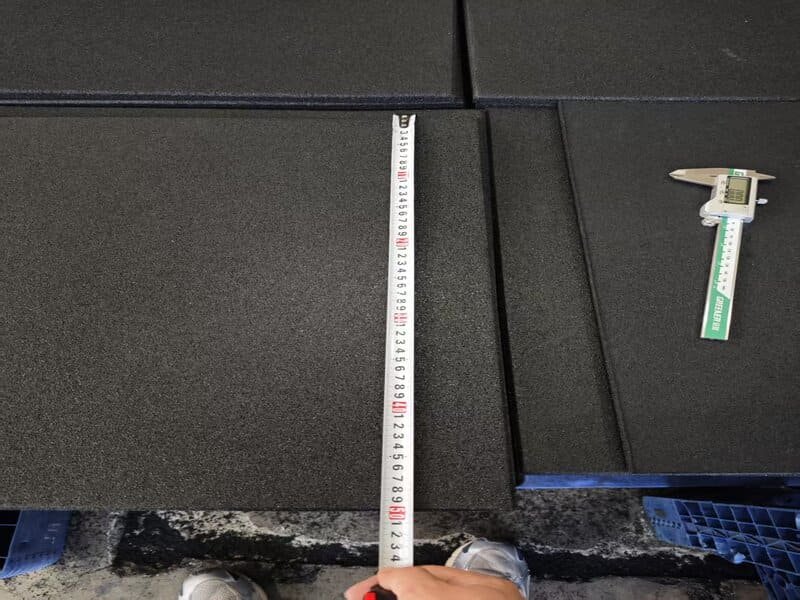
Use this table to quickly match your training style with the correct material specifications. This summary balances durability, cost, and protection to ensure you choose the most efficient solution for your space.
Here is a breakdown based on typical manufacturing specifications and performance data.
| Workout Style | Recommended Thickness | Material Type | Key Benefit |
|---|---|---|---|
| Yoga / Pilates | 4mm – 6mm | PVC / TPE / Cork | Joint comfort & non-slip grip |
| HIIT / General Gym | 8mm – 10mm | Rolled Rubber (EPDM) | Durable, seamless look, stable footing |
| CrossFit / Powerlifting | 15mm – 20mm | Rubber Tiles | Moderate impact absorption & noise reduction |
| Olympic Lifting | 25mm – 50mm+ | High-Impact Tiles / Drop Pads | Max shock dispersion & subfloor protection |
When reading this, remember that "Material Type" is just as important as the number. Don’t use a Yoga mat for HIIT, it will tear in days. Don’t use a 50mm drop pad for Squats, it is too unstable.

Conclusion
Choose your flooring based on the heaviest weight you plan to drop, not your average workout. Prioritize density over simple thickness to ensure stability and long-term durability.
About the Author
Production Engineering Team
We are specialists in the manufacturing and design of performance gym flooring. From formulating rubber compounds to optimizing mold designs, we understand what makes a floor last. We help gym owners and facility managers find practical, engineered solutions for their training spaces.
Need help calculating the exact layout or thickness for your gym?
Every space is different. If you are unsure if you need an 8mm roll or a 15mm tile, let’s check the specs together. Reach out to our team for a free consultation or a material sample kit to feel the density difference yourself.