


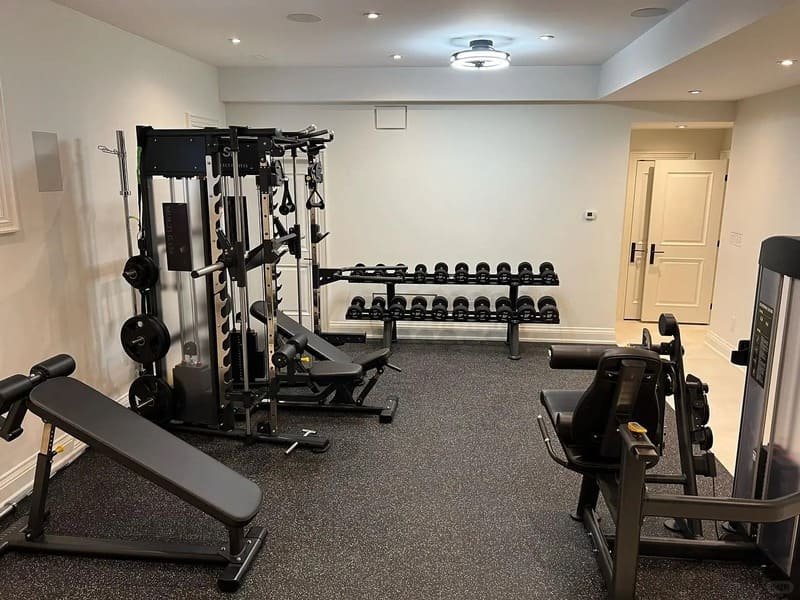
Rubber flooring is not a universal solution; while unmatched for durability, it suffers from distinct off-gassing odours, significant installation weight, and aesthetic limitations like visible seams. It is a specialized performance material, not a cosmetic finish, meaning homeowners often face unexpected challenges regarding maintenance and slip hazards.
Homeowners often buy rubber flooring for the wrong reasons, assuming commercial gym durability translates perfectly to residential comfort. The reality is often a shock. The primary issue is that rubber is an industrial product adapted for home use. Unlike Luxury Vinyl Plank (LVP), which is engineered for aesthetic perfection, rubber prioritizes function over form.
The disconnect happens because manufacturers highlight the "indestructible" nature of the material but gloss over engineering realities. For instance, the sheer density means a standard roll can weigh over 100 lbs, turning a DIY project into a logistical nightmare. Furthermore, chemical curing leads to "off-gassing" that requires planning. If you treat rubber flooring like a cosmetic upgrade, you will be disappointed. However, if you understand its mechanical limitations, it remains the gold standard for impact protection. To balance these insights, it is worth exploring why choose rubber flooring to understand the unique performance benefits that often outweigh these drawbacks in professional settings.
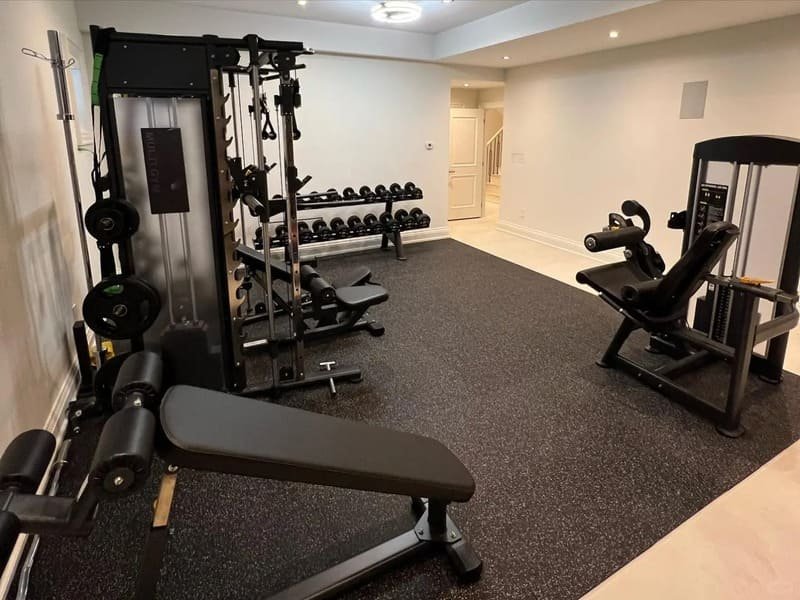
Before diving into the technical breakdown, let’s determine if you should stop reading right now.
Quick Checklist: Rubber Flooring Is a Bad Idea If…
If you fit any of the criteria below, rubber flooring is likely the wrong engineering choice for your application. This checklist filters out unsuitable projects early.
- You want a seamless finish: Even with professional installation, seams are visible. If you hate grid lines, avoid this.
- Poor ventilation: In basements without windows, the sulfur smell (off-gassing) will be trapped and overpowering.
- Wet areas (Kitchen/Bath): Smooth rubber becomes dangerously slippery, and water can wick through seams to rot the subfloor.
- Solo DIY installation: The weight of the rolls makes solo installation dangerous and physically exhausting.
- Harsh cleaning habits: Bleach, Pine-Sol, or vinegar will degrade the rubber binder instantly.
If you passed that checklist, let’s examine why these issues exist and how to manage them.
The "Off-Gassing" Odour: Temporary or Toxic?
The "car tire" smell is caused by sulfur used in the vulcanization of recycled rubber. While generally safe, it can persist for months in unventilated spaces. To avoid this, choose virgin rubber or allow recycled products to outgas outdoors for 48 hours.
The strong odour typically stems from Recycled Rubber (SBR), made from old vehicle tires bound with urethane. To cure these tires, sulfur was used, and that sulfur releases slowly over time—a process called "off-gassing." In a large gym, this isn’t an issue; in a small home office, it can be headache-inducing.
From an engineering standpoint, you have two material choices. Virgin Rubber (EPDM) is not sulfur-cured and is virtually odorless, making it superior for indoor living areas, though more expensive. If you choose the budget-friendly recycled option, my standard procedure is to unroll the mats in a garage for a few days before installation. This simple step accelerates the off-gassing process significantly.
| Feature | Recycled Rubber (SBR) | Virgin Rubber (EPDM) |
|---|---|---|
| Primary Odour Source | Sulfur & Tire compounds | Synthetic materials (Low odor) |
| Intensity | High (Industrial smell) | Low to Non-existent |
| Dissipation Time | Weeks to Months | Hours to Days |

Once you get past the smell, the next hurdle is the visual finish, which often surprises homeowners.
The Aesthetic Struggle: Why It Rarely Looks "Seamless"?
Rubber flooring rarely achieves a seamless appearance because the material expands and contracts with temperature changes, forcing installers to leave tight but visible butt joints. Unlike vinyl, rubber seams create a grid-like aesthetic that absorbs light.
A common misconception is that rubber flooring will look like a monolithic surface. In practice, this is technically difficult without professional heat-welding. Whether using rolls or tiles, the material has a high coefficient of thermal expansion—it grows when warm and shrinks when cold.
If glued too tight without acclimation, seams peak; if fit too loose, gaps open later. With Interlocking Tiles, seams are part of the design. With Rolls, we minimize seams, but because black rubber absorbs light, even hairline gaps are visible. To mitigate this, I recommend EPDM Fleck colors. The visual noise of the speckles tricks the eye and camouflages seams much better than solid black rubber.

While the look is one thing, the physical effort required to install it is a different challenge.
Installation Reality: Heavier Than You Think?
Installing rubber flooring is physically exhausting; a standard 4×25-foot roll can weigh over 100 lbs, making it difficult to maneuver. Additionally, the material requires strict acclimatization to prevent post-installation buckling.
Do not underestimate the weight. Rubber is incredibly dense. Maneuvering rolls into a basement requires leverage and often a second set of hands. Beyond weight, cutting is an engineering challenge. You need a heavy-duty linoleum knife and a fresh blade for every 3-4 cuts, or the rubber will tear, leaving jagged edges.
The most critical step is acclimatization. Rubber has "roll memory." You must unroll the flooring and let it relax flat for 24-48 hours before cutting. If you cut it while it’s still cold or curled, the rubber will shrink back once it relaxes, leaving permanent gaps at your walls. It is a precise, labor-intensive process.
Even after perfect installation, you must be careful about placement, especially regarding water.
The "Slip" Paradox & Water Sensitivity?
While rubber provides excellent dry grip, smooth rubber surfaces become dangerously slippery when wet due to its hydrophobic nature. Furthermore, water can seep through seams and damage the wood subfloor if not properly sealed.
I call this the "Slip Paradox." In a dry gym, rubber offers high traction, which is a primary reason for what sports use rubber flooring and why, especially in activities requiring explosive lateral movements. But introduce moisture, and a smooth rubber floor becomes an ice rink. This is why I rarely recommend smooth-finish rubber for kitchens or baths. The surface tension of water creates a hydroplaning effect.
Structurally, water is also an enemy of the installation system. Rubber is waterproof, but the seams are not. If water spills on a plywood subfloor, it wicks down through the seams. Since rubber acts as a vapor barrier, moisture gets trapped underneath, leading to mold. For wet areas, always specify "Coin Grip" textures and use a seam sealer to lock out moisture.
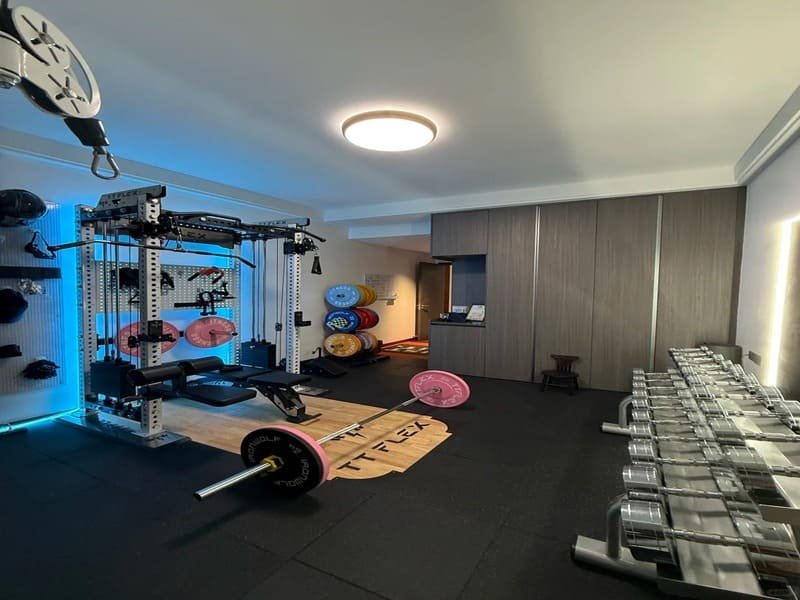
If these disadvantages are deal-breakers, you don’t have to guess what to buy instead.
The Alternative Matrix: What Should You Buy Instead?
If the disadvantages above rule out rubber, review this alternative matrix to find the material that solves your specific pain point while offering durability.
Many clients realize they want the benefits of rubber (durability) without the baggage (smell/look). Here is my cheat sheet for alternatives:
1. If you hate the SMELL…
- Buy This: Luxury Vinyl Plank (LVP) or Virgin Rubber.
- Why: LVP is zero-maintenance and odour-free. Virgin rubber offers performance without sulfur off-gassing.
2. If you hate the SEAMS…
- Buy This: Sheet Vinyl or Poured Epoxy.
- Why: These provide a truly monolithic, waterproof surface, though they lack the impact absorption of rubber.
3. If you hate the INDUSTRIAL LOOK…
- Buy This: Cork Flooring or High-Density EVA Foam.
- Why: Cork adds warmth and acoustic insulation. High-density foam is a cheaper alternative for playrooms without the weight.
4. If you hate the INSTALLATION WEIGHT…
- Buy This: Interlocking Foam Tiles or Carpet Tiles.
- Why: Lightweight and easy for one person to install, though they offer less subfloor protection for heavy weights.

So, is the investment in real rubber still justified?
Price vs. Value: Is It Worth the Cost?
Rubber flooring has a high upfront cost ($2.00 – $12.00+ sq. ft.) but offers unmatched ROI for impact zones due to its 20+ year lifespan. It is the smartest financial choice for dedicated home gyms.
When analyzing Return on Investment (ROI), we look at Lifecycle Cost. Rubber has a high entry price due to material density. Compared to cheap foam mats, it seems expensive. However, foam mats tear within months of heavy use, and laminate chips if you drop a weight.
Rubber flooring is an investment in protection. It protects your subfloor (concrete or wood) and your equipment. If you drop a 50lb dumbbell on tile, you break the floor. On rubber, it bounces. For a "forever home gym," rubber is the cheapest option over 20 years because you buy it once.
Conclusion
Rubber flooring is an exceptional engineering tool for shock absorption, but it fails as a cosmetic solution. Buy it for your gym; avoid it for your living room.
FAQ
Does rubber flooring smell forever?
No. Recycled rubber smells strongest due to sulfur but typically off-gases within a few weeks with ventilation. Virgin rubber is nearly odorless.
Is rubber flooring waterproof?
The material is waterproof, but the seams are not. Water can seep through to the subfloor, so it is not recommended for showers without sealing.
Can I put rubber flooring over carpet?
Generally, no. Rubber needs a solid surface. Installing over plush carpet causes joints to unlock and creates instability.
Need technical advice for your project?
Selecting the right material composition can be tricky. If you want to verify if your subfloor is ready or need a sample to test the "smell factor," feel free to reach out to my engineering team. We can help review your specs or send a material sample kit so you know exactly what you are installing.