


The best playground flooring for maximizing safety and durability is rubber surfacing (Interlocking Tiles or Poured-in-Place). However, the "right" choice depends on your specific needs: Rubber Tiles are best for DIY safety, Poured-in-Place is best for commercial design, and Engineered Wood Fiber is the best choice for strict budget constraints.
Playground safety is not just about the equipment; it is fundamentally about where a child lands. Statistics show that over 60% of playground injuries are caused by falls to the ground. As a contractor who has installed surfaces for everything from small backyard playsets to sprawling municipal parks, I have seen firsthand how the right flooring prevents trips to the emergency room.
While safety is the priority, I know you also care about budget, maintenance, and your local climate. This guide breaks down the options honestly to help you make the right engineering decision.
The Quick Verdict: Best Options at a Glance
If you are in a rush, here is the "Cheat Sheet" based on my field experience:
| Category | Winner | Why? |
|---|---|---|
| Best Overall (Safety + Durability) | Interlocking Rubber Tiles | Consistent shock absorption, low maintenance, and easy to repair if damaged. |
| Best for Complex Designs | Poured-in-Place (PIP) Rubber | Seamless, accessible, and fits any shape, but requires professional install. |
| Best for Tight Budgets | Engineered Wood Fiber (Mulch) | Lowest upfront cost, though it requires annual top-ups and labor. |
| Best for Natural Aesthetics | Artificial Turf | Looks like grass but includes a padded underlayer for safety. |

Now, let’s dive deeper into why these differences matter for your project. If your facility includes multi-purpose areas beyond the play zone, you might also want to consider which flooring is best for a sports court to ensure the right surface for high-impact athletic activities.
1. Comparing the Top Contenders: Rubber vs. Mulch vs. Turf
Interlocking Rubber Tiles balance performance and practicality best for most users. While wood mulch is cheaper upfront, rubber pays for itself through longevity and superior safety performance.
To make the best engineering decision, you need to look beyond the price tag. Here is how the materials perform in the real world:
Interlocking Rubber Tiles
This is often my top recommendation for schools and residential projects.
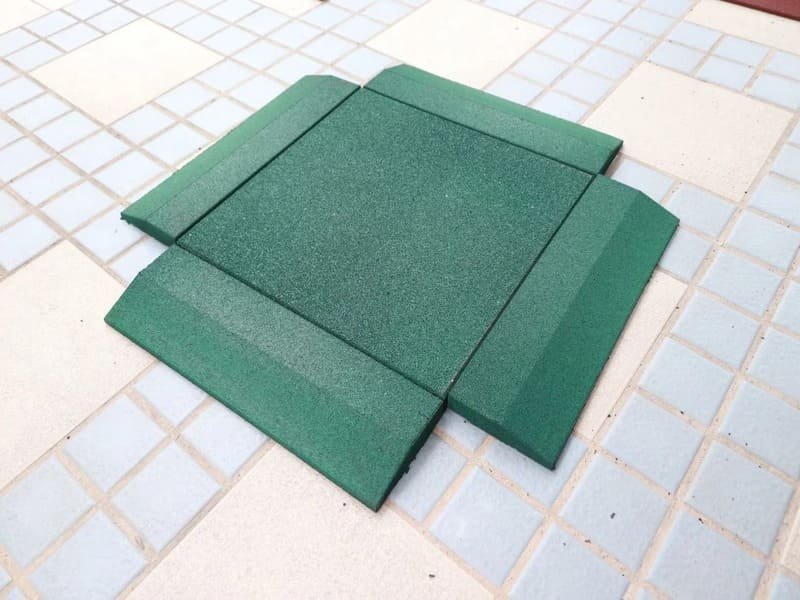
The Good: They are factory-molded, guaranteeing consistent density and Critical Fall Height (CFH) protection. This same precision in manufacturing is why high-density rubber is the best gym flooring for environments that demand extreme durability under heavy loads. They are permeable (water flows through seams), and if one tile gets vandalized, you just replace that one tile.
- The Bad: Upfront material cost is higher. You need a flat, hard sub-base (concrete or compacted stone).
Poured-in-Place (PIP) Rubber
You often see this in high-end public parks. It is mixed on-site and troweled flat.
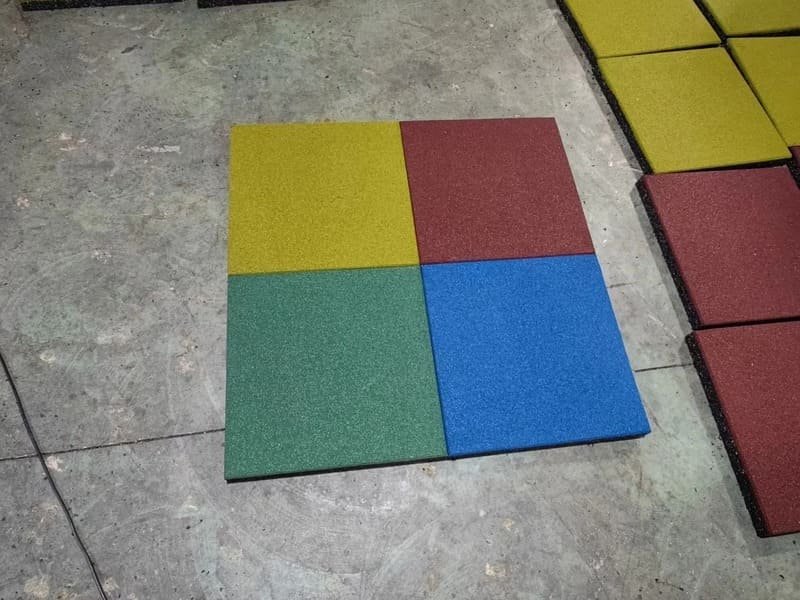
- The Good: Zero seams, highly customizable colors/patterns, and perfect ADA accessibility for wheelchairs.
- The Bad: It is expensive. Repairing a crack usually leaves a visible "patch" mark.
Engineered Wood Fiber (EWF/Mulch)
This is not the same as garden landscaping mulch. It is designed to knit together.
- The Good: Very affordable initially. Natural look.
- The Bad: It decomposes and compacts. I often fail playgrounds during inspections because the "12-inch" depth has compacted to 6 inches, losing its safety rating. It also hides hazards like broken glass or insects.
2. Climate Matters: Heat, Cold, and Rain
No flooring is perfect for every climate. In hot regions, dark rubber can become uncomfortably hot, while in freezing climates, drainage is critical to prevent heaving. You must choose materials that suit your local environment.
This is a detail many guides skip, but it is crucial for user experience.
The Heat Issue (Scorching Summers)
If you live in Arizona or Texas, you need to know this: Dark rubber gets hot. On a 95°F day, black rubber can reach temperatures that are uncomfortable or even unsafe for bare skin.
- My Advice: If you choose rubber in a hot climate, do not use black. Opt for lighter colors (tan, grey, or high-speckle content) which reflect more UV rays. Alternatively, invest in shade structures (sails or trees) over the play area. Artificial turf can also get very hot, so the same rule applies.
Rain and Freeze-Thaw Cycles
In the Pacific Northwest or Northeast, drainage is king.
- The Reality: Loose-fill mulch can turn into a soggy, frozen block in winter, becoming as hard as concrete.
- The Solution: High-quality rubber tiles are designed with "feet" or channels on the underside. This allows water to flow freely underneath the surface. This prevents puddles and stops the tiles from heaving (lifting up) when ground water freezes and expands.
3. The Science of Safety: "Fall Zones" and Thickness
Safety is calculated by "Critical Fall Height." A surface must be thick enough to absorb the impact from the highest point of your equipment. A 3-inch rubber tile typically protects against a 7-foot fall.
Simply putting down a mat isn’t enough; you need the right mat. The Consumer Product Safety Commission (CPSC) has strict guidelines we follow:
- The 6-Foot Rule: The surfacing must extend at least 6 feet in all directions from the equipment.
- The Swing Rule: For swings, the surfacing must extend twice the height of the swing beam, both front and back.
- Thickness Guide:
- 4-foot Fall Height: Requires ~1.75 to 2-inch thickness.
- 6-foot Fall Height: Requires ~2.5 to 2.75-inch thickness.
- 8-foot Fall Height: Requires ~3.5 to 4-inch thickness.
Warning: Never guess on thickness. If you have a 7-foot slide, a 1-inch mat will not prevent a concussion.
4. Cost Analysis: Upfront vs. Long-Term Value
Rubber flooring costs more on Day 1 but costs less by Year 4. Wood mulch requires annual "top-ups" that accumulate cost and labor, whereas rubber is a one-time investment.
Let’s look at the Total Cost of Ownership (TCO) over 10 years.
With Wood Mulch, you lose about 20% of the material annually due to decomposition and kids kicking it out. You have to pay for new material, delivery, and labor every spring.
With Rubber Tiles, maintenance consists of a leaf blower or a hose. There is no replenishment.
For schools and municipalities, the liability reduction is also a financial factor. Rubber provides a consistent safety rating that doesn’t fluctuate based on when the groundskeeper last raked the chips.
Conclusion
There is no single "perfect" floor, but for the vast majority of my clients, Interlocking Rubber Tiles offer the best peace of mind. They solve the safety problem permanently, handle rain better than mulch, and are accessible for all children. However, if you are in an extreme heat zone, remember to choose light colors!
Your playground project is unique. Whether you are dealing with a strict budget, a tricky landscape, or specific safety concerns, getting the technical details right is key.
If you are unsure about which thickness you need or want to check how our materials handle heat and water, my team is happy to help. We can answer your technical questions or point you toward the right specs for your site.
Author Bio
Expert Contractor
I am a specialist in playground construction and safety surfacing with over 15 years of field experience. I work with engineers, schools, and families to design and install custom playground flooring solutions that meet rigorous safety standards (ASTM F1292). My focus is on helping you navigate the trade-offs between cost, climate, and safety to build the best possible environment for children.