


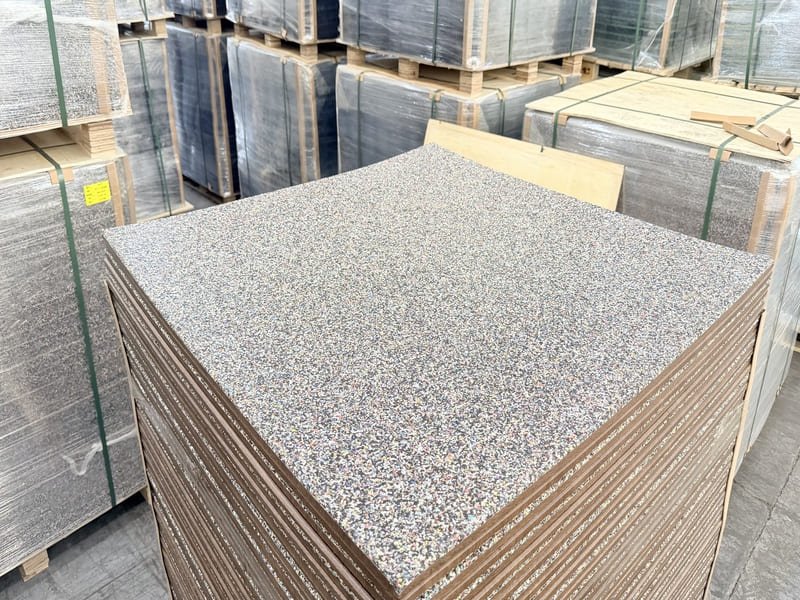
Standard rubber flooring installations require an expansion gap of 1/4 inch to 3/8 inch (6mm to 10mm) at all walls and fixed columns. This space allows the material to expand and contract naturally due to temperature and humidity changes without causing buckling or seam failure.
I have spent years on job sites, and I can tell you that rubber is a dynamic material. Even though a high-density rubber roll feels solid and heavy, it reacts to its environment like a living entity. Many contractors think they can butt the rubber tight against the wall for a "clean look," but this is a major mistake. When the room temperature rises, the rubber molecules expand. If there is no gap, the pressure has nowhere to go but up, resulting in unsightly bubbles or "waves" in the middle of your gym floor. This physical reality applies to recycled SBR and virgin EPDM alike. Ignoring this small gap often leads to total adhesive failure because the sheer force of the expanding rubber is stronger than most glues.
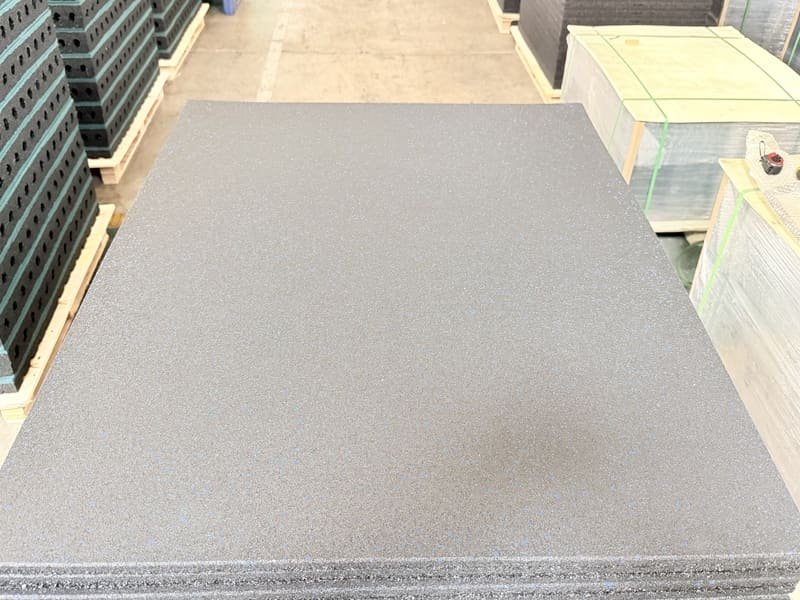
Proper planning for these gaps is the difference between a floor that lasts twenty years and one that fails in two months.
Why Does Rubber Flooring Expand and Contract?
The primary cause of movement is thermal expansion, where rubber increases in volume as temperature rises, and mechanical relaxation, where the rubber "stretches out" after being tightly wound in rolls during manufacturing and transport.
Understanding the science behind the material helps prevent installation disasters. Rubber is highly sensitive to the ambient environment. While it is naturally water-resistant, it is not immune to hygroscopic forces. If your subfloor has high moisture vapor emission rates (MVER), that pressure can affect the dimensional stability of the rubber and the bond of the adhesive. Furthermore, we must consider the "Memory Effect." When I unroll a 100-foot roll of 8mm rubber, that material has been under tension for weeks. It wants to return to its original flat state. This mechanical relaxation can take up to 48 hours.
| Czynnik | Impact on Rubber | Zalecane działanie |
|---|---|---|
| Temperature Increase | Expansion | Maintain 1/4" gap |
| Humidity/Moisture | System Instability | Use vapor barrier |
| Roll Tension | Material Shrinkage/Creep | 48-hour acclimatization |
| Ekspozycja na promieniowanie UV | Degradation/Expansion | Use UV-stabilized EPDM |
I once saw a project where the team installed the floor in a cold, unheated building in winter. Once the HVAC system was turned on and the room reached 75°F, the entire floor buckled because they didn’t account for the thermal expansion coefficient of the recycled SBR.
This is why we must follow strict requirements for every square foot of the installation.
What Are the Definitive Expansion Gap Requirements?
For standard rooms, a 1/4 inch (6mm) gap is sufficient, but for large commercial spaces over 1,000 square feet, you must increase the gap to 3/8 inch or 1/2 inch to accommodate cumulative material movement.
In my experience, the complexity increases when you deal with obstacles like support columns. While a straight wall is easy to manage, a column creates a focal point for stress. You need to maintain a perfect perimeter around every fixed object. If the floor hits a column, it can’t move past it, which creates a pressure point. I always use plastic spacers during the layout phase to ensure these gaps remain consistent throughout the entire room. If you are working in a massive warehouse or a professional crossfit center, the "creep" of the material over 50 linear feet can be significant.
| Typ obszaru | Room Size | Required Gap |
|---|---|---|
| Residential Gym | Under 500 sq. ft. | 1/4" (6mm) |
| Standardowy komercyjny | 500 – 1,500 sq. ft. | 3/8" (10 mm) |
| Large Facility | Over 1,500 sq. ft. | 1/2" (13mm) |
Precision at the Perimeter
Using spacers is not just for tile; it is vital for rubber. Without them, the weight of the rubber rolls can shift during the gluing process, closing your gap before the adhesive sets. I always tell my crew that a uniform gap is easier to cover with trim later. If the gap varies from 1/8" to 1/2", your baseboard won’t hide the mistakes.
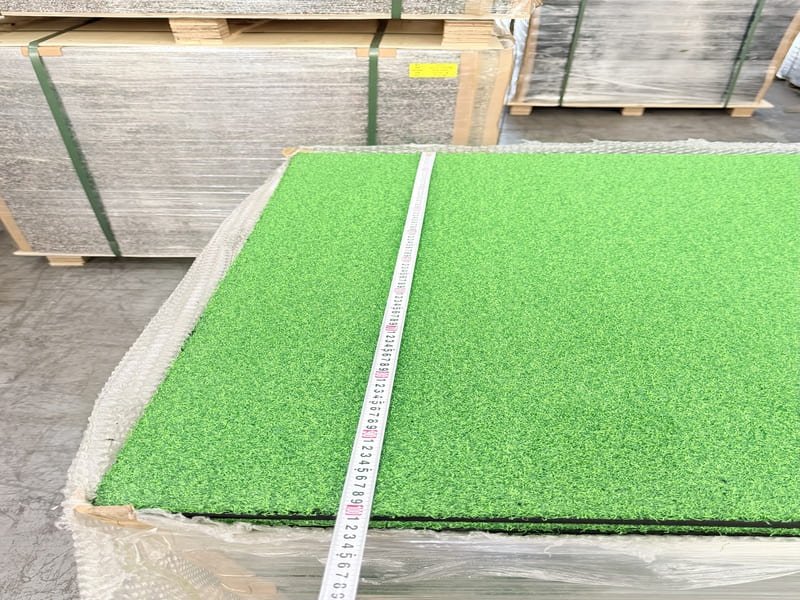
Getting the gap right is only half the battle; you also need to know how to cut the material to fit these spaces.
How Do You Measure and Cut Around Obstacles?
The most effective method is to allow the rubber to acclimatize for 48 hours, then use a "Radial Cut" for columns and a "Trim-to-Fit" approach for walls using a professional-grade utility knife and a T-square.
Acclimatization is the most skipped step in the industry, and it is the most important. I require all my materials to sit in the installation space, unrolled if possible, for at least two days. This allows the rubber to reach thermal equilibrium with the room. For walls, I use the "Oversize and Trim" technique. I lay the roll with an extra inch climbing up the wall, let it settle, and then use a sharp blade to trim it back to the 1/4" mark. For columns, I create a paper template first. I cut the paper to fit the column perfectly, then transfer that shape to the rubber, making sure to add the necessary expansion gap to the template’s dimensions.
Tools and Techniques for Clean Cuts
A dull blade is your worst enemy. I change my utility knife blades every 50 feet of cutting. When dealing with columns, the "Radial Cut" involves making a straight slice from the nearest seam to the column center, then cutting the circular opening. This allows the rubber to wrap around the obstacle without tension.
| Tool Name | Przypadek użycia | Korzyści |
|---|---|---|
| Wytrzymały nóż uniwersalny | Perimeter trimming | Clean, burr-off edges |
| Steel T-Square | Straight wall cuts | Ensures 90-degree accuracy |
| Chalk Line | Long run marking | Maintains alignment over distance |
| Plastic Spacers | Gap maintenance | Guaranteed expansion room |
Once the gaps are cut correctly, the next step is making the installation look professional.
What Are the Solutions for Managing the Gap?
You can hide expansion gaps using 4-inch rubber cove base, aluminum transition strips at doorways, or flexible silicone caulking for areas where moisture protection is required around columns.
Nobody wants to see a 1/4" hole at the edge of their beautiful new gym. In commercial settings, we almost always use a 4-inch rubber wall base (cove base). This trim is flexible enough to follow slight curves in the wall while completely hiding the expansion gap. For residential gyms, some clients prefer a standard wood shoe molding, though you must ensure the molding is nailed to the wall, not the floor, so the rubber can move underneath it. Around columns in areas that might see water—like near water coolers—I use a color-matched, high-flexibility silicone sealant. This fills the gap to prevent water from reaching the subfloor but stays soft enough to compress when the rubber expands.
Finishing the Details
Transition strips are another critical component. When the rubber meets a different material, like carpet or tile, the expansion gap must still exist inside the transition channel. I prefer low-profile aluminum reducers because they provide a "floating" edge for the rubber. This allows the floor to breathe while providing a safe, trip-free edge for gym members.
| Finish Option | Najlepsze dla | Estetyka |
|---|---|---|
| Rubber Cove Base | Siłownie komercyjne | Industrial/Professional |
| Silicone Sealant | Wet Areas/Columns | Seamless/Clean |
| Paski przejściowe | Doorways | Safe/Functional |
| Wood Shoe Mold | Siłownie domowe | Residential/High-end |
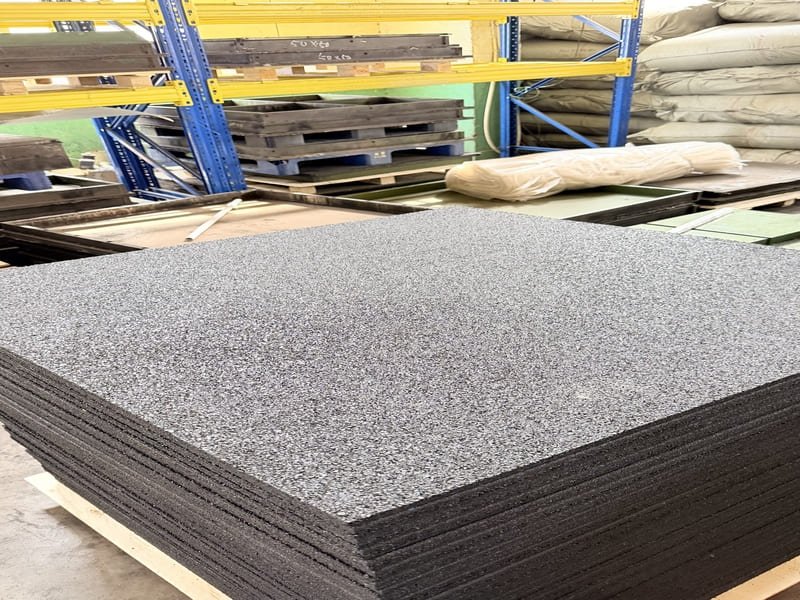
Even with the best finishes, certain common errors can still ruin the project.
What Are Common Mistakes and How to Avoid Them?
The most frequent mistakes include "wedging" the rubber too tightly, installing in extreme temperatures, and failing to account for how different adhesive methods restrict material movement.
I often see DIY installers "wedge" the last piece of rubber into the gap to make it look tight. This is a disaster waiting to happen. As soon as the sun hits that floor through a window, the rubber expands, hits the wall, and the entire floor lifts off the ground. This is called "bubbling." Another mistake is ignoring the HVAC status. If you install the floor before the building’s climate control is active, the expansion rates will be unpredictable. Finally, consider your adhesive. A "Full Spread" glue-down installation restricts movement more than "Loose Lay" or "Tape" methods. If you are gluing the floor down, the expansion gap is even more critical because the stress is transferred directly to the adhesive bond.
Professional Troubleshooting
If you see your floor starting to peak at the seams, it usually means your perimeter gaps are closed. The fix is to remove the baseboards and trim another 1/8" off the edges. It is a tedious job, which is why doing it right the first time is so important.
| Błąd | Konsekwencje | Zapobieganie |
|---|---|---|
| Wedging the edges | Bubbling/Peaking | Use spacers during install |
| Instalacja na zimno | Buckling in summer | Set HVAC to 70°F first |
| Fastening trim to floor | Ripped rubber/Gaps | Nail trim only to the wall |
| No acclimatization | Shrinking seams | 48-godzinny okres odpoczynku |
For high-end commercial projects, we sometimes need to look at the even more technical data.
What Are the Advanced Technical Specs for Pros?
Professional contractors should calculate movement based on a linear expansion coefficient of approximately $0.00013$ per degree Fahrenheit, especially in L-shaped rooms where stress accumulates at "Pressure Points."
When I consult on large-scale stadium projects, we look at the math. In a long hallway of 100 feet, a 20-degree temperature change can move the rubber by nearly 1/4 inch across the total length. In L-shaped rooms, the "inside corner" of the L becomes a massive pressure point. If you don’t provide extra relief in those areas, the seams will eventually pull apart or the rubber will tear. We also look at the density. A $950 kg/m³$ density roll will behave differently than a lighter, more porous mat.
| Metryczny | Value (Typical) | Znaczenie |
|---|---|---|
| Thermal Expansion Coeff. | $1.3 \times 10^{-4} / ^\circ F$ | Predicting movement |
| Twardość Shore A | 60 – 65 | Odporność na ściskanie |
| Typowa gęstość | $900 – 1050 kg/m^3$ | Weight vs. Stability |
Identifying Stress Zones
In complex floor plans, the corners of columns and the ends of long corridors are where you will see the most movement. I recommend "double-cutting" seams in these areas to ensure a perfect fit that still allows for microscopic shifts in the material.
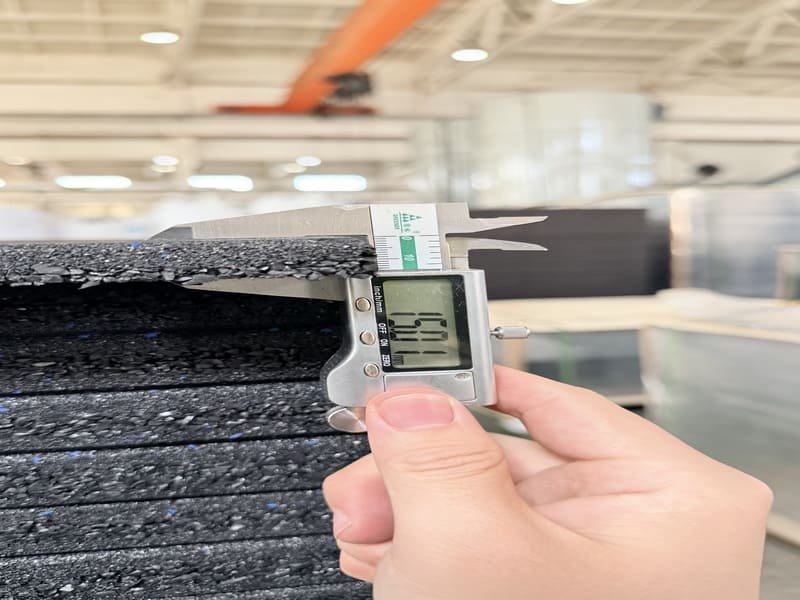
Following these technical steps ensures a successful, professional result.
Summary Checklist for Success
- Acclimatized for 48 hours in the actual installation environment?
- Gap size verified (1/4" for small rooms, 3/8"+ for large)?
- Plastic spacers ready and used at every wall/column?
- Proper trim (Cove base or transition) selected to cover the gap?
Wnioski
Proper expansion gaps are the insurance policy for your flooring investment.
If you are planning a large-scale gym project or need technical advice on rubber flooring manufacturing and installation, feel free to send me a private message.