


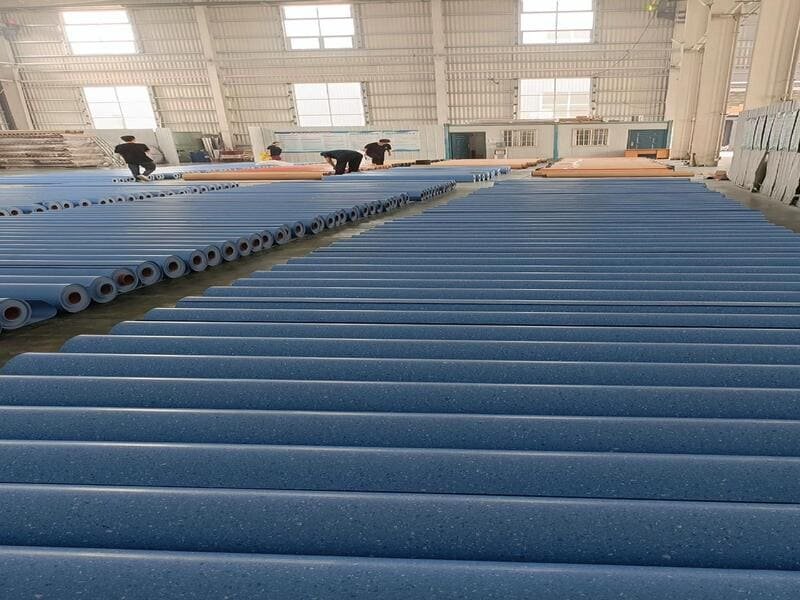
PVC roll flooring warps, curls, or bubbles due to poor material acclimatization, excess subfloor moisture, incorrect adhesive selection, or improper open-time management. These issues cause the vinyl sheet to expand, contract, or unbind from the subfloor. Identifying the specific installation system is critical to addressing these dimensional issues.
When you manage a PVC flooring factory, you see exactly how these rolls are manufactured and how they behave under different site conditions. PVC is a highly reliable material, but it is temperature-sensitive. Many people blame the product quality when a gym or commercial floor starts to lift. However, almost every case of curling or warping comes down to preventable installation variables and environmental pressures. We must look at how the physical properties of vinyl interact with the room environment to solve these issues completely. Let us break down the specific structural and environmental mechanics behind these common flooring failures.
You need to know exactly what is happening to your floor before you can fix it. Let us look at how different installation methods change the way we evaluate floor deformations.
How Do You Diagnose Warping, Curling, and Bubbling?
You diagnose these issues by looking at the location of the deformation and identifying the specific installation method. For fully adhered commercial sheet systems, raised seams typically indicate failed adhesive or lack of roll relaxation. For loose-laid systems, large ridges may indicate perimeter compression.
| Symptom Type | Typical Location | Common Association | Key System Factor |
|---|---|---|---|
| Curling | At seams, roll ends, or walls | Defective bonding or roll memory | Fully Adhered & Loose-Lay |
| Warping / Waves | Across center or near windows | Thermal expansion or poor adhesive transfer | More common in Loose-Lay |
| Bulgotanie | Scattered isolated pockets | Trapped air or subfloor water vapor | Fully Adhered Systems |
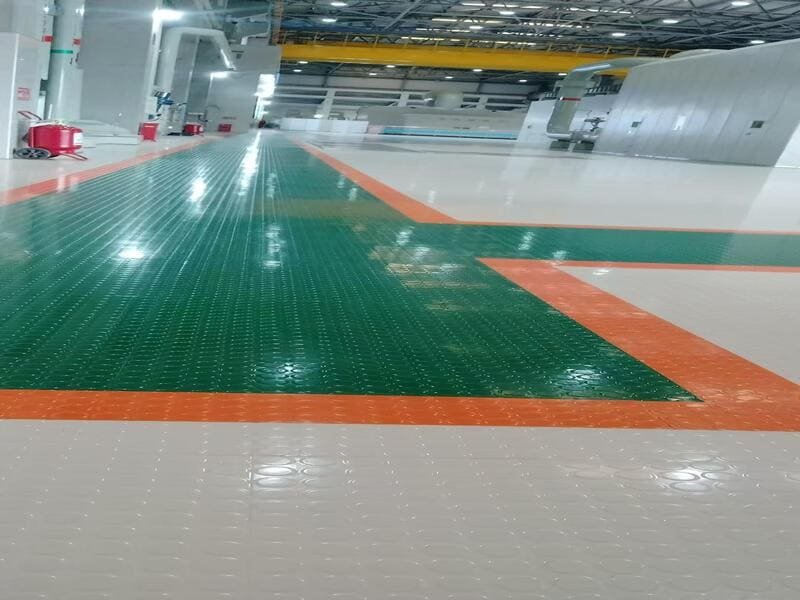
Understanding these visual differences is important because each symptom points to a different failure point. We must first separate fully adhered PVC sheet flooring from loose-laid or floating PVC systems. Commercial spaces like gyms and hospitals require fully adhered systems where rolls are cut precisely to the wall and heat-welded. They do not use generic perimeter expansion gaps. If you treat a moisture bubble on a glued floor the same way you treat thermal movement on a loose-lay sports floor, your repair will fail. Let us look deeper into the physical and technical causes behind these specific symptoms so you can find the true culprit.
Identifying the True Physical Failure Mode
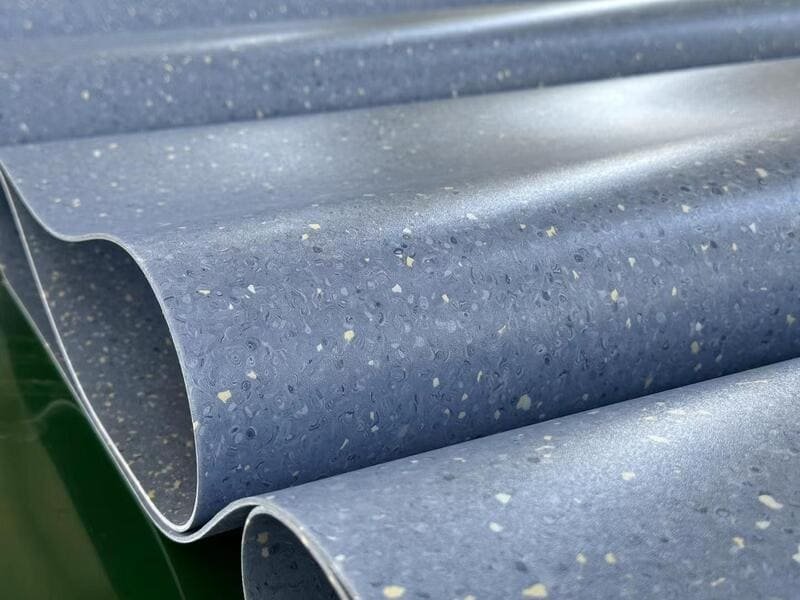
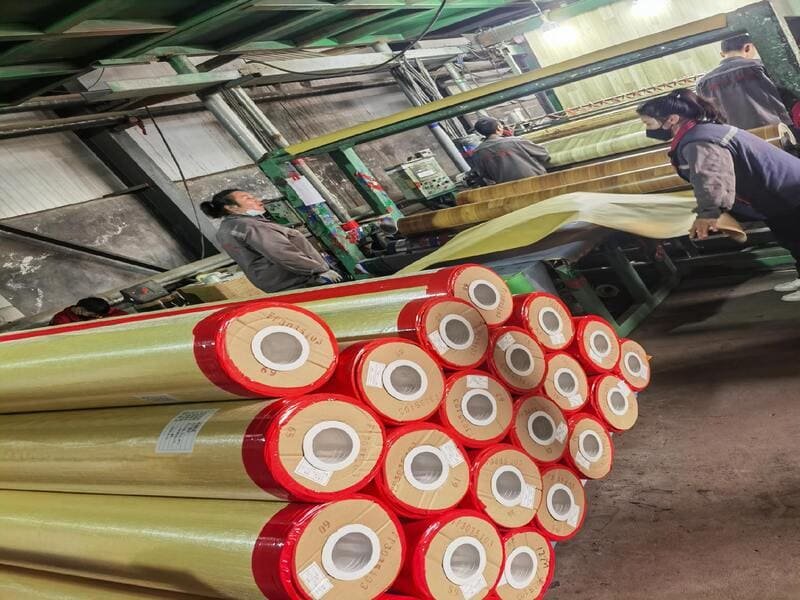
When a fully adhered floor curls at the joints, the adhesive bond has lost its fight against the natural curl memory of the manufactured roll. We wind PVC flooring onto tight cardboard cores right after the hot curing and embossing lines. This gives the material a slight wrap memory. If the installer does not let the roll relax flat, that memory stays active and fights the glue.
Dimensional Stability and Sheet Construction
Some heterogeneous sheet products use fiberglass reinforcement layers to improve dimensional stability. However, actual resistance to curling and dimensional movement depends on the complete product construction, formula, manufacturing process, adhesive system, and installation conditions. Many homogeneous sheet floors do not have fiberglass layers but stay flat perfectly if the PVC formula is balanced and installed correctly.
Now that you can identify your specific floor problem, let us look at the exact mistakes that cause these failures.
Why is Your PVC Roll Flooring Failing?
PVC roll flooring fails because installers skip critical preparation and installation steps. These include inadequate acclimatization, ignoring subfloor moisture and pH levels, mismanaging adhesive open times, or poor roller execution. In loose-laid systems, perimeter restriction also causes major buckling.
| Stage of Failure | Common Culprit | Physical Impact on Floor | Engineering Prevention Standard |
|---|---|---|---|
| Pre-Installation | Słaba aklimatyzacja | Material shrinks or expands post-glue | Rest flat for 24 to 48 hours on site |
| Pre-Installation | Subfloor Moisture & pH | High alkalinity degrades the glue | Test concrete per ASTM F1869 / F2170 |
| Instalacja | Bad Adhesive Timing | Adhesive skins over or traps gas | Follow exact flash and open-time specs |
| Instalacja | Improper Rolling | Fails to transfer glue to the back | Roll with 100 to 110 lb commercial roller |
| Post-Installation | Bezpośrednie światło słoneczne | Extreme heat causes localized movement | Use UV window blinds or temperature control |
These errors create massive tension within the flooring system. Let us look at the engineering reasons why these pre-installation, installation, and post-installation issues destroy your floor.
Pre-Installation Blunders: The Silent Saboteurs
The biggest mistake is ignoring acclimatization. PVC rolls are often stored in cold warehouses or hot delivery trucks. If you bring that roll directly into an air-conditioned room and glue it down immediately, it will struggle to find balance. Furthermore, incorrect storage like laying rolls horizontally without proper support can cause permanent roll-core deformation and waves before installation even begins.
Another silent killer is hidden subfloor moisture and high pH levels. Concrete releases water vapor and alkalis. Excess moisture and alkalinity from the concrete can weaken or degrade moisture-sensitive adhesives, causing loss of bond, bubbles, staining, or widespread flooring failure. You cannot rely on a single moisture value; you must check the specific limits of both the flooring and adhesive manufacturers.
Installation Mistakes: Structural Failures
During the installation phase, mismanaging adhesive wait times causes the most damage. If you lay the vinyl sheet too early into a wet adhesive, you trap moisture and solvents, creating bubbles. If you wait too long, the adhesive skins over, leading to poor adhesive transfer to the backing. Using the wrong trowel notch also creates weak spots by applying too much or too little glue.
For loose-laid or floating sports systems, perimeter compression is a real threat. While fully adhered commercial sheets are cut net to the wall, loose-lay floors need room to move. If a loose-lay floor hits a wall or columns without a designated gap, the sheet buckles. Additionally, structural expansion joints in the building concrete must never be covered continuously with PVC sheet; they require dedicated expansion profiles.
Post-Installation and Environmental Factors
Even a perfect installation can fail if the room environment is too harsh. Direct sunlight from large floor-to-ceiling windows acts like a heater on the vinyl. It causes localized thermal expansion, making specific areas warp or soften the adhesive underneath.
Heavy furniture can also cause problems by pinching the floor. If you place heavy fitness racks or machines on top of a weakly glued roll, you lock those points down. When the floor tries to adjust to temperature changes, it gets caught between these heavy points and forms a ridge.
Knowing why the floor failed is helpful, but you still need to fix the current mess. Let us look at the exact repair steps for each issue.
How Do You Fix Curled, Warped, or Bubbled PVC Flooring?
You fix curled edges by scraping away old glue, reapplying the specified flooring adhesive, and completing proper seam welding. You fix isolated air bubbles via localized adhesive injection only after verifying the subfloor is dry. You fix warped areas by identifying the root bond failure mode.
Diagnostic Steps Before Any Repair
Before attempting a repair, you must diagnose the root cause:
- Check the Lifted Seam: If the back of the PVC sheet is clean, the adhesive transfer failed during installation.
- Inspect the Bubble: If the adhesive inside is soft, wet, or white, subfloor moisture or high pH has destroyed the bond. Do not just glue it back down.
- Analyze the Wave: Determine if it changes with room temperature or if the vinyl has permanently stretched due to structural movement.
Scenario A: Repairing Curled Edges and Seams
When seams lift, you must act fast before dirt ruins the exposed subfloor. Carefully peel back the curled edge without creasing the vinyl. Use a sharp scraper to remove all the old, dried adhesive from both the subfloor and the back of the PVC sheet. Clean out all dust with a vacuum.
Apply a fresh layer of premium, high-tack adhesive specified by the manufacturer using the correct trowel size. Press the vinyl back down into the wet glue. Use a heavy hand roller to ensure a flat bond, then place heavy weights over the seam until the glue cures fully. Once cured, repair the seam using proper hot welding or cold chemical welding according to the product guidelines. Do not use generic polyurethane-based sealers that can damage the PVC backing.
Scenario B: Fixing a Localized Bubble
For small, isolated bubbles where the subfloor is confirmed dry and the bubble was caused by trapped air or localized missing glue, you can perform a targeted repair. Take a heavy-duty syringe filled with a compatible liquid vinyl repair adhesive. Poke a small needle hole directly into the center of the bubble.
[Step 1: Insert Needle] -> [Step 2: Extract Trapped Air] -> [Step 3: Inject Liquid Glue] -> [Step 4: Roll & Weight]First, press down on the bubble to force all the trapped air out of the hole. Next, inject a small amount of the liquid adhesive through the same hole. Use a small roller to spread the glue evenly under the bubbly zone, moving outward from the hole. Roll the area thoroughly to ensure a flat bond, then place a heavy flat object over the spot for 24 hours. Seal the needle pinhole with a drop of cold welding liquid. If the bubble contains moisture or wet adhesive, this injection method will fail; the section must be cut out and replaced.
Scenario C: Fixing Massive Warping and Waves
If a loose-laid system is warping because it is pinching against the walls, remove the wall trim. Trim away the restricted edges to allow the sheet to lay flat. However, if a fully adhered commercial sheet system develops widespread waves, trimming the wall will not fix it. Widespread waves mean a systemic bond failure across the subfloor.
For a fully adhered system with large waves, you must peel back the affected sections. You will need to scrape away the failed adhesive, re-test the subfloor moisture and pH levels, and fix any substrate unevenness. Reapply the correct adhesive, wait for the proper open time, and re-lay the sheet. Roll the entire area using a heavy commercial floor roller.
Fixing a ruined floor takes a lot of effort. Use this simple prevention checklist on your next project to get a perfect result from day one.
Prevention Checklist: How to Install PVC Rolls Right Next Time
- Acclimatization Protocol: Unroll the PVC sheets and let them rest flat in the final installation room for a minimum of 24 to 48 hours at a controlled temperature between 65°F and 85°F. Store rolls vertically prior to installation.
- Subfloor Testing: Test the concrete according to ASTM F1869 and/or ASTM F2170, and confirm that the moisture and pH results fall within the limits specified by both the flooring and adhesive manufacturers.
- System-Specific Trimming: Cut fully adhered commercial sheets net to the wall for a clean fit or flash coving. Ensure loose-laid athletic systems maintain their specified perimeter clearance.
- Subfloor Cleaning & Leveling: Sweep, vacuum, and scrape the subfloor until there is zero dust, grease, patch compounds, or old adhesive residue left behind.
- Adhesive Timing Management: Monitor site humidity and temperature to adjust adhesive open times. Do not install flooring too early into wet glue or too late onto skimmed glue.
- Commercial Rolling: Roll the flooring in both directions using the roller weight specified by the flooring and adhesive manufacturer; many commercial sheet systems require a roller of approximately 100–110 lb.
- Sun-Blocking Strategy: Install commercial window blinds, curtains, or UV-blocking window tints on large windows to prevent hot solar spots on the vinyl floor.
Wnioski
PVC roll flooring warping and curling can be prevented by enforcing a 48-hour room acclimatization period, testing concrete subfloor moisture and pH against manufacturer specs, and using the correct adhesive open times and rolling weights.
If you are dealing with persistent warping issues on your project, or if you want to source high-stability PVC roll flooring with built-in fiberglass layers for your next commercial build, Wyślij mi prywatną wiadomość today. Let us optimize your flooring design together.