


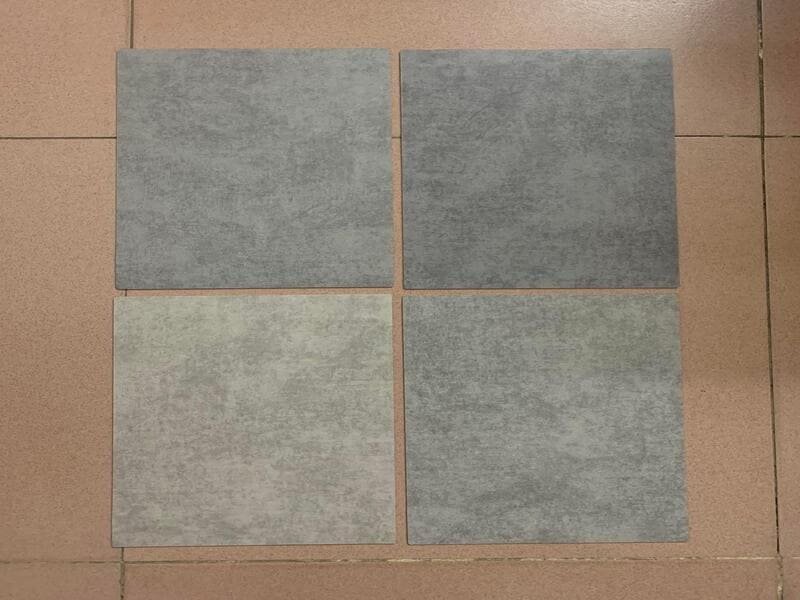
Most facilities should retest ESD vinyl flooring every 6–12 months at minimum, while high-risk electronics manufacturing areas like SMT cleanrooms need monthly or quarterly verification. The right frequency depends on your facility’s sensitivity class, traffic volume, and compliance requirements.
| Typ obiektu | Zalecana częstotliwość |
|---|---|
| Cleanroom / SMT Assembly | Miesięcznie |
| Standard Electronics Assembly | Kwartalnie |
| ESD Warehousing & Packaging | Every 6–12 months |
I’ve spent years in quality control for ESD flooring manufacturing, and this is the question I hear most from plant managers: "How often do we actually need to test this floor?" The table above is your starting point, but the real answer depends on how your facility uses the space. A cleanroom running SMT lines can’t run on the same schedule as a general ESD warehouse. Static dissipative properties don’t fail all at once — they degrade slowly through wax buildup, grounding wear, and dirt accumulation, which is exactly why a fixed schedule matters more than a "test when it looks fine" approach.
Once you have a baseline frequency, the next step is understanding what the governing standards actually require, since compliance and internal auditing aren’t quite the same thing.
Which Standards Govern ESD Flooring Retesting?
ANSI/ESD S20.20 and IEC 61340-5-1 define the ESD control program requirements, while ASTM F150 provides the specific test method for measuring electrical resistance of resilient flooring.
| Standard | Region | What It Governs |
|---|---|---|
| ANSI/ESD S20.20 | North America / Global | Overall ESD control program requirements |
| IEC 61340-5-1 | International / Europe | Electrostatics control program standard |
| ASTM F150 | Globalny | Test method for measuring floor resistance |
It’s worth being precise here: none of these standards hands you a fixed "test every X months" rule written in stone. Instead, S20.20 and IEC 61340-5-1 require you to establish and follow a documented Compliance Verification Plan (CVP), while ASTM F150 tells you jak to measure resistance correctly once you’ve decided when to test. The actual interval is something your facility sets based on risk level — which is why the frequency table above exists as a practical starting point, not a regulatory mandate.
Knowing the standards is one thing. Applying them to your specific facility depends on a handful of practical factors.
How Often Should Different Facilities Test ESD Vinyl Flooring?
Match your testing frequency to facility risk level: weekly visual checks for cleanrooms, monthly for standard assembly, and quarterly for warehousing, with annual full certification across the board.
| Facility Type / Risk Level | Visual / Spot Check | Internal Audit | Full Certification |
|---|---|---|---|
| High Sensitivity / SMT Cleanrooms | Co tydzień | Miesięcznie | Semi-Annually / Annually |
| Standard Electronics Assembly | Miesięcznie | Kwartalnie | Rocznie |
| ESD Warehousing & Packaging | Kwartalnie | Dwa razy w roku | Rocznie |
I recommend treating this matrix as a floor, not a ceiling. If your facility runs multiple shifts, uses forklifts, or has had prior grounding issues, shifting up one tier of frequency is cheap insurance against latent defect costs. A single ESD failure event on a sensitive SMT line can cost far more than a few extra test cycles per year.
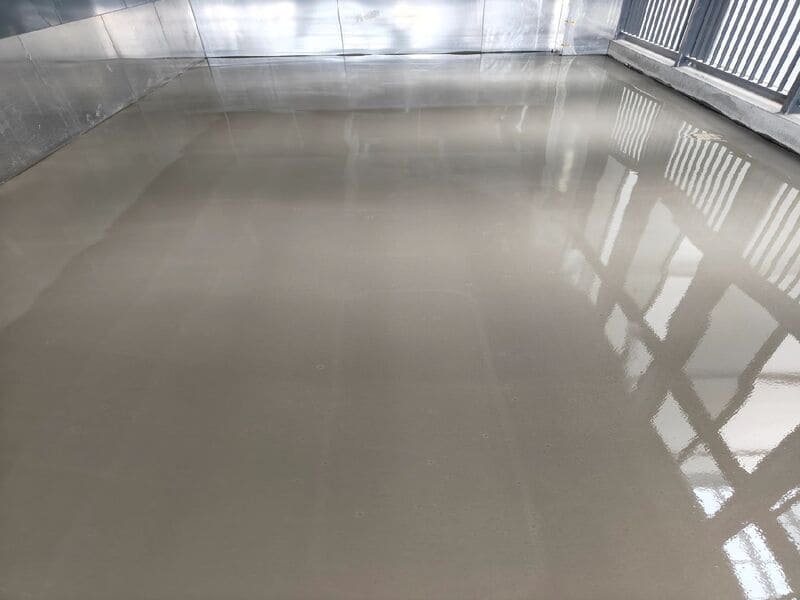
This matrix covers the baseline. But several underlying factors can push any facility toward a tighter schedule regardless of category.
What Factors Change Your ESD Flooring Testing Frequency?
Traffic volume, facility sensitivity class, environmental conditions, and cleaning practices are the four factors that push a facility toward more frequent testing than the baseline.
- Traffic volume and facility type: A cleanroom with light foot traffic wears differently than a manufacturing floor with forklifts and heavy carts rolling across it daily. Mechanical stress accelerates surface degradation.
- Facility sensitivity level: Class 0 ESD areas handling ultra-sensitive microelectronics or SMT assembly need far tighter monitoring than a general ESD-rated storage zone.
- Environmental controls: Relative humidity and temperature swings directly affect static dissipation performance. Dry winter air raises surface resistance readings even when nothing physically changed on the floor.
- Maintenance and cleaning practices: Harsh chemicals, standard (non-ESD) floor wax, or improperly diluted ESD cleaners all leave insulating residue that quietly pushes resistance readings out of spec over time.
These variables compound. A high-traffic cleanroom in a humid climate with inconsistent cleaning protocols needs a far more aggressive schedule than a low-traffic dry warehouse, even if both fall under the same facility category on paper.
When Should New ESD Vinyl Flooring Be Tested After Installation?
New ESD vinyl flooring should undergo initial acceptance testing 24–72 hours after adhesive curing, and again before any sensitive equipment is installed on top of it.
This is one of the most common questions I get on active projects, and it’s separate from ongoing compliance retesting:
- Installation completion — visual inspection for seam integrity and surface finish.
- 24–72 hours after adhesive curing — allow the adhesive and any conductive coupling agents to fully set before testing.
- Initial acceptance test — full P2P and P2G resistance testing across a defined grid, documented as your baseline reading.
- Before equipment installation — a final verification pass before sensitive electronics or workstations move onto the floor.
Testing too early, before the adhesive cures, is a common mistake that produces unreliable readings and can trigger unnecessary rework. Your baseline acceptance test also becomes the reference point every future retest gets compared against, so it’s worth doing carefully.
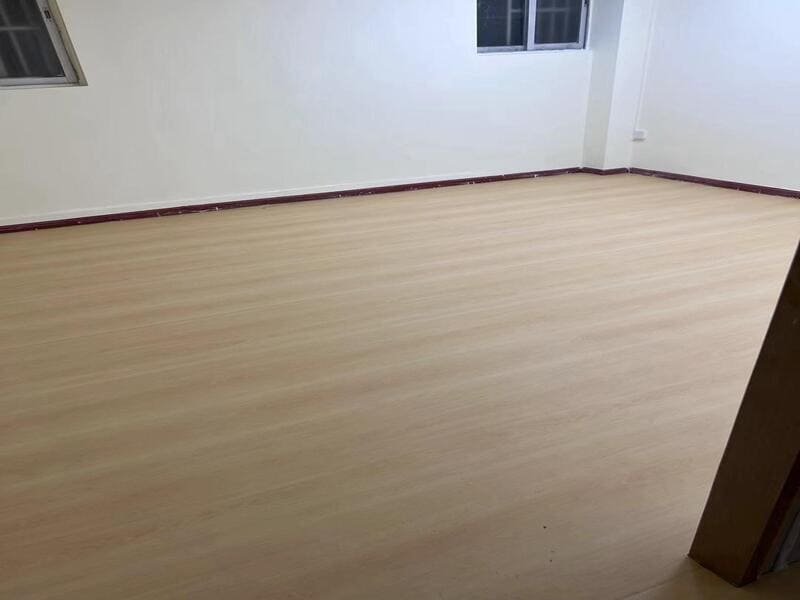
Once a floor is in service and has passed acceptance testing, certain events call for immediate retesting outside your normal schedule.
When Should You Retest ESD Flooring Outside the Normal Schedule?
Retest immediately after deep cleaning, layout changes, seasonal humidity shifts, or any spike in product failure rates. Waiting for the next scheduled audit in these cases risks undetected non-compliance.
- Post-cleaning or deep maintenance: New ESD seals, refinishing, or deep washing can temporarily alter surface resistivity. Retest before resuming production.
- Layout changes or renovation: Moving heavy machinery, installing new grounding straps, or repairing the subfloor can disrupt the grounding path.
- Seasonal environmental shifts: Moving from humid summer conditions into dry winter heating season commonly pushes resistance readings toward the insulative end of the range.
- System failures or defect spikes: A sudden rise in product failure rates during quality control is often the first sign of a flooring compliance drift, not just a process issue.
Knowing when to test is only half the equation. Testing correctly matters just as much, since improper technique produces false readings that can send your team chasing a problem that doesn’t exist — or worse, missing one that does.
How Is ESD Vinyl Flooring Tested?
Use a calibrated megohmmeter with 5 lb (2.27 kg) electrodes to measure point-to-point and point-to-ground resistance, following a standardized grid layout across the floor.
The core equipment and metrics I rely on:
- Megohmmeter: A surface resistance meter fitted with standard 5 lb electrodes, per ASTM F150 methodology.
- Footwear/flooring system tester: Measures body voltage generation (BVG) by simulating a person walking across the floor in ESD footwear.
The three metrics that matter most:
- Point-to-Point (P2P) Resistance: Measures resistance across the floor surface itself, typically expected in the 10⁴ to 10⁹ Ω range.
- Point-to-Ground (P2G / Rtg) Resistance: Confirms the floor-to-ground path is intact and performing.
- Wytwarzanie napięcia w ciele (BVG): Tests the actual voltage a person generates while walking, using ESD-rated shoes or heel straps.
For accuracy, follow a consistent grid layout with defined test points per square meter, and avoid testing immediately after cleaning — residual moisture or cleaner film can skew readings and mask the floor’s true baseline performance.
Should ESD Flooring Retesting Be Done Internally or by a Third Party?
Routine spot checks and internal audits can be performed by trained facility personnel, but annual full certification should involve third-party verification, especially if you need to satisfy customer audits.
| Typ testu | Who Performs It |
|---|---|
| Daily/weekly visual checks | Trained facility staff |
| Monthly/quarterly internal audits | In-house QC personnel with calibrated equipment |
| Annual full certification | Third-party ESD auditor or certified testing service |
| Customer/regulatory audit | Provide calibration records and full test reports |
Internal teams can absolutely handle routine monitoring once trained on proper megohmmeter technique — this is where most of your testing volume happens anyway. But when a customer or regulatory body needs proof of compliance, third-party certification carries more weight because it removes any question of bias in the readings. I generally recommend keeping both calibration records and operator training logs on hand, since audits often ask for evidence of jak your internal team was qualified to test, not just the readings themselves.
Why Does ESD Flooring Fail Compliance Testing?
Most ESD flooring failures trace back to grounding issues, chemical contamination, or dirt accumulation — all of which are preventable with proper maintenance.
- Insufficient grounding connections: Oxidized copper foil tape, detached grounding straps, or poor subfloor grounding are the single most common cause of failed P2G readings.
- Chemical or wax contamination: Standard floor wax or non-ESD cleaners leave an insulating film on the surface, raising resistance beyond acceptable limits.
- Dirt accumulation and wear: Heavy foot traffic deposits insulating dust and grime over time, gradually degrading conductive performance even on a well-installed floor.
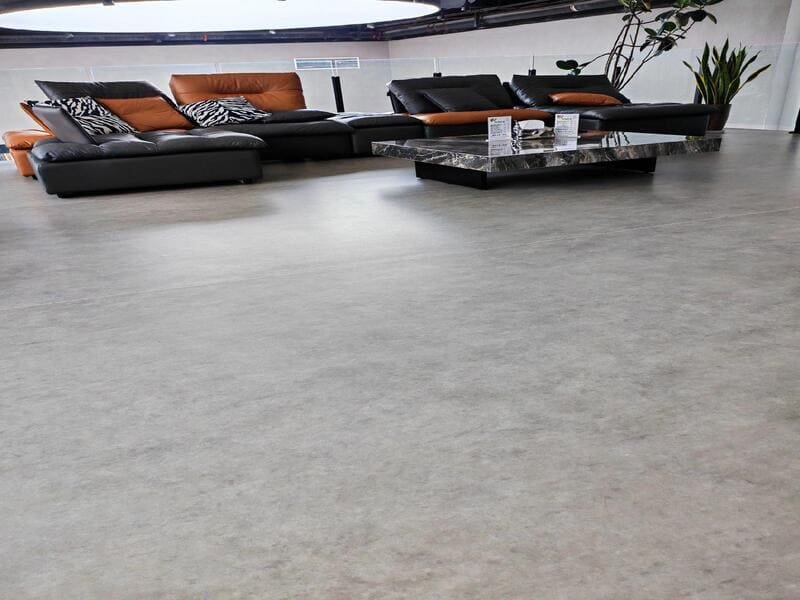
Understanding why a floor fails is useful, but knowing exactly what to do the moment it happens is what actually keeps your facility running.
What Should You Do If ESD Flooring Fails Retesting?
A failed reading doesn’t always mean the floor is defective — start by repeating the measurement, then work through grounding, humidity, and contamination checks before assuming a repair is needed.
The recovery sequence I follow:
- Repeat the measurement — confirm it isn’t a one-off reading caused by electrode placement or a loose connection.
- Check humidity and temperature — abnormal environmental conditions at the time of testing can produce a false failure.
- Inspect grounding connections — check copper tape, straps, and subfloor grounding points for oxidation or detachment.
- Remove contamination — deep strip any wax or chemical residue using ESD-approved cleaning products.
- Retest — confirm the fix resolved the reading before returning the area to service.
- Repair or replace damaged area — if none of the above resolves it, the affected section may need localized repair or replacement.
Skipping any one of these steps tends to produce a floor that passes today and fails again within weeks, which is a frustrating and avoidable cycle.
How Does Flooring Aging Affect Testing Frequency?
As ESD vinyl flooring ages, wear layer thinning, grounding tape degradation, adhesive breakdown, and contamination buildup all cause resistance to drift, which is why older installations typically need more frequent testing.
A few years into service, several things are happening simultaneously beneath a surface that may still look fine visually:
- Wear layer degradation: The conductive or dissipative wear layer thins under repeated foot and equipment traffic, gradually raising surface resistance.
- Grounding tape aging: Copper grounding tape oxidizes over time, weakening the P2G resistance path even if the floor surface itself is intact.
- Adhesive deterioration: Older adhesive can lose its conductive coupling properties, affecting how consistently the floor grounds across its full area.
- Contamination buildup: Years of cleaning cycles, even with proper ESD cleaners, can leave gradual residue buildup that’s easy to miss without testing.
This is exactly why I recommend shortening your retest interval as flooring approaches the later years of its service life, rather than waiting for a visible failure. A floor that tested fine at year two isn’t guaranteed to test the same at year seven, even under identical traffic conditions.
Why Does Record-Keeping Matter for ESD Compliance?
Detailed test logs are what let you survive ISO, ANSI/ESD, and third-party customer audits without scrambling for evidence after the fact.
A defensible log should capture, at minimum:
- Test date and location grid ID
- Ambient temperature and relative humidity at time of test
- Resistance readings (Ω) for P2P and P2G
- Equipment serial number and calibration date
- Operator name
Digital logging systems tend to outperform paper logs for audit readiness, since they timestamp entries automatically and make trend analysis across quarters far easier. If you’re managing multiple facilities, a shared digital system also lets you spot patterns — like a specific zone that consistently drifts out of spec faster than others — before it becomes a compliance failure.
Summary & Actionable Best Practices Checklist
Getting ESD flooring retesting right comes down to consistency, documentation, and matching your schedule to your actual risk profile.
- Establish a written Compliance Verification Plan (CVP)
- Train internal auditors on proper megohmmeter usage
- Maintain strict ESD-safe cleaning protocols
- Schedule annual third-party re-certification
- Shorten intervals as flooring ages past its mid-life point
Retesting isn’t just a compliance checkbox. It’s the mechanism that protects your sensitive microelectronics from failures that are expensive to trace back to their real cause.
Często zadawane pytania
Q: How often should ESD flooring resistance be tested?
Most facilities should run internal audits monthly to quarterly, with full third-party certification annually. Cleanrooms and SMT lines should test more frequently than general ESD warehousing.
Q: Does ESD vinyl flooring require daily testing?
No, daily visual inspection is enough unless your facility’s Compliance Verification Plan (CVP) specifically requires more frequent electrical testing.
Q: Can cleaning affect ESD test results?
Yes. Non-ESD cleaners, waxes, or improperly diluted ESD cleaning solutions can leave insulating residue on the surface, which raises resistance readings and can cause a false failure.
Q: Can I use a standard multimeter instead of a megohmmeter for ESD floor testing?
No. Standard multimeters aren’t built for the high-resistance range ESD flooring operates in (10⁴ to 10⁹ Ω) and lack the standardized 5 lb electrode weight required by ASTM F150 for repeatable readings.
Q: Does new ESD vinyl flooring need to be tested before it’s put into service?
Yes. Initial acceptance testing should happen 24–72 hours after adhesive curing, separate from the ongoing compliance verification schedule.
Q: How much does relative humidity actually affect resistance readings?
Significantly. Dry conditions, like winter heating season, can push resistance readings toward the insulative end of the acceptable range even without any physical change to the floor, which is why seasonal retesting matters.
Q: What’s the cost difference between routine retesting and fixing a failed ESD zone?
Routine internal audits are a fraction of the cost of a deep strip-and-regrounding recovery process, and they’re negligible compared to the cost of a latent defect reaching a customer’s sensitive electronics.
Moja rola
I work in quality control for ESD vinyl flooring manufacturing, with hands-on experience in custom and bulk production for electronics assembly, cleanroom, and industrial applications. My focus is on manufacturing process optimization, material performance validation, and helping engineering teams solve ESD design and compliance challenges through early-stage technical collaboration — not just producing flooring to spec, but helping identify performance improvements before they become costly problems.
Have a specific ESD flooring compliance question, or need help building a retesting schedule for your facility? Send me a message — I’m happy to walk through your setup and share what’s worked in similar environments.