


Yes, but thickness is only part of the story. While a 3.0mm floor offers more wear material than a 2.0mm floor, factors like raw material quality, proper subfloor preparation, and routine maintenance actually dictate the true lifespan of your commercial flooring.
When facility managers plan their budgets, they often ask me if paying more for a thicker floor guarantees better durability. As an R&D engineer in commercial flooring, I see this dilemma often. People naturally assume that thicker materials resist wear and tear better. But we need to look at the chemistry and mechanics of the floor. Homogeneous flooring is a single layer of uniform material from top to bottom. Because of this structure, the entire thickness acts as the wear layer. If the floor gets scratched, you can easily buff it out. This makes it highly durable for commercial spaces. But simply adding another millimeter of thickness does not fix poor material density or bad installation. In my practice, my team works with product developers to optimize the material mix rather than just increasing the thickness. We focus on engineering a dense, high-quality product that performs well under heavy stress.
Let us look closely at how this flooring is built. Understanding the internal structure will help you see why thickness is not the only thing that matters.
Why is Homogeneous Flooring Unique in Its Structure?
Homogeneous flooring features a "through-body" structure, meaning it consists of a single, uniform layer from the surface to the base. This allows the floor to be polished and renewed multiple times, unlike layered options.
Understanding the Single-Layer Advantage
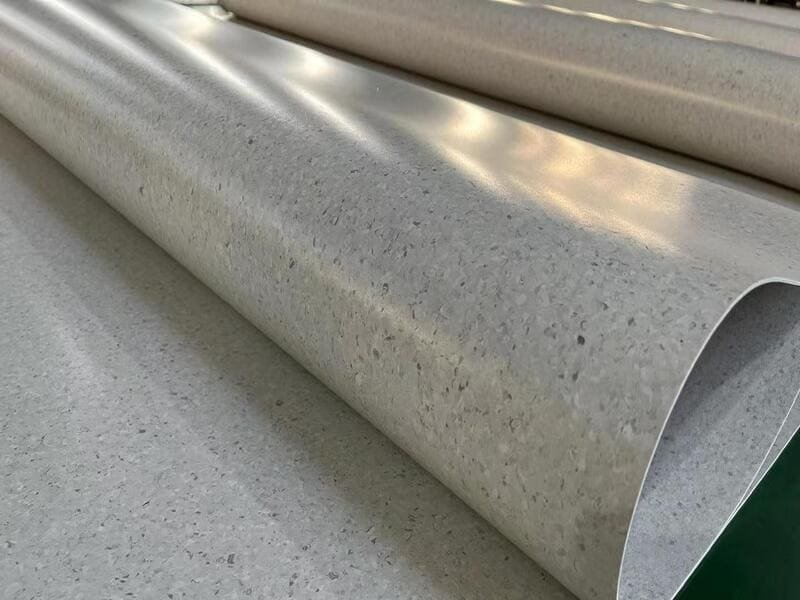
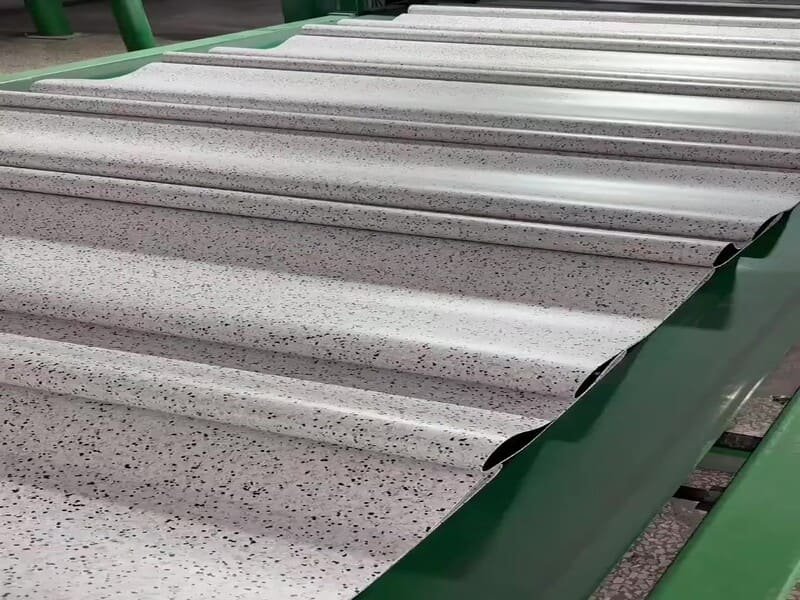
Heterogeneous flooring relies on a thin, clear wear layer on top. When that thin layer wears away, the floor is ruined. Homogeneous flooring is very different. It is a solid PVC compound all the way through. As a technical partner to many commercial projects, I always advise clients to utilize this physical property. You can mechanically scrub and restore a homogeneous floor for decades. But this means the quality of that single layer is vital. If we use cheap materials, the whole floor degrades fast, no matter how thick it is. We engineer our floors to maintain structural integrity across the entire cross-section, ensuring consistent performance.
| Typ podłogi | Struktura | Wear Resistance Strategy | Maintenance Potential |
|---|---|---|---|
| Jednorodny | Single uniform layer | Entire thickness acts as wear layer | High (can be buffed and renewed) |
| Heterogeniczny | Multiple distinct layers | Relies on clear wear layer on top | Low (must replace when top layer wears) |
This solid structure brings us to a common trap buyers fall into. Many people think more material simply equals more time before replacement.
Is the Math of Wear and Tear Directly Linked to Thickness?
Logically, a thicker floor provides more material to wear down. In extreme high-traffic areas, this can mean a longer potential life. But a 3.0mm floor will not last longer than a 2.0mm floor if the underlying material quality is poor.
The Point of Diminishing Returns
It is easy to do simple math and think 3.0mm is much better than 2.0mm. But in real-world engineering, this is false. There is a point of diminishing returns. Thicker flooring can sometimes be more prone to heavy static indentation. If you place heavy medical beds or industrial machinery on a thick floor that lacks density, it will dent permanently. During product development, my team tests the indentation limits of different thicknesses. We often find that a dense 2.0mm floor resists dents much better than a soft 3.0mm floor. You must balance thickness with material hardness to get the best result.
| Flooring Thickness | Traffic Suitability | Indentation Risk (if low density) | Efektywność kosztowa |
|---|---|---|---|
| 2.0mm | High traffic (standard) | Niski do średniego | Wysoki |
| 3.0mm | Extreme heavy rolling loads | Wysoki | Niski |
So if thickness does not guarantee success, we need to find what does. The real secrets to a long-lasting floor hide in the formulation details.
What Are the Hidden Factors That Actually Determine Service Life?
Raw material quality, proper subfloor preparation, and routine maintenance truly determine the lifespan. High-quality virgin PVC resin outlasts cheap fillers. A perfect subfloor prevents cracking, and regular dry buffing with PUR coatings protects the surface.
The Core Drivers of Durability
As an engineer, I always check the PVC to filler ratio first. A 2.0mm floor made with high-quality virgin PVC resin will easily outlast a 3.0mm floor packed with cheap calcium carbonate (chalk) fillers. We look at abrasion resistance groups, aiming for Group T over Group P. Plasticizer migration is another major issue with cheap materials, causing floors to become brittle over time. Also, subfloor preparation is the silent killer of floors. Even a premium 3.0mm floor will fail quickly on a damp, uneven concrete base. Finally, the factory-applied polyurethane (PUR) coating and your daily maintenance routine keep the floor intact. We design these elements together.
| Czynnik | Impact on Service Life | Zalecenia techniczne |
|---|---|---|
| PVC to Filler Ratio | Determines abrasion group (T vs P) | Maximize virgin PVC, minimize chalk filler |
| Przygotowanie podłoża | Prevents bubbling and cracking | Ensure a flat, dry, and clean concrete base |
| PUR Coating | Seals pores and reduces chemical damage | Use PUR+ coatings and dry buff regularly |
Now that you know the hidden factors, you face a practical choice. You must decide which specification actually fits your specific project needs and budget.
How Do You Choose the Right Thickness for Your Project?
Choose standard 2.0mm for 90% of commercial applications, as it offers the best balance of cost and durability. Upgrade to 2.5mm or 3.0mm only for specialized areas with extreme high traffic or constant heavy carts.
Matching Specs to Application
I help clients perform a cost-benefit analysis before they buy. The golden rule in our industry is simple: buy the best quality 2.0mm you can afford, rather than the cheapest 3.0mm on the market. Standard 2.0mm homogeneous vinyl is ideal for schools, standard hospital wards, offices, and retail stores. It provides excellent long-term durability when installed correctly. You only need to spend more on 2.5mm or 3.0mm in specific use cases. Examples include hospital corridors with constant heavy carts, industrial cleanrooms, or manufacturing zones that require aggressive daily cleaning. Partnering with a technical expert early in your design phase ensures you do not waste your budget.
| Obszar zastosowań | Zalecana grubość | Wymagania podstawowe |
|---|---|---|
| Classrooms & Offices | 2.0mm | Standard wear resistance, cost control |
| Hospital Wards | 2.0mm | Easy cleaning, hygiene, moderate traffic |
| Heavy Industry / Corridors | 2.5mm – 3.0mm | High impact resistance, heavy rolling loads |
Making the right choice protects your investment and ensures safety for years to come. Do not let outdated myths ruin your project budget and long-term planning.
Wnioski
Thickness matters, but only when paired with high-quality PVC resin and flawless installation. Prioritize material density and proper maintenance over extra millimeters for true long-term durability.
Message me directly for a free technical consultation, product samples, or a detailed specification sheet tailored to your project!