


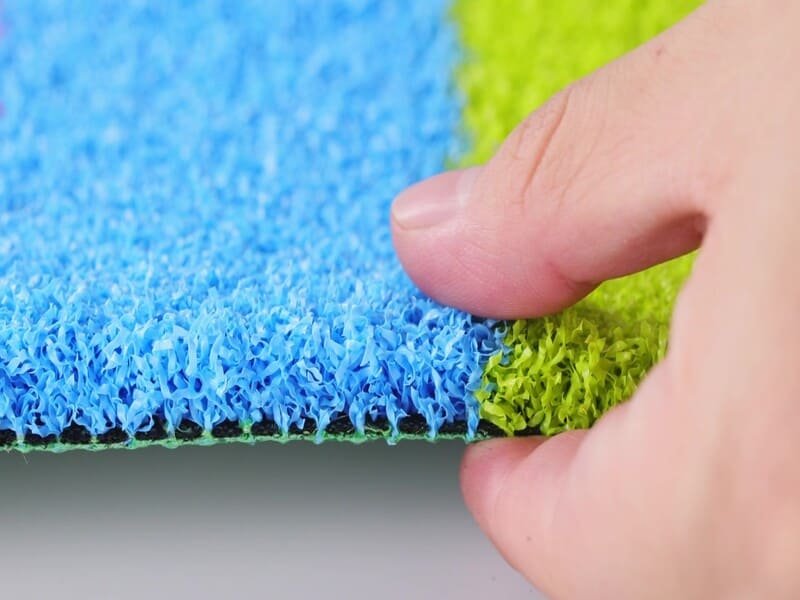
Roll width determines your gym turf efficiency by dictating the number of seams and the volume of scrap material produced. Choosing a width that aligns with your room dimensions can reduce material waste by 20% and significantly improve the floor’s structural integrity under heavy use.
From my years on the production floor, I see gym owners make the same mistake: they buy based on total square footage. This approach fails because turf is a linear product, not a liquid one. If your room is 14 feet wide and you buy a 12-foot wide roll, you have a 2-foot gap. You must buy a second roll to fill that gap, which often leaves you with 10 feet of wasted material across the entire length of the room. This "phantom waste" is where budgets disappear. As an engineer, I focus on the "Effective Yield" of a roll. We optimize the tufting process to ensure the primary backing can handle specific widths without bowing, which is vital for seam alignment. If the roll width is not matched to the layout, you face higher costs and more failure points.
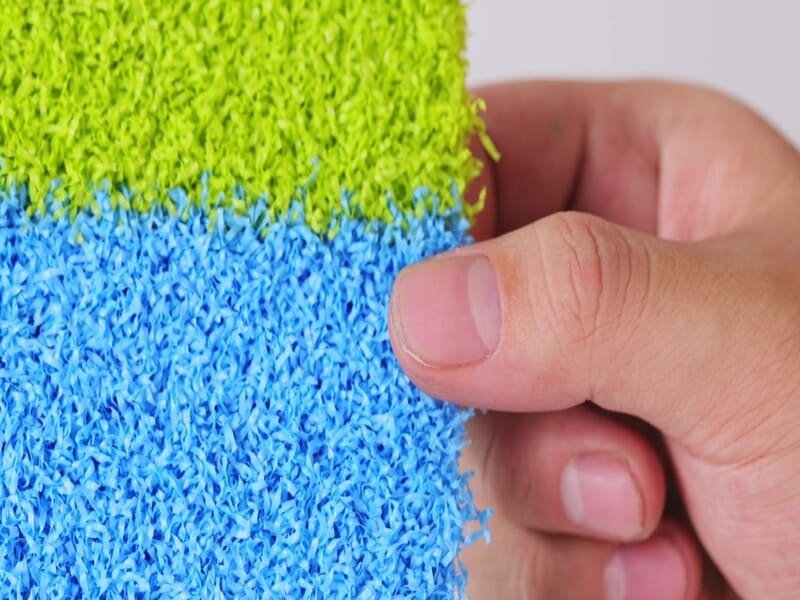
The following sections will show you how to choose the right dimensions and plan your layout like a pro.
What Are the Standard Industry Roll Widths for Gym Turf?
Standard industry widths are typically 6 feet, 12 feet, and 15 feet to match common construction modules. These sizes help manufacturers maintain consistent tension during the tufting process and ensure the pile height remains uniform across the entire surface for better performance and safety.
| Standard Width | Primaire gebruikssituatie | Engineering Advantage |
|---|---|---|
| 2 Meters (approx. 6.5ft) | Sled Tracks & Speed Lanes | High precision, easy to handle without heavy machinery. |
| 4 Meters (approx. 13ft) | Functional Fitness Zones | Balanced width for medium-sized facilities to reduce seams. |
| 15 Feet (Specialty) | Professional Stadiums & Large Gyms | Minimizes seams in massive open spaces but requires forklifts. |
In our factory, we often suggest custom widths when a project exceeds 500 square meters. Why? Because the cost of a custom production run is often lower than the cost of 15% material waste. For example, if you are designing a high-end facility with a 24-foot wide main floor, two 12-foot rolls are perfect. However, many "standard" US rolls are actually 12.3 feet to allow for seam trimming. If you don’t account for that extra 0.3 feet during your planning, your rolls will not fit the space as intended. I always tell my clients to look at the "net usable width" after trimming the factory edges. This is the difference between a clean finish and a messy installation.
Understanding these base sizes is just the start of your cost-saving journey.
How Does Roll Width Directly Create or Prevent Material Waste?
Roll width affects waste by creating a gap between the purchased area and the actual room dimensions. If the room width is not a multiple of the roll width, the "leftover" part of the final roll becomes scrap that you still paid for at full price.
| Room Width | Roll Width Used | Total Drops | Calculated Waste |
|---|---|---|---|
| 15 Feet | 12 Feet | 2 Drops | 25% (9ft of scrap) |
| 15 Feet | 15 Feet | 1 Drop | 0% (Perfect fit) |
| 20 Feet | 12 Feet | 2 Drops | 16% (4ft of scrap) |
I once worked on a project where the client insisted on 12-foot rolls for a 25-foot wide space. They needed three "drops" (lengths of turf). This resulted in an 11-foot wide strip of scrap running the entire 60-foot length of the gym. That is 660 square feet of high-quality turf going into a dumpster. As an engineer, I see this as a failure in design optimization. Total loss occurs when the off-cuts are too narrow to be used for sled tracks or smaller areas. We use specialized software to calculate the "nesting" of these pieces, but the best way to save money is to avoid the waste at the manufacturing stage by selecting the correct width from the start.
Waste is a financial burden, but poor seam planning is a functional risk.
Why Is Seam Planning Critical for Gym Durability and Safety?
Seams are the weakest points of any turf installation because they break the continuity of the primary backing. Improper seam planning leads to trip hazards, especially under the lateral force of a sled, and creates visible lines that ruin the "seamless" professional look of a modern fitness center.
| Functie | Impact of High Seam Count | Technische oplossing |
|---|---|---|
| Structurele integriteit | Higher risk of delamination or "buckling" under heavy sleds. | Place seams parallel to the direction of sled movement. |
| Esthetiek | Visible "valleys" or "peaks" at the join lines. | Ensure pile direction (nap) is identical for all rolls. |
| Onderhoud | Dirt and sweat accumulate in poorly glued seams. | Use 30cm wide seam tape with high-grade polyurethane glue. |
In my experience, the biggest mistake is placing a seam right where a sled turns or where athletes perform high-impact plyometrics. The friction from a 200lb sled being pushed will eventually pull even the best adhesive apart if the seam is in the wrong spot. I always recommend "hiding" seams under equipment rows or along the edges of the room. Another factor I watch closely in production is the "edge curl." If the roll is too wide and the backing is too light, the edges will lift. This is why we use a heavy-duty secondary coating (usually polyurethane or latex) to ensure that when you join two rolls, they stay flat and flush forever.
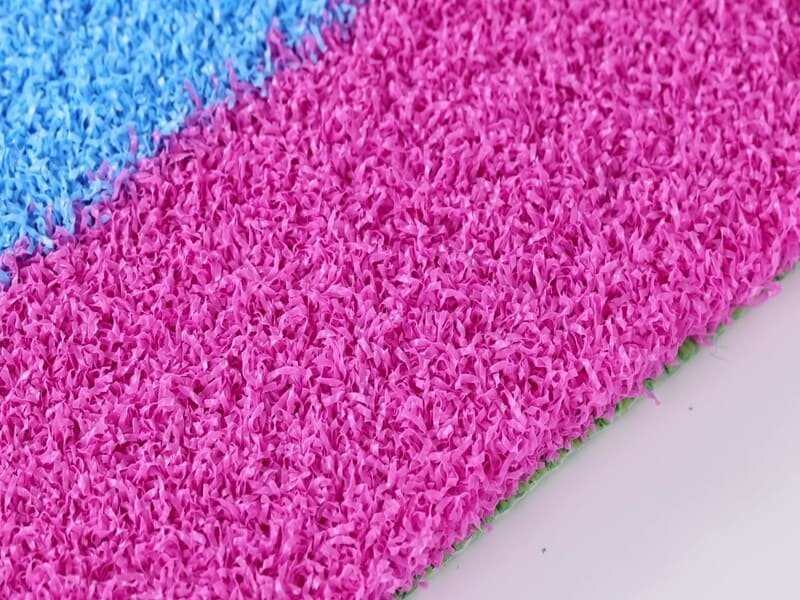
Poor seam planning will stop your customers from enjoying the space and increase your repair costs.
How Do You Calculate the Perfect Efficiency Ratio for Your Layout?
To calculate the efficiency ratio, divide the total room width by the roll width to find the number of "drops," then compare the total square footage purchased to the actual floor area. An efficiency ratio of 0.95 or higher is considered excellent in professional gym manufacturing.
| Stap | Actie | Logic |
|---|---|---|
| 1 | Room Width / Roll Width | Determines how many strips of turf you need. |
| 2 | Round Up to Nearest Whole Number | You cannot buy a "half-width" roll from a factory. |
| 3 | (Total Purchased / Actual Area) – 1 | Gives you the exact percentage of waste. |
Avoid "cross-seams" at all costs. A cross-seam happens when you try to save money by using a scrap piece to fill a hole at the end of a run. This creates a "T-junction" where the grass fibers will never blend correctly. From a manufacturing perspective, the grain of the turf (the direction the fibers lean) is set during the heat-setting process in the oven. If you flip a scrap piece 90 degrees to fill a gap, it will look like a completely different color due to light reflection. I always tell clients that it is better to have 5% more waste than to have a single cross-seam that makes the whole gym look cheap and unprofessional.
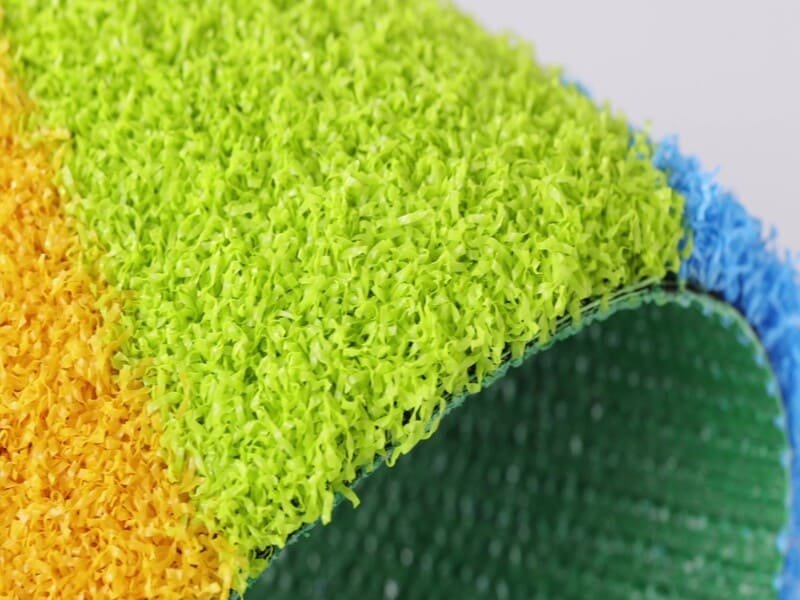
Getting the math right prevents the common pain points of overspending and under-performing floors.
Conclusie
Choose a roll width that limits seams in high-impact zones and keeps material waste below 10%. Proper planning saves more money than finding the cheapest price per square foot.
If you are planning a gym layout and want to avoid wasting money on scrap material, send me a private message! I can help you calculate the exact roll widths and seam maps for your specific floor plan to ensure a professional, durable finish.