


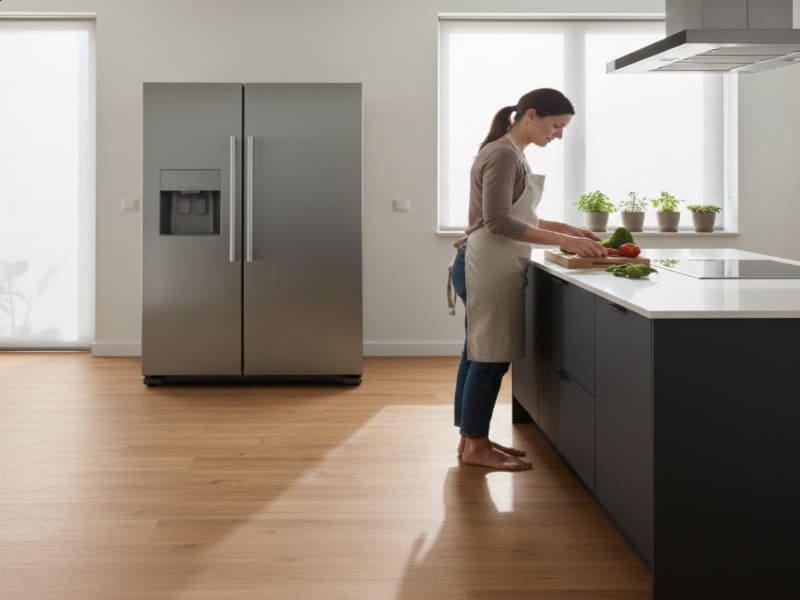
The best flooring for feet and joints combines impact absorption, stable cushioning, warmth, and slip resistance so the body stays comfortable during daily use.
I work as a custom project specialist for flooring beneficial for feet and joints. I test rubber, cork, vinyl, foam, and underlayment systems in real projects and in the lab. I look at force reduction, indentation, rebound, and grip. I see how each floor changes heel pressure, knee load, and lower-back tension over time. In gyms, senior apartments, and family homes, I have seen the same pattern. Hard floors look clean but punish the body. Joint-friendly flooring uses engineered layers to spread impact and to support the foot in a controlled way. This type of floor feels softer, but it is not weak. It protects the user and extends the life of the building at the same time.
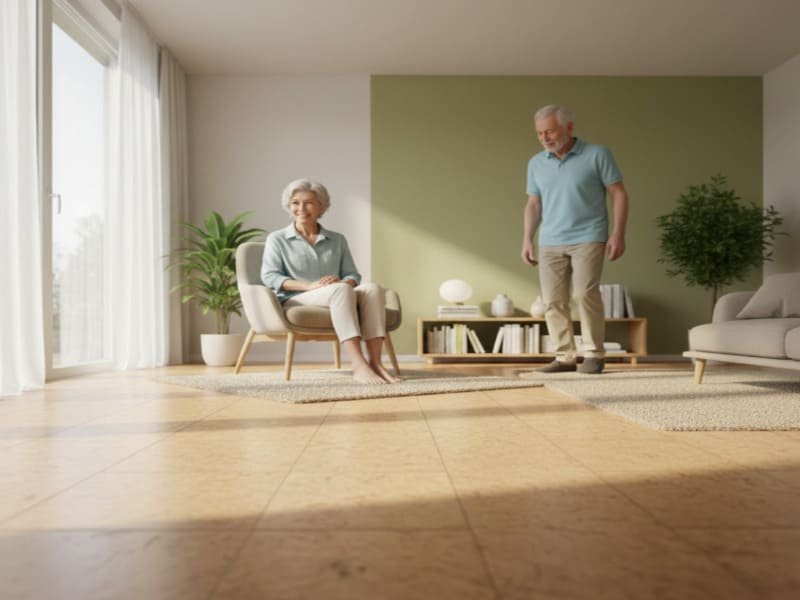
If you want to protect your body and also make better product choices, you can follow the questions and answers below step by step.
Why Does Comfortable Flooring Matter More Than Ever?
Comfortable flooring matters because long hours on hard surfaces now cause more joint pain, heel pain, and fatigue for many people.
| Problem you see today | How hard floors make it worse | How joint-friendly floors help |
|---|---|---|
| Plantar fasciitis | High heel impact | Lower peak force |
| Knee and hip pain | No shock absorption | Controlled cushioning |
| Fatigue at work | Rigid support only | Anti-fatigue response |
| Elderly falls | Slippery cold surfaces | Warm, grippy, soft surfaces |
Deeper look at why comfort is now a performance requirement
As more people stand for work, train at home, and age in place, flooring is no longer just a design choice. It becomes a health tool. I often review failed projects where the client picked tile, polished concrete, or bare SPC because it looked “premium.” After a few months, the staff or family members complain about heel pain, stiff knees, or simple fear of falling. In contrast, when we install flooring beneficial for feet and joints, such as rubber or cork with the right density, the feedback changes. Users describe less end-of-day pain, better balance, and more confidence when they move. From an engineering view, this happens because the floor absorbs part of the energy that used to go straight into cartilage and tendons. From a product development view, this means comfort is not a “nice add-on.” It is a core performance spec.
You could stop here and simply avoid very hard floors, but if you keep reading you can understand which design factors matter most.
What Key Factors Make a Floor Easy on Your Body?
A floor is easy on feet and joints when it reduces impact, gives stable cushioning, stays warm, and offers safe slip resistance.
| Factor | What it means in simple terms | Why it matters for joints |
|---|---|---|
| Shock absorption | How much impact the floor takes | Lowers load on cartilage |
| Cushioning density | How the material compresses under load | Controls support vs. softness |
| Anti-fatigue | How it responds to long standing | Reduces muscle strain |
| Thermal comfort | How warm the surface feels | Reduces stiffness |
| Slip resistance | How well shoes and feet grip the floor | Helps prevent falls |
How I evaluate each factor in real projects
When I design flooring beneficial for feet and joints, I do not look at “soft” or “hard” only. I break the problem into these factors. For shock absorption, I look at force reduction values from test machines that simulate walking or jumping. This same principle defines what are the benefits of shock absorbing basketball flooring, where high-impact protection is critical for safety. Rubber often reaches above 20–30% force reduction. Bare SPC or tile usually sits close to zero. For cushioning, I check both thickness and density. A 2 mm high-density foam can be more supportive than a 4 mm low-density foam, because it resists bottoming out. For anti-fatigue behavior, I stand on samples and also look at dynamic test curves to see how quickly the material recovers after each step. Thermal comfort is simple: cold materials increase stiffness, so cork and carpet-like structures win here. For slip resistance, I check static and dynamic COF to make sure the surface is safe for seniors and kids. When I combine these factors, I can build a floor that feels soft enough, but still stable for daily life.
You could ignore these details and pick by price alone, but understanding these factors helps you design a floor that truly supports the body.
What Are the Best Flooring Types for Comfort?
The best flooring types for feet and joints are rubber, cork, and luxury vinyl with attached foam, followed by carpet, foam tiles, and wood with cushion underlay.
| Rank | Flooring type | Comfort for joints | Typical use cases |
|---|---|---|---|
| #1 | Rubber flooring | ★★★★★ | Gyms, kitchens, wellness, kids’ zones |
| #2 | Cork flooring | ★★★★☆ | Bedrooms, living rooms, home offices |
| #3 | LVP/LVT with IXPE or EVA backing | ★★★★☆ | Kitchens, apartments, long standing areas |
| #4 | Carpet and carpet tiles | ★★★★☆ | Bedrooms, playrooms |
| #5 | Foam tiles (EVA/PE) | ★★★☆☆ | Baby play areas, light home exercise |
| #6 | Engineered wood with cushion underlay | ★★★☆☆ | Living rooms, offices |
Why I rank rubber, cork, and backed vinyl at the top
From my experience, rubber is the best all-round choice when you want flooring beneficial for feet and joints. A 6–10 mm rubber tile or roll with the right density gives strong shock absorption, stable support, good grip, and reasonable warmth. It works in gyms, kitchens, and kids’ play areas. Clients often ask about material durability, and understanding what are the benefits of EPDM rubber flooring helps explain why premium rubber compounds are worth the investment for long-term comfort. Cork comes next because its natural honeycomb structure houses tiny air pockets that compress and rebound in a gentle way. It feels warm and quiet, which is ideal for bedrooms and home offices. LVP or LVT with IXPE or EVA backing is a smart middle choice. The rigid core gives stability, and the foam backing adds cushioning, so it is very practical in kitchens and apartments where cleaning is important. Carpet and foam tiles feel very soft, but they can be less stable or harder to keep clean. Engineered wood with a good underlayment is a fair compromise when a client wants a wood look but better comfort.
You could just pick any “soft” floor, but using this ranking helps you match comfort level with the real use of each room.
Which Flooring Types Should You Avoid If You Have Joint Pain?
If you already have joint pain, you should avoid ceramic tile, polished concrete, and thin rigid core vinyl without backing.
| Flooring type | Comfort level | Main problem for joints |
|---|---|---|
| Ceramic or porcelain | Very low | Hard, cold, high impact |
| Polished concrete | Very low | Zero shock absorption |
| Thin SPC with no foam | Very low | Feels like standing on stone |
Why hard, cold, and bare rigid floors cause trouble
I often visit sites where people complain about knee pain or heel pain after long use of tile or concrete floors. These materials have almost no elastic response. When your heel strikes them, the impact energy has nowhere to go but back into your body. The cold surface also keeps leg muscles tight, which reduces natural shock absorption from the body itself. Thin SPC without backing feels similar. It is sold as “vinyl” so people think it is soft, but the stone-plastic core is extremely stiff. Without any foam backing, it behaves like a thin stone board. For users with arthritis, chronic knee issues, or plantar fasciitis, these surfaces can make symptoms worse. In some projects, I keep tile or concrete for design or building reasons, but I always add high-density mats, rugs, or a floating comfort layer on top.
You could still choose these hard floors for looks, but your joints will likely pay the price over time.
What Is the Best Flooring for Different People and Needs?
The best flooring depends on who uses the space: seniors, people with foot pain, home cooks, athletes, kids, or apartment residents.
| User group | Best comfort choice | What to avoid |
|---|---|---|
| Seniors / elderly | Rubber, cork, vinyl with backing | Tile, polished concrete |
| Plantar fasciitis / heel pain | Rubber, foam tiles, cork | Bare SPC, thin laminate |
| Long kitchen standing | Vinyl with backing, rubber, anti-fatigue mat | Bare tile without mats |
| Home gym users | Rubber tiles or rolls, EVA for light use | SPC, wood, tile |
| Kids’ rooms | Carpet tiles, EVA foam, cork | Hard wood, SPC |
| Apartment dwellers | Vinyl with foam, cork, rubber | Hard ceramic without rugs |
How I match flooring systems to real people
When I design a solution, I first ask who will use the space and how. For seniors, stability and grip matter as much as softness, so I use rubber or cork with a warm, non-glossy finish. For users with plantar fasciitis, I focus on heel cushioning and sometimes add local anti-fatigue mats at key spots like sinks or workbenches. For home cooks who stand a lot, I design vinyl with strong IXPE backing and add one or two high-density kitchen mats. For gyms, I use rubber tiles or rolls in 8–12 mm for free weights and sometimes add extra underlay under platforms. For kids’ rooms, I balance softness and cleanability with carpet tiles or foam layers that can be replaced. In apartments, I often need both comfort and acoustic performance, so I choose systems with tested IIC and STC ratings to reduce noise transfer between floors.
You could ignore these user groups and choose one generic floor, but matching material to user needs gives far better comfort and safety.
What Is the Best Flooring for Each Room?
Each room has a different “best” flooring for joint comfort, based on how people move and how often they stand there.
| Room type | Best joint-friendly option | Why it works there |
|---|---|---|
| Kitchen | Vinyl with backing, rubber, sealed cork | Anti-fatigue and easy to clean |
| Living room | Cork, carpet tiles, wood with cushion underlay | Warm, soft, and welcoming |
| Bedroom | Cork or carpet tiles | Warmth and quiet comfort |
| Home office | Cork or vinyl with underlay | Good for sit–stand workstations |
| Gym or workout area | Rubber tiles or rolls | High shock absorption and grip |
| Kids’ play area | EVA foam or carpet tiles | Soft and safe for falls |
How room function changes my design choices
I never copy one flooring type across the whole building when joint comfort is a priority. In kitchens, I expect long standing and risk of spills, so I combine anti-fatigue performance, water resistance, and easy cleaning, which points to vinyl with backing or rubber. In living rooms and bedrooms, people often walk barefoot, so I choose cork or carpet-like systems that feel warm and soft. In home offices with sit–stand desks, I use cork or vinyl with a quality underlay so the user can stand for longer periods without heavy fatigue. In gyms, I focus on impact and noise, so rubber dominates my designs. For kids’ play areas, I expect falls and rough play, so EVA foam or carpet tiles with cushioned backing are more appropriate. Each space gets its own comfort profile.
You could install one material everywhere to simplify logistics, but tailoring by room gives much better long-term comfort and satisfaction.
How Can You Make Hard Floors Softer without Replacing Them?
You can make hard floors softer by adding anti-fatigue mats, thick rugs with dense padding, or a high-density underlayment layer.
| Method | Where to use it | Comfort effect |
|---|---|---|
| Anti-fatigue mats | Kitchens, laundry, workshops | Strong local cushioning |
| Area rugs with thick pads | Living rooms, bedrooms | Softer step and more warmth |
| High-density underlayment | Under vinyl, laminate, wood | Overall comfort improvement |
How I upgrade comfort on existing hard floors
Many clients already have tile or concrete and do not want full replacement. In these cases, I design layered solutions. For kitchens and workstations, I place high-density anti-fatigue mats where people stand the longest. Density matters more than thickness here, because very soft foam can feel unstable. In living rooms or bedrooms with tile or very hard wood, I add area rugs with dense pads underneath to increase softness and warmth. When we install a floating floor over an existing hard surface, I choose a high-density underlayment that improves both comfort and acoustics. This gives some of the benefits of flooring beneficial for feet and joints without demolition. It is also a practical step for tenants in rented spaces.
You could live with the hard floor as it is, but these simple upgrades are low-risk ways to protect your joints right now.
How Do Different Flooring Types Compare for Softness and Joint Comfort?
Different flooring types vary a lot in softness, shock absorption, warmth, grip, and overall comfort for joints.
| Flooring type | Shock absorption | Cushion feel | Warmth | Grip | Comfort summary |
|---|---|---|---|---|---|
| Rubber | High | Firm-soft | Neutral | High | Best all-round for joints |
| Cork | Medium-High | Gentle-soft | Warm | Medium | Great for living areas |
| Vinyl + IXPE/EVA backing | Medium | Medium-soft | Neutral | Medium | Good mix of comfort and care |
| Carpet / carpet tiles | Medium | Very soft | Warm | Medium | Very comfortable barefoot |
| Foam tiles (EVA/PE) | Very High | Very soft | Warm | Low | Very soft but less stable |
| Engineered wood + underlay | Medium | Medium | Warm | Medium | Balanced but not very soft |
| Tile / polished concrete / SPC | Very Low | Very hard | Cold | High | Tough on joints |
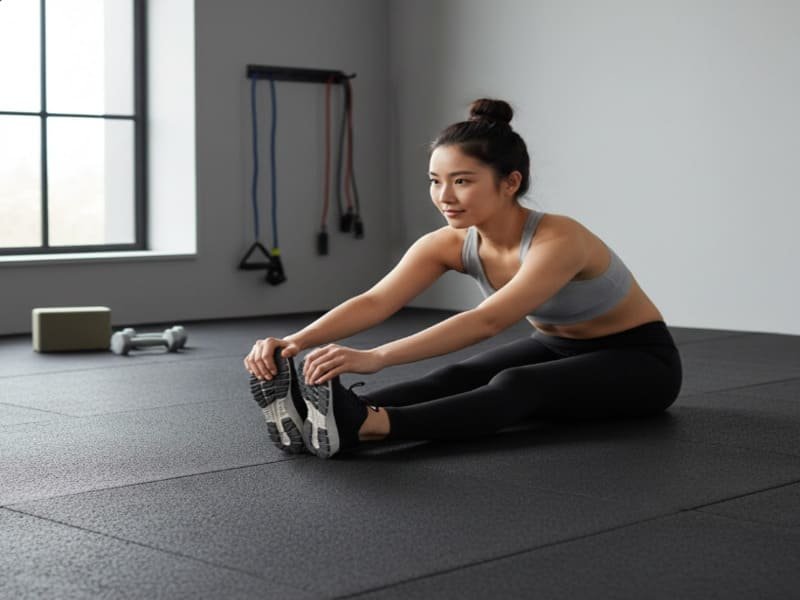
How I use comparison data in real design work
This comparison table is not only theory. It reflects test data and project feedback. Rubber and cork sit at the top of my recommendations when the main goal is protecting joints. Vinyl with backing is my most common compromise when clients want easy cleaning and a wood or stone look. Carpet and foam tiles are very soft but need more care or have lower stability, so I use them in specific zones like bedrooms or kids’ play areas. Engineered wood with underlay is a good upgrade from basic wood, but I do not call it a true “comfort system” unless the underlayment is carefully chosen. Tile, polished concrete, and bare SPC stay at the bottom. I only accept them when we can add comfort layers on top, or when the client understands the trade-offs for joint health.
You could treat all floors as similar “surfaces,” but this table shows that your choice has a real mechanical effect on the body.
What Questions Do People Ask Most About Joint-Friendly Flooring?
Most people ask about vinyl softness, ideal thickness, rubber safety, flooring for seniors, cork denting, warm floors, and ways to soften existing hard floors.
| Question | Short practical answer |
|---|---|
| Is vinyl soft and joint-friendly? | Only when it has IXPE or EVA backing |
| What thickness is best for comfort? | 8–12 mm rubber or cushioned systems work well |
| Is rubber flooring safe at home? | Yes, with proper density and surface finish |
| What is best for seniors with knee pain? | Rubber, cork, or backed vinyl with strong grip |
| Does cork dent easily? | It compresses but high-density cork recovers |
| Which floor feels warmest on bare feet? | Cork and carpet systems |
| Can I soften hard floors without replacing them? | Yes, with mats, rugs, or underlayment |
How I answer these questions as a technical partner
When clients come to me, they do not ask for “EVA at X density” or “rubber with Y force reduction.” They ask simple questions like these. I translate them into technical specs. For example, “soft vinyl” often means rigid core with a 1.5–2 mm IXPE backing, tested for both IIC rating and compression. “Safe for seniors” means a floor with enough grip, no shiny slip-prone finish, good contrast for visibility, and enough cushioning to reduce fall impact. When someone asks about warm floors, I know we should avoid bare tile in bedrooms and consider cork or carpet tiles. For denting, I set clear expectations: cork and foam compress but can still be the best choice if we handle furniture loads correctly. My role is to turn common worries into engineering choices, then produce flooring beneficial for feet and joints that fits both the budget and the real use case.
You could ignore these questions and guess, but using clear answers like these reduces risk and speeds up your flooring decision.
Conclusion
The right joint-friendly flooring spreads impact, adds stable cushioning, improves warmth, and makes daily movement safer and more comfortable.
My Role
I work as a custom project specialist and technical partner for flooring beneficial for feet and joints. I connect manufacturing, testing, and real-world use. I help clients choose materials, layer structures, and thickness combinations that protect the body while still meeting design and budget goals. I support engineers, builders, and end users by turning comfort and safety needs into clear technical specifications and production-ready solutions.
If you are planning a home, gym, clinic, or senior space and you want flooring that is truly easy on the feet and joints, my team can help.
Contact us to request a free sample kit or a custom quote for your project.
We will review your room layout, user needs, and budget, then suggest engineered flooring systems that balance comfort, durability, and performance.