


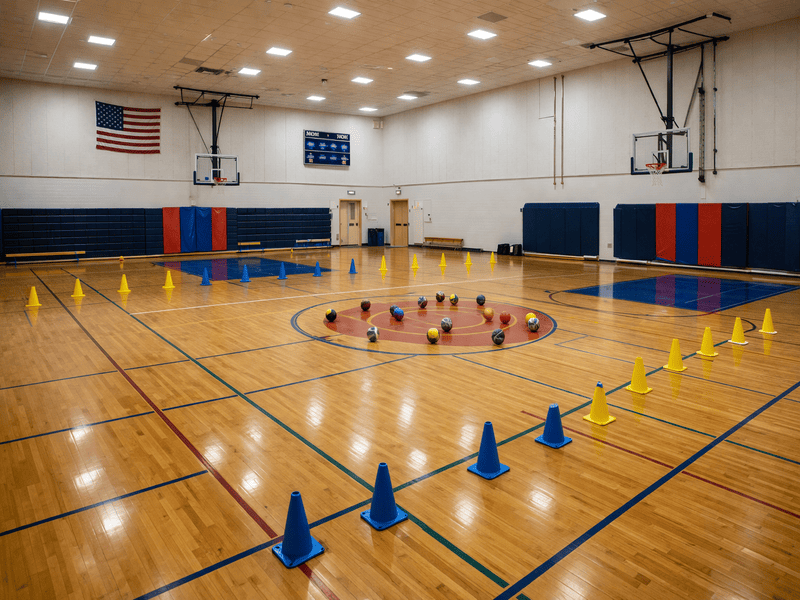
The best school gym floors enhance student safety by strictly adhering to the ASTM F2772 standard, which balances shock absorption and surface friction. To choose the "best" option, schools must match their specific athletic intensity—ranging from elementary play to high school competition—with a material that provides at least 25% to 50% force reduction.
As an Installation Director who has overseen hundreds of gymnasium projects, I know that "the best" floor isn’t a single product; it is the floor that perfectly aligns with your students’ age and your facility’s usage. A high school varsity basketball court requires different safety mechanics than an elementary multi-purpose room. The problem I often see is schools installing "average" floors that provide mediocre protection across the board, rather than "best-in-class" solutions that target their specific injury risks. True performance flooring isn’t just a surface; it’s an engineered system designed to protect growing joints while minimizing school liability. In this guide, I will show you how to identify the best solution for your specific needs and how to spot a dangerous floor before an injury occurs.
To find the best floor, we must first look at the technical metrics that separate elite surfaces from dangerous ones.
What Are the Performance Metrics That Define the "Best" Floor?
The "best" school gym floors are defined by their ASTM F2772 classification, which ranks surfaces into four classes based on shock absorption. For a floor to be considered safe for high-impact sports, it must achieve a Class 2 or Class 3 rating, providing significant force reduction to protect athletes’ joints during repetitive jumping.
| ASTM F2772 Class | Shock Absorption % | Best Use Case | Safety Level |
|---|---|---|---|
| Class 1 | 10% – 22% | Elementary PE / Multi-purpose | Basic |
| Class 2 | 22% – 34% | Middle School / Practice Gyms | High |
| Class 3 | 34% – 46% | High School Varsity / Competition | Elite |
| Class 4 | > 46% | Professional / Elite Training | Maximum |
Decoding the Best Choice for Your Age Group
In my practice, I’ve learned that a "one-size-fits-all" approach leads to injury. For a high school athlete who is 180 lbs and jumping at full height, a Class 1 floor is inadequate; it lacks the "Give" required to prevent shin splints. Conversely, for an elementary student, a Class 3 floor might feel too "mushy," potentially causing balance issues. The "Best" floor is the one that manages Vertical Deformation. We look for a surface that yields between 1.5mm and 5.0mm. Too little yield causes bone-jarring impact; too much yield creates an unstable surface that can lead to ankle sprains.
Why Friction Consistency Matters
The best floors maintain a uniform coefficient of friction across the entire surface. I often see floors that are "sticky" in the keys and "slick" on the sidelines due to uneven wear or poor installation. This inconsistency is a primary cause of ACL tears. When we install a premium system, we ensure the finish provides a sliding coefficient between 0.5 and 0.7. This allows for just enough "controlled slide" to protect the ligaments during a sudden pivot without causing the student to lose their footing and fall.

Understanding these metrics allows us to compare the best material options for different school environments.
How to Choose the Best Flooring Solution for Your School?
Choosing the best school gym floor depends on the primary use of the facility and the available budget. For elite competition, a Sprung Maple System is the best for performance; however, for high-traffic multi-purpose rooms, Vulcanized Rubber or Pad-and-Pour Polyurethane offers the best balance of safety, hygiene, and durability.
| Facility Type | Best Recommended Material | Why It Wins on Safety |
|---|---|---|
| High School Competition | Maple with Sprung Subfloor | Best "Lateral Forgiveness" for pivots. |
| Middle School / Multi-use | Pad-and-Pour Synthetic | Seamless, high shock absorption, easy to clean. |
| Elementary / Cafeteria | Cushioned Vinyl | High impact protection at a lower cost point. |
| Weight Room / Training | Vulcanized Rubber | Maximum slip resistance and equipment protection. |
The Competitive Edge: Sprung Maple
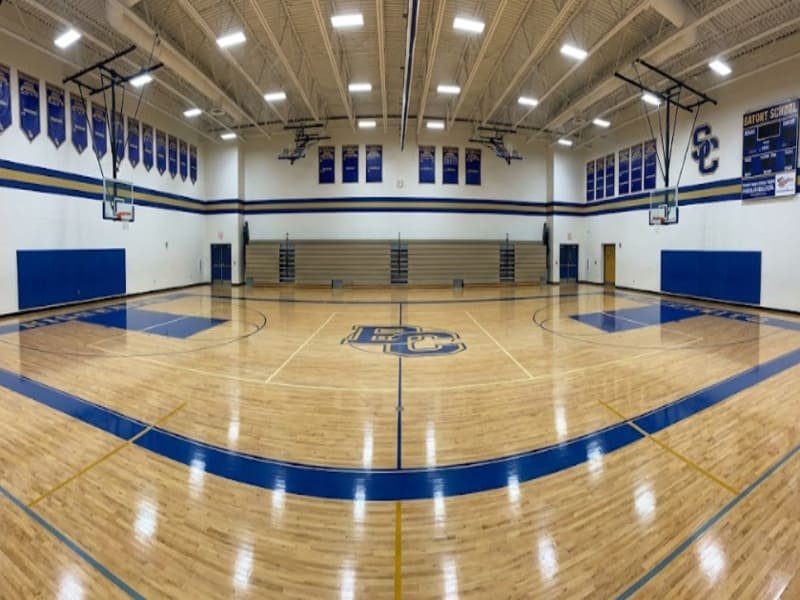
If your goal is a premier basketball or volleyball environment, a maple floor with a resilient subfloor is the gold standard. The "Best" systems utilize dual-layered plywood and rubber pads that create an air-cushion effect. This "floating" nature is what provides lateral forgiveness—the floor actually moves slightly side-to-side when an athlete plants their foot, which drastically reduces the torque on the knee joint. This is a critical factor in preventing the non-contact ACL injuries that plague high school sports.
The Versatility Winner: Synthetic Polyurethane
For schools where the gym also serves as an assembly hall or cafeteria, I often recommend a pad-and-pour system.Some schools also add a dedicated turf-style training lane for agility drills and conditioning, and you can evaluate whether that concept fits your facility in Is the Turf Gym Your New Fitness Playground.
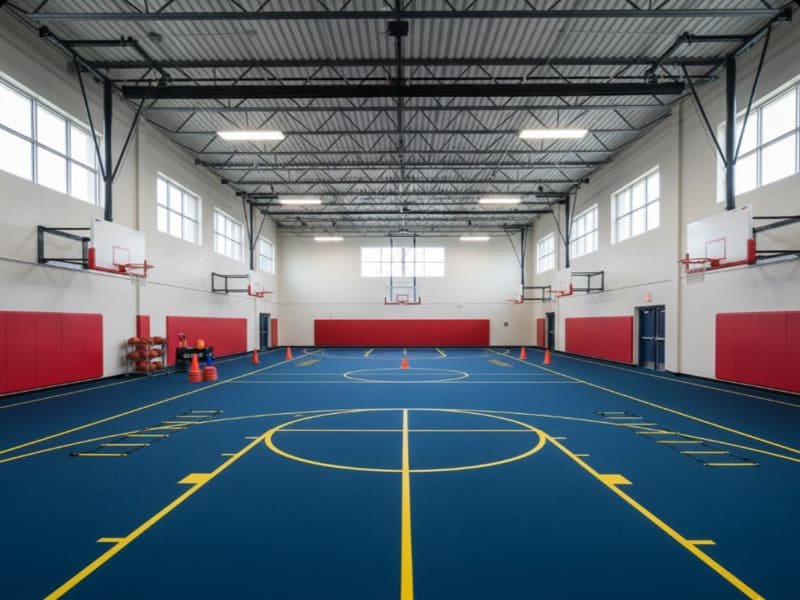
This is the best choice for "Health Safety" because it is completely seamless. There are no cracks for sweat, bacteria, or mold to hide in. From an installation perspective, these are excellent Eco-friendly Gym Flooring choices because many modern resins are low-VOC, ensuring that the indoor air quality remains safe for students. It provides a consistent Class 2 or 3 safety rating across every square inch, something wood can struggle with if not maintained perfectly.
Regardless of the material you choose, the long-term safety of the floor rests on how well it is managed after installation.
Is Your Current Floor Safe? A Quick 3-Step Safety Check
To determine if your current school gym floor is still safe, you can perform a quick "Quick Safety Check." By assessing surface grip, checking for "dead spots," and evaluating the finish quality, school administrators can identify hidden risks before they result in a student injury or a liability claim.
- The "Slide" Test: Wear a standard athletic shoe and attempt a quick pivot. If your foot "locks" instantly without any slide, the floor is too sticky (High ACL risk). If you feel like you are on ice, the floor is contaminated (High fall risk).
- The "Sound" Test: Bounce a basketball across the floor. Listen for "hollow" or "thudding" sounds. A change in sound often indicates a "dead spot" where the subfloor has failed or detached, creating an unpredictable surface for students.
- The "Visual" Test: Look at the floor against the light. If you see "dull" patches in high-traffic areas, the protective finish has worn away. This means the floor no longer meets its original friction or hygiene specifications.
The Role of Professional Maintenance
In my experience, many "bad" floors were once the "best" floors—they simply weren’t maintained. Using the wrong cleaning chemicals can turn a $100,000 investment into a safety hazard in a matter of months. I always tell my clients that the best safety strategy is a combination of the right material and a strict, manufacturer-approved cleaning protocol. This includes daily dust mopping and annual deep-cleans to keep the surface within the safe coefficient of friction.
Planning for the Future
If your floor fails any of the three tests above, it is time to consult with an engineering specialist. Sometimes a simple "screen and recoat" can restore safety, but if the subfloor is compromised, a full replacement might be the only way to protect your students and reduce your school’s liability. Investing in a high-quality, eco-friendly surface today will pay for itself through lower insurance premiums and a healthier, more active student body.

Conclusion
The best school gym floor is a balanced system that matches your students’ age with the correct ASTM safety class. By focusing on shock absorption and maintenance, you ensure the heart of your school remains a safe place for every student.
Do you have questions about which ASTM class is right for your facility? My engineering team can help you analyze your current floor’s safety or provide material data sheets for your next upgrade.
[Contact us for a free technical consultation or to request a sample kit of our eco-friendly flooring options.]