



High-performance sports flooring is defined by technical standards like Force Reduction, Vertical Deformation, and Ball Rebound. For a detailed breakdown of how these metrics are defined, tested, and interpreted across different standards, see this guide: What Metrics Define High-Performance Sports Flooring.
However, the "best" metrics depend entirely on the material type (Wood, PVC, Rubber, PU) and the specific sport application. Understanding this correlation determines athlete safety and facility ROI.
The Commercial Imperative: Why Metrics Dictate ROI and Safety
In my years managing production lines, I have seen too many facility owners make the mistake of buying based on looks rather than data. They choose a floor that looks like wood but performs like concrete. B2B purchasing decisions must prioritize technical data because the cost of failure is high. If a floor fails to meet slip resistance standards, you risk liability from injuries. In many multi-purpose sports halls, impact noise and vibration are also major compliance concerns, which are addressed in detail here: Noise Solutions for Sports Hall Flooring.
If shock absorption is too low, athletes suffer.
From a manufacturing perspective, we engineer floors to lower your "Total Cost of Ownership" (TCO). A floor with superior durability metrics might cost more initially but will last ten years longer than a cheaper alternative. When you focus on compliance with recognized global standards like ASTM F2772 or EN 14904, you are essentially buying an insurance policy for your facility. This ensures that your investment is safe, compliant, and durable.
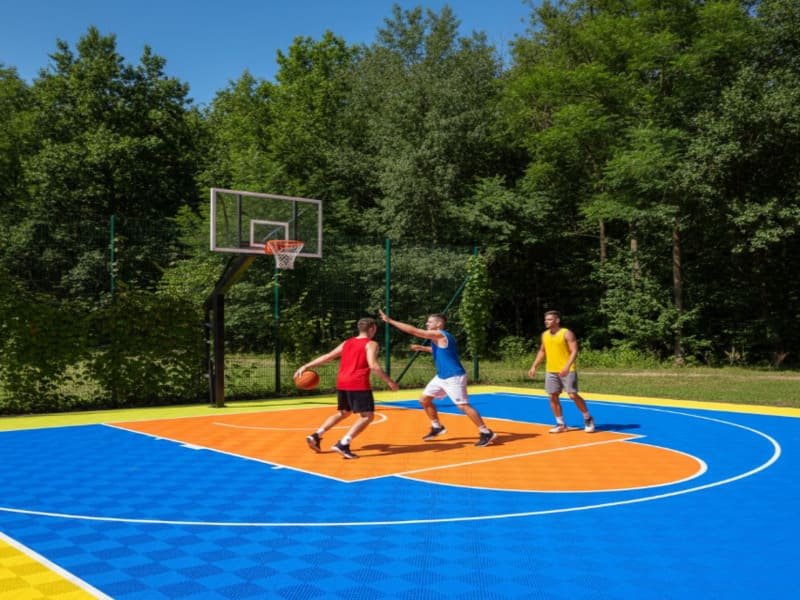
Understanding the financial impact is step one. Now, we must look at how different materials stack up against these metrics.
Material Wars: How Different Flooring Types Stack Up Against Metrics
No single material is perfect for every metric. Wood excels in ball rebound, Rubber dominates in shock absorption, and PVC offers a versatile balance. Understanding the inherent strengths and weaknesses of each material type is critical for matching the product to your facility’s needs.
As a production manager, I know that you cannot force a material to do something it is not chemically designed to do. We formulate rubber for impact resistance, while we engineer wood systems for area elasticity and ball bounce. Choosing the wrong material prevents you from hitting your target metrics, regardless of quality.
- Timber/Wood Systems: The gold standard for basketball due to high area elasticity and superior ball rebound (>90%). However, they are sensitive to moisture and have lower shock absorption compared to thick rubber.
- PVC (Vinyl): The most versatile option. We can engineer the foam backing to achieve Class 1 to Class 4 shock absorption. It offers great grip but can be susceptible to indentation from heavy static loads.
- Rubber: The king of durability and impact protection. It has excellent force reduction but often poor ball rebound, making it ideal for gyms but bad for basketball.
- Polyurethane (PU): A seamless, poured system. It is highly customizable and durable but requires precise installation to ensure consistent thickness and performance metrics.
| Feature | Solid Hardwood | PVC (Vinyl) | Rubber Rolls/Tiles | Polyurethane (PU) |
|---|---|---|---|---|
| Shock Absorption | Moderate (Area Elastic) | High (Foam Backed) | Very High (Point Elastic) | Customizable |
| Ball Rebound | Excellent (>90%) | Good (90%+) | Poor to Fair | Good |
| Durability | High (can be sanded) | Moderate | Extreme | High |
| Best Use | Competition Courts | Multi-purpose / School | Weight Rooms / CrossFit | Multi-sport / Track |
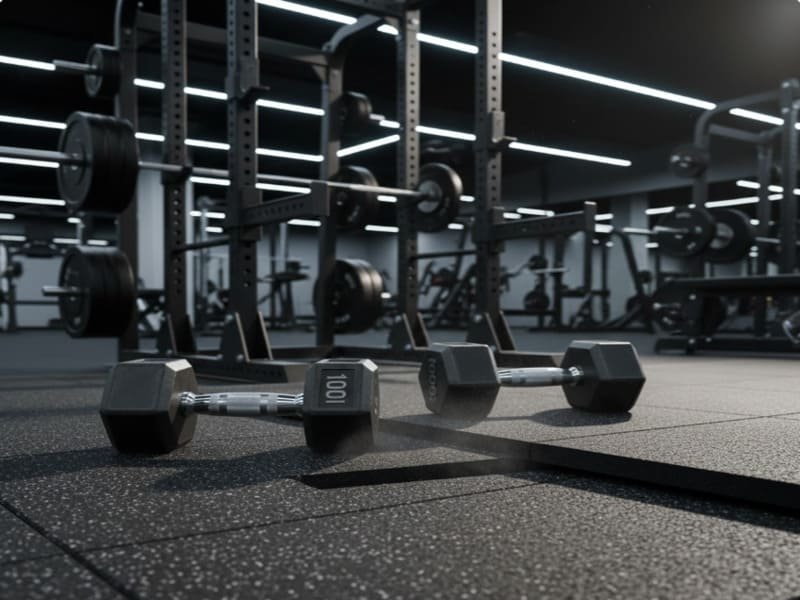
Now that you know the materials, let’s map them to the specific sports applications to see which metrics matter most.
The Application Matrix: Matching Metrics to Your Sport
Different sports require different metric profiles. A basketball court needs high energy return (rebound), while a dance studio requires high energy absorption. This section provides the specific metric ranges you should look for based on your primary activity.
In the factory, we don’t just make "sports flooring"; we make "application-specific solutions." Using a generic spec for a specialized facility is a recipe for disaster. Here is the cheat sheet I give to clients to ensure they are looking for the right numbers in the Technical Data Sheet (TDS).
- Basketball & Competition Halls:
- Focus: Ball Rebound and Stability.
- Target: Force Reduction 22–30% (ASTM Class 2/3) to provide stability for running and jumping. Ball Rebound must be ≥90% to prevent "dead spots."
- Badminton & Futsal:
- Focus: Friction.
- Target: Friction coefficient between 80–110. You need enough grip for rapid directional changes but enough slide to prevent ankle locking.
- Dance & Aerobics:
- Focus: Shock Absorption.
- Target: Force Reduction ≥45% (ASTM Class 4). The floor needs to be softer to protect dancers’ joints during repeated landings.
- Gyms & Weight Rooms:
- Focus: Stability and Indentation Resistance.
- Target: Avoid Class 4 (too soft). High vertical deformation creates an unstable lifting platform. Focus on high static load limits (>500 psi) to handle heavy equipment.
| Sport / Application | Key Metric Priority | Ideal Force Reduction | Ideal Ball Rebound |
|---|---|---|---|
| Basketball | Ball Rebound | 40% – 55% (DIN/EN) | ≥ 90% |
| Weightlifting | Stability (Low Deform.) | Low (< 15%) | N/A |
| Dance/Aerobics | Shock Absorption | High (> 45%) | N/A |
| Multi-Purpose | Balance | 22% – 40% | ≥ 90% |
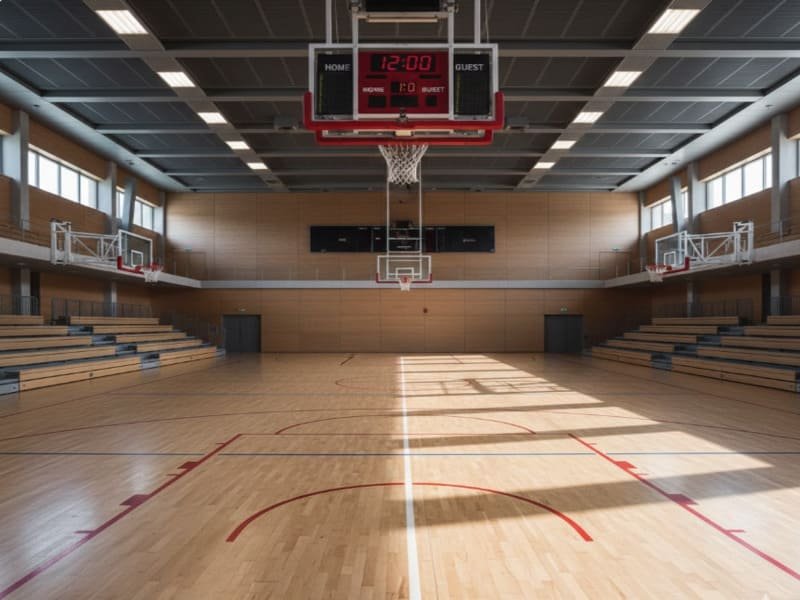
Matching the sport to the metric ensures performance. Next, we verify if the floor can physically survive the environment.
Durability Metrics for Asset Protection and Maintenance
Durability metrics like Static Load Limit and Rolling Load Resistance determine if your floor will last 5 years or 15. For commercial facilities, these numbers dictate whether heavy equipment and bleachers will destroy your investment.
In the lab, we test materials to destruction to find their breaking points. For a facility owner, "durability" isn’t an abstract concept; it’s about whether a dropped dumbbell leaves a permanent hole.
- Static Load Limit: This tests "indentation recovery." We compress the floor with a heavy load for 24 hours. For weight rooms, you need a material (usually high-density rubber) that recovers 100% of its thickness. PVC often struggles here if the foam backing is too soft.
- Rolling Load Resistance: If you use retractable bleachers or heavy cleaning machines, this metric is vital. A low rolling load rating means the floor will delaminate or bubble under the wheels.
- Abrasion Resistance: We use the Taber Abrasion test to see how quickly the surface pattern wears off. High abrasion resistance keeps the floor looking new and maintaining its grip (friction) rating for years, even with heavy foot traffic.
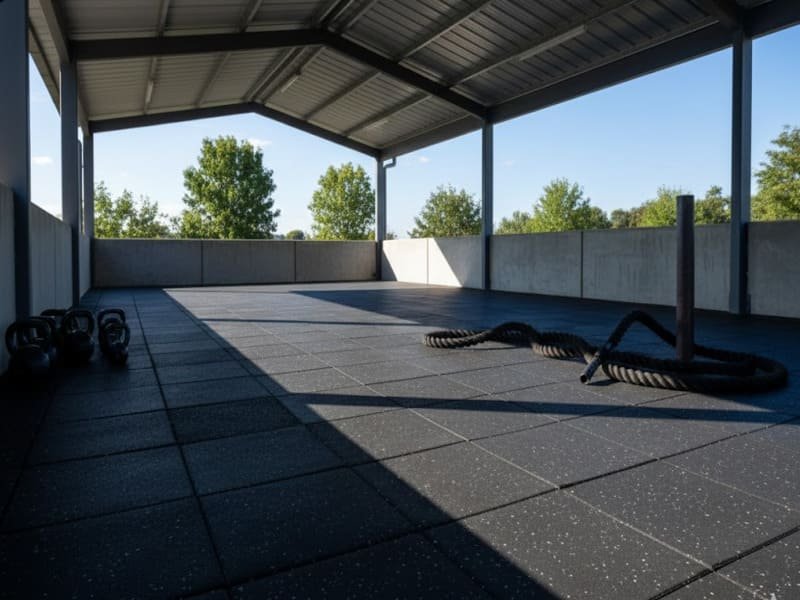
You have the targets and the durability needs. The final step is knowing how to prove the supplier is telling the truth.
Procurement Checklist: How to Validate Supplier Quality
To ensure you are getting what you paid for, you must demand verified Technical Data Sheets (TDS) and independent lab reports. Never rely on marketing brochures alone; always validate claims against third-party testing.
As a manufacturer, I can tell you that marketing teams love to round up numbers. But technical data sheets are legally binding. Here is how you protect yourself during procurement.
- Demand the TDS: Ask for the full Technical Data Sheet. Compare the "Force Reduction" and "Vertical Deformation" numbers directly against the requirements for your specific sport (as listed in the Application Matrix above).
- Verify Independent Testing: Look for reports from accredited bodies like Labosport or ASET Services. Internal factory tests are useful for us, but for you, third-party validation is the only proof that matters.
- Check Certifications: If you are building a competition court, look for FIBA (basketball), BWF (badminton), or IHF (handball) certifications. These confirm the floor meets the strict performance metrics required for professional play.
Conclusion
A high-performance floor is a precise balance of material science and application needs. By understanding the specific metrics for your sport—whether it is rebound for basketball or shock absorption for dance—and choosing the right material to match, you ensure safety and ROI.
If you need help interpreting a spec sheet or want to know which material best fits your facility’s specific metrics, feel free to contact my team. We can provide a technical consultation to guide you to the right solution.
About the Author
I am the Production Manager at a leading sports flooring manufacturing facility. I oversee the entire lifecycle of sports surfaces, from raw material formulation to final quality control. My expertise lies in matching technical production capabilities with real-world application needs, helping facility owners build safe, durable, and high-performance environments.