


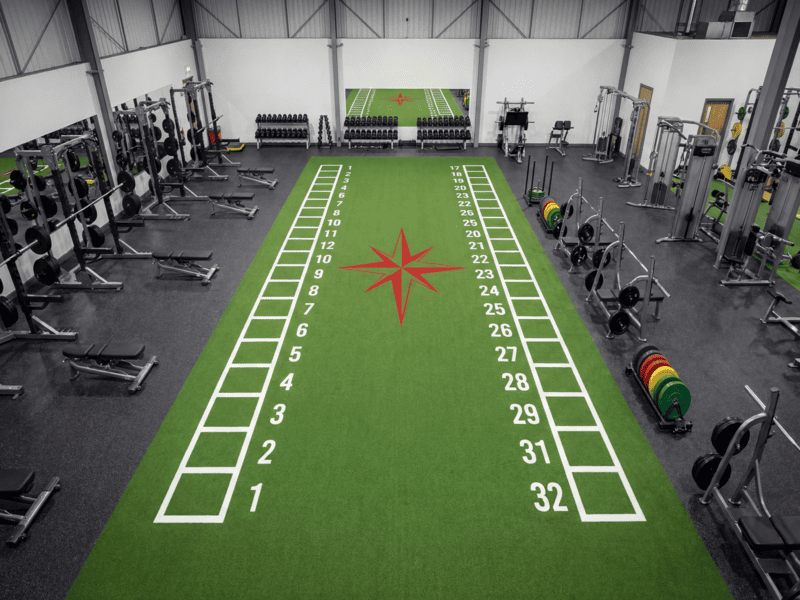
For most commercial gyms, a heavy-duty aluminum reducer is the absolute best transition strip between turf and rubber. It offers the strongest edge protection and won’t buckle under heavy sled traffic. If your priority is a high-impact zone where athletes frequently jump or land, a beveled rubber reducer is the smarter choice for safety and grip.
I’ve spent years fixing "finished" gym floors where the seam between the turf and rubber was ignored. Most people think they can just butt the two materials together and call it a day. That is a mistake that leads to frayed turf and curling rubber edges within months. Because rubber and synthetic turf expand at different rates and have different pile heights, you need a physical bridge to lock them down. Choosing between aluminum and rubber isn’t just about price; it’s an engineering decision based on whether you are dragging $300$lb sleds or hosting high-intensity plyometric classes. Aluminum wins for pure durability, while rubber wins for impact protection.
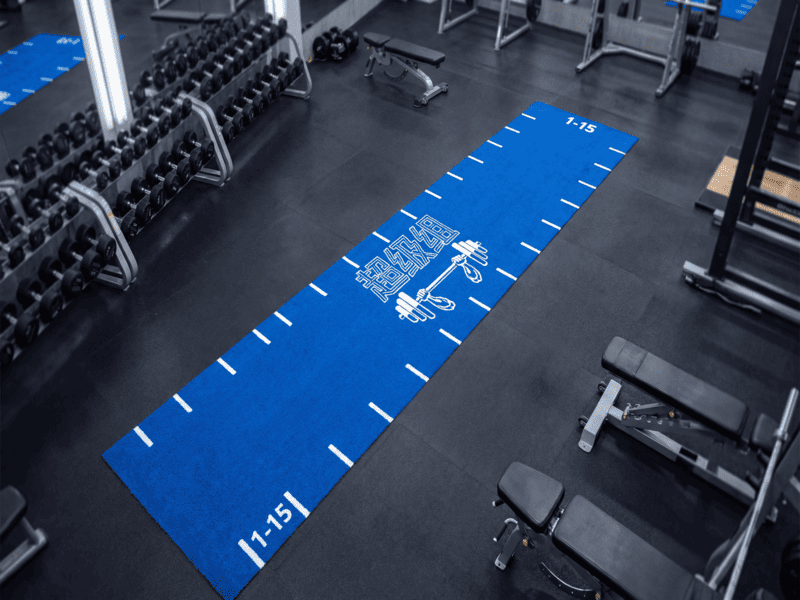
The "best" strip depends entirely on your specific gym environment. Here is the professional ranking based on thousands of hours of field performance.
What is the Best Transition Strip for Your Specific Scenario?
The right choice depends on your primary activity. For heavy equipment and sleds, aluminum is the industry standard. For home gyms or areas with minimal height differences, low-profile metal thresholds or PVC tracks offer a cleaner, more cost-effective look.
| Scenario | Best Recommendation | Why It Wins |
|---|---|---|
| Commercial Gyms | Heavy-Duty Aluminum Reducer | Toughest defense against sleds and heavy weights |
| High-Impact/Sled Lanes | Aluminum with Mechanical Fasteners | Zero movement even under high horizontal force |
| Almost-Equal Heights | Low-Profile Metal Threshold | Creates a sleek, nearly invisible transition line |
| Home Gyms | Rubber Reducer or PVC Track | Easy DIY install and easier on the budget |
| Outdoor Facilities | Stainless Steel or UV-Stable Rubber | Won’t rust or get brittle from sun exposure |
A common technical hurdle is the "height mismatch." Gym rubber usually sits between $8$mm and $20$mm, while turf pile can look much taller. However, turf compresses. If you install a strip that is too high, it becomes a speed bump that trips members during sprints. I always use a "reducer" style strip because it creates a gentle ramp. This slope is not just for looks; it is vital for safety and meeting building codes in commercial spaces.
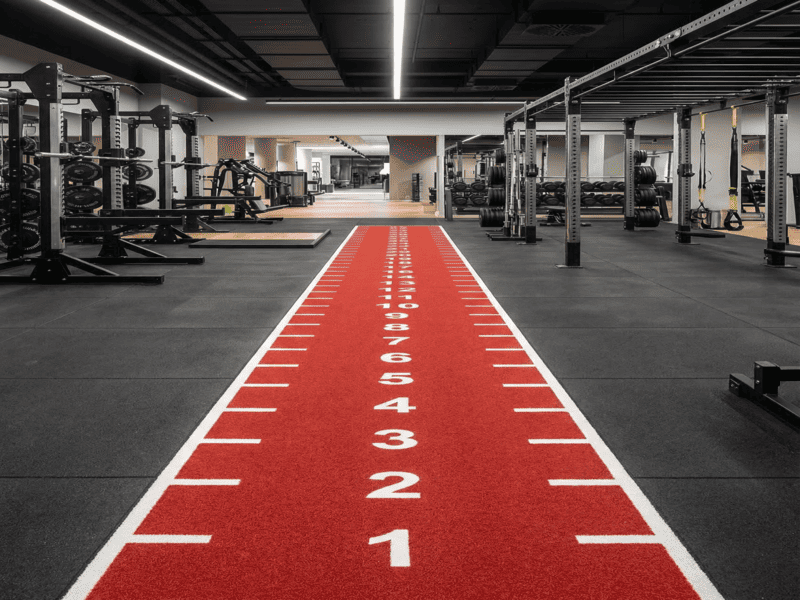
You might wonder if you can skip the strip if the materials look level. Here is why that almost always backfires.
Do You Actually Need a Transition Strip if the Heights Match?
Yes. Even if the heights are identical, you still need a transition strip to prevent "gap creep" and protect edges. Without a physical barrier, rubber flooring will eventually expand or contract, leaving a gap where sweat and dirt accumulate, which weakens the floor adhesive.
Transition Strip vs. Seam Tape
I often get asked if seam tape is enough. It isn’t. Seam tape is designed to join two identical materials. When you join turf to rubber, you are dealing with two different backings and textures. Glue often fails at this junction because of the constant lateral force of athletes pushing off the floor. A transition strip acts as a mechanical "cap" that holds the edges down from the top.
The Problem of "Creep"
Rubber is a dynamic material. If your gym gets direct sunlight, the rubber will grow. Turf, meanwhile, tends to flatten and spread. Without a transition strip to act as a permanent border, a tiny $1$mm gap can turn into a $10$mm trip hazard in a year. That gap also becomes a hygiene trap that is impossible to clean.
Protecting the Investment
The edge is the weakest point of any flooring. By installing an aluminum or rubber reducer, you are protecting the most vulnerable part of the installation. It is much cheaper to replace a $20$ dollar strip than to replace an entire $2,000$ dollar turf lane because the edges started unravelling.
| Feature | Transition Strip | Seam Tape/Glue Only |
|---|---|---|
| Edge Protection | High (Full Coverage) | Low (Exposed Edges) |
| Movement Control | Mechanical Lockdown | Adhesive Only (May Fail) |
| Visual Finish | Professional/Clean | Visible Seams/Gaps |
| Lifespan | 10+ Years | 1-2 Years |

The difference between a "good" floor and a "great" floor is in the installation details. Here is how I handle these in the field.
How to Install a Transition Strip for Maximum Longevity?
To ensure a strip lasts for years, use a combination of mechanical fasteners and high-tack adhesive. Trim the turf edges perfectly clean, align the strip to the rubber edge first, and anchor it into the subfloor every 12 inches to prevent any shifting.
- Precision Trimming: Use a fresh blade and a straight edge. Any overlap between the turf and rubber will make the transition strip sit unevenly and eventually wobble.
- The "Mechanical" Rule: For commercial jobs, glue is never enough. I drill into the concrete subfloor and use flat-head masonry screws. If a $300$lb sled hits that strip, it shouldn’t budge even a fraction of an inch.
- Expansion Gap: Leave a $2$mm gap inside the channel of the strip. This gives the rubber room to "breathe" during temperature changes without buckling the entire floor.
- The Sled Test: This is my standard check. After the adhesive cures, I drag a weighted sled across the transition ten times. If it makes a "click" sound or shows movement, we re-anchor it immediately.
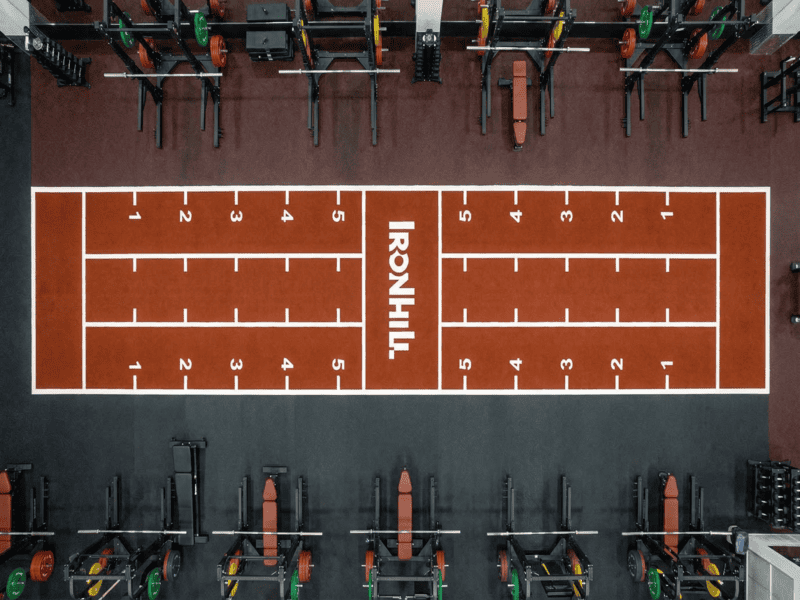
Most failures happen because people rush the measurement or pick a material that isn’t rated for gym abuse.
What are the Critical Mistakes to Avoid?
The biggest mistake is using a plastic or PVC strip in a heavy sled area—it will crack under the shear force. Another error is failing to account for the "settled" height of the turf, which results in a transition that sits too high and becomes a trip hazard.
I see a lot of people try to use cheap carpet transitions from a hardware store. These have "teeth" designed for carpet backing that will actually rip the backing of your gym turf. You must use a "smooth-surface" reducer. Also, avoid using standard indoor aluminum for outdoor setups. If it’s exposed to rain and salt, it will corrode. Always match the metal grade to the environment.
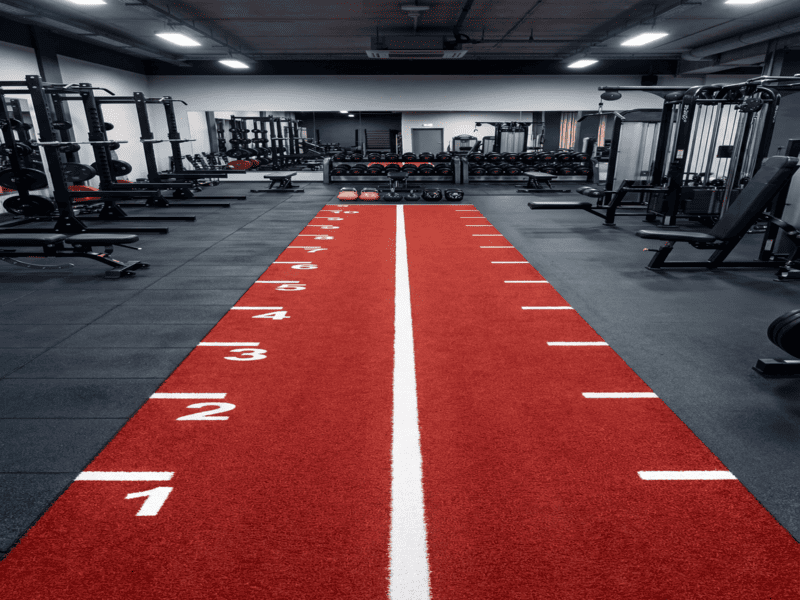
If you stick to these principles, your gym floor will stay safe and professional-looking for a decade.
Conclusion
For most commercial gym installations, a heavy-duty aluminum reducer is the best transition strip between turf and rubber because it provides the strongest edge protection, best resistance to sled traffic, and the most professional long-term finish. Rubber reducers are a smart alternative when slip resistance and softer landings matter more than maximum durability.
Need help choosing the right specs or bulk pricing for your facility? Send me a private message to get expert advice on your specific installation environment.