


Rubber gym mats are engineered by shredding recycled tires into SBR crumbs, mixing them with 6-10% polyurethane binder, and curing them under specific heat (140-160°C) and pressure (up to 300 tons). The method—whether "peeling" logs for rolls or compression molding for tiles—determines the final density and performance.
The Science Beneath the Surface
To the average eye, a gym mat is just a black slab of rubber. But to an engineer, it is a composite material system defined by specific vulcanization parameters, binder ratios, and density gradients. If you are researching gym flooring, you likely have one burning question: Why does one mat cost $20 and last a decade, while another costs $15 and crumbles in a year?
The answer lies entirely in the manufacturing variables—the pressure applied, the curing temperature, and the chemical formulation. In this deep dive, I will take you inside the factory, revealing the exact steps and technical parameters we use to turn a discarded tire into a high-performance athletic surface. If you prefer a process-focused overview from raw material to finished product, this guide explains it step by step: How Are Rubber Gym Mats Made.

Everything starts with the precise formulation of raw materials. If you want a material-level explanation of each component and what role it plays, this article breaks it down clearly: What Are Gym Mats Made Of?.
Phase 1: The Formulation (Exact Ratios Matter)?
A premium gym mat typically consists of approx. 85-90% recycled tire rubber (SBR), 10-15% EPDM color granules, and a critical 6-10% polyurethane binder load. Deviating from these ratios by even 1% can significantly alter the mat’s tensile strength and flexibility.
The Recipe for Durability
In the mixing chamber, precision is non-negotiable. We start with SBR (Styrene-Butadiene Rubber) sourced from truck tires, which provide the structural backbone. We then add EPDM granules for aesthetics and surface hardness.
However, the "secret sauce" is the Polyurethane (PU) binder—specifically MDI (Methylene Diphenyl Diisocyanate).
- The Golden Ratio: Standard commercial mats require a binder content of 6% to 8% by weight. For premium, high-impact mats, we push this to 10%.
- The Cost of Cutting Corners: Cheap mats often drop the binder content to 4-5% to save money. The result? The rubber crumbs don’t fully bond, leading to surface shedding within months.
We also monitor the Mesh Size (granule size). For a smooth finish, we use fine 20-30 mesh rubber dust. For base layers requiring drainage and shock absorption, we use coarser 4-10 mesh granules. The mixer must run at a specific RPM to ensure the binder coats every single granule evenly without creating clumps.
| Component | Typical Ratio | Function | Engineering Insight |
|---|---|---|---|
| SBR Crumb | 80-90% | Structure | 1-3mm granules provide the best balance of cushion and stability. |
| PU Binder | 6-10% | Adhesion | <6% results in crumbling; >10% makes the mat too hard. |
| EPDM | 10-20% | Surface | Virgin rubber added strictly for color and UV resistance. |

Once the mix is ready, it splits into two very different manufacturing paths: Rolling or Molding.
Path A: Making Rolled Rubber (The Peeling Process)?
Rolled rubber is created by curing a large cylinder of rubber under moderate pressure and then "peeling" it into a continuous sheet using a lathe-like machine with a precision blade. This process is efficient but produces a lower density compared to tiles.
The Cylinder and The Knife
This process reminds me of manufacturing plywood.
- Curing the Log: The rubber mix is poured into a large cylindrical mold. It is cured (baked) to solidify the binder.
- The "Peeling" (Skiving): The cured log is mounted on a spindle. A massive, extremely sharp blade runs against the rotating log, peeling off a continuous sheet of rubber.
- Thickness Control: The angle of the knife determines the thickness. We can calibrate this to a tolerance of ±0.1mm.
Tech Note: Because this process relies on the binder to hold the sheet together as it’s being pulled/peeled, the tensile strength is critical. However, since the log isn’t compressed as aggressively as tiles, rolled rubber is typically less dense.
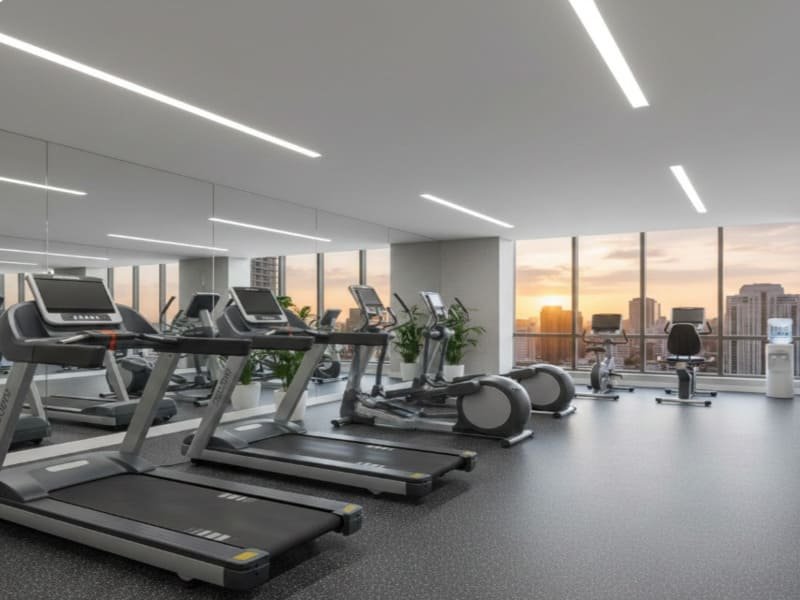
For heavy lifting and extreme abuse, we switch to a different machine entirely.
Path B: Compression Molding (Making Tiles)?
Tiles are produced by placing the rubber mix into square molds and subjecting them to extreme hydraulic pressure (up to 300 tons) and heat (160°C). This forces the granules closer together, creating a significantly denser, non-porous product ideal for heavy weightlifting.
Heat, Pressure, and Time
This is where the heavy engineering happens. Compression molding is a batch process, distinct from the continuous peeling of rolls.
- Loading: We weigh the exact amount of rubber mix (e.g., 4kg for a standard tile) to ensure consistent density.
- Compression: The mold closes, applying between 50 to 300 tons of pressure depending on the desired density.
- Curing (The Bake): The mats are held at temperatures between 140°C and 160°C.
- Dwell Time: They cook for roughly 8 to 15 minutes. This ensures the polyurethane binder fully cross-links (cures) throughout the entire thickness of the mat.
Why density matters: The high pressure eliminates air pockets between the granules. This is why a 20mm tile feels much harder and heavier than a 20mm roll. It’s also why tiles are better at absorbing the shock of a 200kg deadlift without bottoming out.
| Parameter | Specification | Impact on Quality |
|---|---|---|
| Pressure | 50 – 300 Tons | Higher pressure = Higher density & better durability. |
| Temperature | 140°C – 160°C | Too low = uncured binder (smell); Too high = burnt rubber. |
| Dwell Time | 8 – 15 Mins | Ensures the center of the mat is fully cured. |
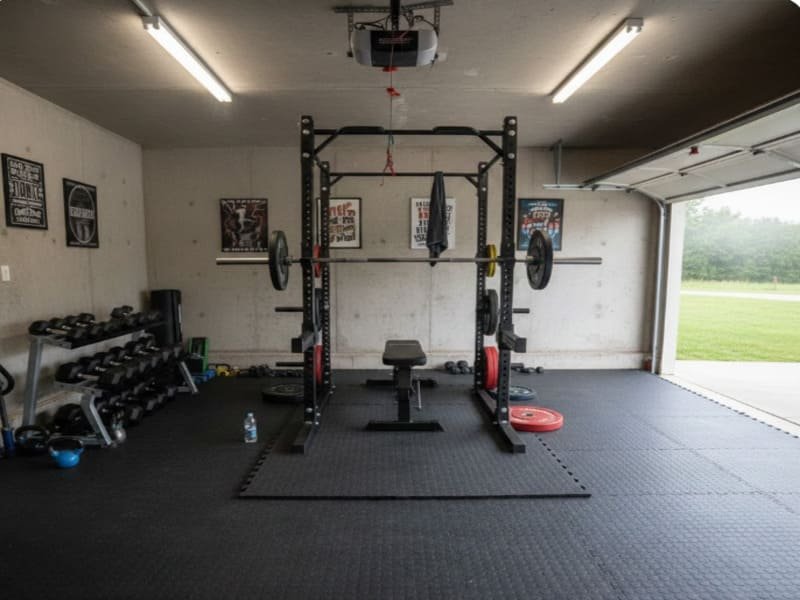
Regardless of the method, the final step is ensuring the product is install-ready.
Phase 3: Precision Finishing (Water-Jet & Skiving)?
Finished mats are cut using high-pressure water jets (50,000+ PSI) to create seamless interlocking edges. Surface skiving is often used to shave off the top millimeter, removing the "molding skin" and exposing the vibrant EPDM color.
The Final Tolerance
A mat that comes out of a hot mold isn’t perfect. It shrinks as it cools. To fix this, we use Water-Jet Cutting.
- The Tech: A stream of water mixed with abrasive garnet, pressurized to 50,000 PSI, cuts through the rubber like a laser.
- The Result: This allows us to cut complex "puzzle" interlocks with zero heat deformation. The tolerance is tight enough that when you lock two tiles together, the seam is virtually invisible.
We also perform Surface Skiving. The molding process sometimes leaves a smooth, shiny "skin" of excess binder on top. By shaving this off, we increase the coefficient of friction (grip) and ensure the color looks uniform.
Now that you understand the specs, how do you use this info to buy the right product?
The Engineer’s Buying Checklist (How to Vet Suppliers)?
Don’t just ask for the price. Ask about binder ratios, density (kg/m³), and curing times. A reputable supplier should know these technical details; if they don’t, they are likely selling low-quality, generic stock.
How to Buy Like a Pro
You now know more about rubber manufacturing than 90% of sales reps. Use this knowledge to protect your investment. When getting quotes for your gym, ask these specific questions to filter out low-quality options:
1. "What is the density of this mat in kg/m³?"
- Target: Look for 900 – 1000 kg/m³ for heavy strength training. Anything under 800 kg/m³ is too soft for heavy barbells.
2. "What is the binder percentage by weight?"
- Target: You want an answer between 6% and 8%. If they say "standard" or don’t know, be wary. Low binder content leads to crumbling surfaces.
3. "Is the surface skived or molded?"
- Insight: Skived surfaces generally offer better grip when wet. Molded skins can be slippery.
4. "Are these bonded or vulcanized?"
- Target: For maximum water resistance and hygiene (like in hot yoga), you want vulcanized. For standard weight rooms, bonded (compression molded) is sufficient and more affordable.
Conclusion
The difference between a gym floor that lasts two years and one that lasts twenty is hidden in the manufacturing data: the 300 tons of pressure, the 160°C heat, and that critical 8% binder ratio. Don’t settle for "black rubber." Demand the specs.
If you need help interpreting a spec sheet or want to compare the density of our compression-molded tiles against standard rolls, my team is ready to assist.