


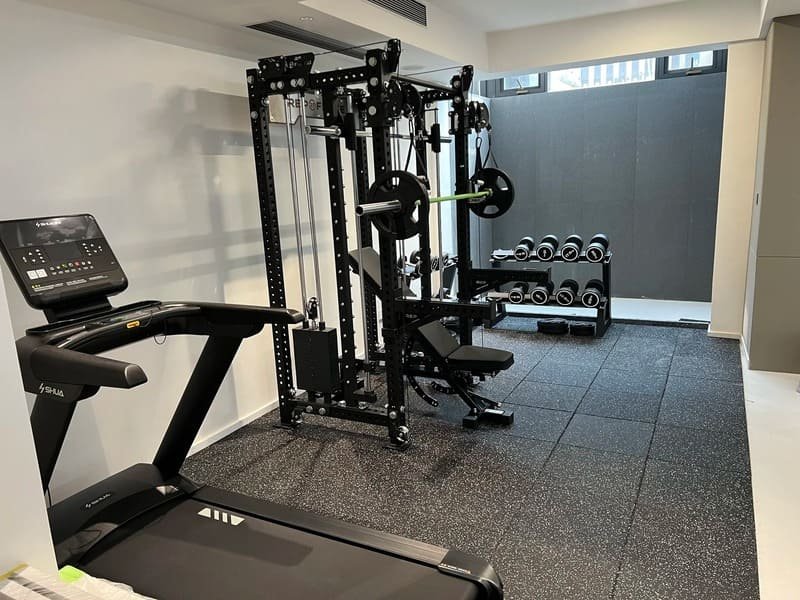
The short answer is a definitive yes. In the gym flooring industry, a perfect installation can make mid-range materials last over 10 years, while a poor installation can destroy premium virgin rubber in under 12 months. For gym owners and investors, prioritizing the installation budget is the single most effective way to secure ROI and prevent early failure.
TL;DR – The Bottom Line
- Performance Driver: Installation accounts for roughly 70% of the floor’s lifespan; material quality accounts for only 30%.
- The Risk: Even the most expensive flooring will bubble, gap, and curl if moisture testing and acclimatization are skipped.
- The Solution: Allocate budget to professional labor first, then upgrade materials with whatever is left.
As a Vinyl Plank and Rubber Flooring R&D Engineer with over 15 years in the industry, I have analyzed countless "failed" floors. The story is almost always the same: A facility owner falls in love with a premium, high-density rubber spec. While it is vital to understand how rubber density and shore hardness affect gym performance, spending 90% of your budget on the material while hiring an uncertified general contractor is a recipe for premature failure. Six months later, the seams are opening, and the floor looks cheap.
From an engineering standpoint, flooring is a system, not just a product. The rubber is merely the surface layer. The "performance" you feel—the stability, the shock absorption, the seamless look—is actually the result of the bond between the subfloor, the adhesive, and the rubber. Furthermore, in multi-story facilities, understanding how do different flooring materials affect the choice of acoustic underlay is another critical layer of the installation system that amateur teams often overlook.
Is Material Quality the Only Thing That Matters? (The Budget Rule)
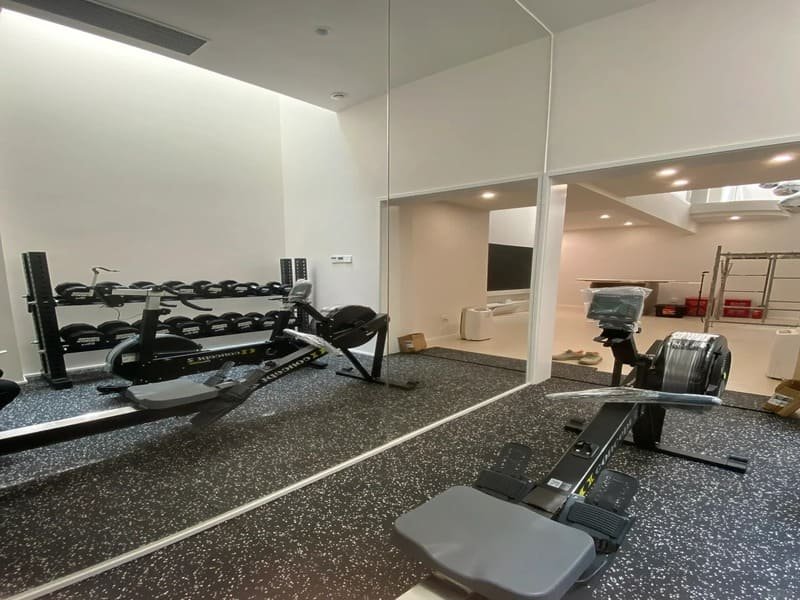
No. In fact, relying solely on material specs is a "rookie mistake" in commercial projects. To guarantee success, I recommend a specific budget allocation: if you have $100, allocate $60–$70 to site prep and professional labor, and the remaining $30–$40 to the material itself.
This might sound counterintuitive. Why spend more on the "invisible" labor than the visible product? Because the "70/30 Rule" of flooring dictates that 70% of failure is caused by site conditions and installation errors.
Let’s compare two investment strategies I often see:
| Feature | Gym A (The "Smart Allocator") | Gym B (The "Material Obsessed") |
|---|---|---|
| Strategy | 60% Labor / 40% Material | 90% Material / 10% Labor |
| Product | Standard Recycled Rubber | Premium Virgin Rubber (High Density) |
| Installer | Certified Flooring Specialist | General Handyman / DIY |
| Prep Work | Full Moisture Testing & Leveling | Skipped (Broom Cleaned Only) |
| Result | Lasts 10+ Years, Flat, Seamless | Fails in 1 Year, Gapping, Curling |
| Real Cost | One-time Investment | Double Cost (Removal + Replacement) |
Gym B thought they were buying "quality," but they were actually buying a future liability. Gym A understood that a mid-range product installed perfectly will always outperform a top-tier product installed poorly.
Why Do Most Rubber Floors Fail Before Installation Even Begins?
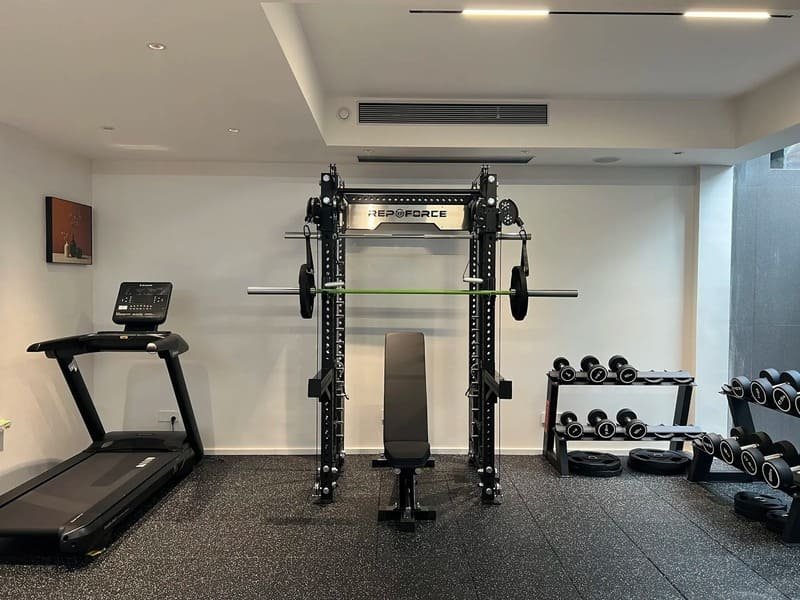
Failures typically occur because the "invisible work"—specifically moisture testing, subfloor leveling, and acclimatization—is ignored. These steps are time-consuming and unglamorous, so amateur teams skip them, leading to bubbling and permanent gapping later.
As an engineer, I can tell you that rubber is non-porous. It creates a vapor barrier. If there is moisture in your concrete subfloor, it has nowhere to escape.
- Moisture Mitigation: A pro team will always perform a Relative Humidity (RH) test using in-situ probes (ASTM F2170 standard). If the RH is above 85% (depending on the adhesive), they will apply a moisture mitigation system. An amateur will just guess. The result? Vapor pressure builds up, turning the adhesive into mush and causing bubbles.
- The "Telegraphing" Effect: Rubber is flexible; it mirrors the subfloor. If the installer doesn’t use a self-leveling compound to smooth out the concrete, every crack and wave will show through the rubber under gym lighting.
- Acclimatization: This is the most common shortcut. Rubber rolls are stored under tension. They need 24–48 hours unrolled to "relax" to their natural size. If glued immediately, the rubber will shrink as it relaxes, pulling the seams apart and leaving gaps that collect sweat and dirt.
Does the Skill of the Installer Affect Safety and Hygiene?
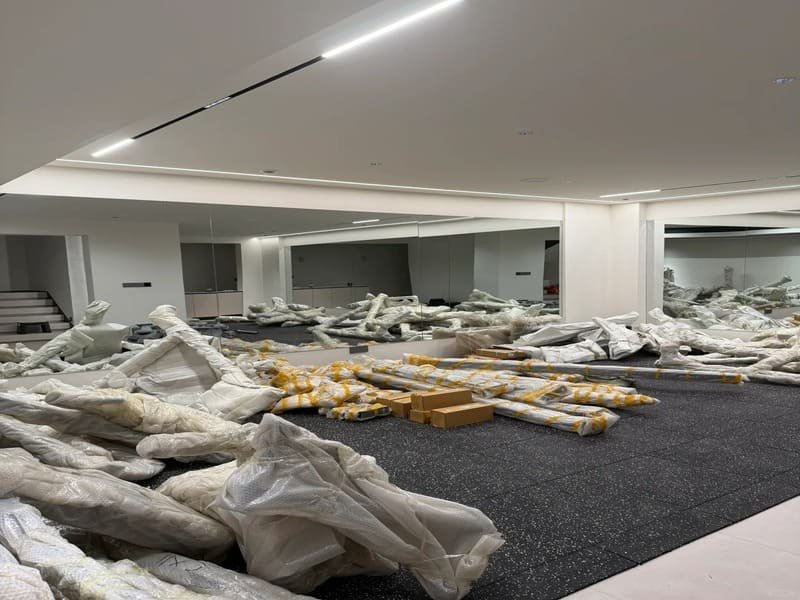
Yes. The technical execution—specifically adhesive troweling and seam compression—directly impacts whether your floor becomes a tripping hazard or a bacterial trap. Skilled installers use techniques that seal the floor against sweat and stabilize it for heavy lifting.
In a gym, the floor is a piece of safety equipment. The way it is bonded determines its function.
- Adhesive Trowel Science: It is not just "gluing it down." The installer must use the correct trowel notch size specified by the adhesive manufacturer. Too small? Not enough bond strength for heavy deadlifts. Too large? Glue bleeds through the seams, creating a mess that never cleans up.
- Compression Cutting: This is a technique 90% of general contractors don’t know. A pro cuts the rubber slightly larger than the space and forces it in. This "compression" keeps the seams tight without glue, creating a near-waterproof seal.
- The 100lb Roller: If you don’t see the crew using a heavy 75-100lb roller after installation, they have failed. Rolling is required to crush the adhesive ridges and ensure 100% transfer to the rubber backing. Without this, you have air pockets (voids). When a weight drops on a void, the rubber punctures.
How Do You Choose the Right Installation Team? (The Vetting Checklist)
To protect your investment, do not hire a team based on price alone. Use this specific checklist to interview potential installers. If they cannot answer these questions confidently, they are likely not qualified to install commercial rubber flooring.
When interviewing contractors, ask these technical questions to gauge their expertise:
| Question to Ask | The "Red Flag" Answer | The Professional Answer |
|---|---|---|
| 1. "Do you test for moisture?" | "The concrete looks dry, it’s fine." | "Yes, we use in-situ probes to measure Relative Humidity (RH) and document it." |
| 2. "How long for acclimatization?" | "We can unroll and glue same-day." | "We require 24-48 hours for the rolls to relax before gluing." |
| 3. "What trowel notch do you use?" | "Standard flooring trowel." | "We use the specific V-notch or square-notch size specified by the glue manufacturer." |
| 4. "Do you use a heavy roller?" | "We just walk it in." | "Yes, we use a 100lb sectional roller to ensure adhesive transfer." |
| 5. "Can I see a gym portfolio?" | Shows photos of carpet or LVT. | Shows photos of rubber rolls/tiles with close-ups of seams. |
Pro Tip: Ask them about "compression cutting." If they look confused, do not hire them for rubber rolls.
Conclusion
The "Best" floor isn’t the one with the highest price tag; it’s the one installed with the highest level of care. If you are balancing a budget, steal from the material fund to pay for the installation fund. A lower-cost rubber mat installed by a master craftsman will serve your gym better than a premium mat installed by an amateur.
Call to Action
Unsure how to balance your budget between materials and installation? We can help you run the numbers. [Contact our engineering team] for a project consultation—we will help you select the right material grade that leaves enough budget for a flawless installation.