


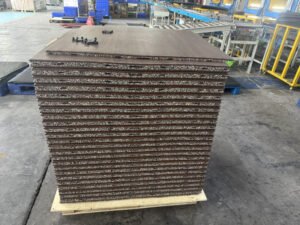
Why Rubber Flooring Fails on Moist Concrete Subfloors
Rubber flooring fails on moist concrete because trapped water vapor breaks down adhesives and creates...
Jan
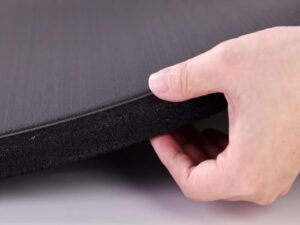
How Factories Control Odor in Rubber Flooring Production
Factories control rubber flooring odor through three critical pillars: the use of high-purity raw materials...
Jan
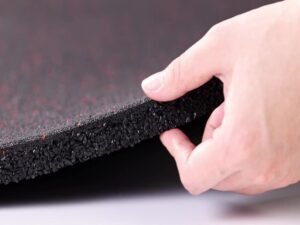
Why Rubber Flooring of the Same Thickness Feels Different
Rubber flooring of the same thickness feels different primarily due to density ($kg/m^3$) and Shore...
Jan
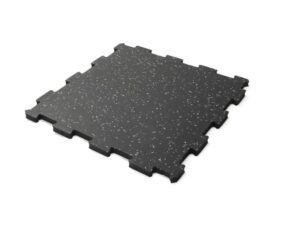
What Happens to Rubber Flooring Under Repeated Barbell Drops
Quick Answer: The Bottom Line Repeated barbell drops cause cumulative damage that isn’t always visible...
Jan
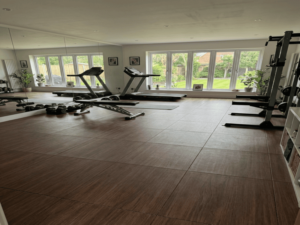
Why Is My Gym So Loud?3 Invisible Factors Creating Noise Complaints
A loud gym is a sign of energy, but uncontrolled noise is a sign of...
Jan
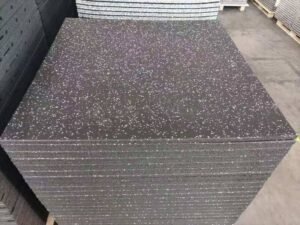
How Factories Control Consistency Across Bulk Rubber Flooring Orders
Factories control consistency through a rigorous engineering process involving single-source raw material locking, automated binder...
Jan
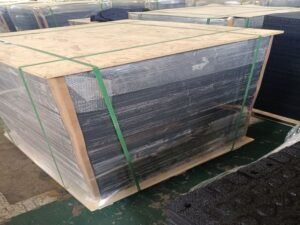
What Buyers Often Miss When Ordering Gym Flooring in Bulk
Buying in bulk saves money, but hidden costs in logistics, waste calculation, and material quality...
Jan
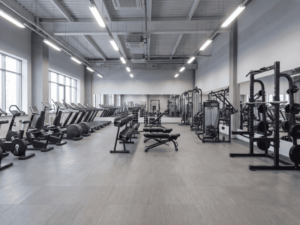
Why Rubber Flooring Behaves Differently in High-Humidity Regions
High humidity forces rubber flooring to absorb atmospheric moisture, causing hygroscopic expansion. This leads to...
Jan

How Do Rubber Density and Shore Hardness Actually Affect Your Gym’s Performance
The specific combination of density and hardness dictates whether your floor protects your subfloor or...
Jan

How Rubber Aging Happens Under Heat, UV, and Oxygen
Have you ever walked into your gym in the morning and noticed a fine grey...
Jan