


The best outdoor rubber mat is the one that directly solves your pain points—eliminating slip hazards, enduring harsh weather, and providing long-term comfort without high maintenance costs. (
Ever worried about family slipping by the pool or noticed your beautiful deck splintering after a heavy winter? That feeling of needing a safer, more durable outdoor space is exactly why I, as an Outdoor Rubber Mat Quality Control Engineer, focus on engineered solutions. The right rubber patio flooring is not just a cosmetic upgrade; it’s a critical safety investment. Before you choose a color, you need to choose the right material and type. This guide will help you match our manufacturing excellence to your specific needs, ensuring your patio, pool deck, or playground is safe and comfortable for years.
Before committing to any outdoor surface, you must understand the core technology. The decision starts with the foundation: the raw materials.
Why Do We Engineer Rubber for the Outdoors?
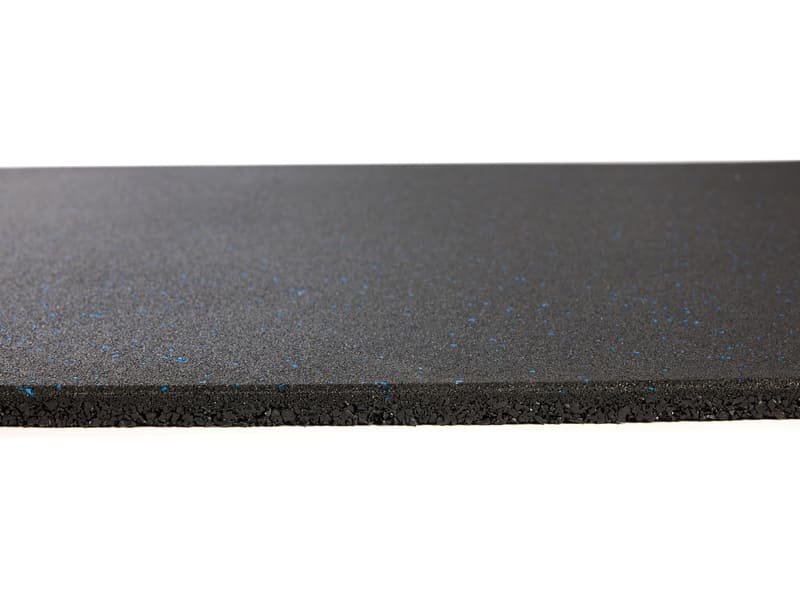
Outdoor rubber mats are specialized, weather-resistant surfaces made primarily from recycled SBR, natural rubber, or UV-stable EPDM, offering superior flexibility, grip, and impact resistance where other materials fail.
Before you choose a mat, think about where you’ll use it—a sunny poolside, a family patio, or a busy playground. Each space demands a different engineering focus. We use specialized materials: Recycled Tire Rubber (SBR) provides cost-effective bulk and durability for patios, while EPDM (Ethylene Propylene Diene Monomer) offers unmatched resistance to UV rays and ozone, meaning the color stays vibrant for a decade. Rubber is ideal because it is inherently weather-resistant. It does not absorb water like wood, preventing rot, and it maintains its flexibility across wide temperature ranges, preventing the cracking common in concrete or rigid plastics. This fundamental material strength provides superior impact absorption and is the core of outdoor safety.
Material Breakdown: Durability vs. Aesthetics
| Material | Key Advantage | Best Application Focus | Quality Control Focus |
|---|---|---|---|
| Recycled SBR | High Durability, Eco-Friendly, Cost-Effective | Patios, Utility Areas, Under Grills | Binder Integrity, Consistent Particle Size ($90\%$ of recycled content) |
| EPDM | Superior UV Stability, Color Retention, Ozone Resistant | Poolside, Playgrounds, High-End Decks | Color Fastness Testing, Minimum $2500$ hours UV chamber exposure |
| Natural Rubber | Maximum Elasticity, High Grip | Outdoor Gym Floors, Areas Needing Max Shock Absorption | Tensile Strength ($12\text{MPa}$ min.), Low-temperature flexibility |
💡 Expert Tip: For areas exposed to direct, all-day sunlight, always go for EPDM mats. They last $2–3$ times longer than standard recycled SBR in intense UV environments, justifying the initial cost increase through longevity.
How Do I Choose the Right Format: Tiles vs. Rolls?
The right format depends entirely on your area size and whether you need customization (tiles) or seamless, professional coverage (rolls).
In my experience, buyers often focus on color before layout. That is a mistake. The format—tile, roll, or stand-alone—affects installation time, drainage, and long-term seam visibility. For a homeowner looking to cover a small, irregular deck, modular tiles offer DIY simplicity. For a large commercial pool area, a seamless roll minimizes seams, maximizing safety and ensuring superior waterproofing underneath. You must choose the right system for the surface area.
Comparing Main Outdoor Rubber Mat Systems
| Type | Features | Best For | Pros | Cons |
|---|---|---|---|---|
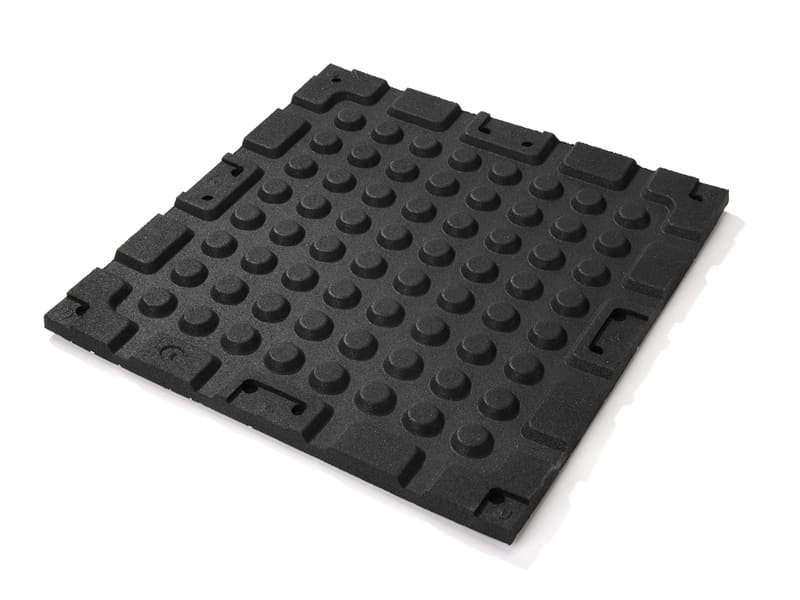
| Interlocking Rubber Tiles | Modular, simple DIY installation | Rubber Deck Tiles, Small Patios, Playgrounds | Highly customizable layouts, easy replacement of damaged sections | Visible seams if not installed perfectly, can shift slightly without proper edging |
| Rolled Rubber Flooring | Seamless, fixed width and length | Non-slip Pool Mats, Large Sports Zones, Commercial Areas | Professional finish, excellent moisture barrier, minimized tripping hazards | Difficult to handle, usually requires two people for unrolling/placement |
| Stand-Alone Mats | Portable, distinct edging | Entryways, Under Grills, Small Gazebos | Instant use, easy to clean, highly portable | Limited coverage area, potential edge tripping hazard if placed incorrectly |

The QC focus on tiles is on the interlock tolerance—we measure it down to the tenth of a millimeter to ensure the seams disappear and stay locked against movement. For rolls, the focus is consistent density across the full width to prevent wave effects.
Buyer Recommendation: If your area is over $50\text{m}^2$, consider rolled flooring. The labor saving from minimizing tile placement often makes it cost-competitive with interlocking systems while providing a better, seamless aesthetic.
What Key Performance Benefits Will My Investment Provide?
The primary benefits are fall prevention through enhanced grip, knee/joint comfort via shock absorption, and surface protection that extends the life of your existing patio or deck.
I view these benefits as quantifiable returns on investment. When we engineer a mat, we are engineering for three things: safety, comfort, and longevity. These are the measurable outcomes that make rubber flooring superior to traditional hard surfaces.
Three Pillars of Rubber Flooring Performance
Safety First: Proven Slip Resistance
Our non-slip pool mats are designed with specific textures that facilitate water run-off. Rubber’s inherent traction is high, but we enhance it by creating micro-channels and high-grip profiles. This significantly reduces the risk of hydroplaning and slips, a critical issue around wet areas. Our goal is always to meet or exceed the relevant ADA (Americans with Disabilities Act) and R-value standards for wet slip resistance.
Comfort and Shock Absorption
The cushioning effect is a huge benefit for families and those who stand outside often. The elasticity of the rubber reduces stress on ankles, knees, and the lower back. For rubber surfacing for playgrounds, the thickness dictates the Critical Fall Height (CFH) rating—a $2\text{-inch}$ mat can protect against falls from up to $6\text{ft}$, a requirement we test and certify rigorously. This is about preventing serious injuries, not just providing a soft surface.
Maximum Durability and Surface Protection
Installing a rubber mat is also an act of maintenance. The mat acts as a shield, protecting expensive wood or concrete base floors from abrasion, impacts, and constant moisture exposure. By using UV-stabilized rubber, we ensure the material itself will not break down, become brittle, or need frequent replacement. This focus on weather-resistant rubber flooring significantly cuts down on long-term maintenance costs.
Technical Selection: Matching Thickness, Texture, and Budget
Select mat thickness based on impact needs (thicker for $6\text{ft}$ fall zones), material based on UV exposure (EPDM for maximum sun), and texture for drainage (channeled backs for patios).
Choosing the right specification requires prioritizing your needs. A low-traffic, decorative garden path requires far less material density than a busy outdoor gym area.
Choosing Criteria Prioritization
- By Safety/Impact: For play areas or outdoor gyms, prioritize thickness 1/2 inch to $3 inches and density to meet specific CFH standards.
- By Environment/UV: For direct sun exposure (e.g., California, Florida), prioritize EPDM material for color stability and UV resistance.
- By Budget/Foot Traffic: For high-traffic, shaded areas, the more cost-effective SBR Recycled Rubber offers sufficient durability.
- By Drainage Needs: For poolside or high-rain areas, prioritize perforated or waffle-backed designs to facilitate rapid water run-off and prevent mold growth underneath.
💡 Expert Tip: Outdoor rubber mats typically range from \$10–\$30 per m² depending on thickness and material (SBR being lower, EPDM being higher). Always ask a supplier about the percentage of UV stabilizer in the SBR mix, as this is a key factor in longevity that affects price.
Installation, Maintenance, and Procurement Signal
Installation is simple: ensure a clean, level sub-base. Maintenance is easy: mild soap and water. Procurement starts with defining your specific area’s safety requirements.
Proper installation and simple, consistent maintenance are key to the long life of your investment. We engineer our products for ease of installation, knowing most residential customers will choose the DIY route.
Streamlined Installation Guide
- Prep the Sub-Base: Sweep, clean, and ensure the concrete, wood, or compacted base is level. This step is critical for a smooth finish.
- Layout and Edge: For interlocking tiles, start in a corner and work outwards. Use a fixed edge (wall or rail) as your first straight line reference.
- Custom Trimming: Use a very sharp utility knife and a sturdy metal straight edge. For the best result, make several light passes rather than trying to cut through the material in one stroke.
- No Adhesive Needed: Most tiles and many rolls rely on weight and interlocks. We only recommend a simple perimeter adhesive for high-wind areas or commercial applications.
Simple Maintenance for Long Life
Cleaning is minimal. Use a garden hose and a soft brush with a mild soap and water solution. Crucially, avoid harsh chemical solvents, gasoline, or strong degreasers, as these break down the binder holding the rubber particles together, causing premature material failure.
Conclusion
Whether you need a durable rubber deck tile, a child-safe rubber surfacing for playgrounds, or truly non-slip pool mats, the optimal choice combines the right material (EPDM vs. SBR) with the correct safety thickness. This focus on engineered specifications guarantees a safe, comfortable, and beautiful outdoor space for decades.
As a Quality Control Engineer specializing in custom rubber solutions, I bring the manufacturing insights to your design process. My team can provide detailed technical specifications, ensuring the material density, UV rating, and texture are perfectly matched to your environment.
Ready to upgrade your outdoor area with weatherproof, high-performance flooring? Request your free outdoor flooring sample today, and let our engineering team provide a precise quote and material recommendation based on your specific location and safety needs.