


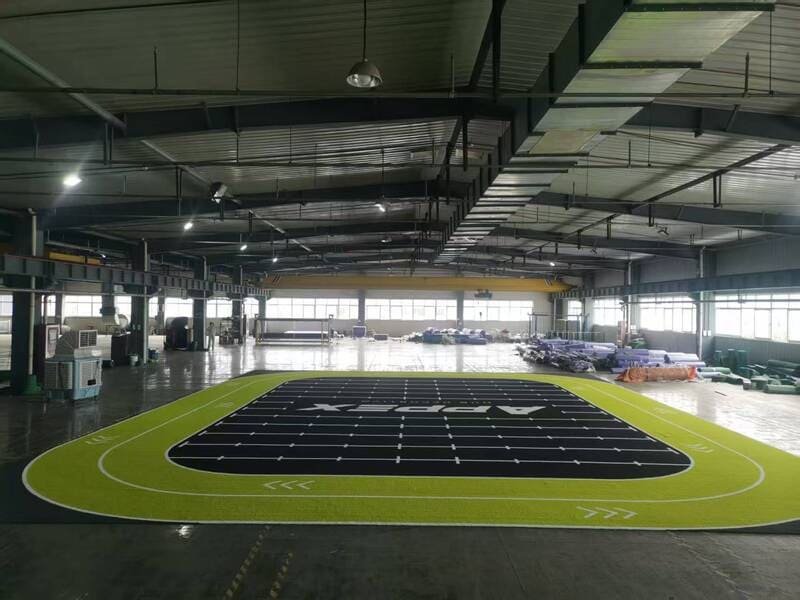
High turf density is more important than pile height because it directly determines the floor’s structural integrity, traction, and resistance to crushing under heavy sleds. While pile height only measures the length of the blades, high density ensures the fibers remain upright and functional during intense athletic use.
As a production engineer, I see many buyers get distracted by "soft and fluffy" turf, often overlooking the specific functional requirements of what kind of turf is used in gyms for high-performance training. In a landscaping project, long grass is a luxury, but in a gym, it is a liability. If you have 30mm of height but low density, the fibers will collapse and create a slippery, flat surface within months. From my perspective on the factory floor, density is about the "Stitch Rate" and "Gauge." By packing more fibers into every square inch, we create a surface that supports itself. This "broom effect" is the only thing standing between your members and the cold concrete subfloor. Short, dense turf is a professional tool; tall, sparse turf is just a rug that will fail under pressure.
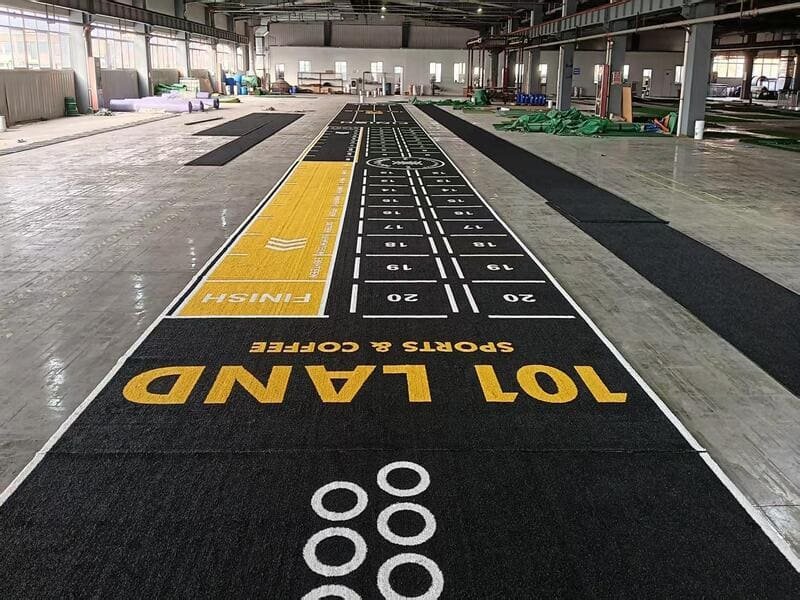
To help you make an immediate decision, I have created a "Cheat Sheet" below. This is the fastest way to tell if the turf you are looking at is actually worth the money.
What is the "Golden Rule" for making a quick buying decision?
The best way to judge gym turf is the "Density Factor": look for a pile height between 12mm and 15mm paired with a face weight of at least 50oz to 80oz. If the turf is taller than 20mm but weighs less than 50oz, it will likely fail in a commercial gym setting.
In the manufacturing world, we use a simple calculation to check if a product is "fit for purpose." You should never buy turf based on one spec alone. Instead, look at the relationship between height and weight. If a supplier offers you "thick" 30mm turf but the weight is low, they are selling you air. A professional sled lane requires a short, dense carpet-like feel. This creates the "smooth glide" athletes need. For quick execution, use the table below to verify the samples on your desk right now.
The "Buy-It-Now" Decision Matrix
| Performance Level | Pile Height (Goal) | Face Weight (Minimum) | Recommendation |
|---|---|---|---|
| Elite (Pro Sled Lanes) | 12mm – 13mm | 80oz+ | Must Buy: Maximum durability. |
| Standard (Functional HIIT) | 15mm | 60oz | Safe Choice: Great for most gyms. |
| Budget (Stretch Areas) | 15mm – 20mm | 50oz | Minimum: Avoid if using sleds. |
| Fail (Landscaping Turf) | 25mm+ | Under 50oz | Do Not Buy: Will mat and slip. |
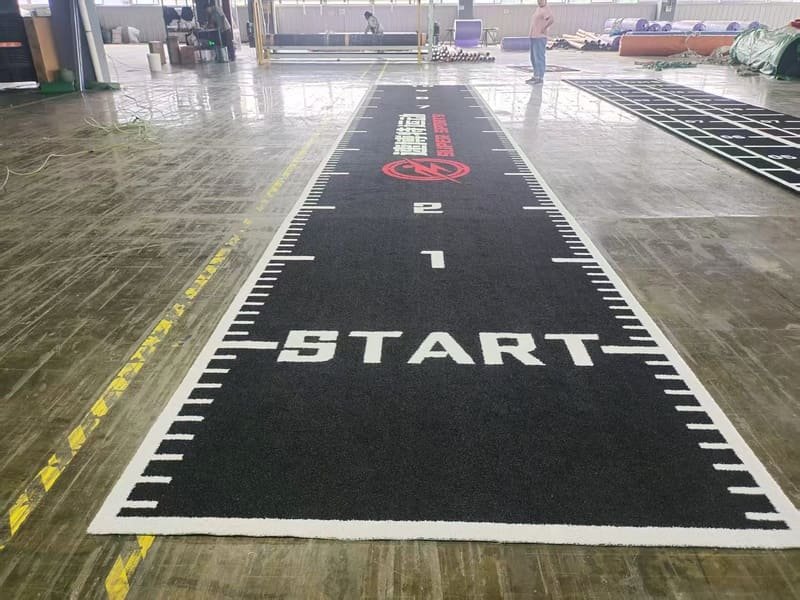
By following this matrix, you avoid the most common mistake in the industry. Now, let’s look at why the physics of density actually saves your floor from being destroyed.
Why does high density provide better resistance to matting and crushing?
High density creates a support system where fibers lean on each other to stay upright. This prevents the yarn from laying flat under the weight of sleds or heavy footsteps, ensuring the surface stays grippy and maintains its original look for years instead of months.
When I design a production run, the biggest challenge is "compression set." If fibers are spaced too far apart, they have no lateral support. When a 200kg sled passes over, the fiber bends and stays bent. In high-density turf, the stitch rate is so tight that the fibers are physically prevented from falling over. This is what we call the "broom effect." It’s like a dense brush; the more bristles there are, the harder it is to flatten them. This density keeps the friction coefficient consistent. If your turf goes flat, it becomes a "plastic slide," which is a major safety hazard for HIIT training and lateral movements.
Engineering Analysis: The Life of a Fiber
| Feature | Sparse Turf (Low Density) | Compact Turf (High Density) |
|---|---|---|
| Internal Support | None; fibers collapse individually | High; fibers act as a solid block |
| Traffic Response | Permanent "pathing" visible quickly | Fast recovery; fibers spring back |
| Safety Factor | Slippery when flat | Consistent grip for shoes |
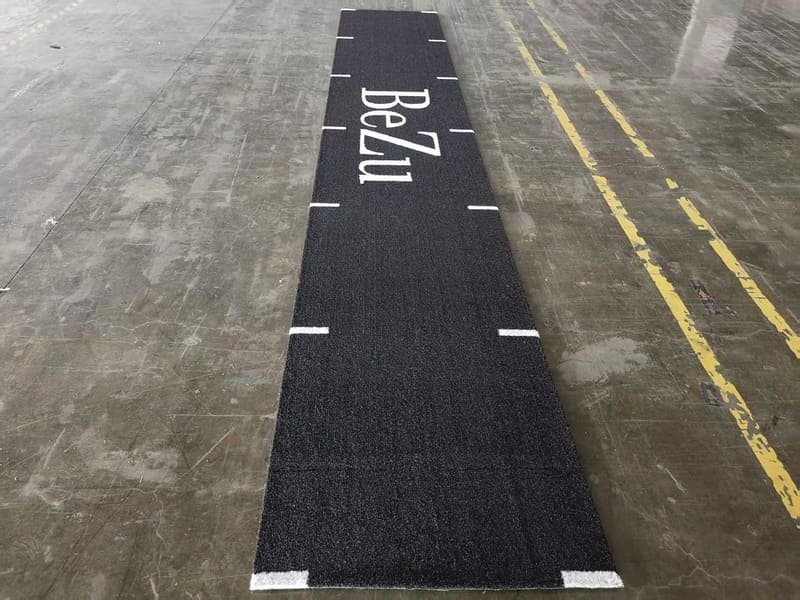
If you want to avoid a floor that looks old after six months, you must prioritize the stitch count. This is a manufacturing fact that no amount of cleaning can fix.
Does density affect sled performance and foot stability more than height?
Yes, because a dense, short pile provides a firm base that prevents "drag" and ankle rolls. Tall fibers create too much resistance for sled skis, while low density allows the foot to slide between yarn rows, causing instability during fast movements.
The most common complaint I hear is that a sled feels "stuck" on new turf. This usually happens because the pile is too high. The sled skis sink into the grass and have to "plow" through it. On a dense 12mm surface, the sled sits on top of the fibers and glides. From a safety perspective, foot stability is even more critical. Athletes doing plyometrics need a surface that doesn’t shift under their weight. In low-density turf, the yarn moves under the foot, which can lead to ligament strains. We solve this in production by narrowing the "Gauge"—the distance between the rows—to ensure there are no gaps for the foot to slide into.
Activity Performance Ratings
| Activity Type | Best Pile Height | Required Density | Engineering Reason |
|---|---|---|---|
| Sled Pushing | 12mm – 15mm | Very High | Reduces friction and prevents drag. |
| Sprinting/Agility | 15mm | High | Provides firm ground for push-off. |
| Heavy Lifting | 12mm | High | Prevents "squishy" feel underfoot. |
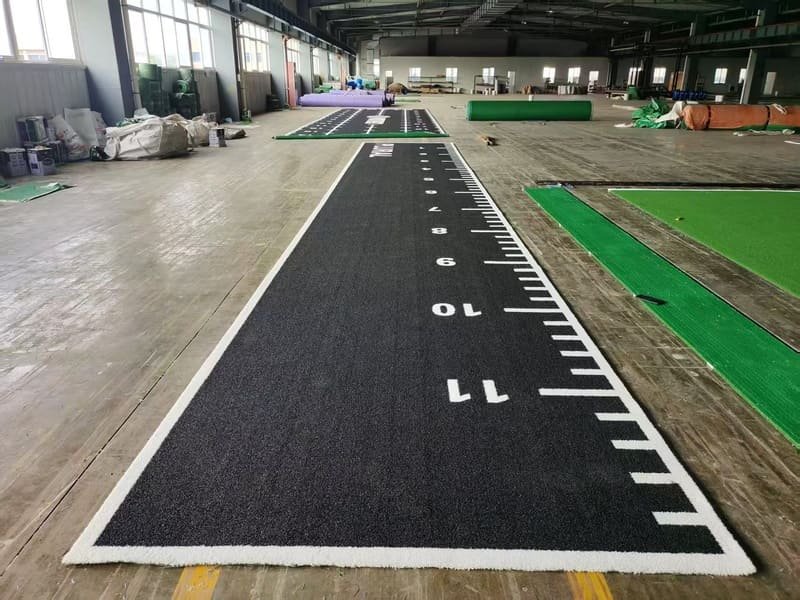
Maintenance is another area where density wins. A short, tight pile is much easier to vacuum than a long, sparse one where chalk and dirt get trapped at the bottom.
How can you read a spec sheet to find the best ROI?
To get the best return on investment, look for a "Face Weight" of 60oz or higher and a "Stitch Rate" of at least 200 per meter. These numbers guarantee that you are paying for actual material rather than just the height of the grass.
When you look at a spec sheet, ignore the marketing terms and focus on the math. I tell all my clients to check the "Total Weight" versus the "Pile Height." If the weight is low but the height is high, the manufacturer is saving money on yarn, and you are getting a weaker product. A high ROI turf will use a "Fibrillated" yarn or a very tight "Monofilament" with a high Dtex (yarn thickness). This ensures the product lasts 8 to 10 years even in a 24/7 commercial gym. Replacing your turf every 2 years because it’s "matted" is a cost that most gym owners don’t budget for, but you can avoid it by choosing density today.
The "Pro Engineer" Spec Checklist
- Gauge: Look for 3/16" or 5/32" for maximum tightness.
- Stitch Rate: Aim for 200–280 stitches per meter.
- Backing: Ensure it has a dual-layer or UV-stabilized backing to prevent shrinking, which is a major engineering factor in why turf seams fail first in commercial gyms during intense sled training.
- The Thumb Test: If you press your thumb into the sample and can feel the black backing easily, the density is too low.
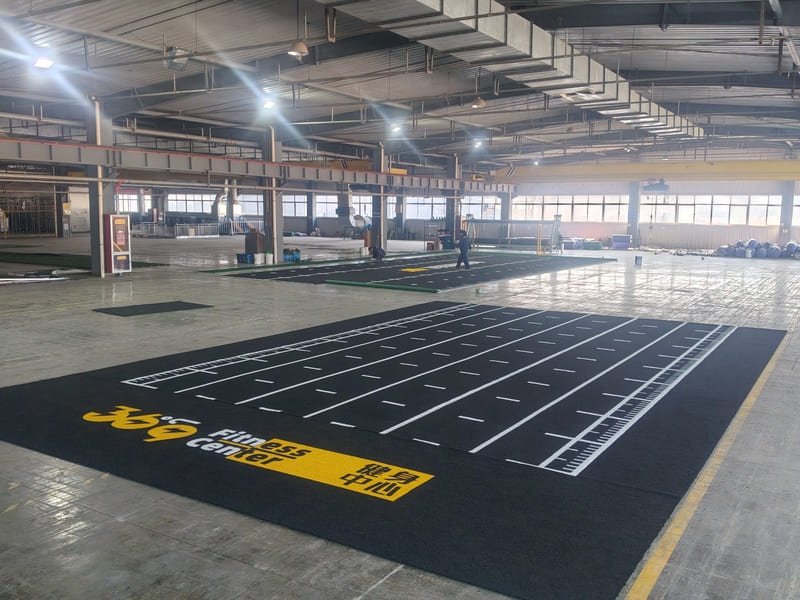
I always suggest getting a cross-section sample. When you look at it from the side, you should see a solid wall of color with no gaps between the fibers.
Conclusion
Density wins every time.
Get a Technical Consultation
Choosing the right specifications for your gym can save you thousands in future replacement costs. If you are currently comparing samples and want an engineering perspective on which one will actually last, my team is here to help.
Contact us today to request a free sample pack of our high-density gym turf or to get a custom quote for your facility.