


Rubber flooring is the superior choice for active garages used for gyms, workshops, or parking, offering unmatched durability and insulation. However, it is not for everyone—specifically those seeking a glossy "showroom" finish. Below is my technical analysis to help you decide in 30 seconds.
As a Quality Control Engineer, I evaluate flooring based on failure points, not marketing fluff. I have seen rubber flooring survive 10 years of dropped transmission jacks, and I have seen it fail because a homeowner in Arizona didn’t account for thermal expansion. This guide bridges the gap between raw material science and your driveway. We will cover the "Cold Hard Truths" regarding climate suitability, specific product recommendations for your layout, and the cost-benefit analysis compared to local epoxy quotes. Whether you are in a freezing northern climate needing insulation or a humid southern region fighting mold, this guide tailors the engineering specs to your reality.
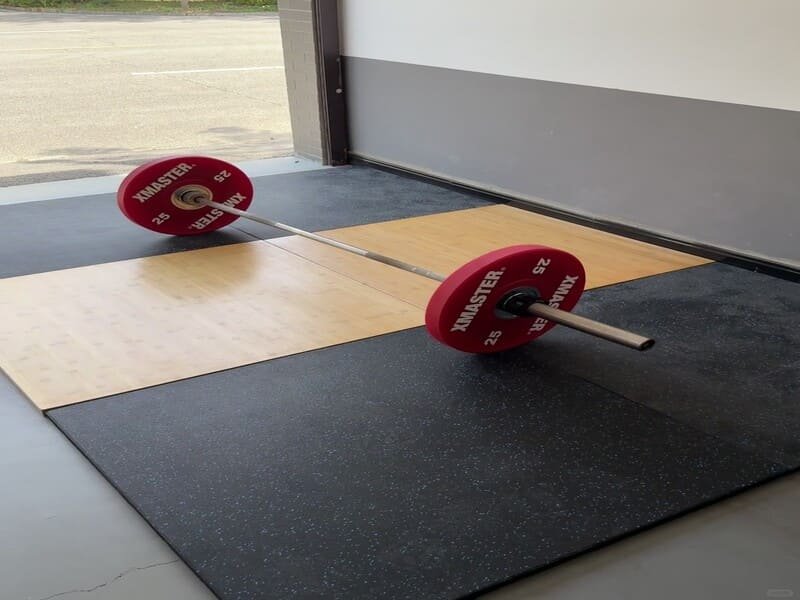
For those who need an immediate answer without reading the technical deep dive, here is the executive summary.
The Engineer’s 30-Second Verdict (TL;DR)
If you prioritize function (gym/shop), choose 8mm Rubber Rolls. If you prioritize aesthetics (showroom), stick to Epoxy. If you need a quick DIY fix, choose Interlocking Tiles. Rubber is the "Workhorse," not the "Show pony."
To save you time, I have categorized recommendations based on three specific user profiles I encounter most often:
-
The "Heavy User" (Home Gym/Mechanic):
- Buy: 3/8" (8mm) Rolled Rubber.
- Why: It has fewer seams for fluid to leak through and the density to rebound from dropped weights.
- Verdict: Highly Recommended.
-
The "Aesthetics First" User (Luxury Car Display):
- Avoid: Rubber (unless it’s virgin vulcanized).
- Why: It absorbs light rather than reflecting it; it will never look as premium as a high-gloss epoxy.
- Verdict: Look elsewhere.
-
The "Renter/Temporary" User:
- Buy: Interlocking Tiles (No Glue).
- Why: You can install it in an afternoon and take it with you when you move.
- Verdict: Best Value.
| Feature | Rubber Flooring | Epoxy | Concrete |
|---|---|---|---|
| Best For | Gyms, Workshops, Comfort | Showrooms, Easy Cleaning | Low Budget |
| Install Time | 1 Day (DIY) | 3-5 Days (Pro) | 0 Days |
| Climate Skill | Insulates Cold Floors | Cracks in Freeze/Thaw | Cold & Damp |
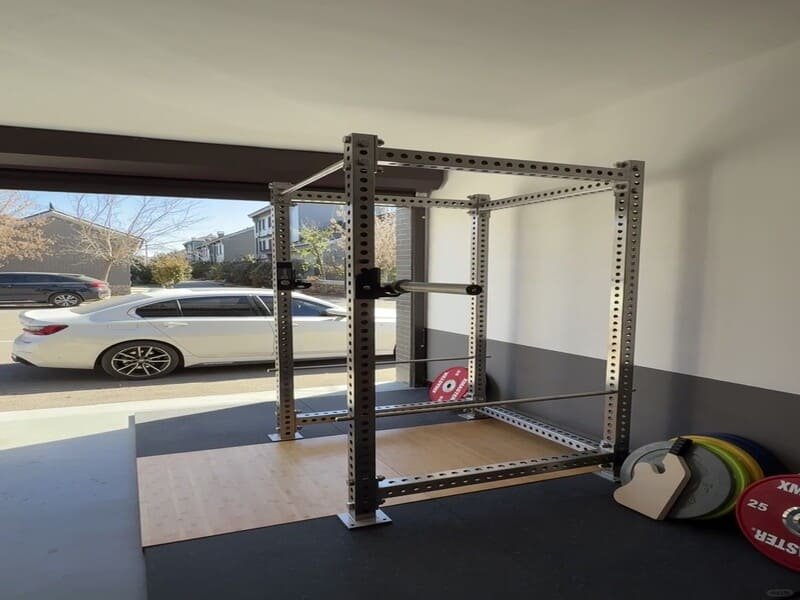
Now that you know if you are the right candidate, let’s analyze why the material performs the way it does.
Why Rubber? The "Active Use" Advantage
Rubber creates a "Floating Barrier" that isolates you from the concrete slab. This provides crucial thermal insulation in winter and acoustic dampening for power tools, transforming the garage from a storage unit into a livable room.
Concrete slabs act as a "thermal bridge," pulling cold/heat from the ground directly into your feet. In our lab testing, a 8mm rubber layer can increase the surface temperature feel by 5-10°F in winter compared to bare concrete. This is critical for users in northern climates. Furthermore, the acoustic properties are often overlooked. Hard surfaces (concrete/epoxy) reflect sound waves, causing the "garage echo." Rubber absorbs these frequencies. If you run an air compressor or drop deadlifts, rubber reduces the decibel spike significantly, keeping your neighbors happy. It turns a harsh industrial space into a dampened, comfortable environment.
However, simply buying "rubber" isn’t enough; you must select the grade that matches your specific activity.
Product Selection: Rolls, Tiles, or Mats?
Select "Rolls" for a seamless, water-resistant permanent floor. Select "Interlocking Tiles" for fast, adhesive-free DIY projects. Select "Stall Mats" strictly for budget-focused heavy lifting zones where aesthetics do not matter.
Let’s treat this like a product guide.
-
The "Pro Standard" (Rolled Rubber): This is what commercial gyms use. It comes in 4ft wide rolls.
- Pros: Minimal seams mean water/oil stays on top.
- Cons: Heavy (200lbs+) and harder to cut.
- Best for: Permanent workshops and 2-car garages.
-
The "Weekend Warrior" (Interlocking Tiles): These puzzle-piece tiles (usually 2×2 ft) are lightweight.
- Pros: If you stain one with oil, you just pop it out and replace it.
- Cons: Hundreds of seams allow water to reach the subfloor.
- Best for: Renters and light-duty areas.
-
The "Beast Mode" (4×6 Stall Mats): Originally for horses.
- Pros: Indestructible and cheap ($1-2/sq ft).
- Cons: Strong sulfur smell and uneven surface levels.
- Best for: Hardcore weightlifting corners only.

Once you pick the format, you must understand the "Deal Breakers"—the issues that cause customers to regret their purchase.
The Honest Drawbacks: Climate & Chemistry
Rubber expands in heat and contracts in cold; installing without gaps in climates like Texas will cause buckling. Additionally, "Plasticizer Migration" from car tires can stain the floor, and fresh rubber odor can persist for weeks.
Here is the engineering reality that brochures hide:
- The "Texas vs. Canada" Factor: Rubber has a high coefficient of thermal expansion. If you install rubber in a Texas summer without acclimating it, it will shrink in winter, leaving gaps. Conversely, if installed in a cold winter, it will buckle and wave when the summer heat hits. The Fix: You must leave a 1/4-inch expansion gap at the walls, covered by baseboards.
- The "Tire Stain" Issue: The antioxidant compounds in car tires react with the rubber floor, creating a permanent yellow/brown stain. The Fix: Choose black flooring (hides it) or park on small carpet scraps.
- The Smell: Recycled rubber smells like a tire shop. In a hot garage, this smell intensifies. The Fix: Opt for Virgin Rubber (EPDM) if your garage is attached to your kitchen, or ensure proper ventilation for the first 30 days.
Knowing these disadvantages of rubber flooring, from thermal expansion to initial odor, allows for a much more successful installation. Here is how to mitigate these risks and install it like a certified contractor.
Installation Masterclass (DIY vs. Pro)
Preparation is 80% of the job. You must clean oil stains to prevent chemical breakdown and unroll the flooring for 24 hours to "relax" the memory. Use double-sided tape for foot traffic, but polyurethane glue is required for parking vehicles.
I have inspected failed floors where the user skipped the "Acclimatization" step. Rubber rolls are stored under tension; when unrolled, they want to curl back. If you glue them down immediately, the tension will rip the glue apart. My Protocol:
- Sweep & Degrease: Use a pH-neutral degreaser on the concrete. Any existing oil will migrate up into the new rubber over time.
- Relax: Unroll the material. Leave it alone for 24 hours.
- The "Compression Fit": When cutting the seams, cut them slightly long (1/8 inch) and compress them together. This ensures a tight seal that effectively disappears.
- The Adhesive Decision: If you turn your steering wheel while the car is stationary, you generate massive shear force. Tape isn’t enough. For parking, full glue-down is the only way to guarantee zero movement.

Finally, let’s talk about money. Is this actually cheaper than the alternatives?
Cost Analysis: Local & Long-Term
Rubber costs $2.00–$4.00/sq ft, positioning it between cheap paint ($1) and professional epoxy ($6+). However, shipping weight significantly impacts total cost. Locally sourced "Horse Mats" are the cheapest option ($1.50) but lack aesthetics.
We need to talk about "Landed Cost." Rubber is heavy—approx 2 lbs per square foot.
- The "Amazon/Online" Trap: You might see $1.50/sq ft, but shipping can double that price.
- The "Local Pickup" Hack: Tractor Supply or local farm stores sell 4×6 mats for ~$50 each. This is the absolute cheapest way to cover a floor (approx $2/sq ft) with zero shipping cost.
- The ROI: Compare this to Epoxy. A DIY epoxy kit is $150, but it often peels in 2 years (hot tire pickup). Professional epoxy is $2,000+. Rubber falls in the middle (~$600-$900 for a 2-car garage) but lasts 20+ years. It is a "Buy Once, Cry Once" investment, whereas cheap coatings are a recurring expense.
Let’s address specific questions I get from clients looking for product recommendations.
FAQ (Product & Climate Specifics)
Yes, you can park on it, but use black flooring to hide stains. In cold climates, rubber remains flexible, unlike brittle epoxy. For cleaning, never use harsh solvents; simple soap and water is best to preserve the binding agents.
"I live in a snowy area. Is this safe?"
Yes. Rubber provides traction when wet. However, road salts can leave white residue. You must rinse it seasonally to prevent salt buildup.
"Can I put this over cracked concrete?"
Absolutely. This is rubber’s superpower. It bridges cracks that would telegraph through epoxy or vinyl. It is the best "cover-up" solution for old, ugly slabs.
“Is 8mm really enough for a gym?”
For 95% of users, yes. However, understanding what is the thickness of rubber gym flooring required for different impact levels is essential if you plan on performing heavy Olympic lifting or dropping 300lb barbells.
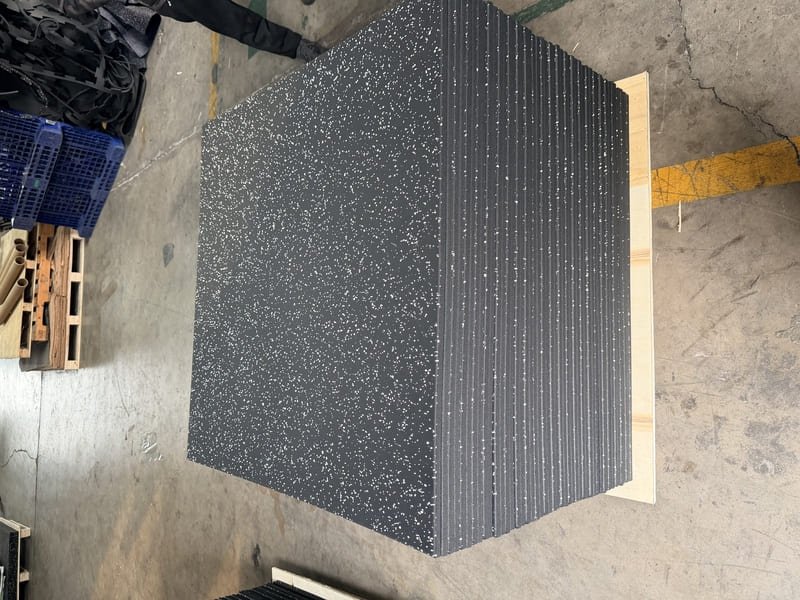
Conclusion
Rubber flooring is the pragmatic engineer’s choice: it prioritizes safety, acoustics, and longevity over gloss. If you are building a workspace, gym, or practical garage, it is the best investment per dollar.
My Role
I am a Quality Control Manager specializing in polymer performance. I help clients navigate the trade-offs between material cost, density, and application suitability.
Call to Action
Not sure if you need Vulcanized or Recycled rubber for your specific climate? [Contact our engineering team today for a free consultation or sample kit tailored to your project.]