


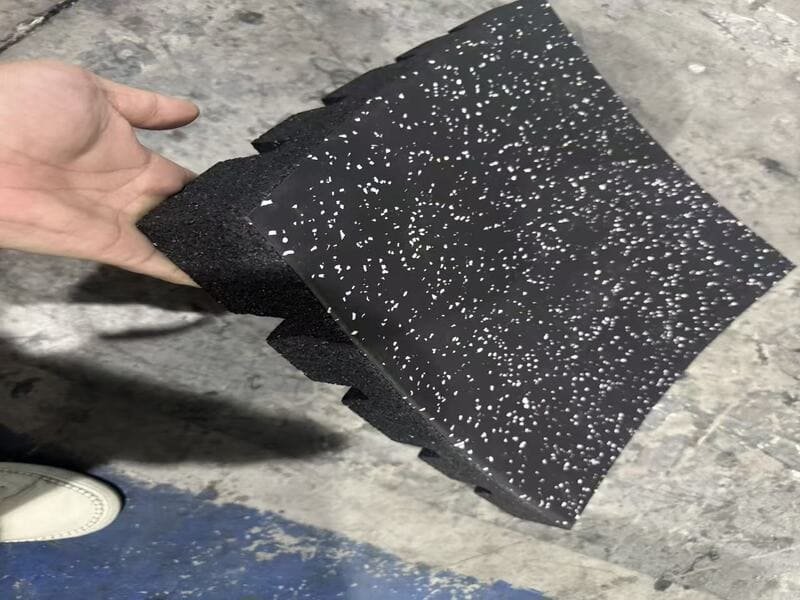
Thickness is not the main factor in soundproofing because density and decoupling matter more. A thick but light material allows vibrations to pass through easily. Effective soundproofing requires high-mass rubber that absorbs impact energy and breaks the mechanical connection between floor layers.
I see this mistake every day on the factory floor. Customers always ask for the thickest 12mm mat because they think it works twice as well as the 6mm version. That is just not how sound works. In my lab tests, a 5mm high-density rubber mat almost always beats a 10mm soft foam mat. The foam has too much air. Air doesn’t stop sound; mass does. High-density rubber is "limp mass," which means it stays heavy but flexible. It kills the vibration instead of letting it ring like a bell. If you only look at the thickness on the ruler, you are missing the material science that actually keeps the room quiet.
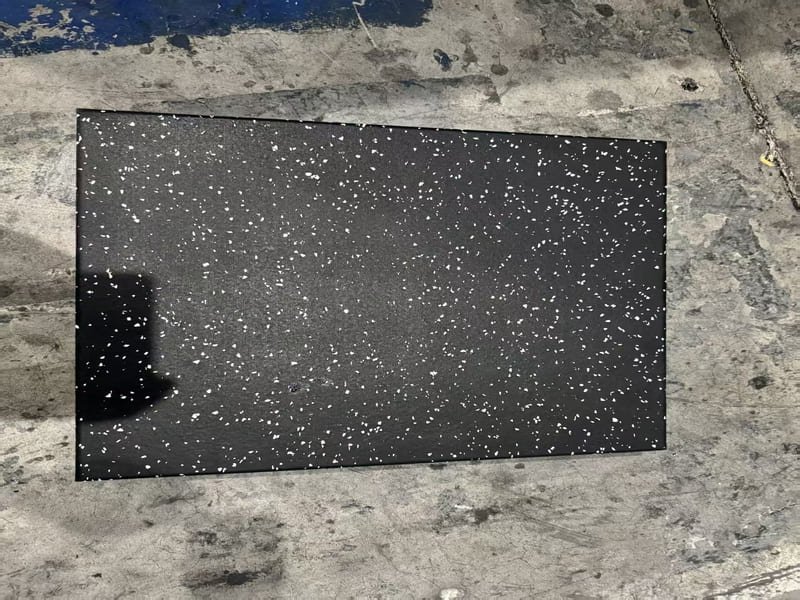
I want you to understand how different noises behave. Evaluating does soundproofing a floor work for your specific layout is the first step to ensure you don’t waste money on thick materials that do nothing.
Do You Know the Difference Between Airborne and Impact Noise?
Airborne noise travels through the air, while impact noise travels through the floor structure. Rubber mats primarily target impact noise by dampening vibrations from footsteps or dropped objects. Understanding this difference is the first step to choosing the right product for your specific project needs.
| Noise Type | Source Examples | Primary Solution | Rubber Mat Role |
|---|---|---|---|
| Airborne | Voices, TV, Music | Mass and Sealing | Blocks sound waves |
| Impact | Footsteps, Furniture | Decoupling/Damping | Absorbs vibration |
Impact noise is the biggest headache for my clients. When someone walks in heels on a hard floor, that energy vibrates the whole building frame. If your underlayment is thick but too "springy," it creates a drum effect. I have inspected jobs where the thick mat actually made the noise louder at certain low frequencies. It acted like a trampoline for sound waves. To stop this, the mat needs the right "Shore A" hardness. It has to be firm enough to support the floor weight but soft enough to break the vibration path. We test this hardness on every batch to make sure the mat doesn’t become a bridge for noise.
The Problem With Soft Mats
A mat that is too soft will compress over time under the weight of furniture. When it flattens out, you lose the soundproofing benefit. I always tell installers that a thinner, denser mat is more stable for the final floor finish like LVT or hardwood. You get better sound numbers and a floor that doesn’t bounce when you walk on it.
Now let’s look at why density is the number I check most often in the quality lab.
Why Does Density Always Trump Thickness in My Lab Tests?
High density means more mass in a smaller space, which is better for blocking sound. A thin, heavy rubber mat has more "damping capacity" than a thick, light one. This allows the mat to convert sound vibrations into tiny amounts of heat energy instead of letting them pass through.
| Metric | High-Density Rubber (5mm) | Low-Density Foam (10mm) |
|---|---|---|
| Weight per sq ft | High (Approx 0.8 lb) | Low (Approx 0.2 lb) |
| IIC Rating | 52 – 55 | 42 – 45 |
| Damping | Excellent | Poor |
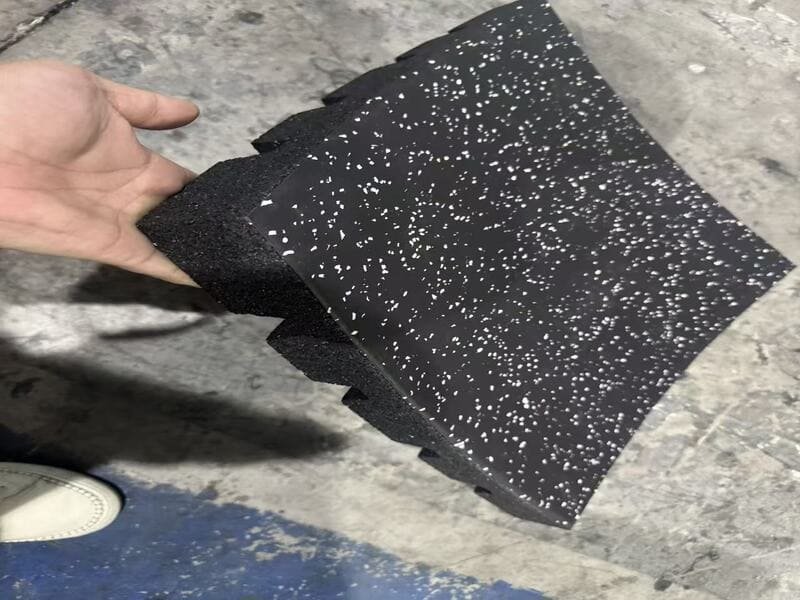
In our factory, we weigh every roll of rubber. If the weight is low, the soundproofing fails. A 5mm mat made from recycled crumb rubber is full of heavy particles. When sound hits it, those particles rub together. This turns the noise into a tiny bit of heat energy. It is a physical change that thin, dense materials do better than thick, airy ones.
Engineering the Bottom Surface
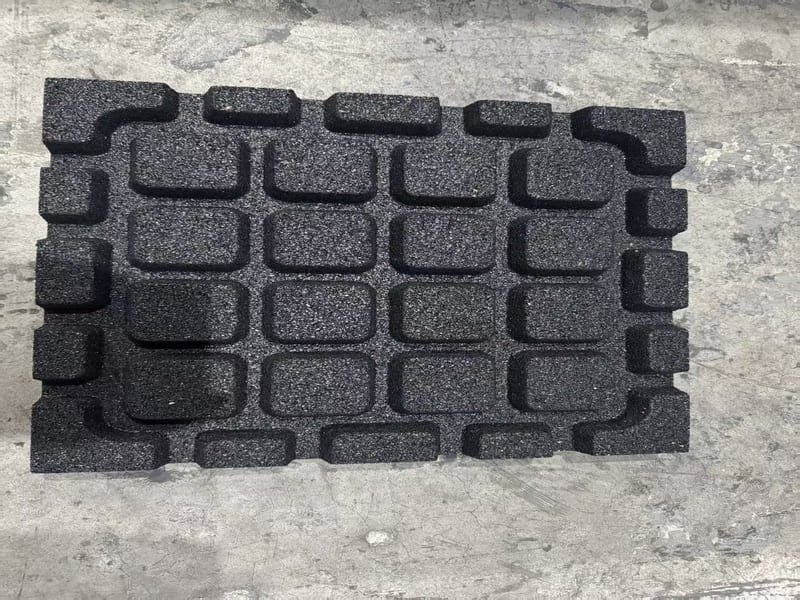
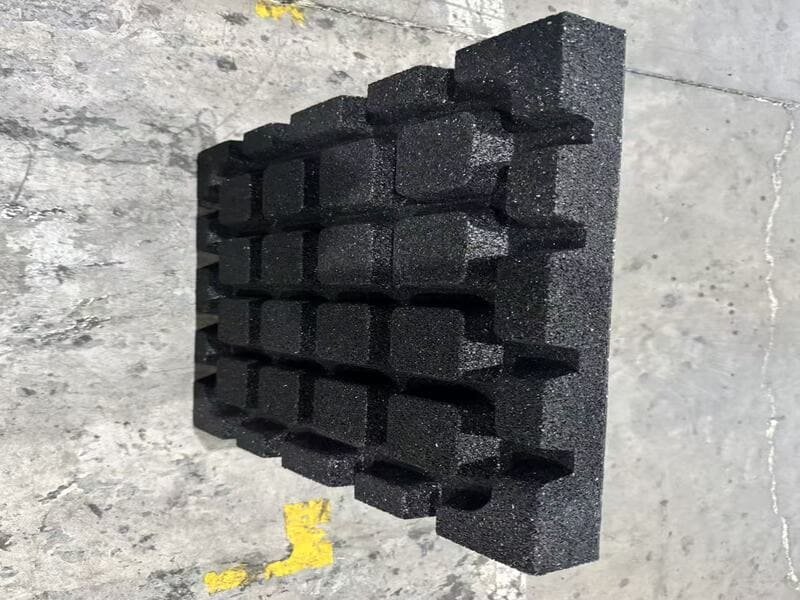
We don’t just make flat sheets. Many of our high-performance thin mats have a "dimpled" bottom. These small bumps create air gaps that decouple the floor from the subfloor. As a QC specialist, I measure these dimples to the millimeter. If they are the right shape, a 6mm mat can outperform a solid 12mm mat because there is less surface area for the vibration to travel through. This is pure engineering, and it proves that a "ruler" is the worst tool for judging soundproofing.
The numbers on the spec sheet can be tricky, so let me show you what to look for.
Which Performance Metrics Should You Actually Watch?
You should focus on IIC (Impact Insulation Class) and Delta IIC ratings rather than thickness. IIC measures the total assembly’s ability to block impact sound, while Delta IIC tells you exactly how much the rubber mat adds to the floor. A high Delta IIC is the best proof of quality.
I spend a lot of time reading ASTM E2179 lab reports. These tell the truth. A company might claim an IIC of 70, but they tested it with a huge concrete slab and a dropped ceiling. That doesn’t help you. You need to look for the Delta ($\Delta$) IIC. This is the rating for the mat alone. If a 5mm mat has a Delta IIC of 25, it is a world-class product. If a 12mm mat only has a Delta IIC of 15, it is just expensive trash.
Real World vs. The Lab
1. The IIC Target
For most apartments, you want a total IIC of 50 or higher. I check our production runs to ensure we hit these targets consistently.
2. The STC Factor
Rubber is great for impacts, but it helps less with voices (STC). If you have loud neighbors talking, you need mass, not just a thick underlayment.
3. Edge Quality
I check that every mat is cut perfectly straight. If there are gaps between the mats during installation, sound will leak through like water.
The best mat in the world will fail if the installation is lazy, and thickness won’t save you.
What Factors Outweigh Thickness During Installation?
Decoupling and installation quality are more important than how thick the mat is. Even a 20mm mat will fail if it touches the walls directly or has gaps between sheets. You must use perimeter isolation strips to prevent "flanking paths" where sound leaks through the structure.
I have been to many "failed" jobs where the mat was very thick. The problem was always the same: the installer pushed the mat right against the drywall. I call this "short-circuiting." The vibration goes from the floor, into the wall, and skips the mat entirely. It doesn’t matter if the mat is 5mm or 50mm; if it touches the wall, it is useless. You must leave a gap and fill it with a flexible sealant or use an isolation strip.
The Subfloor Connection
Concrete and wood subfloors act differently. Concrete is heavy and loud; wood is light and bouncy. I test our mats on both. A thin rubber mat on concrete works wonders because it adds the "cushion" that concrete lacks. On a wood floor, you might need a denser mat to add mass to the light wood. Also, never use a glue that dries hard. If the glue is hard, it acts like a bridge for sound. Always use a pressure-sensitive adhesive that stays "rubbery" to keep the layers separated.
Stop focusing on the thickness. Look at the density, the IIC testing, and the installation plan.
Conclusion
Thickness is a secondary metric; density and engineering are king. Prioritize certified IIC ratings as an investment in community harmony to ensure long-term peace and quiet for everyone in the building.
If you need high-performance mats or help picking the right density for your project, send me a private message today for a custom consultation!