


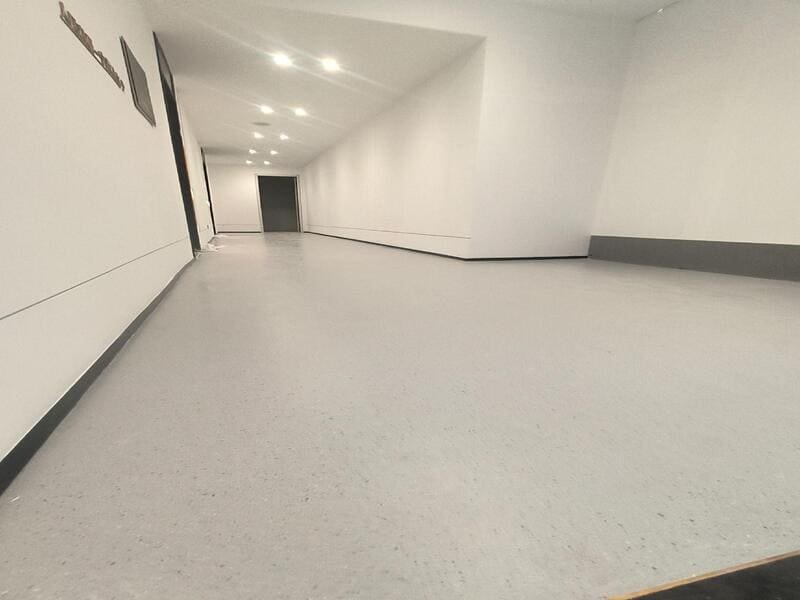
Choosing sports flooring is not just about aesthetics because it directly impacts athlete safety, performance, and long-term facility ROI. Gym owners and contractors often struggle to choose between PVC and rubber because both are top-tier options, but they excel in completely different environments. This ultimate guide breaks down the structural differences, pros, cons, and specific use-cases to help you make a 100% confident decision.
As a production manager with years of hands-on manufacturing experience in the PVC flooring industry, I have seen how choosing the wrong material ruins a facility’s budget and performance. I analyze raw material formulas, vulcanization densities, and multi-layer structural behaviors every day to solve real-world problems for gym designers and developers. In this guide, I will give you my unfiltered, technical perspective so you can choose the perfect surface for your project.
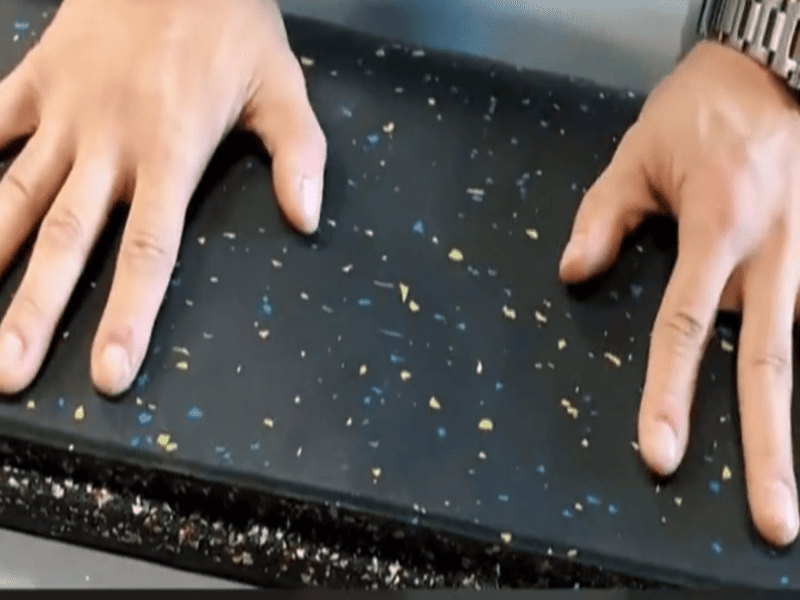
Choosing the right material requires comparing real data, so let us look at how these two factory options stack up against each other across critical operational metrics.
What Is the Core Difference Between PVC and Rubber Sports Flooring?
PVC and rubber sports flooring differ fundamentally in material composition, shock absorption style, and structural behavior under load. PVC utilizes a multi-layer synthetic structure with foam backing to provide excellent point-elastic vertical deformation, whereas rubber uses high-density vulcanized compounds to deliver massive tensile strength, impact resistance, and long-term durability.
| Metric | PVC Sports Flooring | Rubber Sports Flooring |
|---|---|---|
| Shock Absorption | High (Excellent energy return via foam backing) | Moderate to High (Excellent mass dampening) |
| Heavy Weight Durability | Low (Vulnerable to permanent sharp static loads) | Exceptional (Recovers instantly from heavy drops) |
| Ball Bounce / Return | Superior (Uniform rebound for ball sports) | Deadened (Absorbs energy, poor ball bounce) |
| Maintenance & Cleaning | Extremely Easy (Non-porous, wipe clean) | Moderate (Porous if unsealed, traps grime) |
| Lifespan & Cost Ratio | High ROI for indoor courts; medium cost | Ultra-long lifespan under heavy iron; low long-term cost |
| Best Use-Cases | Basketball, Badminton, Dance Studios | CrossFit, Weight Rooms, Ice Rink Perimeters |
Understanding the Material Science of Indoor Sports Surfaces
To understand why these materials perform differently, we must look at how they are manufactured. As a manufacturing specialist, I evaluate how molecular structures dictate real-world performance under daily athletic stress.
1. The Multi-Layer Structure of PVC Sports Flooring
Commercial PVC sports flooring is an engineered product consisting of multiple specialized layers. The top layer is a pure polyvinyl chloride wear layer coated with a polyurethane (PUR) surface, which provides specific friction coefficients and scratch resistance. Below this sits a high-density glass fiber stability layer that prevents thermal expansion and keeps the floor flat. The bottom layer is a closed-cell PVC foam backing.
This combination creates point-elastic performance. When an athlete lands, the foam compresses directly under the foot, providing localized cushioning and returning that energy directly back to the player for explosive movements.
2. The Solid Density of Vulcanized Rubber Sports Flooring
Rubber flooring relies on a completely different manufacturing process called vulcanization. Whether using natural rubber or synthetic Styrene-Butadiene Rubber (SBR) combined with Ethylene Propylene Diene Monomer (EPDM) granules, the material is bonded under extreme heat and pressure.
This creates a highly dense, solid, or interconnected mesh structure with incredible tensile strength. Instead of compressing like foam, rubber acts as a mass-dampening barrier. It absorbs massive kinetic energy from dropped weights and distributes the force horizontally, protecting both the subfloor and the equipment.
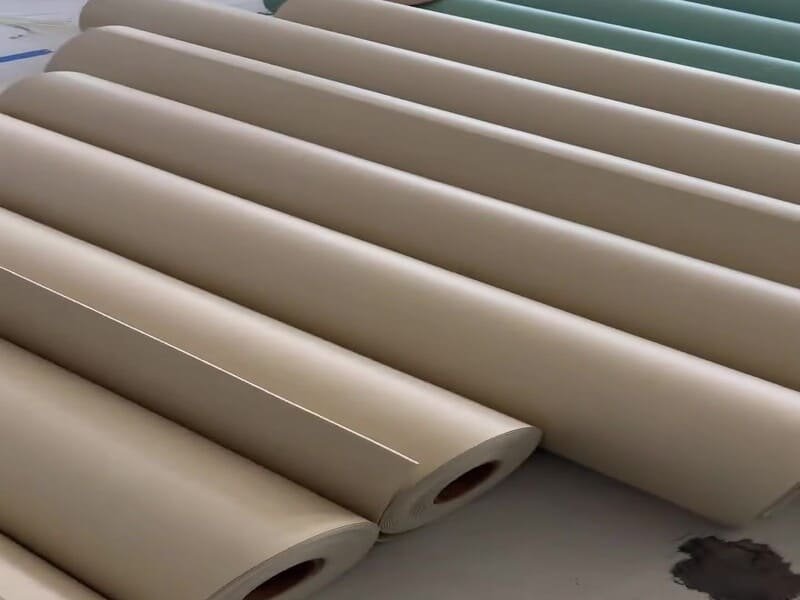
This structural difference explains why a facility manager cannot simply substitute one for the other without altering how the facility operates.
How Do They Battle Across Key Buyer Pain Points?
The choice between PVC and rubber depends entirely on your specific athletic application and how you manage daily facility maintenance. Gym owners frequently ask me about four specific pain points, and breaking them down engineering-wise reveals the clear winner for each scenario.
1. Safety and Shock Absorption (Injury Prevention)
The primary question from school coaches and club owners is always: "Will my athletes get joint fatigue or hurt themselves if they fall?"
PVC flooring excels at protecting joints during high-impact agility sports. The closed-cell foam backing acts as a shock absorber that meets strict standards like EN 14904, which regulates force reduction in sports halls. It reduces vertical deformation stress on the ankles and knees during repetitive jumping and running.
Rubber flooring is superb at cushioning heavy drops, but standard solid rubber tiles offer less vertical springiness for running. If an athlete trips and slides on rubber, the high surface friction can cause skin burns or ankle locking. PVC surfaces are specifically engineered with controlled slide coefficients to allow quick pivots without danger.
2. Heavy Loads and Indentation Resistance (The Weight Room Dilemma)
Facility managers often worry: "Will heavy equipment or dropped dumbbells ruin the floor forever?"
If your facility handles heavy iron, PVC is the wrong choice. Heavy static loads from weight machines or sharp impact loads from dropped dumbbells can puncture the wear layer or permanently crush the delicate PVC foam backing. Once compressed beyond its recovery limit, PVC will leave ugly dents that ruin the look and safety of the floor.
Rubber is the undisputed king of durability in heavy-load environments. High-density vulcanized rubber recovers its shape instantly. It can handle thousands of pounds of static equipment and endless impacts from olympic weightlifting without tearing, crumbling, or showing any sign of indentation.
3. Sports Performance and Ball Bounce
Contractors always ask: "Does the ball bounce naturally, and is the grip right for quick pivots?"
For ball sports like basketball, volleyball, or badminton, PVC flooring provides superior performance. The glass fiber layer ensures that ball rebound is completely uniform across the entire surface. If you drop a basketball on a standard 4.5mm or 6.0mm PVC sports floor, it returns to a natural height, allowing standard play.
Ball Rebound Comparison (Standard Testing):
[PVC Sports Floor]   |||||||||||||||||||||||||||||| 90%+ Rebound
[Rubber Gym Mat]     ||||||||||||||                  Under 50% Rebound (Deadened)
Rubber floors naturally deaden ball bounce because their molecular structure absorbs energy instead of reflecting it. Furthermore, the high surface traction of rubber is excellent for preventing heavy lifting shoes from slipping, but it is too sticky for fast court sports where players need to slide safely.
4. Maintenance, Hygiene, and Odor Control
Owners frequently ask: "Is it hard to clean? Will it smell like a tire factory?"
PVC has a non-porous surface that is completely sealed against sweat, moisture, and bacteria. You can clean it easily with a standard mop and neutral detergent. It does not trap grime and is virtually odorless from day one, which is vital for enclosed indoor spaces.
Rubber can be tricky. Recycled rubber rolls and tiles have micro-pores that can trap sweat, skin cells, and cleaning water if they are not sealed correctly during or after installation. This can lead to hygiene issues over time. Additionally, new rubber has a distinct volatile organic compound (VOC) odor. High-quality vulcanized rubber minimizes this, but cheap recycled rubber requires massive ventilation for weeks to remove the factory smell.
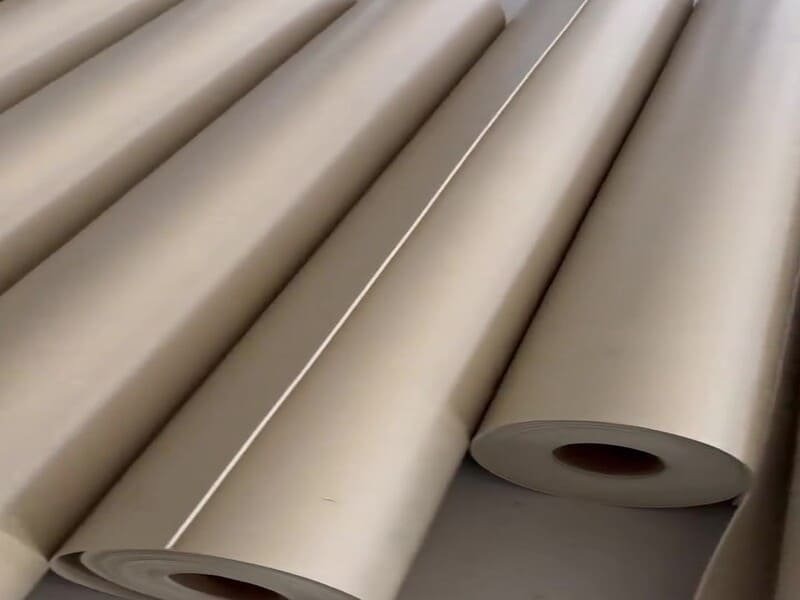
Understanding these trade-offs allows us to evaluate the total cost of ownership rather than just the initial price tag.
What Is the True Cost: Upfront Price vs. Lifetime ROI?
Calculating the cost of sports flooring requires looking past the initial invoice to evaluate installation complexity and long-term replacement cycles. A cheap upfront choice can become an expensive nightmare if it fails under your facility’s specific daily traffic.
1. Initial Material and Installation Expenses
Raw material costs vary based on thickness and quality, but high-grade PVC sports flooring and top-tier vulcanized rubber rolls sit in a similar premium price bracket. The true divergence occurs during installation.
PVC sports flooring requires a perfectly smooth, moisture-treated concrete subfloor. The rolls must be unrolled, glued down with specialized acrylic adhesives, and then the seams must be heat-welded using a matching PVC welding rod to create a single, 100% waterproof sheet. This requires professional installers and specialized tools, which increases upfront labor costs.
2. Installation Flexibility and Lifespan
Rubber offers more flexibility for budget-conscious installations. Interlocking rubber tiles can be laid down directly over existing subfloors by warehouse staff or DIY gym owners without any glue, saving massive installation fees. Rubber rolls do require adhesive, but they do not require complex heat welding.
Installation & Lifespan Trade-offs:

* PVC: High installation skill required + Heat welding = 100% Seamless & Sanitary
* Rubber: Low-to-medium skill required + Interlocking = Easy to swap damaged tiles
When placed in their correct environments, both materials offer exceptional lifespan. A premium PVC floor in a multi-purpose indoor court will easily last over 10 years without losing its foam bounce. However, if you place that same PVC floor under a weight rack, it will fail in less than a year. Under heavy iron, vulcanized rubber lasts for decades, making it the highest ROI choice for strength training.
Where Each Floor Shines: The Final Checklist
To make your decision simple, use this production-verified checklist to match your primary facility activity with the correct manufacturing solution.
Choose PVC Sports Flooring If You Are Building:
- Multi-Purpose Indoor Sports Halls: Ideal for basketball, volleyball, badminton, and futsal because it provides uniform ball bounce and safe traction.
- Dance, Yoga, or Pilates Studios: The soft foam backing provides comfortable underfoot insulation, prevents joint fatigue, and offers a warm, clean surface for floor exercises.
- School Gymnasiums: It handles heavy foot traffic from kids while providing maximum impact safety during recess games.
Choose Rubber Sports Flooring If You Are Building:
- Commercial Weightlifting Zones or CrossFit Boxes: It withstands repeated drops from heavy Olympic bars and bumper plates without damaging the subfloor.
- Home Gyms with Free Weights: Easy to install via interlocking tiles, highly durable, and dampens vibration noise throughout the house.
- Specialized High-Stress Areas: Perfect for ice rink perimeters (withstands skate blades), ski resorts, and heavy foot traffic equipment paths.
Conclusion
The final choice between PVC and rubber sports flooring comes down to your primary activity. If your facility focuses on ball sports, agility training, and quick cleaning, choose PVC; if your facility focuses on heavy iron, high impact, and raw durability, go with rubber.
Need Professional Guidance for Your Facility?
If you are planning a commercial gym project or sourcing bulk sports flooring for an upcoming tender, let us collaborate. Send me a private message today with your facility dimensions, primary activity, and subfloor conditions. I will personally review your project specifications and provide a direct factory consultation to ensure you get the exact material density, thickness, and performance your athletes need.