


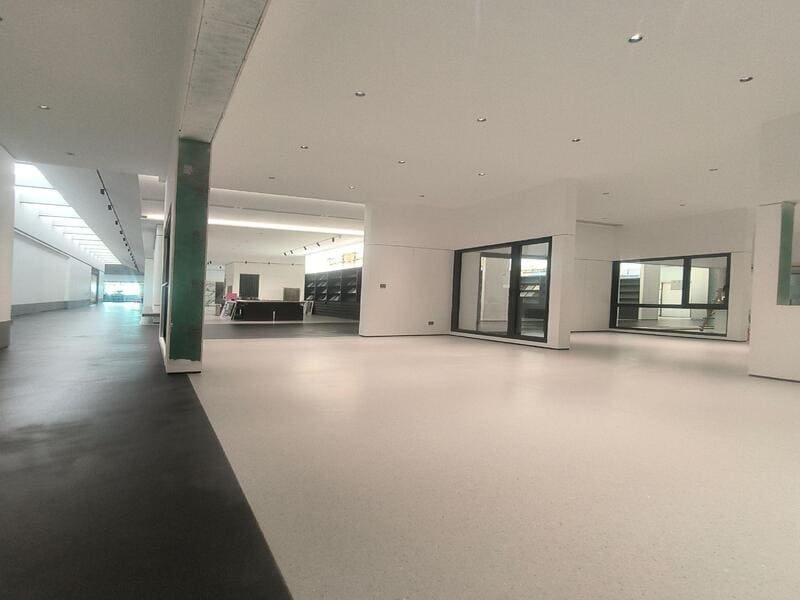
Yes, you can install PVC sports flooring directly over concrete without a subfloor, but only if the concrete is perfectly flat, 100% dry, and your sports activities do not require high shock absorption.
As an installation director with years of hands-on experience in sports flooring engineering, I see many clients try to cut corners to save money. A subfloor adds significant labor and material costs, so skipping it is a common goal. However, doing this without a proper site assessment can completely ruin your investment. In this guide, I will share the exact technical rules we use in the field to help you decide if you can skip the subfloor safely or if you must install one.
Let us dive deep into the technical facts and real-world conditions so you can make the right decision for your project.
Why Do You Worry About Cost Savings vs Ruining the Floor?
Direct installation saves up to 40% on initial material and labor costs, but subfloor failure can lead to expensive repair costs that double your original budget.
When I talk to project managers and facility owners, their main worry is always budget versus durability. You want to save money on wood or rubber underlayments, but you also fear that the PVC rolls will bubble, crack, or unglue after six months. This fear is real because concrete looks solid, but it behaves like a sponge that holds water and transfers force. If you install a thin PVC roll directly on a bad concrete slab, every imperfection will show through, and the floor will feel like rock.
Balancing Performance and Budget
| Consideration | Direct Concrete Installation | Wood/Rubber Subfloor System |
|---|---|---|
| Material Cost | Extremely Low | High (Plywood/Rubber pads) |
| Labor Time | Fast (1-2 days) | Slow (3-5 days) |
| Risk of Failure | High (If concrete has moisture) | Very Low (Subfloor protects PVC) |
| Joint Protection | Low (Depends on PVC foam thickness) | High (Meets EN 14904 standards) |
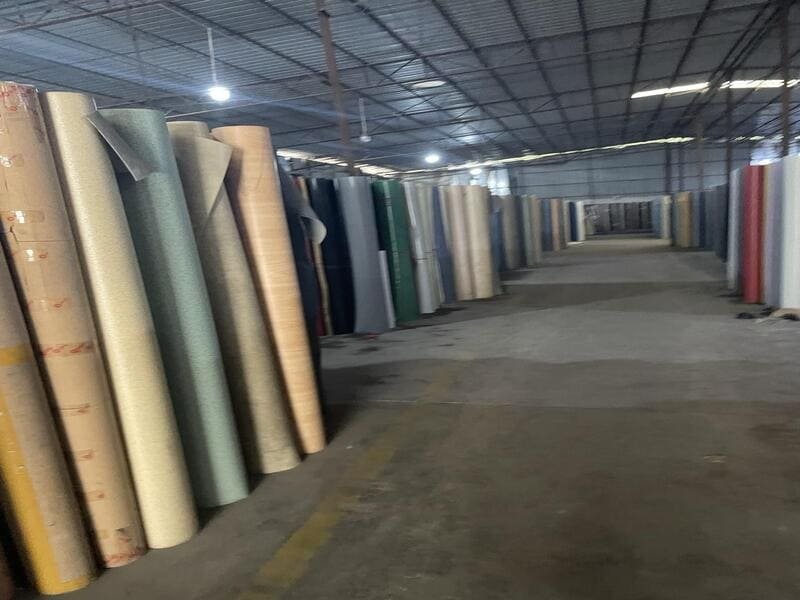
This technical trade-off means you must know exactly when to say yes and when to say no to bare concrete.
When Can You Skip the Subfloor?
You can skip the subfloor when your concrete slab is fully cured, flat, dry, and when the PVC flooring has a thick built-in foam backing for low-impact sports.
Scenario A: The Green Light for Direct Installation
I give my team the green light to skip the subfloor only under specific conditions. First, the concrete must be at least 28 days old so it is fully cured. Second, the PVC sports flooring must be a heterogeneous roll with a high-density foam backing of at least 4.5mm to 8mm thickness. Third, the facility must be used only for low-impact activities like table tennis, yoga, or light fitness training.
Scenario B: The Red Light Where a Subfloor is Required
You absolutely must use a subfloor if the court is for professional basketball or volleyball. These sports require a vertical deformation and shock absorption rate of at least 25% to 45% under the EN 14904 standard. Thin PVC over raw concrete provides less than 10% shock absorption, which causes knee injuries. Furthermore, if the concrete sits directly on soil without an old vapor barrier, or if it is uneven, you cannot skip the subfloor.
| Technical Property | Direct on Concrete (6.0mm PVC) | PVC Over Wood Subfloor System |
|---|---|---|
| Shock Absorption | ~15% – 20% | ~35% – 50% (Excellent) |
| Ball Rebound (EN 12235) | ≥ 90% (Very Hard) | ~93% (Standard Compliant) |
| Vertical Deformation | Low (< 1.0mm) | Medium (1.5mm – 3.0mm) |
If you meet the green light conditions, you must still follow strict preparation rules to avoid flooring failure.
What Are the 3 Golden Rules of Concrete Preparation?
The three golden rules are testing and sealing moisture, grinding or filling to achieve a flat surface, and cleaning the concrete to ensure perfect glue adhesion.
Rule 1: Moisture Control
Moisture is the number one enemy of PVC adhesive. Water vapor rises through concrete and destroys water-based acrylic glues, which creates bubbles and mold. I always require a Calcium Chloride test (ASTM F1869) or a Relative Humidity probe test (ASTM F2170). The RH level must be below 75%. If it is higher, you must apply a 100% solids epoxy Damp Proof Membrane (DPM) before laying the PVC.
Rule 2: Leveling and Flatness
Your concrete slab must be flat within 3mm over a 3-meter radius (or 1/8 inch over 10 feet). If you have dips, the PVC will sink and create a trip hazard. If you have bumps, the PVC will wear out fast at those high spots. We use a self-leveling cement compound to patch all low areas before installation.
Rule 3: Cleanliness and Texture
Concrete must be free of dust, oil, old paint, and wax. Smooth power-troweled concrete is often too slick for glue to bite into. We shot-blast or grind the surface to open up the concrete pores, which guarantees a permanent bond with the adhesive.
Concrete Acceptance Standards
| Test Parameter | Standard Method | Passing Limit for Direct PVC |
|---|---|---|
| Moisture Vapor | ASTM F1869 | < 3 lbs / 1,000 sq.ft / 24 hours |
| Relative Humidity | ASTM F2170 | ≤ 75% RH |
| Surface Flatness | Straightedge | ≤ 3mm variance over 3 meters |
| pH Level | pH Paper | Between 7.0 and 9.0 |
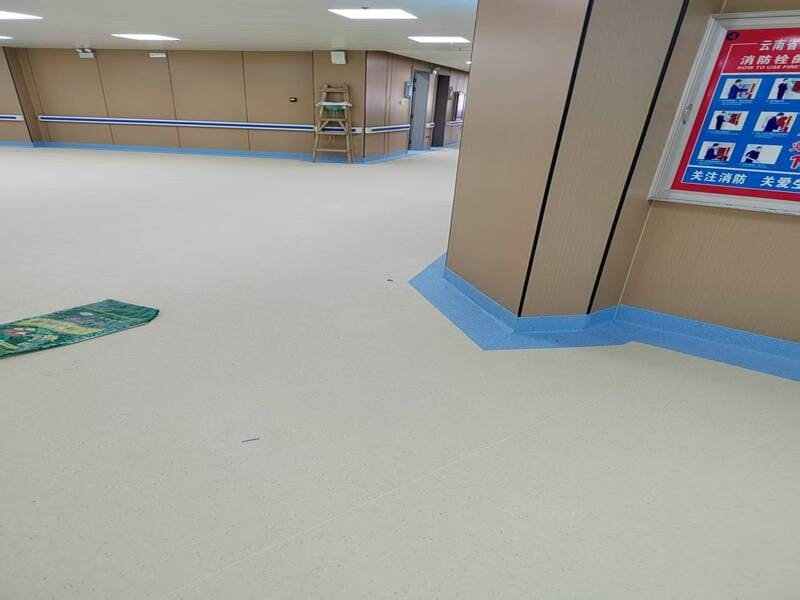
Selecting the right type of PVC product can also help mitigate some minor concrete issues.
How Do PVC Flooring Types Affect Subfloor Necessity?
Thick heterogeneous foam-backed PVC rolls and interlocking tiles handle bare concrete well, while thin homogeneous sheets demand a perfect subfloor base.
Product Selection Matrix
| PVC Flooring Type | Thickness Range | Direct to Concrete? | Best Application |
|---|---|---|---|
| Homogeneous Sheet | 2.0mm – 3.0mm | No (Shows every bump) | Healthcare/Corridors |
| Heterogeneous Sports Roll | 4.5mm – 8.0mm | Yes (If flat and dry) | Badminton/Multi-purpose |
| Interlocking PVC Tiles | 5.0mm – 7.0mm | Yes (Forgives moisture) | Home Gyms/Garage Fitness |
Analyzing the Engineering Differences
Homogeneous PVC is one solid layer without foam. If you glue it to raw concrete, the floor will feel rock-hard, and every tiny grain of sand underneath will telegraph to the surface. Heterogeneous sports PVC contains a top wear layer, a fiberglass stabilization layer, and a PVC foam backing layer. This foam layer acts like a mini-subfloor, absorbing minor impacts and masking small subfloor imperfections. Interlocking PVC tiles do not use glue, so they allow concrete to breathe, making them the safest choice for DIY projects on damp floors.
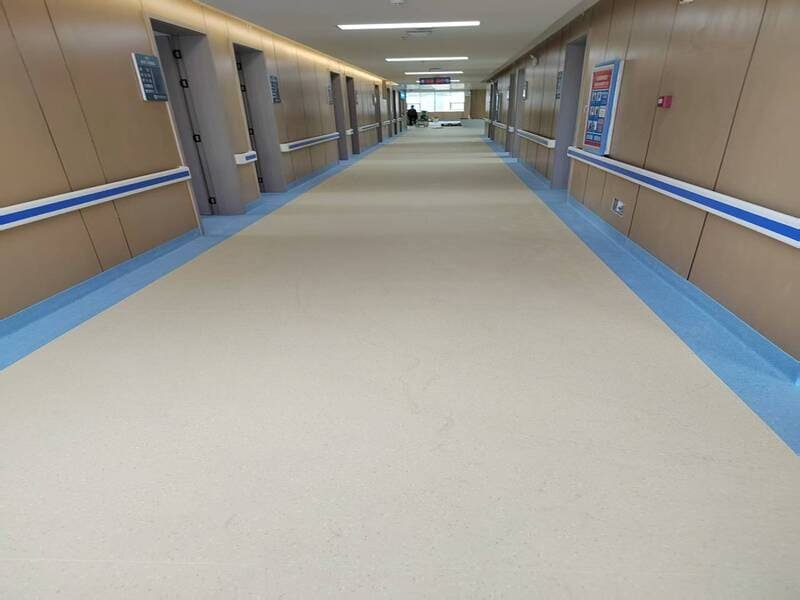
Let us compare the clear benefits and real risks of installing these products without a subfloor base.
What Are the Pros and Cons of Concrete-Only Installation?
The pros are low material costs and low floor height, while the cons are hard impacts on joints and zero tolerance for moisture spikes.
The Benefits and Drawbacks
| Pros (Advantages) | Cons (Disadvantages) |
|---|---|
| Saves $5 to $15 per square meter on plywood or underlayment. | Low shock absorption can cause fatigue in athletes. |
| Eliminates door trimming issues because the floor profile stays low. | High risk of glue failure if the subfloor gets wet later. |
| Works perfectly with underfloor radiant heating systems. | The floor feels cold during winter seasons. |
Technical Analysis of the Risks
From an engineering viewpoint, the biggest risk is the lack of a safety net. A wood subfloor system absorbs structural movement and dissipates vapor pressure. When you glue PVC directly to concrete, the PVC becomes part of the slab. If the slab cracks due to temperature drops or settling, the PVC sports floor will tear or wrinkle. You must decide if the cost savings are worth the potential reduction in floor lifespan.
If you accept these risks and your site is ready, you must follow our precise installation steps.
Step-by-Step Guide: How to Install PVC Directly on Concrete
To install PVC successfully on bare concrete, you must acclimate the material, fix all slab defects, apply the correct glue, weld the seams, and roll the entire floor.
The Field Installation Procedure
| Step Number | Phase Name | Key Action Requirement |
|---|---|---|
| Step 1 | Acclimatization | Unroll PVC in the room at 18°C to 26°C for 24-48 hours. |
| Step 2 | Slab Patching | Fill all cracks with polyurethane filler and sand smooth. |
| Step 3 | Moisture Barrier | Lay a 0.2mm PE film if installing interlocking loose-lay tiles. |
| Step 4 | Adhesive Application | Use a fine trowel to spread pressure-sensitive sports glue. |
| Step 5 | Seam Welding | Grooving and heat-welding joints with a 4mm PVC welding rod. |
| Step 6 | Floor Rolling | Use a 45kg (100-lb) roller from the center out to remove air. |
Professional Installation Tips
Never skips the acclimatization step. PVC expands and contracts with temperature. If you glue cold PVC to warm concrete, the floor will develop large bubbles the next day. When applying glue, wait for the proper flash time until the adhesive becomes tacky but does not transfer to your fingers. For heavy sports traffic, use a two-part polyurethane adhesive instead of acrylic glue because polyurethane resists water and heavy rolling loads much better.
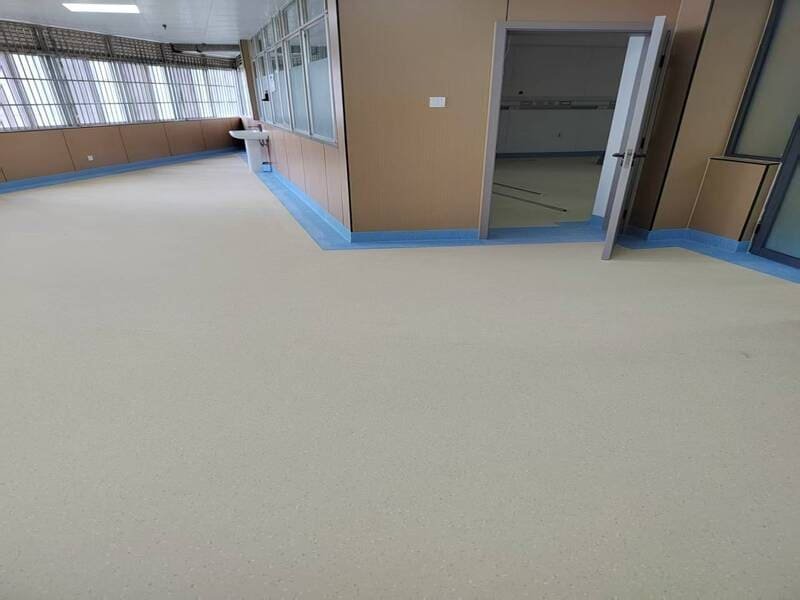
Different sports activities place unique demands on a direct-concrete installation.
How Do Specific Sports Requirements Affect Your Choice?
High-impact sports like basketball require a subfloor system for safety, while low-impact activities like badminton or yoga perform well directly on concrete.
Requirements by Sport Type
| Sport | Impact Level | Ball Bounce Need | Direct Concrete Approved? |
|---|---|---|---|
| Basketball | High | High (Uniform) | No (Needs sprung subfloor) |
| Badminton | Medium | Low | Yes (With ≥ 4.5mm foam PVC) |
| Weight Training | Extreme | None | No (Needs heavy rubber mats) |
| Yoga / Pilates | Low | None | Yes (Provides good stability) |
Engineering for Athlete Safety
In basketball, players land with a force equal to three to four times their body weight. Without a wood subfloor or a thick rubber underlayment, that energy returns straight into the player’s ankles and spine. For badminton, vertical traction and slip resistance are more important than deep shock absorption, so a 4.5mm or 6.0mm PVC roll glued to flat concrete works beautifully. For weight rooms, dropped dumbbells will easily crack thin PVC and smash the concrete underneath, meaning you need thick vulcanized rubber tiles instead of standard PVC.
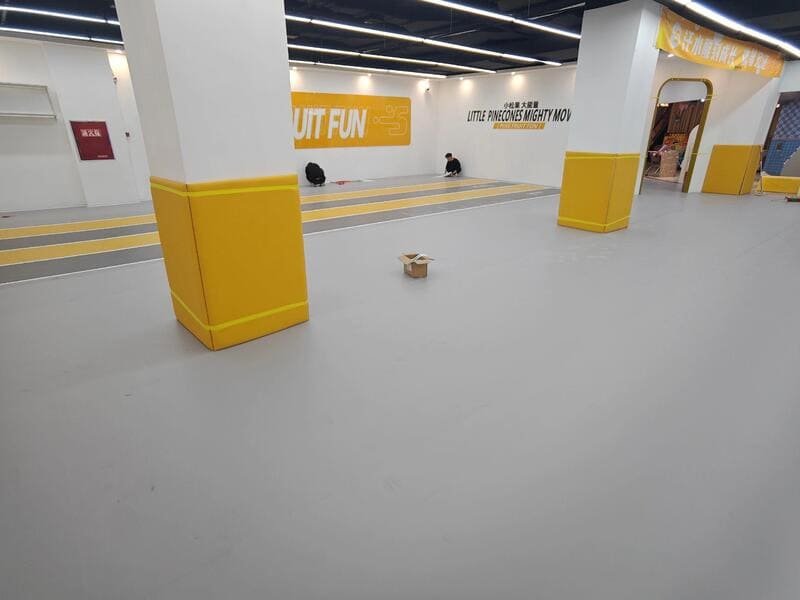
Let us answer the most common questions that buyers and installers ask me during site visits.
Frequently Asked Questions (FAQ)
Can I install PVC over old epoxy-coated concrete?
Yes, but you must check the bond of the epoxy first. If the epoxy is peeling or bubbling, you must grind it off. If the epoxy is stable, you must sand it to create a rough texture so the new PVC glue can bond to it.
What happens if I do not use a vapor barrier?
If your concrete has high moisture and you skip the barrier, the adhesive will turn back into a liquid state. The PVC sports floor will lift, bubbles will form, and mold will grow underneath, creating bad odors.
How long does PVC sports flooring last on bare concrete?
On a dry, flat concrete floor with proper adhesive, a high-quality sports PVC floor lasts 10 to 15 years. If the concrete has moisture issues, the installation can fail within 6 months.
Is a padded underlayment the same as a subfloor?
No. A padded underlayment is a thin foam or rubber mat that adds minor cushioning. A true subfloor is a structural layer, like two layers of plywood or a sleeper system, which distributes heavy loads and absorbs structural impacts.
Conclusion
Direct installation works perfectly if your concrete is dry, flat, and you use a thick foam-backed PVC roll for medium-impact sports. Never skip moisture testing.