


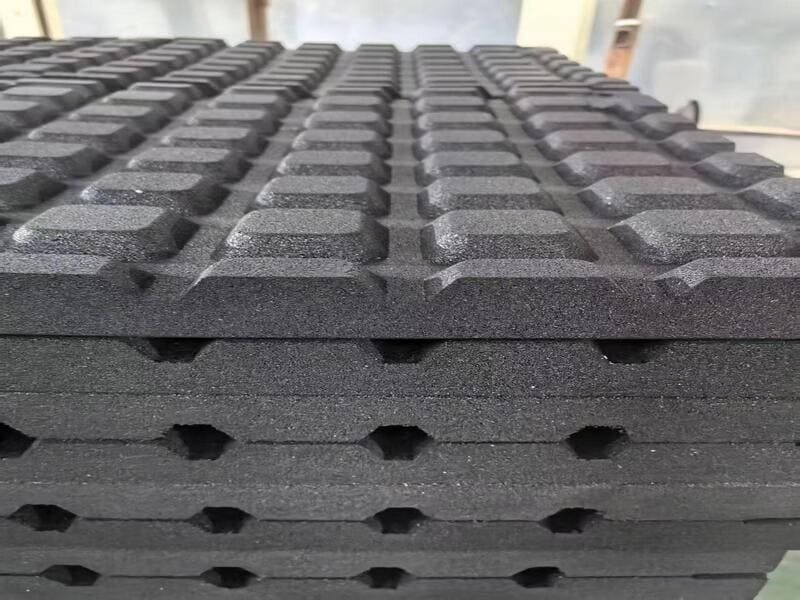
Rubber gym floors feel hard because of high material density, low thickness, or specific manufacturing like vulcanization. While users expect a soft cushion, industrial rubber is often engineered for stability and durability. Understanding the balance between shore hardness and shock absorption is key to solving this common discomfort.
In my years as a production engineer, I have seen many gym owners surprised by the firmness of their new flooring. From a manufacturing perspective, "hardness" is a technical choice rather than a mistake. We use high-pressure molding to create tiles that can withstand thousands of pounds. If the rubber is too soft, heavy equipment like power racks will sink and create permanent dents. This "hardness" is actually density, measured in kilograms per cubic meter. When we design a production line for heavy-duty gym mats, we prioritize a stable base for the athlete’s foot. However, This is why two rubber mats with the same thickness can feel completely different when their density and manufacturing methods are not the same. This leads to increased stress on joints and more noise during weight drops. I always tell my clients that the goal is not a "soft" floor, but a "responsive" one that protects both the subfloor and the person using it.
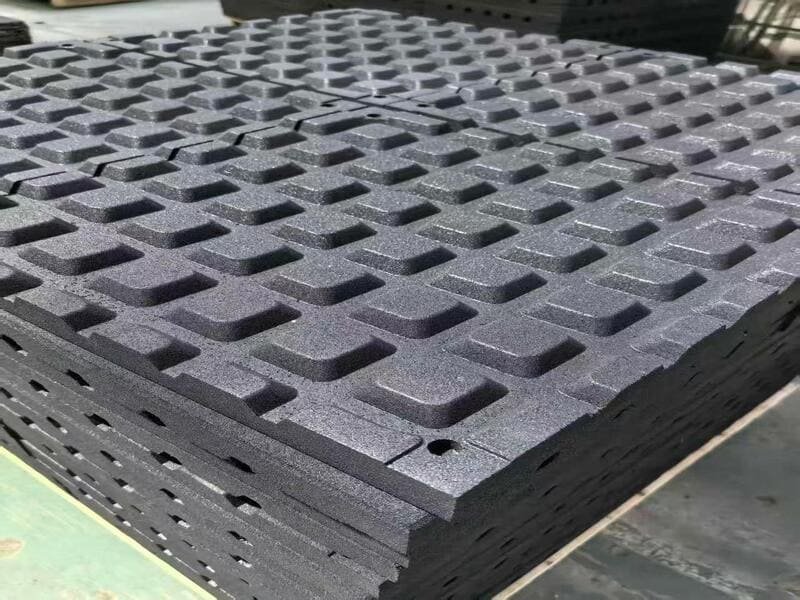
You might wonder how we measure this firmness in the factory. This leads us to the actual science of rubber materials.
What Is the Science Behind Rubber Hardness?
We measure rubber hardness using the Shore A scale, where most gym floors rank between 60 and 70. This range ensures the floor is firm enough for stability but retains enough elasticity to absorb impact. Higher density and vulcanization processes increase this hardness to prevent material deformation under heavy loads.
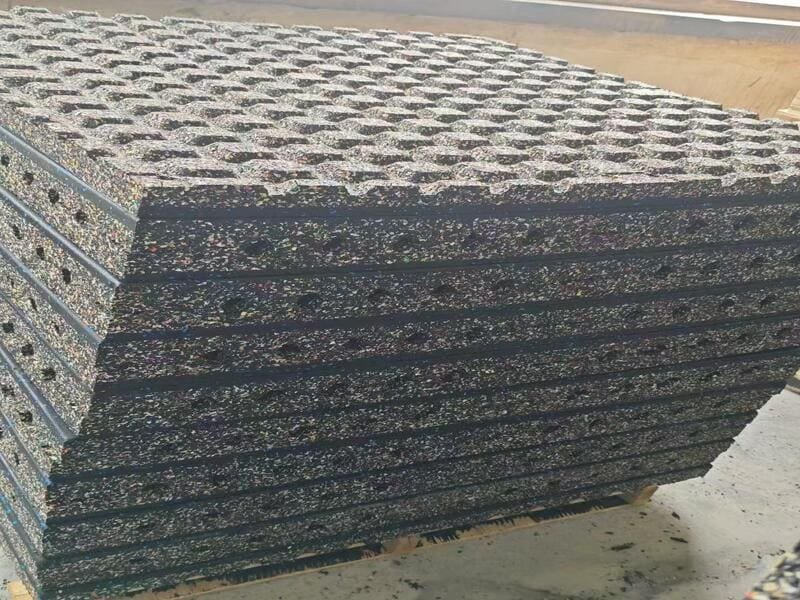
As an engineer, I focus on the durometer of the material during the quality control phase. Most recycled SBR rubber is processed with heat and binders which naturally makes it feel firm. When we use the vulcanization process, we create strong chemical bonds between polymer chains. This makes the rubber very tough and water-resistant, but it also increases the Shore A rating. If you use a high-density mat, it helps prevent ankle rolls during heavy squats because the surface does not compress unevenly.
| Technical Factor | Typical Range | Impact on Feel |
|---|---|---|
| Shore A Hardness | 60 – 75 | Higher means a firmer, more plastic-like feel. |
| Material Density | 900 – 1200 kg/m³ | High density improves durability but reduces "squish." |
| Manufacturing Type | Cold Press vs. Vulcanized | Vulcanized is much harder and more durable. |
I remember a project where a client wanted the densest tiles possible for a yoga studio. I had to explain that while the tiles would last forever, they would be very uncomfortable for floor work. We must match the manufacturing specs to the actual movement. If the production pressure is too high, the air pockets between rubber crumbs disappear, and the floor starts to feel like solid rock.
This technical balance is why some floors fail to meet user expectations. Let look at the main reasons for this.
What are the Top 5 Reasons Your Gym Floor Feels Too Hard?
The five main reasons include using high-density SBR tiles instead of soft rolls, choosing insufficient thickness like 3mm mats, cold environmental temperatures, laying rubber directly onto concrete, and material hardening due to oxidation over time. Each factor reduces the floor’s ability to deflect and absorb energy during use.
From my experience on the factory floor, the most common issue is the "Bottoming Out" effect. This happens when a mat is too thin, such as 3mm or 5mm. When you jump, the rubber compresses instantly and your force hits the concrete subfloor. This makes the rubber feel harder than it actually is. Also, temperature is a big factor. Rubber is a polymer, and in cold garages, these politicians lose their flexibility. Another silent killer is oxidation. Over 5 to 10 years, the UV light and air break down the binders, making the rubber brittle and stiff.
Technical Causes of Floor Hardness
| Reason | Description | Engineering Insight |
|---|---|---|
| Density Choice | SBR vs. Virgin EPDM | Virgin rubber rolls are usually softer than recycled tiles. |
| Thickness | 3mm vs. 20mm | 20mm allows for progressive compression and better feel. |
| Subfloor | Concrete vs. Wood | Concrete offers zero "give," making thin mats feel rigid. |
I once inspected a garage gym where the owner complained of knee pain. The mats were high-quality, but the garage was unheated in winter. The rubber had reached its "glass transition" point where it felt like plastic. Just adding a simple underlayment or increasing the thickness to 15mm would have solved the physics of the impact.
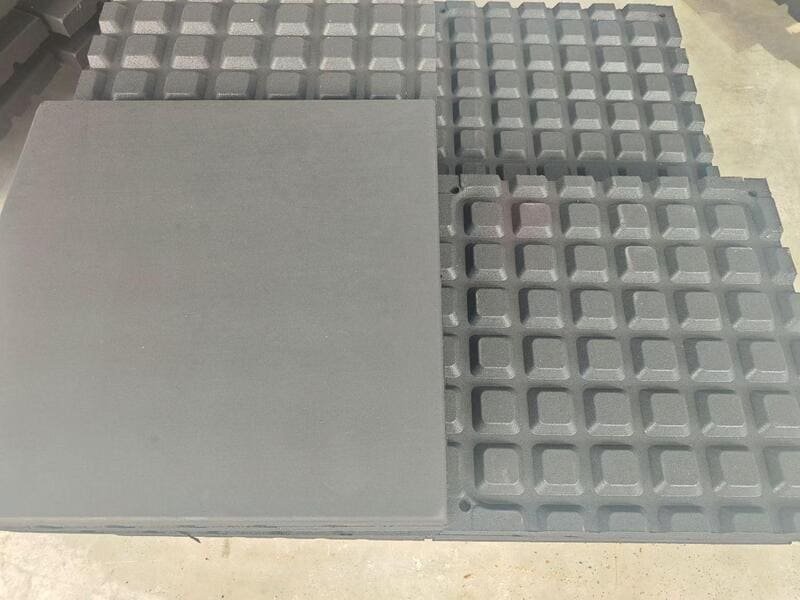
This brings us to a very important choice every buyer must make regarding performance.
How Do You Balance Stability and Comfort?
Stability is vital for heavy lifting to prevent energy loss, while comfort is needed for high-impact or floor exercises. A floor that is too soft will cause balance issues and "pitting" under heavy equipment. Understanding why shock absorption matters for gym floors is essential because overly hard surfaces increase joint fatigue, vibration, and impact noise.
In the world of gym design, there is always a trade-off. For powerlifting, I recommend a very hard, high-density floor. You do not want the floor to move when you have 500 pounds on your back. However, for a HIIT class with lots of jumping, that same floor will be a nightmare. If we make the rubber too squishy, the legs of a treadmill or a heavy rack will sink into the floor over time. This creates "pitting," which is a permanent dip in the material. As an engineer, I suggest "zoning" to solve this. Use very hard vulcanized rubber for the weight area and softer, thicker tiles for the functional area.
| Activity Type | Recommended Feel | Engineering Reason |
|---|---|---|
| Heavy Lifting | Hard / Firm | Prevents energy loss and ensures foot stability. |
| HIIT / Jumping | Medium / Soft | Requires high shock absorption to protect joints. |
| Yoga / Stretching | Soft | Needs "give" for body contact and comfort. |
I have seen many people try to put gym mats over plush carpet to make them "softer." This is a big mistake. The lack of a solid base makes the surface unstable and can lead to tripped ankles. The "hardness" of the rubber is there to keep you safe; the "thickness" is there to keep you comfortable.
This can be confusing, but there are simple ways to test your floor today.
How Can You Identify Your Floor Problem?
You can identify the problem using the Thumb Test to check for indentation, the Drop Test with a kettlebell to observe bounce versus thud, and by checking the Technical Data Sheet (TDS) for density values. These tests help determine if the issue is the material or the installation.
If you can’t make a small dent in the rubber with your thumb, the shore hardness is likely above 75. This is very hard for a gym. Another test I use is dropping a 10kg bumper plate. If it bounces back aggressively, the floor is very elastic. If it hits with a dead thud and you feel the vibration in your feet, the floor is "bottoming out" against the concrete. As an engineer, I always look at the density in the specs. If the density is over 1100 kg/m³ and the tile is only 10mm thick, it will almost certainly feel hard.
Diagnostic Checklist for Gym Owners
| Test Method | What to Look For | What it Means |
|---|---|---|
| The Thumb Test | Surface "give" | No give means high durometer/density. |
| The Drop Test | Sound and Vibration | High vibration means insufficient thickness. |
| TDS Review | Density (kg/m³) | Higher density requires more thickness for comfort. |
I often help customers read their technical sheets. Many find that they bought "industrial warehouse mats" instead of "sports flooring." While they look the same, the warehouse mats are designed for forklifts, not humans. Identifying the exact density is the first step to fixing the comfort of your gym space.
Once you know the problem, we can look at the engineering solutions.
How Do You Soften the Impact of a Hard Floor?
You can soften the impact by adding a high-impact foam or crumb rubber underlayment, zoning your gym with thicker "drop zones" for weights, or upgrading to 20mm interlocking tiles. These methods increase the total depth of compressible material without sacrificing the stability of the top surface.
If your current floor is too hard, you don’t always have to throw it away. As a production engineer, I often suggest adding a 5mm underlayment made of low-density rubber. This creates a "dual-durometer" system. The top layer stays hard and durable, while the bottom layer provides the air pockets needed for cushion. Another great solution is creating a dedicated platform for heavy lifting. By adding 20mm or 30mm tiles just in the areas where you drop weights, you save money while protecting your joints.
Strategies for Improvement
| Strategy | Implementation | Benefit |
|---|---|---|
| Underlayment | Add a 3-5mm soft layer | Increases shock absorption for the whole room. |
| Thick Drop Zones | Use 20mm+ tiles in key spots | Protects subfloor and reduces noise specifically. |
| Zoning | Mix turf and rubber | Provides different feels for different workouts. |
I worked with a commercial gym that had very thin, hard rolls. Instead of replacing the whole floor, we installed 20mm "impact tiles" on top of the rolls in the free weight area. This fixed the noise complaints from the neighbors and made the members much happier. It is all about managing the physics of the impact through layers.
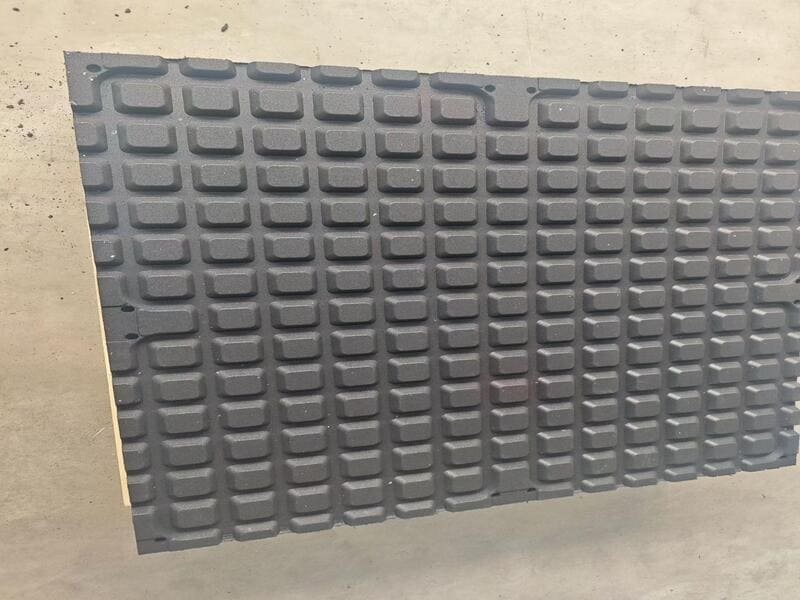
The best way to avoid these problems is to buy the right product from the start.
How Do You Choose the Right Feel for Your Next Gym?
Choose your floor based on your specific application: 15mm+ high-density tiles for powerlifting, 8mm-10mm rolls for general fitness, and turf or vulcanized rubber for functional training. Always ask your supplier for the Shore A hardness and the specific density in kg/m³ before purchasing.
When you talk to a manufacturer, you must be specific. Don’t just ask for "rubber flooring." Ask for the density. For a home gym in a garage, I usually recommend 15mm tiles because they handle the cold and the concrete subfloor much better than thin rolls. If you are doing a lot of sprints and sled work, look for vulcanized rubber with a lower density or a turf track. Always ask for a sample. You should be able to feel the difference between a 900 density and a 1200 density tile just by holding them.
Buyer’s Technical Checklist
- What is the Shore A Hardness? (Target 60-70 for general use).
- What is the Density? (950 kg/m³ is a good balance for most).
- Is it Cold-Pressed or Vulcanized? (Cold-pressed is usually "softer").
- What is the Thickness? (Never go below 8mm for concrete floors).
I have helped many brands optimize their product lines. I always suggest that they offer at least two density options. This allows the customer to pick the right "firmness" for their specific sport. Buying the wrong density is a mistake that is very expensive to fix later.
Conclusion
Hard gym floors result from density and thickness choices. Balance your selection based on your heaviest lift and frequent movements.
Need help choosing the right density for your gym project? If you are looking for a manufacturer who understands the engineering behind the feel, feel free to send me a private message (DM) for a professional consultation.