


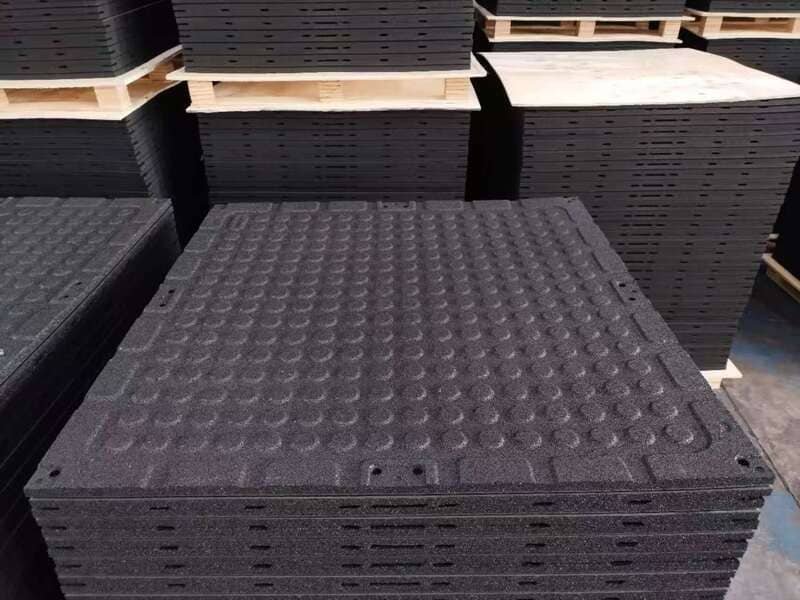
To remove sweat odor from rubber flooring, you must use an enzymatic cleaner or a pH-neutral degreaser to break down organic proteins trapped in the material’s pores. Simple mopping only cleans the surface, so you need mechanical agitation with a soft brush to reach deep-seated bacteria and eliminate the smell.
As a production process engineer, I have spent years optimizing the density and surface tension of rubber mats. Most people do not realize that rubber, especially recycled crumb rubber, is not a solid block of plastic. It is a porous structure. When athletes sweat, the liquid carries skin cells and oils deep into these microscopic gaps. Standard detergents cannot reach these depths. Over time, these trapped organics rot. This creates a persistent "locker room" smell that seems impossible to kill. I have seen facility managers replace entire floors because they did not understand this basic material science. To solve the problem, you have to treat the floor like a filter that needs backwashing, not just a table that needs wiping. You must focus on the "Biofilm"—a sticky layer of body oils that protects bacteria from standard cleaners.
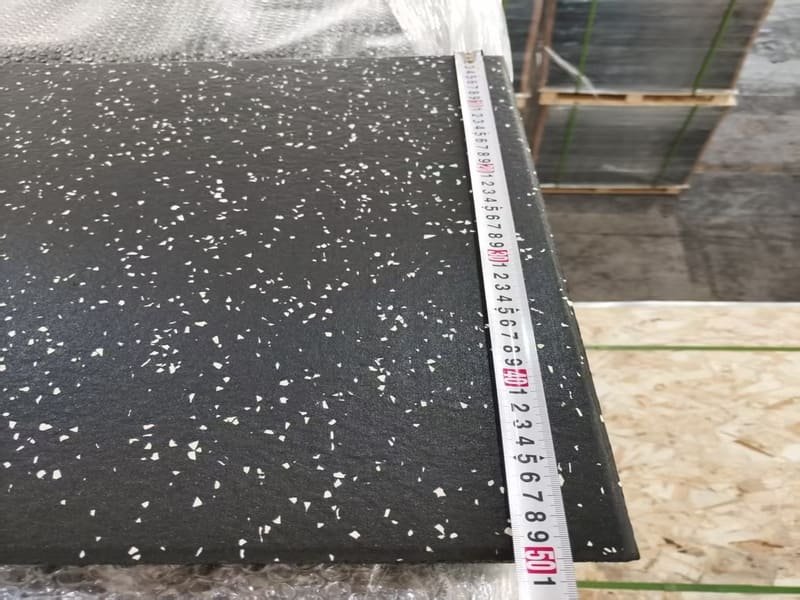
You need to understand the physics of the material to choose the right cleaning strategy for your specific gym environment.
Why Does Rubber Flooring Hold Odors Over Time?
Rubber flooring holds odors because it is a porous material that absorbs moisture and organic matter through capillary action. Low-density mats act like sponges, trapping sweat and bacteria in internal voids where heat and darkness accelerate microbial growth, leading to a permanent foul smell if not deep-cleaned.
| Feature | Open-Cell/Recycled Rubber | Closed-Cell/Virgin Rubber |
|---|---|---|
| Porosity | High (Microscopic gaps) | Very Low (Sealed surface) |
| Odor Retention | High (Traps sweat deep) | Low (Surface level only) |
| Cleaning Needs | Deep Agitation Required | Surface Wiping Sufficient |
| Durability | High Impact Resistance | High Chemical Resistance |
Understanding the Engineering of Rubber Porosity
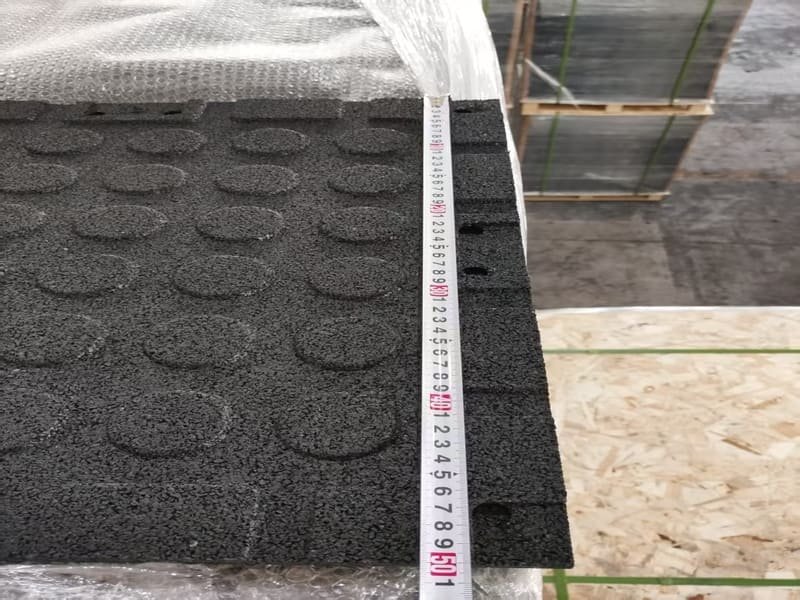
From a manufacturing perspective, the density of your mat determines its odor resistance. Recycled rubber is made of granules bonded with polyurethane. This process leaves tiny "interstitial spaces." When you sweat, the salt buildup and proteins settle in these spaces. I often explain to my clients that "old rubber smell" issues in mats are often just sulfur off-gassing from the vulcanization process, which is harmless and fades. However, "Sweat Smell" is a biological failure. Bacteria break down urea and pheromones in the sweat, releasing ammonia and sulfur compounds. If your floor has a density lower than 950 kg/m³, it is much more likely to swallow these liquids. You are not just cleaning a floor; you are managing a microbial habitat. We must use chemistry to reach where the mop cannot go.
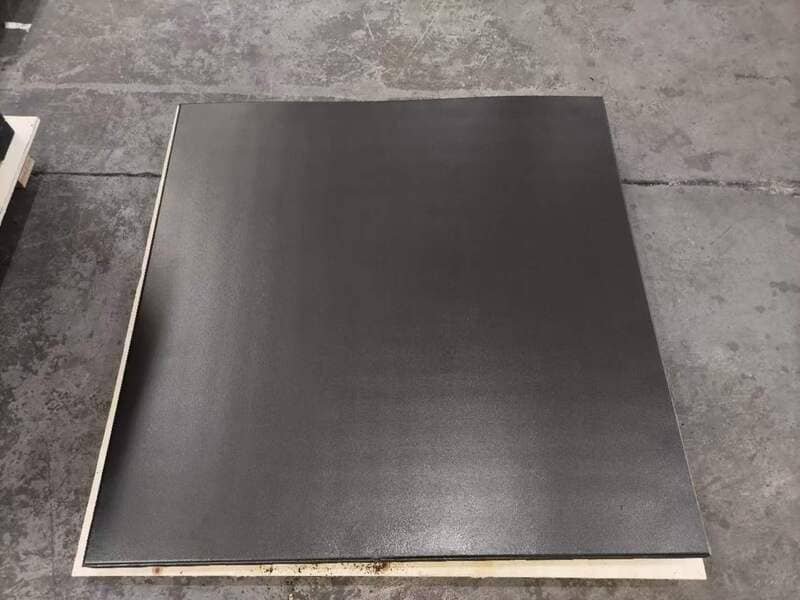
If you do not change your cleaning agents now, the smell will return within hours of your next workout session.
How Do You Execute the Deep Cleaning Protocol?
The deep cleaning protocol requires four steps: dry debris removal, application of an enzymatic cleaner to digest organic proteins, mechanical agitation with a soft-bristle brush, and a full water extraction. This process ensures that the cleaning solution penetrates the rubber pores and removes the bacteria-laden biofilm.
The Technical Steps for Odor Elimination
To get professional results, you must follow the correct chemical sequence. I recommend starting with a dry vacuum to remove grit that can abrade the rubber surface. Next, choose your agent wisely. Vinegar is good for mineral deposits, but enzymatic cleaners are the only tools that "eat" the sweat proteins.
| Step | Tool/Agent | Purpose |
|---|---|---|
| 1. Dry Prep | HEPA Vacuum | Remove skin cells and dust |
| 2. Chemical | Enzymatic Degreaser | Break down body oils/biofilm |
| 3. Agitation | Soft-Bristle Deck Brush | Force cleaner into rubber pores |
| 4. Extraction | Wet/Dry Vac | Remove dirty solution completely |
Why Mechanical Agitation is Mandatory
In our factory tests, we found that "dwell time"—letting the cleaner sit—is not enough. You need friction. A soft-bristle brush works the solution into the texture of the mat. If you use a flat mop, you are simply pushing dirty water over the holes. This actually fills the pores with more debris. Also, you must extract the water. If you let it air-dry, the dissolved sweat just settles back into the bottom of the mat. Use a wet vacuum to pull the contaminants out of the floor entirely. This is the only way to achieve a 100% reset of the floor’s hygiene.
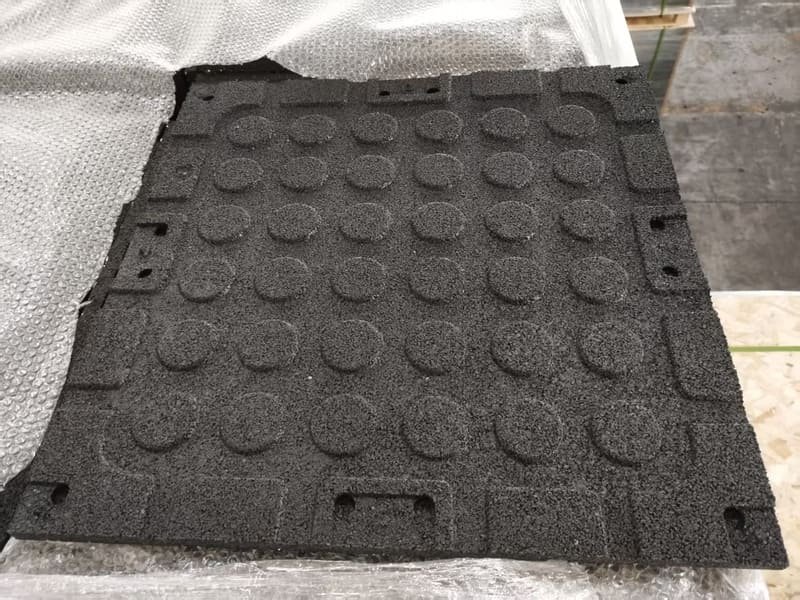
Many people try to fix this with the wrong chemicals, which often leads to permanent damage to the floor tiles.
What Are the Common Mistakes to Avoid When Cleaning Rubber?
You must avoid bleach and oil-based cleaners because bleach dries out the rubber binders causing cracks, while oils can dissolve the polyurethane glue holding the floor together. Excessive water is also dangerous as it can seep into seams and cause mold growth on the subfloor.
| Mistake | Consequence | Engineering Reason |
|---|---|---|
| Bleach | Cracking/Pitting | Oxidizes the rubber polymer |
| Pine/Oil Cleaners | Sticky Surface | Dissolves the PU binder |
| Excessive Water | Subfloor Mold | Capillary action through seams |
Protecting the Structural Integrity of the Mats
I have seen many gym owners ruin their investment by using harsh disinfectants. Bleach is a strong base that strips the protective oils from the rubber. This makes the surface brittle and more porous, which actually makes it smell worse in the long run. Oil-based cleaners like Pine-Sol are even worse. Rubber is a hydrocarbon-based product. Oil-based cleaners act as a solvent. They make the floor feel "gummy" or sticky. Once the surface is sticky, it attracts more dirt. This creates a cycle of filth. You should stay with neutral pH cleaners (pH 7-9). These are safe for the rubber and safe for the skin of the athletes who use the floor.
Once the floor is clean, you need a plan to keep the odor from returning next week.
How Can You Prevent Odor Build-Up Long-Term?
Long-term prevention involves applying a specialized rubber floor sealant to close surface pores and maintaining strict humidity control below 50%. Implementing a "wipe-down" rule after every workout and performing a deep mechanical clean once a month will stop sweat from ever reaching the inner core of the mats.
Maintenance and Engineering Solutions
The most effective way to stop the smell is to prevent the sweat from entering the rubber. I suggest using a water-based polyurethane sealer. This creates a thin, flexible barrier. It turns your "open-cell" surface into a "closed-cell" surface. It makes daily mopping much more effective. Additionally, you must control the air. Bacteria love humidity. If your gym is damp, the rubber will never fully dry out. Use a dehumidifier to keep the air dry. This stops the microbes from breeding in the first place.
| Frequency | Action | Goal |
|---|---|---|
| Daily | Neutral pH Wipe-down | Remove fresh sweat |
| Weekly | Standard Damp Mop | Remove surface dust |
| Monthly | Deep Agitation Clean | Clear out the pores |
The Value of Professional Guidance
As an engineer, I focus on the lifecycle of the product. A well-maintained rubber floor should last 15 years. If you ignore the odor, the bacterial growth can eventually rot the subfloor. This leads to expensive repairs. By following a structured maintenance chart, you protect both the hygiene and the financial value of your facility. Always remember that prevention is cheaper than restoration. Use the right tools and the right chemistry from day one.
Conclusion
Deep cleaning and sealing are the only ways to stay odor-free.
Need a custom flooring solution for your gym project?
If you are struggling with floor maintenance or need high-density, odor-resistant mats for your next project, feel free to send me a private message!