


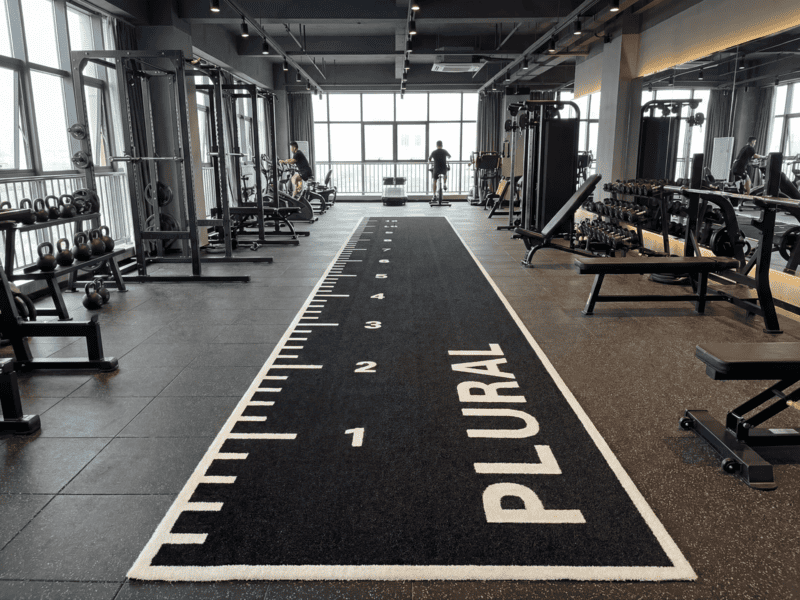
To install gym turf on concrete, the method depends on your usage: for home gyms, use heavy-duty double-sided acrylic tape on edges and seams; for commercial sled lanes, apply a full-spread pressure-sensitive adhesive. In all cases, you must clean the concrete, acclimate the turf for 24–48 hours, and use a 100-lb roller to ensure a secure bond.
Installing turf over concrete is not a "one size fits all" task. As a contractor, I categorize every project based on lateral force—the side-to-side energy generated during workouts. A home gym floor over concrete setup for yoga and HIIT has low lateral force, while a 40-yard commercial sled track has extreme lateral force. If you use home-style taping for a commercial sled lane, the turf will bunch and delaminate within weeks. Conversely, full-gluing a small home gym is often overkill and ruins the subfloor for future use. We must also consider the "Concrete Moisture Vapor Emission Rate" (CMVER). Concrete is porous; if moisture levels exceed 3 lbs per 1,000 sq. ft., standard adhesives will emulsify and fail. Understanding your specific scenario—Home, Studio, or Performance Center—is the first step to a successful build.
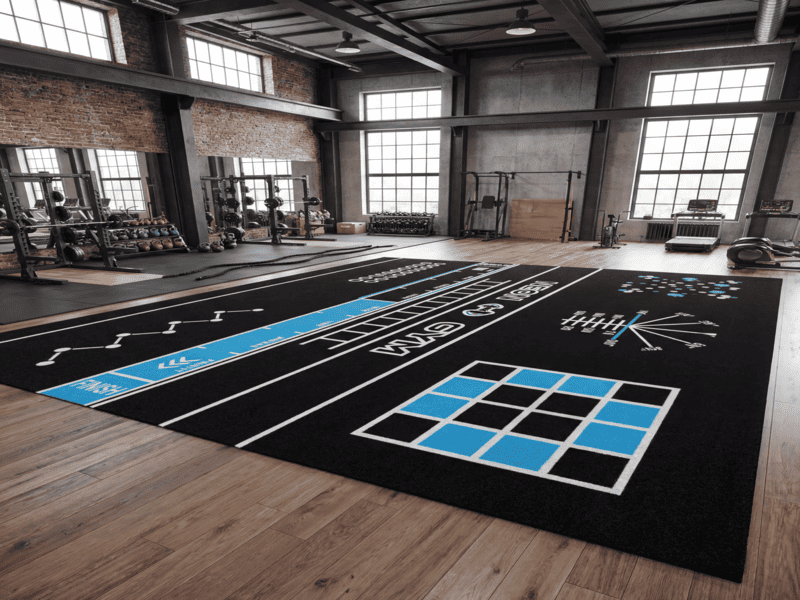
Your installation path is determined by how you plan to use the space.
Which installation method is right for your gym?
Choose your method based on traffic and equipment. Home gyms benefit from "Loose Lay" or "Tape" methods for easy removal. Professional studios with heavy sleds require "Full-Spread Glue" to prevent shifting. High-impact areas should always include a 5mm-10mm rubber underlayment to protect joints from the hard concrete surface.
| User Type | Recommended Method | Primary Attachment | Best For |
|---|---|---|---|
| Home/Garage | Perimeter Tape | 3" Double-sided Acrylic Tape | Mobility, HIIT, Light weights |
| Small Studio | Grid Tape Method | Tape every 3′ + Seams | Circuit training, Kettlebells |
| Commercial | Full-Spread Glue | Moisture-cure Urethane | Heavy Sleds, Sprints, Pro use |
In my experience, home users often over-complicate the process. If you are just doing burpees and stretching, tape is enough. However, if you are pushing a 200-lb sled, the friction between the concrete and the turf backing acts like sandpaper. Over time, this friction destroys the turf fibers from the bottom up. For commercial clients, I insist on a full-spread adhesive. We use a 1/16" x 1/16" x 1/16" square-notched trowel to apply the glue. This ensures 100% coverage. If the concrete is "green" (less than 28 days old) or in a damp basement, we must use a specialized moisture-barrier adhesive. This prevents the pH in the concrete from attacking the glue bond, which is a common cause of "bubbling" in gym floors.
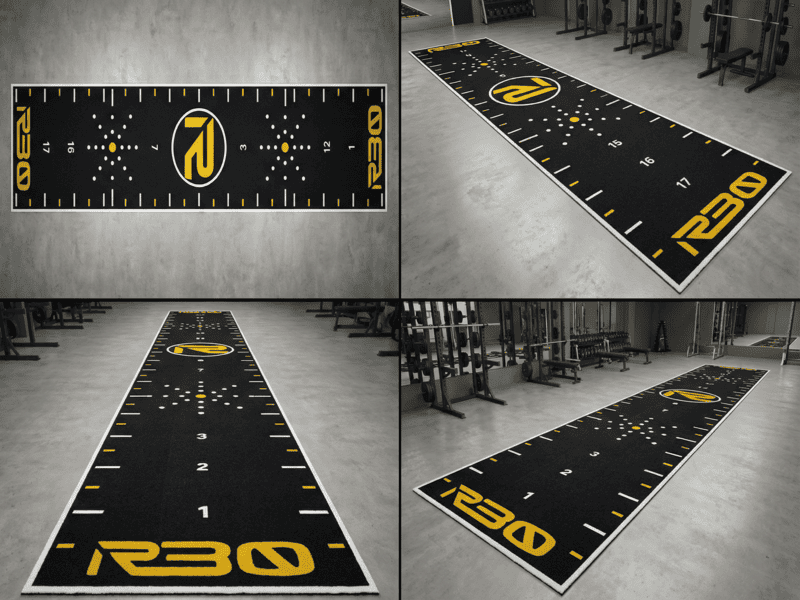
Once you pick your method, you need the right technical parameters to execute the job.
What are the critical technical specs for a professional finish?
Successful installation requires specific tolerances: concrete must be properly leveled within 1/8" over a 10-foot radius. Turf must acclimate for at least 24 hours (48 hours if temps are below 50°F) to stabilize dimensions. Maintain a 1/16" gap at seams before joining, and allow adhesive to cure for 24–72 hours before allowing heavy sled traffic.
| Parameter | Specification | Why it Matters |
|---|---|---|
| Levelness | < 1/8" gap under 10′ straightedge | Prevents tripping and uneven wear |
| Acclimation | 24-48 Hours (Relaxed) | Stops shrinking after cutting |
| Cure Time | 24h (Foot traffic) / 72h (Sleds) | Prevents adhesive "sliding" |
| Concrete PH | Between 7 and 9 | High alkalinity destroys glue |
I cannot stress acclimation enough. Turf is plastic-based; it expands in heat and shrinks in cold. If you take a roll from a cold truck and glue it down immediately, it will shrink by 1/2" by morning, leaving giant gaps at your seams. I also get asked about "seam gaps" a lot. I prefer to "butt" the edges tightly without overlapping. If you overlap and cut through both layers (double-cut), you get a perfect fit, but you must be careful not to score the concrete, as this creates a weak point for moisture to enter. For edges, I recommend using a rubber transition strip. Transitioning from 1/2" turf to 0" concrete without a reducer is a safety hazard and leads to the turf edges peeling up over time.
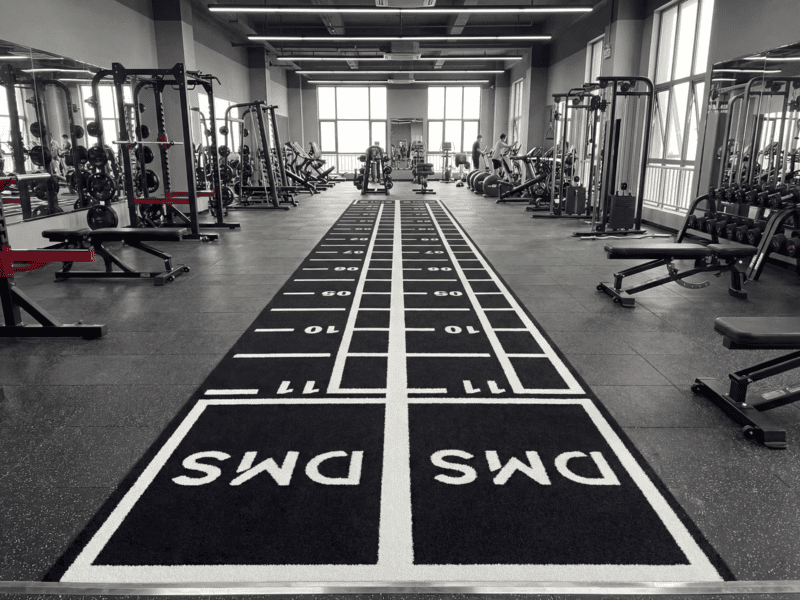
Precision in the planning phase prevents expensive material waste during the cutting phase.
Frequently Asked Questions about Concrete Turf Install
Can you install turf over painted or epoxy-coated concrete? Only if the bond is 100% solid. If the paint is peeling, the turf adhesive will pull the paint off the floor. I recommend sanding or "scuffing" painted surfaces with 40-grit sandpaper to create a mechanical bond before applying tape or glue.
Do I need a vapor barrier?
If your concrete "sweats" or shows dark spots when covered, you need a liquid vapor barrier. Tape will not stick to damp concrete, and glue will eventually fail without a moisture-suppression system.
Is tape enough for sled work?
For a home gym with light sled work (under 150 lbs), heavy-duty acrylic tape on the perimeter and center is usually enough. For anything heavier, the turf will eventually "wave" and require re-stretching.
How do I handle seams?
Use a 12-inch wide seam tape. Apply the adhesive to the tape, not the floor, for the seam area. This allows the two rolls to move as one unit without being rigidly pinned to the floor at the most vulnerable point.
Conclusion
Installing gym turf on concrete is a balance of surface prep and choosing the right attachment for your training intensity. By respecting acclimation times and moisture limits, you ensure a safe, professional-grade workout surface.
For specific questions on material selection or project-specific adhesive recommendations, feel free to reach out via private message.“`