


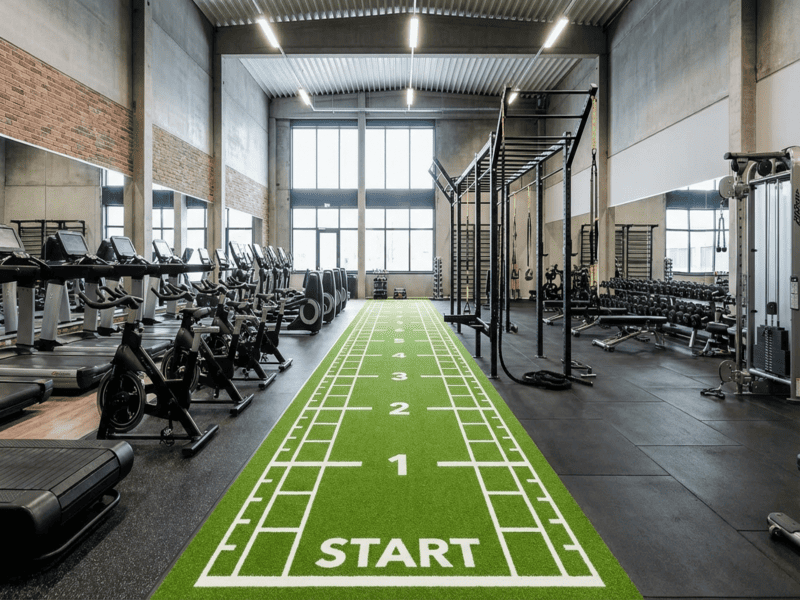
Yes, artificial grass is a high-performance solution for gyms, provided you select commercial-grade non-infill polyethylene with a PU backing. It is the only surface that offers the specific friction needed for sled work and the shock absorption required for high-intensity agility drills while defining premium functional zones.
Artificial grass has evolved from a visual "extra" into a critical piece of performance hardware. In my experience designing layouts, the floor is no longer just a covering; it is a tool for biomechanics. However, many owners fail because they treat it like a carpet rather than an engineered system. To succeed, you must balance fiber science with a "zero-defect" installation. If you choose the wrong density or the wrong backing, the turf will mat down, trap odors, and become a liability within months. This guide explains how to specify, install, and maintain gym turf to ensure it adds real ROI to your facility.
Quick Reference: Is Turf Right for Your Scenario?
- Commercial Gyms: Essential for sled lanes and HIIT zones; increases PT revenue.
- Personal Training Studios: High impact on branding and versatility in small footprints.
- Home/Garage Gyms: Great for joint protection, but requires a strict cleaning routine to prevent odors.
- Pro-Athlete Facilities: Requires high-density "Better/Best" specs to handle extreme shear forces.
I. Strategic Benefits: Why Turf is an Operational Powerhouse?
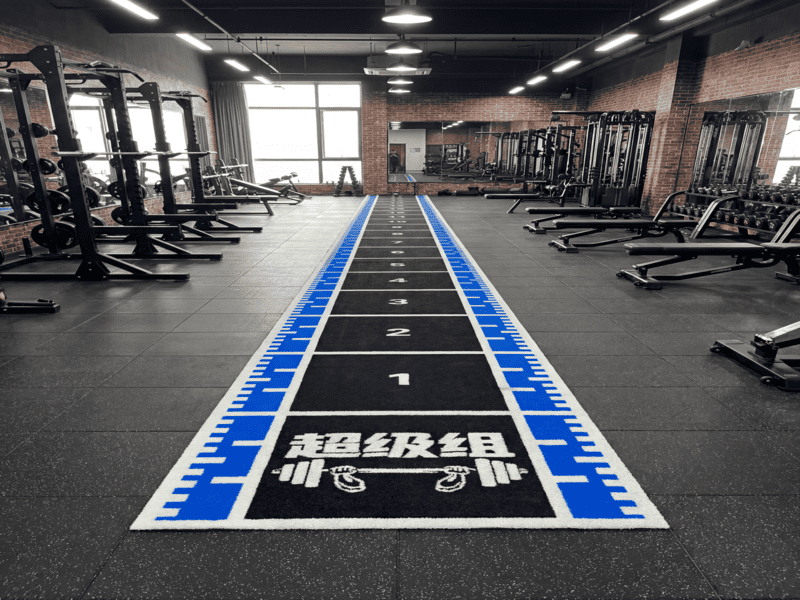
Turf is an operational powerhouse because it solves the "friction gap" in gyms. It provides consistent resistance for sled pushes that rubber cannot match, reduces ground reaction forces on joints, and creates high-visibility zones that drive personal training sales and improve member flow.
When a member pushes a heavy sled on rubber, the movement is jerky because rubber is "grippy." This creates shearing stress on the athlete’s hips and lower back. Turf offers a low, consistent friction coefficient, allowing for smooth, progressive overload. Beyond the biomechanics, the "Green Zone" acts as a psychological anchor. It tells members exactly where high-intensity movement happens, keeping the heavy lifting areas clear and safe. From a business perspective, a dedicated turf area is a "premium" feature. I often see facilities justify a 15-20% increase in PT rates once they install a professional functional lane.
Biomechanical and Operational Impact
| Feature | Benefit to Athlete | Benefit to Owner |
|---|---|---|
| Controlled Friction | Smooth sled movement; no "stop-start" jerking | Accurate performance tracking; less equipment wear |
| Force Reduction | Lower impact on knees/ankles during sprints | Lower injury liability; higher member retention |
| Zone Marking | Clear spatial awareness | Improved floor traffic; higher PT conversion |
| Acoustics | Dampens the "clatter" of kettlebells/ropes | Better environment for coaching and music |
II. Technical Deep-Dive: Specifying the "Buying-Grade" Specs?
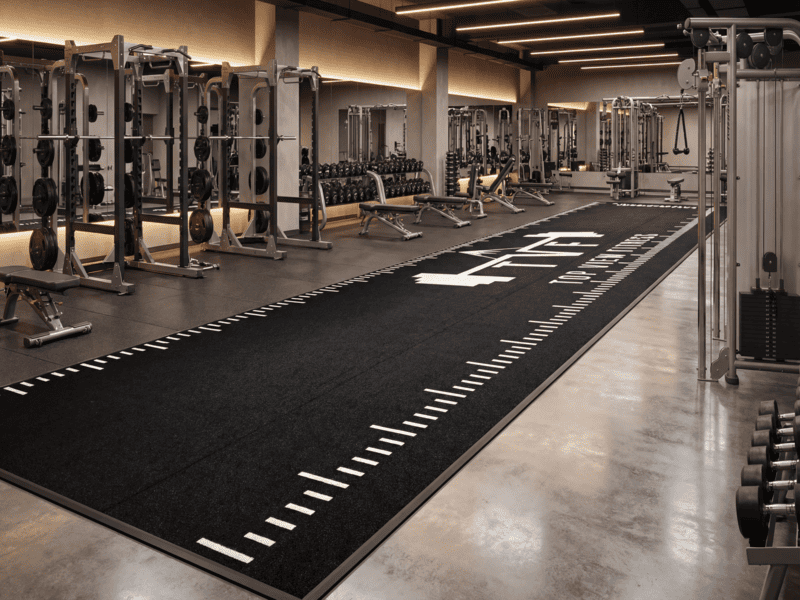
To avoid failure, you must specify Polyethylene (PE) monofilament with a face weight of at least 50 oz and a Polyurethane (PU) backing. Avoid latex backings and nylon fibers for indoor use, as they lead to odor retention and skin abrasions.
The biggest "red line" in gym turf is the backing. Cheap turf uses SBR Latex, which acts like a sponge for sweat. In a closed indoor environment, this leads to a permanent "locker room" smell. Polyurethane (PU) is non-porous and easy to sanitize. For the fibers, look for "texturized" or "curled" monofilament. This shape acts like a spring, helping the grass stay upright after being crushed by a 500lb sled. Also, ensure the product is "Lead-Free" and has a Low-VOC certification (like GreenGuard), as indoor air quality is a major concern for modern members.
Specification Matrix: Good, Better, Best
| Spec Component | Good (Garage/Light Use) | Better (Commercial/PT) | Best (Elite/High-Traffic) |
|---|---|---|---|
| Fiber Material | PE Texturized | PE Monofilament (C-Shape) | PE High-Density Curled |
| Face Weight | 40 oz – 48 oz | 50 oz – 60 oz | 70 oz+ |
| Pile Height | 15mm – 20mm | 12mm – 15mm (Short/Dense) | 10mm – 12mm (Ultra-Dense) |
| Backing Type | Dual-Layer Latex | Polyurethane (PU) | PU + Reinforced Scrim |
| Static Control | None | Topical Spray | Integrated Anti-static Fiber |
III. Beyond Rubber: The Comparative Matrix and Hybrid Strategy?
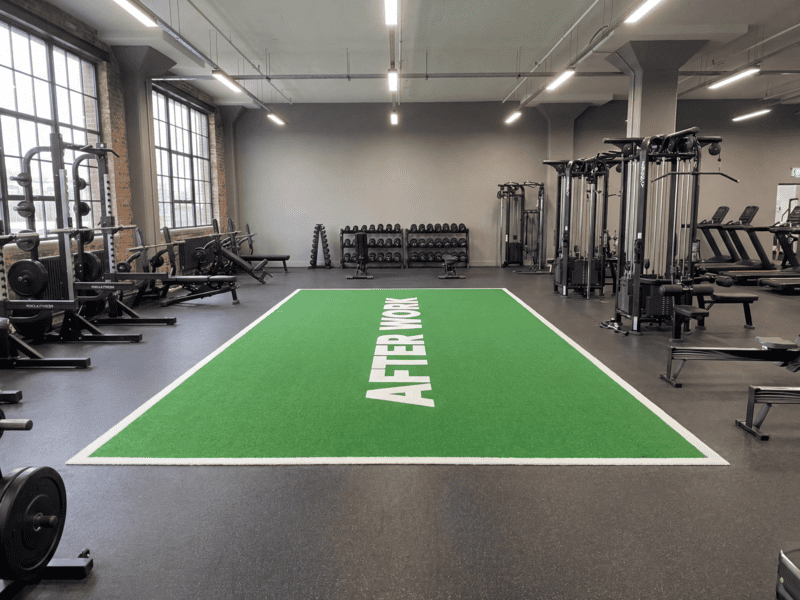
Turf and rubber are not competitors; they are partners. While rubber is the king of stability for heavy Olympic lifting, turf is the king of movement. The most successful gyms use a "Flush-Mount" hybrid strategy to eliminate trip hazards.
I always advise against putting turf under heavy squat racks or plate-loaded machines. Turf has too much "give," which makes it unstable for heavy lifting. Instead, use turf for "lanes" and rubber for "stations." The key to a professional finish is the height match. If you have 10mm rubber, you need a turf system that, when compressed, matches that 10mm height. If the heights don’t match, you must use transition strips or a recessed subfloor. This prevents members from tripping during high-speed agility drills.
Detailed Material Comparison
| Feature | Gym Turf (Non-Infill) | Rubber Rolls/Tiles | Hybrid Strategy |
|---|---|---|---|
| Best Use Case | Sleds, Sprints, Crawls | Squats, Deadlifts, Machines | The Complete Training Center |
| Skin Comfort | High (Soft on skin) | Low (Abrasive) | Best for all-around safety |
| Stability | Medium (Slight give) | High (Rock solid) | Use rubber for racks, turf for lanes |
| Noise Reduction | Excellent | Good | Combined, they create a quiet gym. Understanding how soundproofing a floor works is essential when designing a multi-functional space that doesn’t disrupt neighboring businesses. |
| G-Max (Safety) | High (Best for falls) | Medium | Optimal protection in "Fall Zones" |
IV. The "Dark Side": Avoiding Odors, Burn, and Matting?
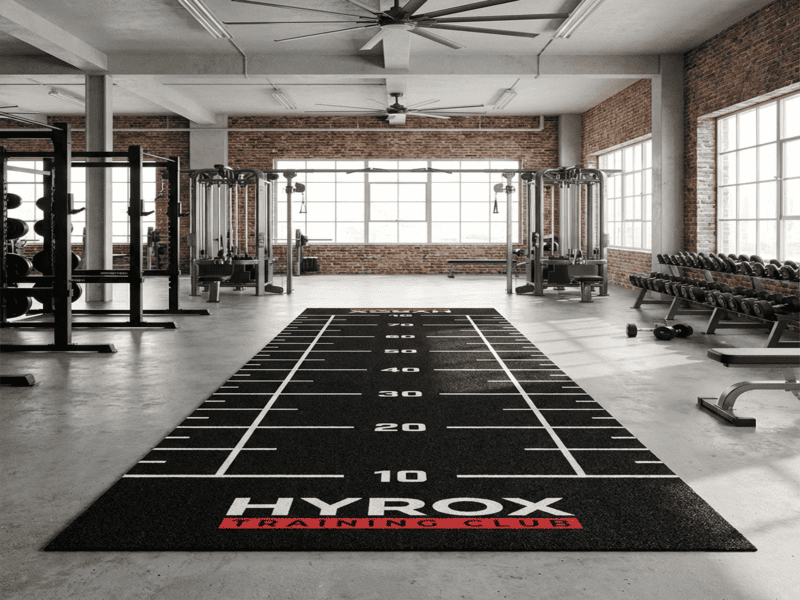
Addressing the "Dark Side" requires a 7-point "Red Line" strategy: use enzymatic cleaners, avoid "Landscape" grade turf, ensure PU backing, and implement a monthly "blooming" schedule to prevent fiber matting.
The "turf smell" isn’t from the grass; it’s from bacteria eating the sweat trapped in the backing. If you choose a latex backing, you are inviting this problem. For friction burns, the purity of the Polyethylene matters. "Reclaimed" plastic is often more abrasive. Stick to virgin PE for the softest feel during burpees or bear crawls. Another trap is matting. If you see the turf looking "flat" or "shiny," it’s because the fibers have collapsed. Monthly "blooming"—using a stiff-bristled power brush—is required to stand the fibers back up and maintain consistent friction for sleds.
The "No-Nonsense" FAQ
- Will it smell? Only if you use Latex backing or fail to use enzymatic cleaners.
- Can I drop weights on it? No. It will dent the subfloor and crush the fibers.
- Is it slippery? When wet or contaminated with excess cleaning soap, yes. Keep it dry.
- Does it shed? Low-quality turf sheds fibers (pilling). High stitch-rate turf does not.
- Can I DIY the install? Yes for garage gyms, but commercial sled lanes require professional seam-taping to prevent "rolling."
V. Financial Breakdown: The Total Cost of Ownership (TCO)?
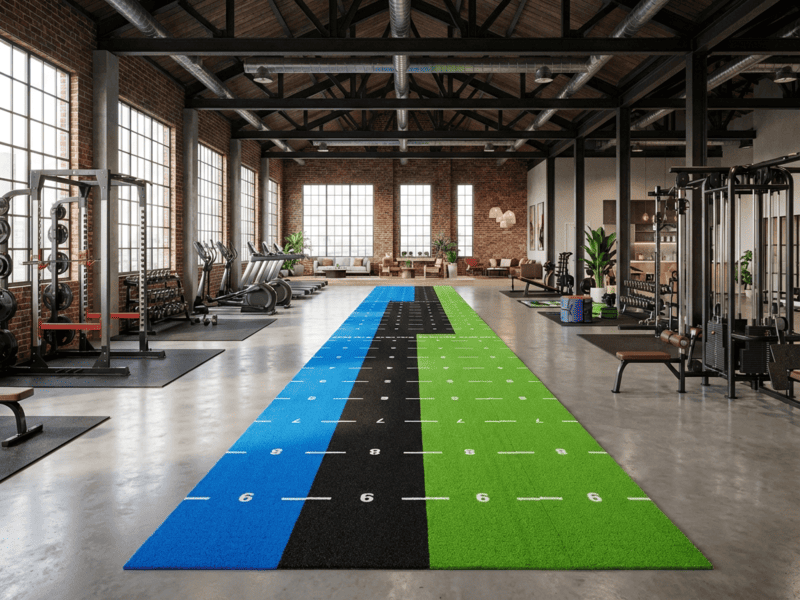
The total cost of gym turf includes the material ($6–$13/sqft), installation labor ($2–$4/sqft), and long-term maintenance. High-quality turf has a lower TCO because it prevents frequent replacement and minimizes injury claims due to matting or seam failure.
Don’t just look at the invoice for the grass. A cheap $4/sqft turf will likely fail in 18 months in a high-traffic sled lane. That means you pay for the material and labor twice. A premium $10/sqft turf lasts 7-10 years. For a 1,000 sqft functional zone, the difference in "Cost per Year" is massive. Additionally, consider the "Modular Advantage." If you install your turf in sections or rolls that can be easily accessed, you can rotate the high-wear areas (like the start of a sled lane) to extend the life of the entire floor.
TCO Example: 1,000 sqft Functional Zone
| Expense Item | Budget Option (2-Year Life) | Premium Option (8-Year Life) |
|---|---|---|
| Material Cost | $4,000 | $10,000 |
| Installation | $2,000 | $3,000 (Complex leveling) |
| 8-Year Replacement Cost | $24,000 (Re-installed 4 times) | $0 (Still performing) |
| Total 8-Year Investment | $30,000 | $13,000 |
Conclusion
Gym turf is a high-yield investment that transforms a simple room into a professional training environment. By avoiding the "Latex trap" and focusing on fiber density, you create a space that is safe, hygienic, and durable.
Confused by different specs?
The difference between a 40oz and 60oz turf can change your gym’s entire performance profile. Whether you are building a boutique studio or a 20,000 sqft commercial facility, I can help you select the exact specification to match your sled weight and traffic volume. Send me a private message now to get a technical spec sheet or a custom quote for your project. Let’s make sure your floor is as tough as your athletes.