


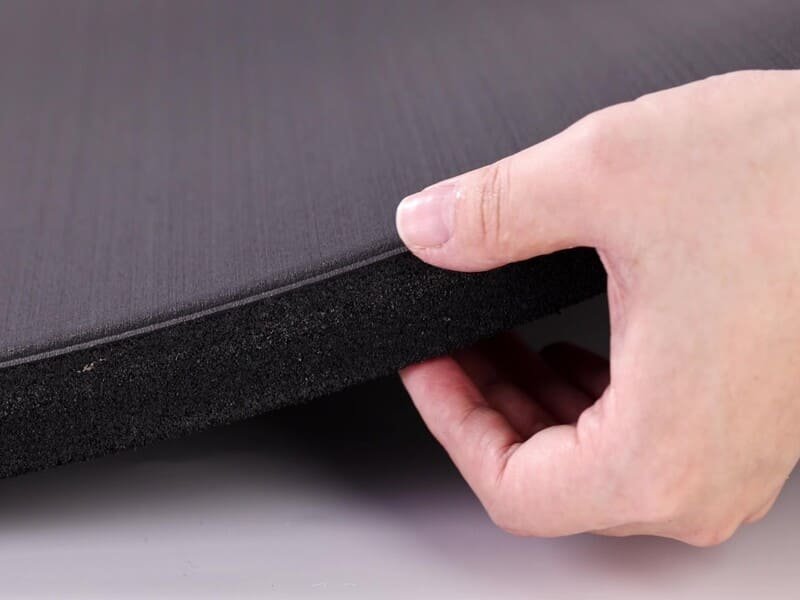
Factories control rubber flooring odor through three critical pillars: the use of high-purity raw materials (like MDI binders), achieving a 100% vulcanization cure ratio, and implementing industrial-scale degassing. These processes ensure that volatile organic compounds (VOCs) are extracted at the source rather than off-gassing in the customer’s facility.
I have seen many buyers frustrated by "stinky" mats that ruin their gym’s environment. The truth is, that sharp chemical smell isn’t just an annoyance—it is a sign of an incomplete manufacturing process. To satisfy your search for a solution, you must understand that odor control is not about "masking" a scent; it involves meeting the specific manufacturing standards for low-odor rubber flooring to engineer the smell out of the product entirely. If a factory rushes the cooling cycle or uses low-grade recycled crumb, no amount of cleaning will fix the smell. Below, I will break down the exact technical gap between low-end and professional-grade production.
TL;DR: Rubber odor is not controlled by perfumes, but by raw material purity, full vulcanization, and factory-side degassing. If a supplier cannot prove these three steps, the smell will end up in your gym—not their factory.
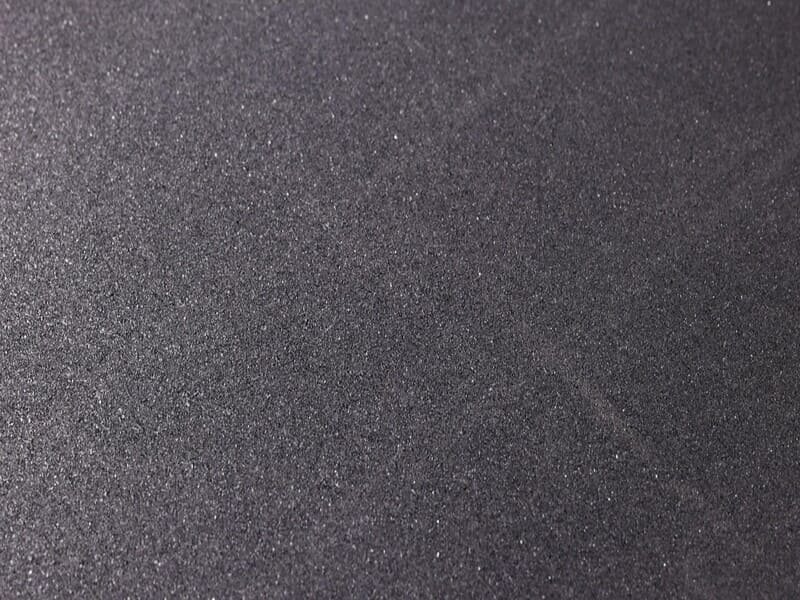
The following sections provide the technical blueprint for how we achieve "near-zero" odor floors.
Why Does One Rubber Mat Smell Worse Than Another?
The difference lies in the "Cure Ratio" and the quality of the "Extender Oils." Low-end factories often use high-sulfur compounds and naphthenic oils because they are cheap and speed up production. However, these materials never fully stabilize, leading to a permanent chemical discharge that users perceive as a toxic smell.
| Feature | Low-End Factory (The "Smelly" Choice) | Professional Factory (The "Clean" Choice) |
|---|---|---|
| Odor Strategy | Using masking fragrances (perfumes) | Physical degassing and material purity |
| Chemistry | High sulfur / Cheap naphthenic oils | Optimized cure ratio / Paraffinic oils |
| Testing | No VOC or formaldehyde testing | FloorScore®, REACH, or Greenguard Gold |
| Logistics | Ship immediately after cooling | 48–72h factory-side pre-aging |
In my experience, the biggest culprit is the "rush to ship." When we press a rubber tile at 150°C, the molecules are highly active. If you wrap that tile in plastic and put it in a shipping container immediately, you trap those gases. A professional factory layout includes a dedicated "cooling and degassing" zone where mats sit in open-air racks. This simple step of 48 to 72 hours of pre-aging can reduce initial odor by up to 70%. We prioritize this logic because we view ourselves as technical partners, not just a volume shop.
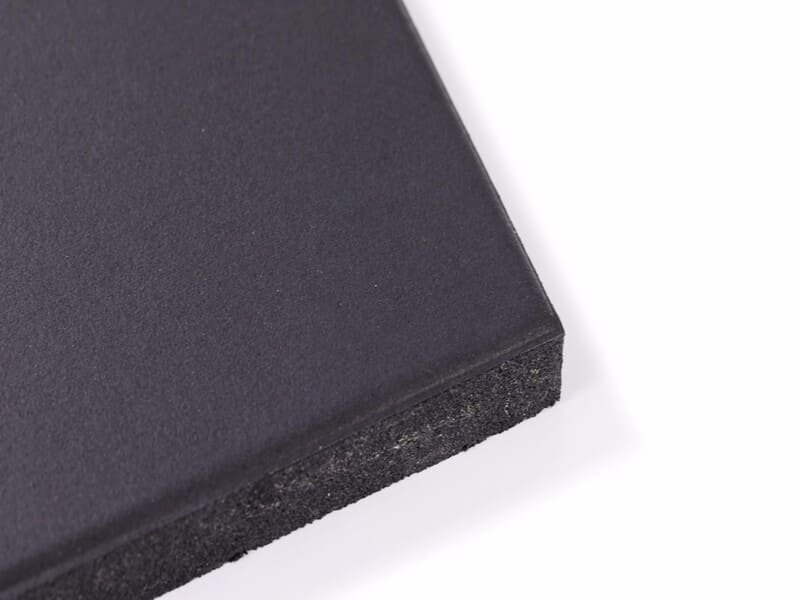
Beyond the factory floor, you need to know how to verify these claims during your procurement process.
How Can Buyers Verify a Factory’s Odor Control Claims?
You can verify claims by requesting specific VOC (Volatile Organic Compound) laboratory reports and performing a "Closed Container Sniff Test" on samples. Never trust a supplier who says "it just smells like rubber"; ask for data-backed proof such as FloorScore® certification, which measures specific emission rates in mg/m³.
When you are evaluating a new supplier, don’t just look at the price. I suggest you ask their engineering team these three specific questions:
- "What is your standard degassing time before packaging?" (Anything less than 48 hours is a red flag).
- "Do you use MDI or TDI binders?" (MDI is more stable and has much lower odor).
- "What is your target vulcanization temperature and duration?" (This shows if they understand the "complete cure" science).
The "Sniff Test" Protocol
- Step 1: Place the sample in a clean, airtight glass jar or plastic bag.
- Step 2: Leave it in a warm spot (approx. 25°C) for 24 hours.
- Step 3: Open the container and inhale.
- The Result: If it smells like a "burnt tire" or "sharp chemicals," the cure ratio is low. If it has a faint, earthy scent that dissipates in seconds, it is high-quality rubber.
I once helped a distributor who was losing money on returns. We found their previous factory was using "masking agents" that smelled like lemon but faded after two weeks, revealing a terrible chemical stench underneath. We switched them to a true degassing protocol, and their return rate dropped to zero.
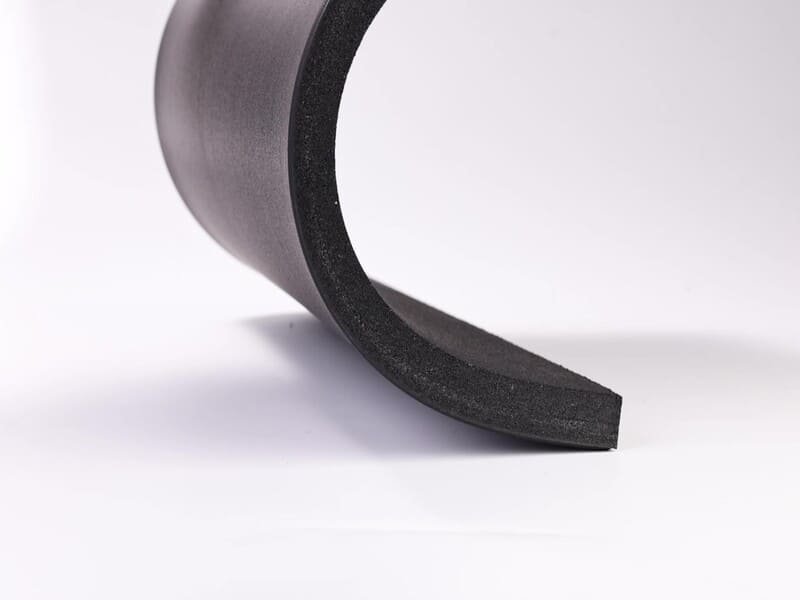
By following these verification steps, you ensure that the air quality in your project remains safe for the long term.
What Raw Material Science Prevents Off-Gassing?
Raw material control prevents off-gassing by replacing volatile solvents with 100% solids MDI binders and using "washed" rubber crumb. In our R&D lab, we have found that the purity of the polyurethane binder is the single most important factor in whether a gym floor will smell "toxic" or "neutral" after installation.
| Material Type | Odor Profile | Technical Justification |
|---|---|---|
| TDI Binders | High/Sharp | Contains high levels of volatile isocyanates. |
| MDI Binders | Low/Neutral | Higher molecular weight, stays stable at room temperature. |
| Washed Crumb | Clean/Earthy | Dust and fiber contaminants are removed before molding. |
We treat the manufacturing process as a chemical balance. If we add too much binder, the floor becomes too hard and smells like plastic. If we add too little, the floor crumbles. Our engineering focus is on finding the "Goldilocks" zone where the binder fully encapsulates the rubber granules. This creates a physical barrier that prevents internal odors from escaping. We also avoid "extender oils" that have a high evaporation rate. Instead, we use stable paraffinic oils that stay inside the rubber matrix for the life of the product.
This engineering-first approach is what transforms a commodity product into a professional-grade flooring solution.
Conclusion
Odor control is a choice between cheap shortcuts and rigorous engineering. By focusing on raw material purity and proper degassing, we deliver floors that are safe for any indoor space.
Ready to see the difference for yourself? My team and I are happy to provide technical consultations for your specific project needs. Contact us today to request a free sample kit or a detailed VOC test report to ensure your next flooring installation is truly odor-free.