


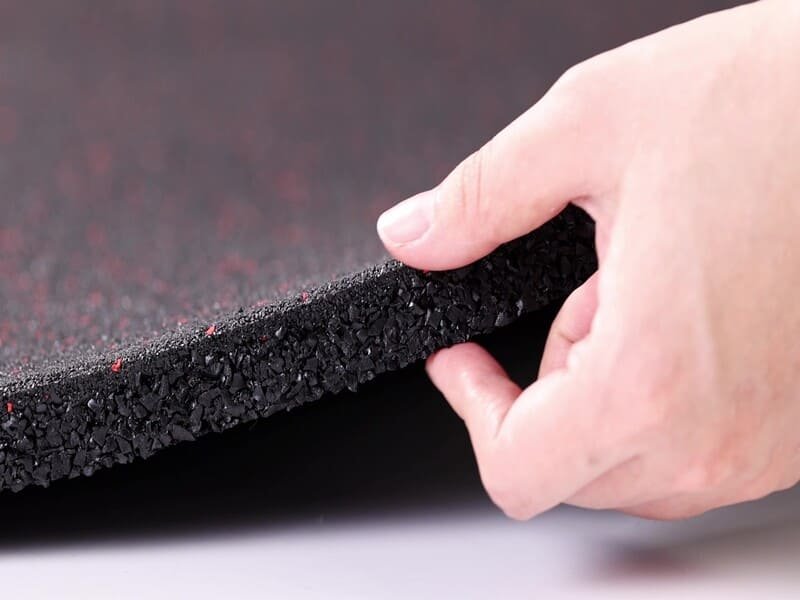
Rubber flooring of the same thickness feels different primarily due to density ($kg/m^3$) and Shore A hardness. While two mats may measure 8mm, a high-density vulcanized tile (950 $kg/m^3$) will feel like a solid road, while a low-density roll (800 $kg/m^3$) will feel like a soft sponge.
The reality is that thickness is just a shell; the performance is defined by the internal "recipe." Understanding why two rubber mats with the same thickness feel completely different is essential if you want to avoid the mistake of buying a book by its cover without checking the page count. In the lab, we use durometers and precision scales because the human foot can be easily fooled by surface texture. To get the right floor, you must look at the weight-to-volume ratio and the manufacturing method.
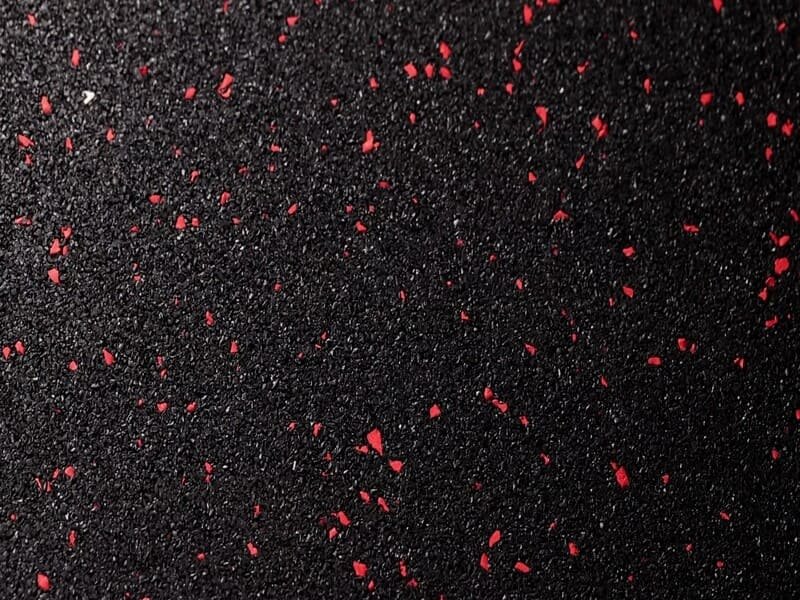
To help you make a fast decision, I have summarized the three technical specs that actually dictate how your floor will feel.
What Are the 3 Parameters That Actually Define Floor "Feel"?
The "feel" of rubber flooring is determined by Density, Shore Hardness, and the Manufacturing Process. To avoid buying the wrong product, you must specify these three metrics alongside thickness to ensure the floor matches your specific gym environment.
In my daily inspections, I don’t just use a caliper. I use a "Decision Trio" approach. If a client wants a floor for heavy powerlifting, I look for high density and high Shore hardness. If they want a comfortable area for stretching, I look for lower density and a cold-pressed finish.
Quick Selection Guide for Gym Owners
| Application | Recommended Density | Shore A Hardness | Manufacturing Process |
|---|---|---|---|
| Heavy Weightlifting | 1,000+ $kg/m^3$ | 70 – 75 Shore A | Vulcanized (Hot Press) |
| General Commercial Gym | 900 – 950 $kg/m^3$ | 60 – 65 Shore A | High-Density Rolls |
| Home Gym / Cardio | 800 – 850 $kg/m^3$ | 50 – 60 Shore A | Cold-Pressed Rolls |
| Functional Training | 950 $kg/m^3$ | 65 Shore A | Dual-Layer Laminated |
I once saw a gym owner order 10mm mats that felt "soft and nice" as samples. Within three months, the heavy dumbbells had left permanent indentations because the density was too low ($<800 kg/m^3$). They bought thickness but forgot about support.
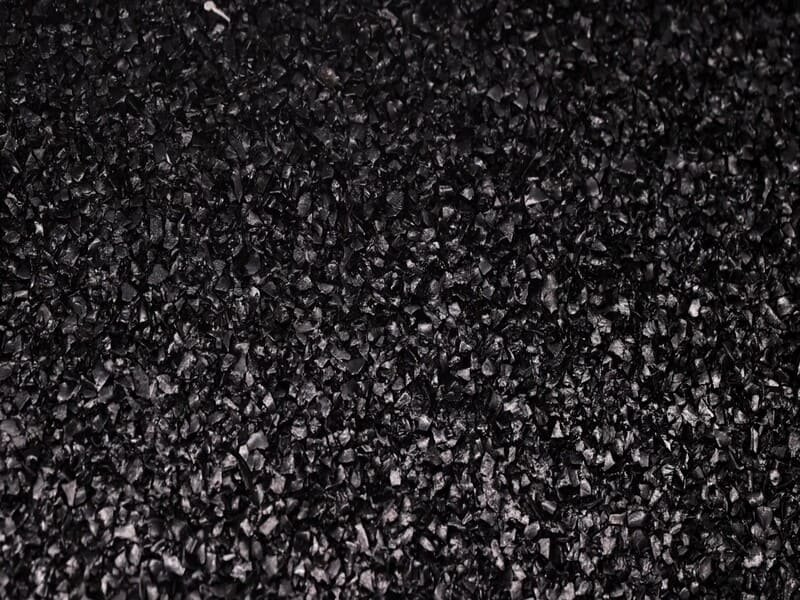
Understanding these metrics is the only way to ensure your floor doesn’t bottom out under pressure.
Why Does Density Change Your Joint Support?
Density ($kg/m^3$) measures how much raw rubber is compressed into the mat. Higher density provides better "energy restitution," meaning the floor supports your joints by pushing back, whereas low density simply collapses under your weight.
In the factory, we control density by adjusting the weight of the raw rubber granules before they enter the mold. For a standard 1×1 meter tile at 20mm thickness, a high-quality product should weigh about 18kg to 20kg. If a supplier sends you a tile that weighs only 15kg, it will feel much softer because it is full of air. This air makes the floor feel "cushioned" for walking, but it offers zero protection during a heavy squat.
The Impact of Density on Your Body
- Low Density: Acts like a sponge. It absorbs the impact but provides no stability for your ankles or knees.
- High Density: Acts like a spring. It absorbs the shock of a dropped weight but stays firm enough to keep your feet level.
- The "Bottoming Out" Effect: This happens when a low-density mat is crushed completely, leaving your joints to take the impact of the concrete subfloor.
I always tell my production team: "We are not selling rubber; we are selling joint protection." When I test a batch, I check if the material recovers its shape instantly after a 200kg load test. If it leaves a mark, the density is too low for professional use.
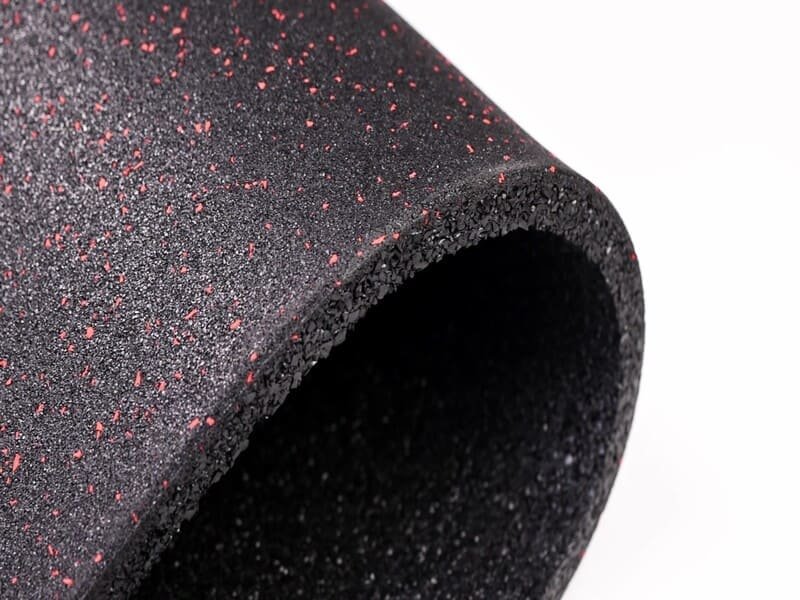
Selecting the right density is a balance between comfort for the user and protection for the building.
Does the Manufacturing Process Create "Hard" or "Soft" Surfaces?
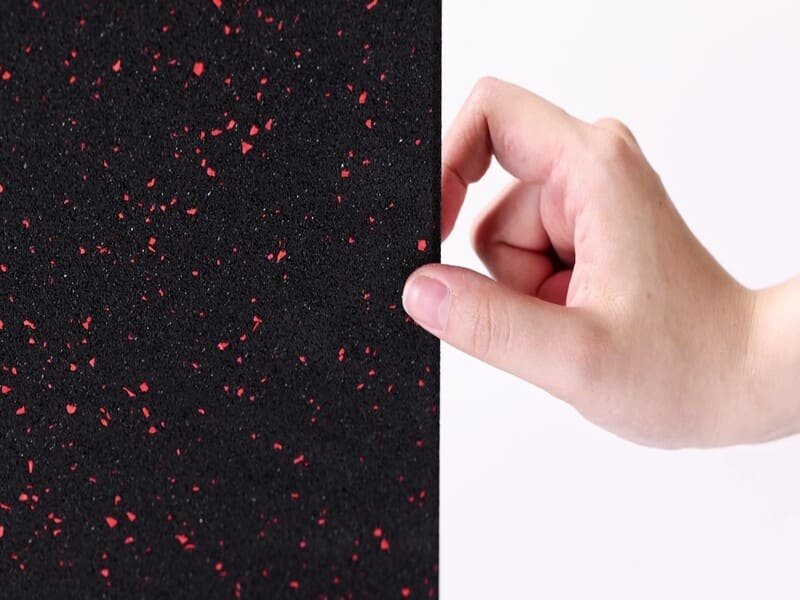
The manufacturing process creates different internal structures. Vulcanized rubber is baked under extreme pressure to be non-porous and hard, while cold-pressed rolls remain more porous and flexible, even if the thickness is identical.
Vulcanization is like baking a dense loaf of bread, while cold-pressing is like pressing granola into a bar. As a QC inspector, I see that vulcanized tiles are almost waterproof because the pores are closed. This makes them feel "harder" and smoother. Cold-pressed rolls have tiny gaps between the granules, which allows for more "give" and a more traditional rubbery feel.
Process Comparison Table
| Feature | Vulcanized (Hot Press) | Cold-Pressed (Rolls) |
|---|---|---|
| Surface Feel | Smooth, firm, and "stiff" | Tactile, grippy, and "flexible" |
| Water Absorption | 0% (Hygiene friendly) | 3-5% (Can hold sweat/dirt) |
| Standard Use | High-traffic zones, deadlift areas | Large area coverage, cardio zones |
| Longevity | 10+ years | 5-8 years |
I often recommend a "Dual-Layer" approach for premium projects. We manufacture a very high-density 2mm top layer (for wear and hardness) and laminate it to a 6mm softer base (for shock absorption). This engineering trick makes an 8mm mat feel like a professional athletic surface rather than just a piece of recycled tire.
The process defines how the floor will age and how much maintenance it will require.
How Can You Verify Quality Before You Buy?
To verify quality, you should ask for the weight per square meter and the Shore A hardness certificate. A reputable manufacturer will provide a technical data sheet (TDS) that lists density, tensile strength, and hardness.
Don’t just take a sample and step on it. While you are learning how to choose the ideal rubber flooring thickness for your studio, remember that in the factory, we know that temperature can also change how rubber feels; a cold mat feels harder than a warm one. Instead, use objective data. If a supplier cannot tell you the $kg/m^3$ of their 10mm mat, they are likely a middleman with no quality control.
My Pro-Tip Checklist for Buyers:
- Ask for the Weight: A standard 8mm roll should weigh approximately $8kg/m^2$ to $9.5kg/m^2$. If it’s lighter, the density is low.
- Ask for the Shore A: Aim for 65 Shore A for general gym use. 70+ for heavy weights.
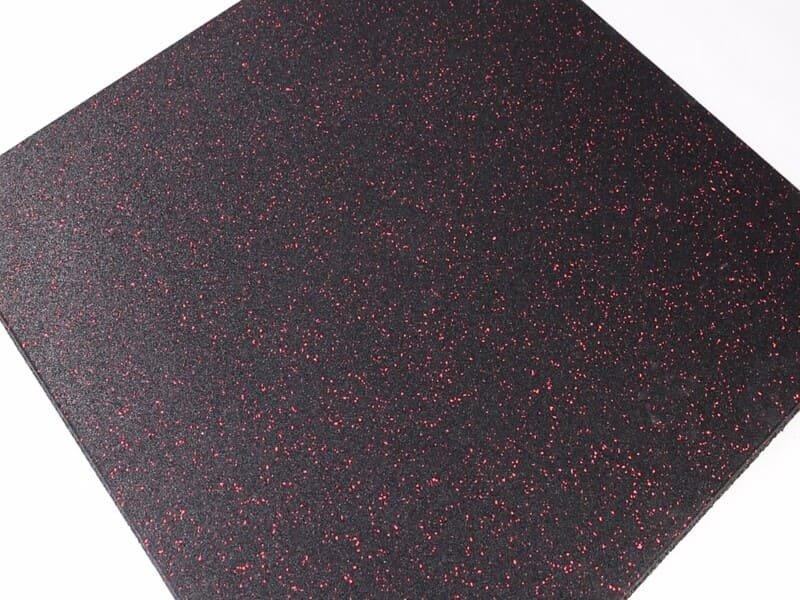
- Request a Large Sample: Small 10x10cm samples are hard to test. Ask for a 30x30cm piece so you can actually stand on it.
I have spent years perfecting these standards at LaiYin. We treat every batch as a technical partnership with the gym owner. We don’t just ship black rubber; we ship engineered surfaces designed for specific human movements.
Using data instead of "feeling" will save you from replacing your floor in two years.
Conclusion
Thickness is a measurement, but density and hardness are the performance. Always check the $kg/m^3$ and Shore A rating to get the "feel" you actually need.
Get the Right Specs for Your Project
Choosing the wrong density can lead to floor failure and athlete injury. If you are unsure which Shore A hardness or density is right for your specific gym zones, my team is here to help.
Contact us today to receive a free technical consultation or to request a sample pack with labeled density and hardness ratings so you can feel the difference for yourself.