


Quick Answer: The Bottom Line
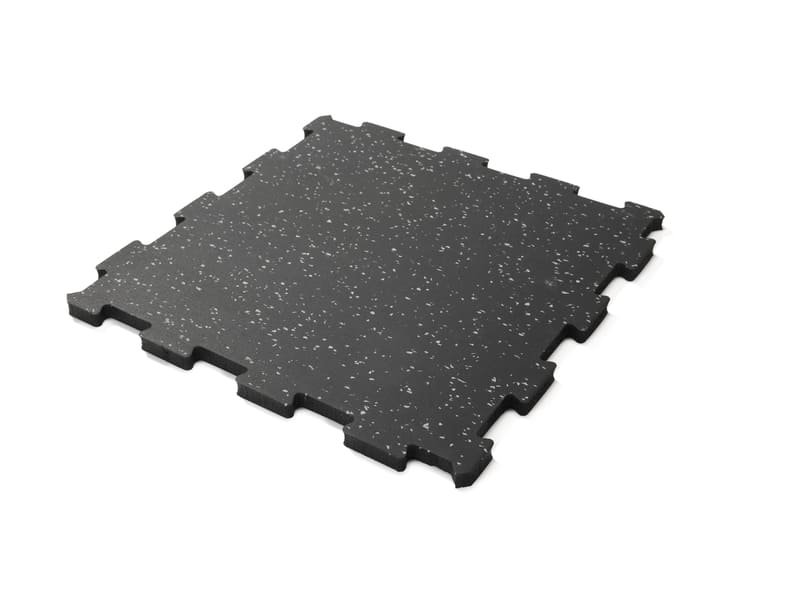
Repeated barbell drops cause cumulative damage that isn’t always visible immediately. The impact compresses rubber granules, fatigues the bonding agent (glue), and reduces the floor’s ability to bounce back. If your flooring is too thin (under 15mm) or low-density, this shockwave travels through the mat and can cause invisible micro-cracks in your concrete subfloor. In short: The floor absorbs the damage so your foundation doesn’t—until the floor fails.
Introduction: The "Thud" That Every Gym Owner Fears
When a heavy barbell hits rubber flooring, the energy doesn’t disappear; it transfers. Repeated drops cause immediate compression of rubber granules and cumulative stress on the bonding agents. Over time, this leads to permanent indentations, loss of elasticity, and potential damage to the concrete subfloor if the flooring is insufficient.
As a production manager who has overseen the manufacturing of thousands of tons of rubber flooring, I can tell you that the "thud" you hear is actually a complex physical event. When a 200kg deadlift is dropped, that kinetic energy forces the rubber to compress instantly. In the industry, we look at this through the lens of "deflection." High-quality rubber is designed to deflect (squish) and then recover.
However, the flooring is not invincible. The core problem usually isn’t the rubber granules themselves—tire rubber is incredibly durable—but the polyurethane binder holding them together. Every time a weight hits, it creates shear force that tries to tear those granules apart. If the flooring is too thin or the binder ratio is low, the energy passes right through the mat and attacks your subfloor. Understanding this mechanism is the first step in protecting your facility’s foundation.
Where Does the Energy Go During a Drop?
Energy cannot be destroyed; it is transferred into the bumper plates, the rubber flooring, and the subfloor. The flooring acts as a shock absorber by converting this kinetic energy into heat and mechanical deformation, preventing it from shattering the concrete below.
Let’s break down the physics of the drop. When a lifter drops a barbell, the potential energy turns into kinetic energy ($KE = 1/2 mv^2$). When the movement stops, that energy has to go somewhere. In a perfect scenario, your bumper plates absorb some of it through elastic deformation. The rest travels into the floor.
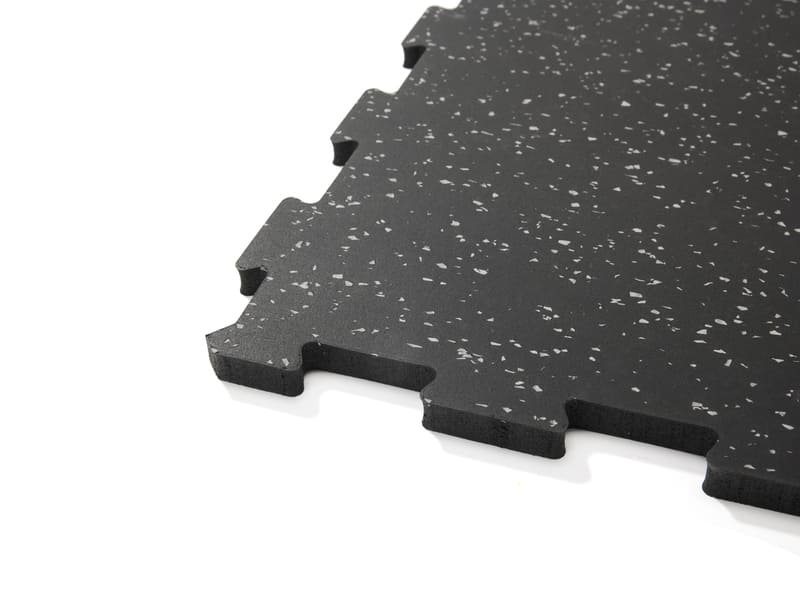
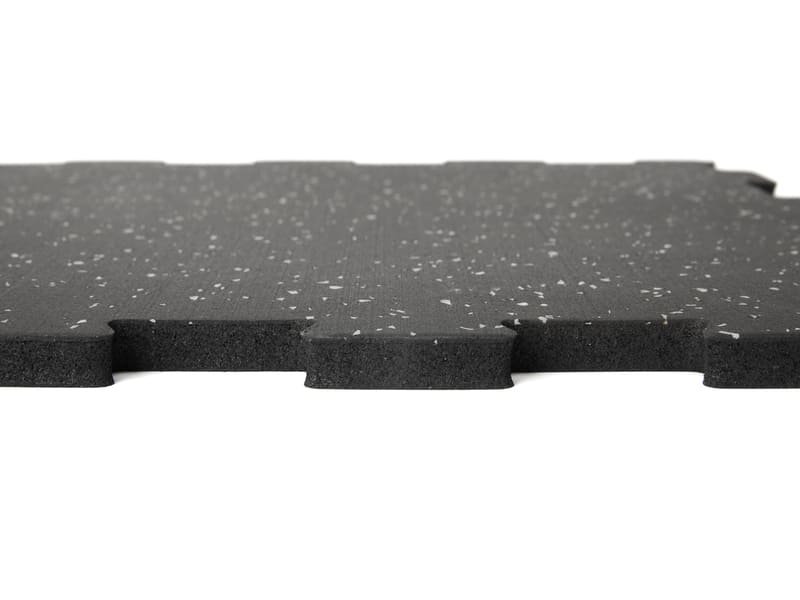
From a manufacturing perspective, we design rubber mats to act like a dense sponge. When the weight hits, the air pockets between the rubber granules collapse. This compression absorbs the shock. However, there is a limit called “bottoming out.” If the impact force exceeds the mat’s ability to compress, the rubber acts like a solid rock. This total collapse of the shock-absorption system mirrors what happens when acoustic underlay is over-compressed, where the material loses its dampening capacity and starts transmitting the full shockwave to the structure. At that split second, the shockwave travels directly into the concrete slab. We often see this in labs when testing low-density mats; the vibration sensors on the subfloor spike dangerously high. The goal is to maximize the "impulse time"—slowing down the impact duration by milliseconds—which significantly reduces the peak force transferred to your building’s structure.

Is the Damage Immediate or Cumulative?
While micro-trauma occurs with every drop, the primary concern is cumulative material fatigue. Over time, rubber loses its "trampoline effect" (resilience), leading to surface delamination, permanent divots, and structural cracks where weights land most frequently.
In our testing facilities, we use a machine that simulates thousands of drops in the exact same spot. What we observe is distinct. The immediate effect is "micro-trauma"—a temporary deformation of the granule structure. Quality rubber recovers quickly. However, the real killer is the cumulative effect, or what we call "hysteresis loss."
Over time, the polyurethane binders that glue the crumbs together begin to fatigue. They lose their elasticity. You might notice the floor stops bouncing back and starts packing down. We call this the loss of the "trampoline effect." Once the binder weakens, you will see surface delamination, where the top layer begins to flake off. This is common in budget mats that use less binder to save cost. Eventually, micro-fissures turn into visible cracks. These cracks almost always appear in the specific "landing zones" of lifting platforms. Once a crack forms, the structural integrity of the mat is compromised, and it can no longer effectively disperse the energy of a heavy drop.
Risk Assessment: Are You in the Danger Zone?
Not all drops are equal. The risk to your floor and foundation depends heavily on usage intensity and equipment type. Use the table below to determine your risk level.
| Usage Scenario | Frequency | Equipment | Risk Level | Est. Lifespan (Standard Mat) |
|---|---|---|---|---|
| Home Gym | Occasional | Bumper Plates | Low | 5-10+ Years |
| Commercial Gym | Daily Use | Bumper/Mixed | Medium | 3-5 Years |
| CrossFit / Powerlifting | High Reps / Heavy Drops | Bumper Plates | High | 1-2 Years (if low quality) |
| Hardcore Lifting | Heavy Drops | Iron Plates | Extreme | < 1 Year |
If you fall into the High or Extreme categories, standard 8mm or low-density rolled flooring will likely fail within 12 to 18 months, putting your subfloor at immediate risk.
How Does Repeated Impact Affect the Subfloor?
Repeated heavy drops can cause invisible micro-cracks in the concrete subfloor, even through rubber mats. If the flooring is too thin, shock transmission can compromise structural integrity and allow moisture to seep up, destroying mats from the bottom.
This is the section I always emphasize to gym owners who lease their manufacturing or retail spaces. Concrete is strong in compression but weak in tension. When a shockwave hits it repeatedly, it develops hairline fractures. You won’t see these immediately.
However, if your rubber flooring is too thin (e.g., 8mm for heavy lifting) or too dense (lack of air pockets), the shock transmission is nearly 100%. Over a year of heavy deadlifts, those hairline fractures in the concrete grow. This leads to two major problems. First, structural integrity is weakened. Second, and more commonly, these cracks break the vapor barrier. Ground moisture begins to seep up through the concrete via capillary action. This moisture gets trapped under your rubber mats. Since most rubber mats are porous, the moisture interacts with the binder and the concrete dust, creating a perfect breeding ground for mold and mildew. I have lifted mats in gyms that looked fine on top, only to find the bottom side rotting away due to subfloor moisture caused by cracking.
Which Factors Determine if Your Floor Survives?
Survival depends on thickness, density, and material type. Vulcanized rubber offers superior tensile strength and waterproofing compared to recycled crumb rubber, while thicker tiles (20mm+) prevent "bottoming out" during heavy lifts.
Not all rubber is created equal. In the factory, we process two main types: bonded crumb rubber and vulcanized rubber.
Recycled Crumb Rubber (SBR): This is the most common black gym mat. It is made of tire granules glued together. It is excellent for general use, but under extreme point loads (like a dropped dumbbell), the glue can fail, leading to crumbling.
Vulcanized Rubber: This is a premium process where raw rubber is cured under heat and pressure to form a single, non-porous sheet. It has incredibly high tensile strength and is virtually waterproof. It handles repeated drops significantly better because there are no "crumbs" to break apart.
Thickness is King: For heavy lifting, 8mm is decorative. 15mm is the baseline. 25mm+ is ideal. The physics is simple: you need enough travel distance for the weight to slow down before it hits the concrete. If you are dropping iron plates (which have a small surface area) rather than bumper plates, you need even thicker flooring to handle that concentrated point load.
When Should You Replace Your Flooring?
Replace your flooring if you see permanent indentations that don’t recover, notice black rubber dust (granule shedding), feel the surface hardening, or hear significantly louder noise during drops, indicating failed shock absorption.
As a manufacturer, I can give you a checklist to diagnose your floor’s health.
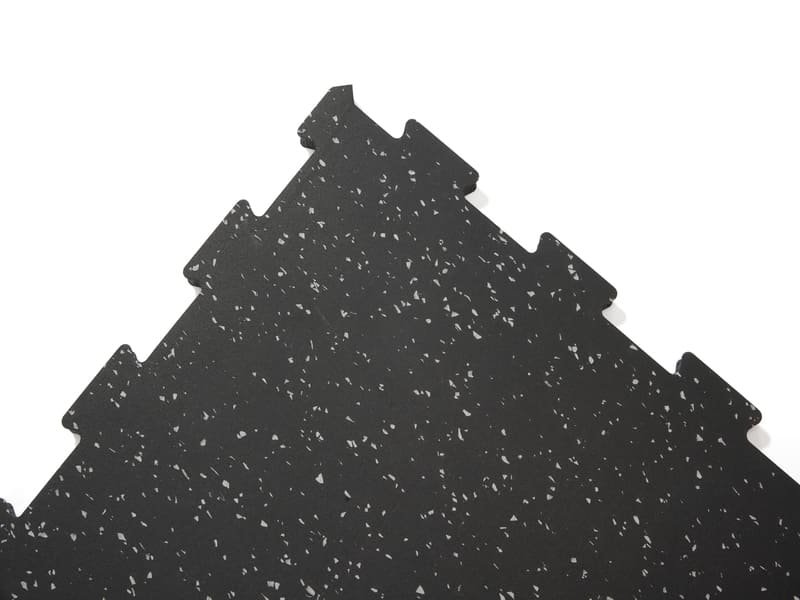
- Permanent Indentations (Divots): Move your equipment. If the mat stays compressed and looks like a shallow bowl, the cell structure has collapsed. It has zero shock absorption left in that spot.
- Granule Shedding: If you sweep your gym and your dustpan is full of black rubber bits, your floor is literally falling apart. This means the binder has degraded, likely due to UV exposure or cleaning chemicals breaking down the glue.
- Hardening: Rubber oxidizes over time. If your mats feel like hard plastic rather than firm rubber, they have lost their coefficient of friction (grip) and their ability to absorb shock. This performance drop is often a direct result of how rubber aging happens under heat, UV, and oxygen during long-term facility operation.
- The "Ear Test": This is the easiest one. If the drops sound sharper and louder than they did six months ago, the acoustic dampening properties are gone. The mats are no longer isolating the vibration, which means your subfloor is taking the hit.
What Strategies Extend the Life of Your Floor?
Extend floor life by using a plywood underlayment to disperse energy, installing dedicated lifting platforms with thick drop zones, rotating where you lift to prevent localized fatigue, and using proper bumper plates.
You don’t always need to buy the most expensive flooring; you often just need better engineering.
Layering is the secret. We recommend installing a layer of plywood underneath your rubber mats. Wood is fantastic at dispersing the energy of a point load across a wider surface area before it reaches the concrete.
Lifting Platforms: A dedicated platform usually has a solid wood center (for stability) and extra-thick rubber tiles (40mm+) on the sides. This puts the protection exactly where the drop happens.
Rotation: Just like rotating tires on a car, move your lifting spots. If everyone deadlifts in the exact same 2-foot square, that spot will fail years before the rest of the gym.
Equipment Choice: Encourage the use of bumper plates. Iron plates focus hundreds of pounds of force into a tiny surface area, which acts like a chisel on your floor. Bumper plates spread that load out, saving your rubber mats and your concrete.
Conclusion
Rubber flooring is a consumable asset designed to protect your non-consumable asset—your facility’s foundation.
Who needs to worry most? If you manage a commercial gym, a CrossFit box, or any facility where heavy barbells are dropped daily (High/Extreme Risk in our table), this is not a theoretical issue—it is a predictable maintenance cycle. Your flooring will degrade. The key is to catch it before the damage reaches the concrete.
If you are unsure whether your current flooring setup is suitable for your specific lifting volume, or if you need a recommendation on the right thickness for your facility, feel free to reach out to our technical team for a consultation or a free sample kit.