


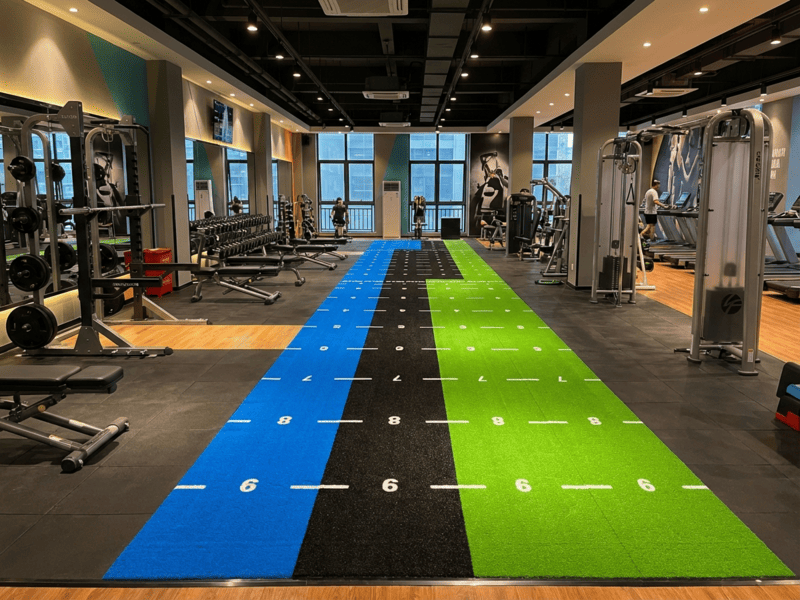
Delamination isn’t just cosmetic; it is a structural failure where the turf separates from the subfloor or its own backing. In high-traffic sled lanes, this creates dangerous tripping hazards and immediate liability risks. Identifying the root cause—whether it’s installation, material, or environment—is the only way to fix it permanently and stop throwing money at temporary repairs.
TL;DR – The Engineering Reality
In over 80% of gym turf delamination cases in sled lanes, the root cause is improper adhesive selection or application, not the turf fibers themselves. Even the highest-quality turf will fail if the bond cannot withstand horizontal shear force. If you see a bubble, the system has likely already failed.
In my years of engineering flooring systems, I have seen gym owners confuse simple fiber wear with delamination. Fiber wear is just aesthetics; the grass looks flat. Delamination is a total system failure. It manifests as a "bubble," a ridge, or a complete detachment of the material. Why does this happen? It is rarely just "bad luck." It is usually a violation of physics or chemistry. When you ignore a small bubble in a sled track, you are ignoring a compromise in the structural integrity of the floor. As athletes continue to drive heavy sleds over that weak spot, the bubble expands, snapping the remaining adhesive bonds like a zipper. This turns a $200 repair into a $10,000 replacement project. Understanding the difference between a surface issue and a bond failure is critical for your budget and your members’ safety.

To understand why these bubbles appear, we have to look at the invisible forces happening under your athletes’ feet.
The Mechanics of Failure: Understanding "Shear Force"?
Standard flooring handles compression, like standing or stacking weights. However, strength training areas generate massive horizontal shear forces. When an athlete pushes a sled, they create an opposing "tug-of-war" between the turf and the concrete, testing the limits of the adhesive bond.
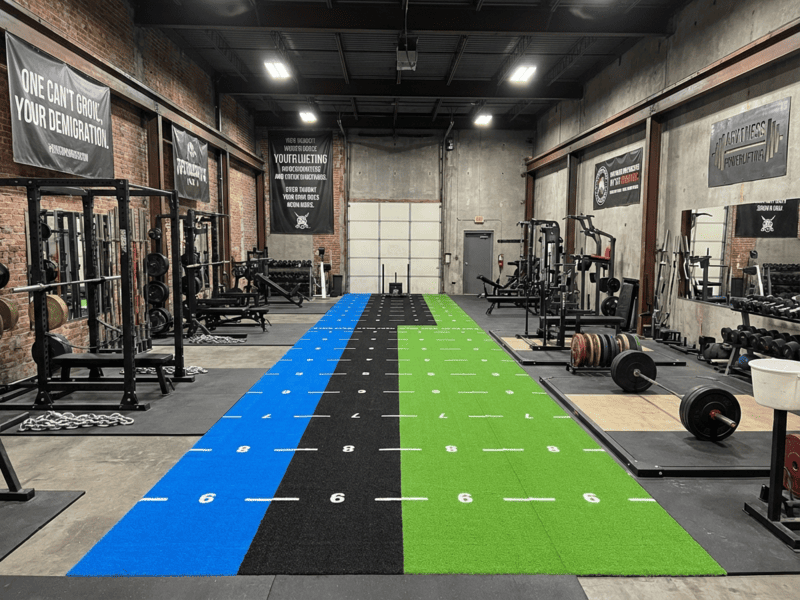
Most people think about floor durability in terms of weight—how much deadlift weight can it take? But in a functional training zone, weight isn’t the enemy; friction is. We call this the "Sled Push Factor." When an athlete digs their toes in to drive a 300lb sled, two things happen simultaneously in opposite directions. First, the athlete drives the turf backward with their feet. Second, the friction of the heavy sled drags the turf forward.
This creates a massive amount of tension, or shear force, directly on the glue bond and the turf backing. It is a "ploughing" effect. If the adhesive is too brittle, it snaps. If the backing is too weak, it tears. Unlike a rubber mat that might just shift, glued-down turf has nowhere to go. If the bond isn’t stronger than the force being applied by the athlete, the energy has to go somewhere, and it usually results in the turf ripping away from the subfloor.
Physics creates the stress, but usually, human error during the installation process is what allows that stress to break the floor.
Core Cause #1: Installation Errors (The Most Common Culprit)?
The number one cause of failure is improper adhesive application, which is why learning how to choose glue or double sided tape to installed gym turf is non-negotiable for any high-performance sled lane. This includes "spot gluing" instead of full coverage, using the wrong trowel notch size, or allowing the glue to "skin over" before laying the turf. Poor subfloor preparation, like dust or moisture, also guarantees bond failure.
I cannot stress this enough: you cannot cut corners on installation in a sled lane. In my experience inspecting failed floors, I see the same three errors repeatedly.
| Installation Error | Why It Fails | The Result |
|---|---|---|
| Spot Gluing | Applying glue only to the perimeter or in strips creates air pockets. | The loose areas bunch up under sleds, creating ripples that eventually crack. |
| Open Time Issues | Installing turf after the glue has started to cure (skin over). | The turf sits on top of the glue rather than bonding with it. Zero grip. |
| Dusty Subfloor | Gluing to concrete dust instead of the concrete slab. | The glue peels right off the floor with the dust attached to it. |
A proper install requires 100% adhesive coverage using a specific trowel notch (usually 1/8" or 3/16") to ensure the glue ridges collapse and transfer fully to the turf backing. If the installer is lazy with prep, the floor is doomed before the first workout.
Even the best installer in the world cannot make the wrong product work. Material selection is just as critical as the labor.
Core Cause #2: Material & Product Incompatibility?
Using landscape turf or latex-backed products in a gym is a recipe for disaster. Gyms require Polyurethane (PU) backing to withstand torsion. Additionally, using general carpet glue instead of moisture-cured urethane adhesive will lead to rapid chemical breakdown.
As a manufacturer, I often see gym owners buying "Landscape Turf" because it is cheaper. This is a fatal mistake for a strength area. Landscape turf is designed for drainage and looks; it has a thin latex backing that degrades quickly indoors. Latex becomes brittle over time. When you subject brittle latex to the heavy torsion of a sled turn, it cracks and crumbles, separating the grass fibers from the base.
For gyms, you must use a product with a Polyurethane (PU) backing. PU is flexible, non-absorbent, and holds the fiber lock much tighter under stress. Furthermore, the adhesive matters. General multi-purpose carpet glue is water-based and weak. You need a high-strength, moisture-cured urethane adhesive. This creates a waterproof, permanent bond that actually gets stronger with slight moisture exposure, unlike carpet glue which re-emulsifies and turns to mush if you spill a water bottle on it.
Sometimes you have the right product and the right glue, but the environment itself attacks the installation.
Core Cause #3: Environmental Factors & Maintenance Abuse?
Turf is plastic, meaning it expands and contracts with temperature changes. In gyms without climate control, this movement snaps rigid glue bonds. Furthermore, aggressive mopping or water spills can seep through seams, destroying water-based adhesives through saponification.
We often forget that synthetic turf is essentially a large sheet of plastic. Like all plastics, it creates thermal expansion and contraction. I have seen gyms in warehouse units where the temperature swings from 40°F at night to 90°F during the day. This causes the turf to grow and shrink. If the adhesive creates a rigid, glass-like bond, the expanding turf will sheer the glue right off the concrete. This is why we use flexible urethane adhesives—they move with the turf.
Water is the other enemy. Many facilities use excessive water to clean their turf. If you are using a cheaper adhesive, that water seeps through the stitch rows or seams. It settles between the backing and the concrete. Over time, high alkalinity in the concrete mixes with the water, causing "saponification," which literally turns the glue into a soapy, oily sludge that offers zero adhesion.
These environmental stresses usually reveal themselves first in the weakest part of any floor: the seams.
Specific Problem Zones: Seams and Edges?
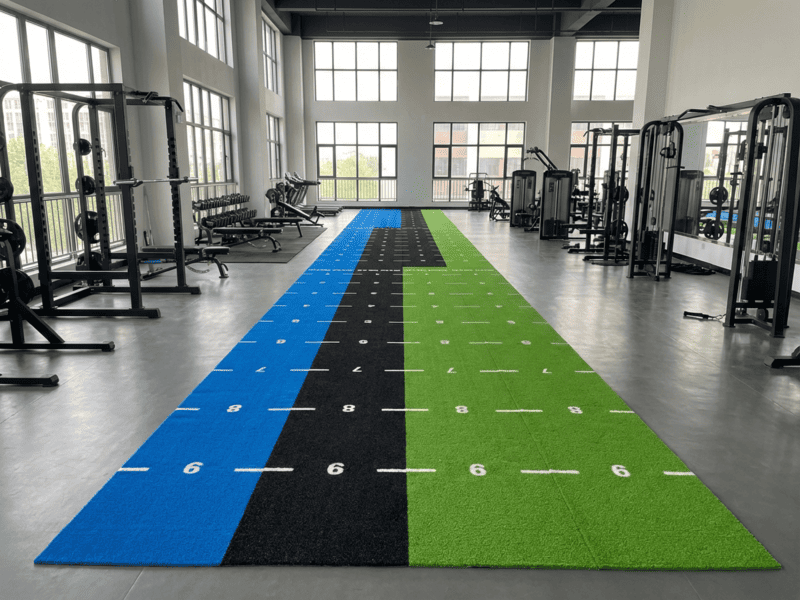
Delamination almost always starts at a seam. This is typically due to poor seaming tape execution or failure to roll the seam immediately. If the seam is not chemically bonded and weighted down during the cure, it becomes a lift point for sleds.
The seam is the Achilles’ heel of any turf installation, and understanding why turf seams fail first in commercial gyms is the first step in preventing systemic delamination before it starts. In a continuous roll, the weight is distributed, but a seam is a break in that continuity. If a sled catches the edge of a seam that is lifted even 1 millimeter, it will peel it back like a banana skin.
The most common failure here is the lack of a weighted roller. After the glue is applied to the seaming tape (we recommend a 12-inch wide Mylar tape), the installer must roll it with a heavy (75-100lb) floor roller. This bursts any trapped air bubbles and forces the glue up into the backing texture. If you skip this step, the seam is just "floating" on top of the glue. Another issue is "peaking," where the two pieces of turf are pushed too tight together, causing them to tent up. This creates a hollow spot underneath that eventually cracks under foot traffic.
So, you have a bubble. How do you know which of these problems caused it? You need to look at the evidence.
Troubleshooting & Diagnosis (Interactive Section)?
To fix the problem, you must diagnose the cause. Peel back the damaged area and look at the glue. If the glue is on the floor but the turf is clean, it’s a backing failure. If the glue is on the turf but the floor is clean, it’s a prep failure.
Before you try to fix anything, play detective. The pattern of the failure tells you exactly who is to blame—the installer, the manufacturer, or the environment. Here is a quick diagnostic guide I use when visiting sites:
| Visual Evidence | The Diagnosis | The Cause |
|---|---|---|
| Glue is on the concrete, Backing is clean | Product Failure | The backing (likely Latex) failed to grab the glue, or there was oil/release agent on the backing. |
| Glue is on the backing, Concrete is clean | Prep Failure | The installer didn’t clean the dust. The glue bonded to dirt, not the slab. |
| Glue is sticky, wet, or slimy | Moisture Issue | High hydrostatic pressure from the slab or water spills dissolved the glue. |
| Concrete and Backing are both clean | Open Time Error | The glue dried before the turf was laid. No transfer occurred. |
Once you know why it happened, you have to decide if it is worth saving.
Solutions: Repair vs. Replace?
Injecting adhesive with a syringe is a temporary band-aid for small bubbles. For lasting results, you must cut out the delaminated section and reinstall it. However, if the bond failure is widespread, total replacement with proper materials is the only safe option.
I get asked constantly, "Can I just inject glue into the bubble?" You can, but it is a short-term fix. Using a syringe to inject adhesive works for spots smaller than a dinner plate, but you must weight it down immediately.
For larger areas, you have to perform surgery. You need to cut out the delaminated section, scrape the old glue off the concrete (this is hard work), and re-glue that section. However, be warned: if you find that the old glue scrapes off easily, the problem is likely affecting the entire floor, not just that one spot. In that case, repairs are a waste of money. You are chasing a ghost. The only real solution is to rip it up, grind the concrete to open the pores, and install a new system with the correct PU-backed turf and urethane adhesive. It hurts to hear, but it is safer than a lawsuit.
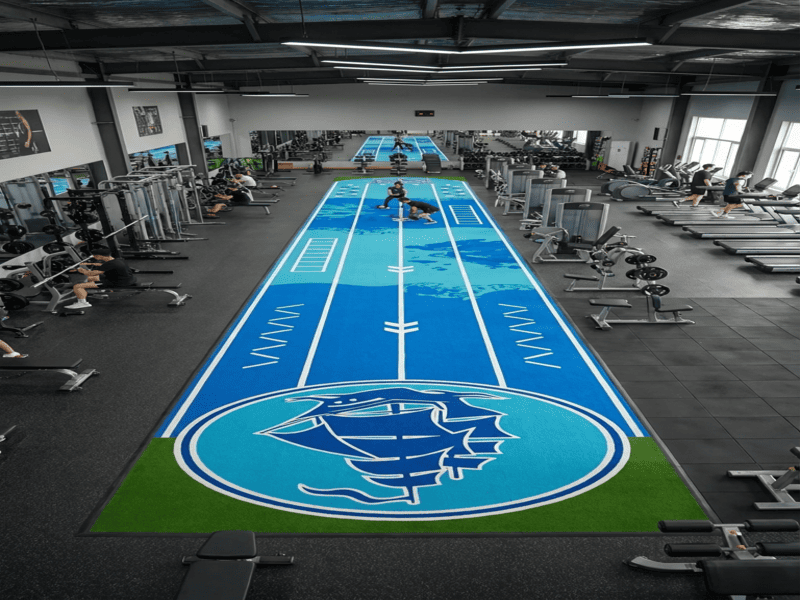
Repairs are painful and expensive, which is why proper specification for your next install is non-negotiable.
The "No-Fail" Prevention Checklist
If you are planning a new install or a replacement, do not sign a contract until you have verified these five engineering requirements. This checklist is your insurance policy against future delamination.
- [ ] Polyurethane (PU) Backing Only: strictly no latex backing for sled areas.
- [ ] Moisture-Cured Urethane Adhesive: Verify the specific adhesive brand. Do not accept "multi-purpose" glue.
- [ ] 100% Trowel Coverage: No spot gluing. Demand to see the trowel notch size (recommend 3/16" V-notch).
- [ ] Climate Control During Cure: Ensure the HVAC is running to maintain stable temperature (65-75°F) for 24-48 hours after install.
- [ ] Weighted Seam Rolling: Confirm the installer has a 75lb+ roller on site.
Conclusion
Preventing delamination starts with specs, not maintenance. Use PU-backed turf, moisture-cured urethane adhesive, and ensure the subfloor is immaculate. It is cheaper to buy quality once than to repair cheap turf twice.
Are you unsure if your current quote or material spec is up to engineering standards? Before you commit to a purchase, feel free to contact us for an independent Spec Review. My team at LaiYin can evaluate your project parameters to ensure you aren’t walking into a preventable failure.