


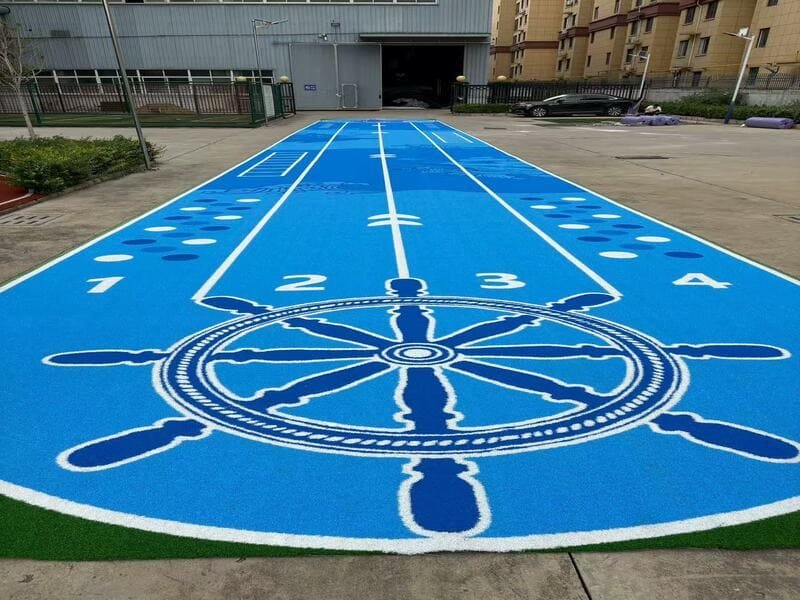
High-traffic gym turf requires specific engineering specifications: Nylon 6 fibers for heat resistance (220°C+), a face weight between 36oz and 60oz for density, and a Polyurethane (PU) backing for maximum tuft bind. General landscaping grass lacks the thermal stability to withstand the friction of sled pushes.
The Engineering Perspective: Quantifying Durability
As a production process engineer, I define "suitability" not by how the turf looks, but by how it fails. In a high-traffic gym, failure happens in two specific ways: Thermal Deformation (melting from friction) and Delamination (fibers pulling out of the backing).
Unlike landscaping grass, which is designed for aesthetics and vertical drainage, gym turf is a functional surface subject to extreme shear forces. When a 300lb sled is pushed across the floor, it generates significant kinetic friction. If the turf’s polymer chains cannot withstand the resulting heat spikes, the fibers will plastically deform—permanently flattening or "smearing" into a hard, slick surface.
To prevent this, we must look at the specific manufacturing metrics: Polymer Type, Face Weight Density, and Backing Chemistry. Below, I will verify the exact data points you need to confirm before approving a purchase order.
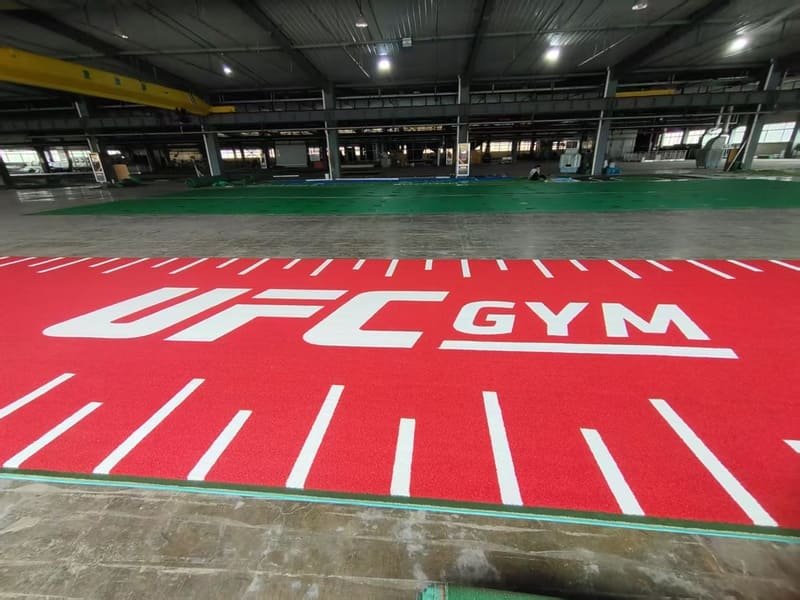
Why Is Nylon the Only Standard for Sled Lanes?
Nylon 6 has a melting point of approximately 220°C (428°F), whereas Polyethylene (PE) melts around 120°C (248°F). This 100°C differential is the critical safety margin that prevents turf from melting under the friction of heavy sleds.
Thermodynamics of Friction
In my lab, we perform Taber Abrasion Tests. We simulate years of wear in a few hours. The results are consistent:
- Polyethylene (PE): Excellent for soft touch and UV resistance (outdoors), but structurally weak against friction. Under heavy sled drag, the local surface temperature can momentarily spike. If it hits that 120°C limit, the PE fibers soften and lose their "elastic memory" (the ability to spring back).
- Nylon (Polyamide): It is a crystalline polymer with high tensile strength. It acts like a microscopic spring. Even after 10,000 cycles of weighted friction, Nylon retains its vertical structure.
The "Burn" Factor:
Have you ever gotten a "rug burn" from sliding on turf? That is friction heat. Nylon is more abrasive than PE, which is why we don’t recommend it for playgrounds. But for equipment (sleds, tires, ropes), that toughness is exactly what makes it suitable for high-traffic zones.
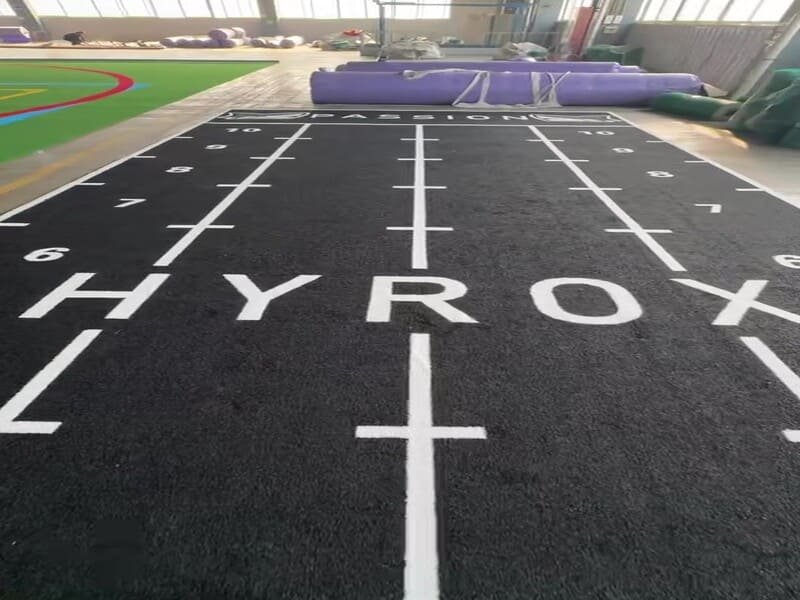
What Are the Correct Weight and Height Specs?
For functional fitness, specify a Pile Height of 0.75" to 1" (19-25mm) and a Face Weight of 36oz to 60oz. Beware of "Total Weight" figures; you must verify the weight of the fiber specifically to ensure density.
Debunking the "Heavier is Better" Myth
This is the most common misconception I correct.
- Pile Height: In a gym, shorter is stronger. A tall blade (1.5"+) creates leverage. When you step on it, it lays flat. A short blade (0.75") stands up like a crew cut. It offers less resistance to sleds and provides a stable platform for lifting shoes.
- Face Weight vs. Total Weight:
- Face Weight: The weight of the yarn only.
- Total Weight: Yarn + Glue + Backing.
- Engineer’s Note: A supplier might claim "80oz Turf." You must ask: "Is that Face Weight?" Often, it’s a 40oz face weight with 40oz of heavy rubber backing.
- The Sweet Spot: For a high-traffic facility, a 40oz to 50oz Face Weight Nylon turf with a 3/16" gauge (tight stitching) creates the perfect balance of durability and cost. Anything over 60oz in a short pile is often over-engineered and difficult to install due to stiffness. Understanding these weight-to-pile ratios is a critical step when learning how to purchase high-quality artificial turf that delivers both performance and longevity.
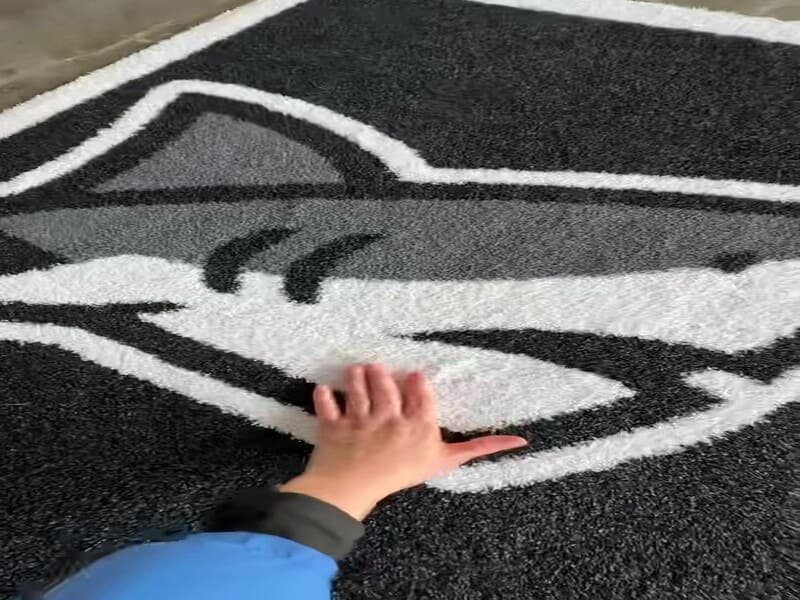
Why Specify Polyurethane (PU) Backing?
Polyurethane (PU) backing offers superior moisture resistance and a stronger Tuft Bind (>8 lbs force) compared to traditional Latex. In indoor environments with sweat and humidity, PU prevents the backing from degrading or absorbing odors.
The Chemistry of the Bond
The "Tuft Bind" is a standardized test (ASTM D1335) that measures how much force is required to pull a single tuft of grass out of the mat.
- Latex (SBR): It is water-based. Over time, oxidation and moisture (from cleaning or humidity) can cause Latex to crack. Once it cracks, the tuft bind drops, and you see "shedding" (green fibers all over your gym).
- Polyurethane (PU): It is a thermoset polymer. It is hydrophobic (repels water) and creates a chemical bond with the yarn fibers. It is lighter, more flexible for installation, and maintains its grip strength for years longer than Latex.
Foam Padding (5mm):
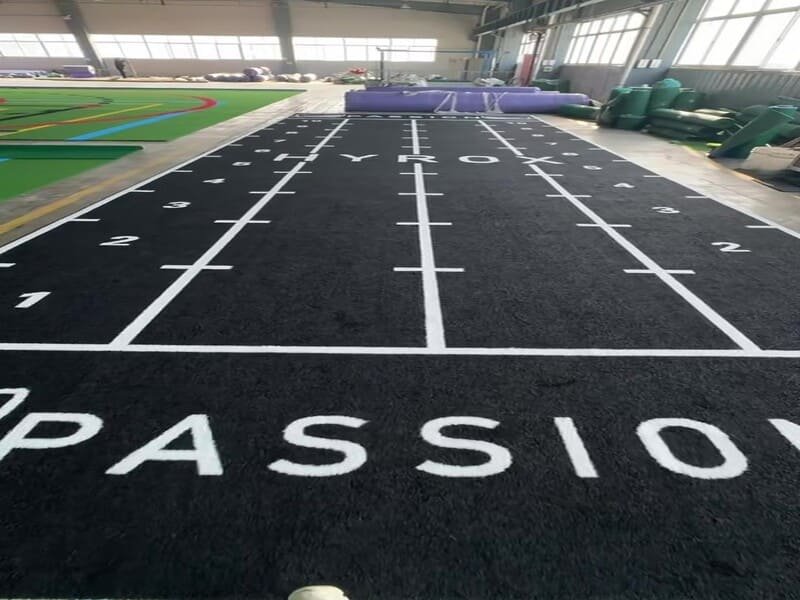
Adding a 5mm closed-cell foam pad is excellent for Agility Zones (shock absorption for joints). However, for Heavy Sled Lanes, I often recommend removing the foam. A direct glue-down of the turf to concrete minimizes compression, making the sled easier to move and the floor more responsive.
Installation: The "Shear Force" Reality
High-traffic turf must be fully adhered to the subfloor using a urethane-based adhesive. Double-sided tape or loose-lay installation will fail under the horizontal shear forces generated by agility drills and sled work.
Why Tape Fails
When an athlete stops abruptly (deceleration) or a sled is pushed, horizontal force is applied to the floor. This is Shear Force.
- Tape: Holds the perimeter but allows the center to shift. This creates "ripples" or wrinkles. A wrinkle is a tripping hazard and a wear point where the turf will eventually tear.
- Full Glue-Down: By troweling adhesive over 100% of the surface, you transfer the shear force directly into the concrete slab. The turf cannot move, stretch, or wrinkle.
No Infill Required:
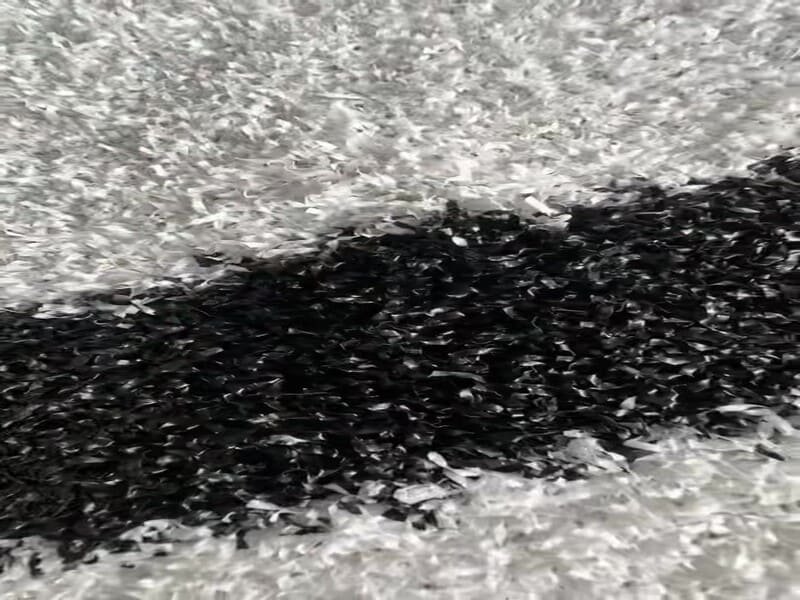
Ensure you order a product with a "Thatch Layer" (a curly secondary fiber). This acts as a built-in support system for the grass blades, eliminating the need for rubber crumb infill. Never use crumb rubber indoors—it is a hygiene nightmare.
Engineering Decision Matrix
Do not guess. Use this specification table to match the material properties to your facility’s specific mechanical demands.
The Right Spec for the Right Zone
I have compiled this table based on material performance data to help you select the exact product specification for your needs:
| Zone / Application | Material Polymer | Face Weight (Yarn) | Pile Height | Backing System |
|---|---|---|---|---|
| Heavy Sled Lane | 100% Nylon 6 | 40 oz – 50 oz | 0.75" (19mm) | PU Backing (No Foam) |
| Agility / HIIT | Texturized Nylon | 36 oz – 45 oz | 0.85" (22mm) | PU + 5mm Foam |
| General Circuit | Nylon / PE Blend | 40 oz | 1.00" (25mm) | PU + 5mm Foam |
| Stretching Area | Polyethylene (PE) | 50 oz+ | 1.25" (32mm) | PU + 5mm Foam |
Conclusion
To guarantee the longevity of your gym floor, you must verify three data points: Material (Nylon for sleds), Density (36-60oz Face Weight), and Backing (PU).
For the rigorous buyer, here is your final audit checklist:
High-Traffic Turf Audit Checklist
- ☑ Polymer Verification: Is it Nylon 6? (Reject PE for sled lanes)
- ☑ Face Weight Check: Is the yarn weight at least 36oz? (Don’t be fooled by "Total Weight")
- ☑ Pile Height: Is it under 1 inch? (Taller piles increase drag and wear)
- ☑ Backing: Is it Polyurethane (PU)? (Check for a grey/white backing, not black latex)
- ☑ Infill: Is it a "Thatch" style product? (No rubber crumbs needed)
My Role
As a Production Process Engineer, I live in the details of polymer science and manufacturing tolerances, which is exactly how flooring distributors identify high-performance gym turf before approving large-scale commercial orders. I know that a spec sheet can be confusing, but the numbers don’t lie.
If you are unsure if a sample you received meets these standards, send me the specs. My team can help you audit the technical data sheet and provide a sample of true high-traffic Nylon turf for comparison.