


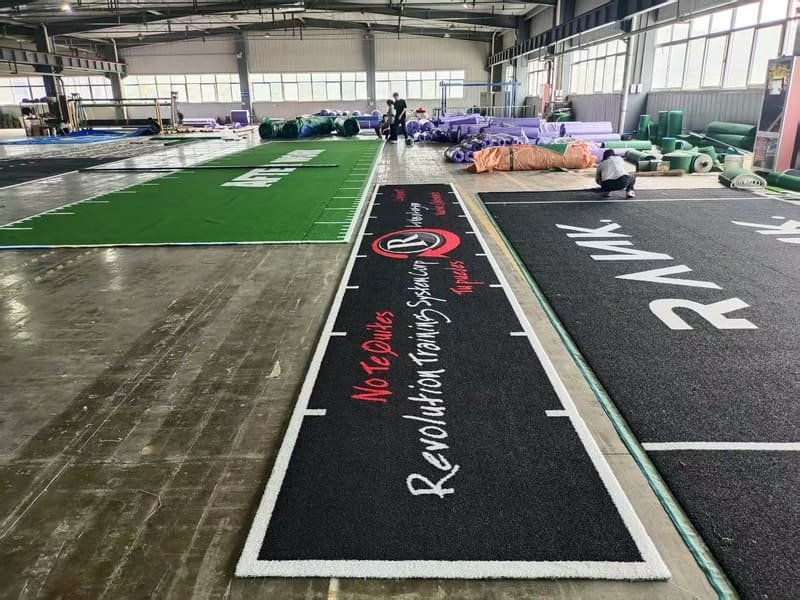
Fiber recovery relies on a specific combination of polymer memory (material composition), geometric structure (fiber shape), linear mass density (Dtex), and the support of the thatch layer. Turf lacking these specific engineering traits will permanently flatten under the heat and pressure of heavy sled training.
As an R&D engineer who has spent years testing artificial grass under extreme load conditions, I often see gym owners frustrated by the "flat track" phenomenon. You buy a premium-looking green strip, but after three months of sled pushes, it looks like a matted green carpet that offers uneven resistance. This isn’t just bad aesthetics; it’s a functional failure. The recovery mechanism of a synthetic fiber is essentially a battle against plastic deformation. When a weighted sled drags across the surface, it applies both compressive force and frictional heat.
If the fiber is merely a flat strip of plastic, it lacks the structural integrity to spring back—it folds like a creased piece of paper. However, if we engineer the fiber with specific polymers and geometric "spines," we create a mechanical memory system. In my lab tests, the difference between a standard landscape turf and a dedicated high-performance gym turf often comes down to how the material handles the "yield point"—the moment where bending becomes permanent. Understanding the interaction between the upright fibers and the curly thatch layer is crucial. The uprights provide the aesthetic and the glide, while the thatch acts as the internal suspension system. Without this synergy, even the most expensive raw materials will fail to perform. For a broader look at designing and optimizing your functional training area, refer to our The Ultimate Guide to Sled Turf Tracks.
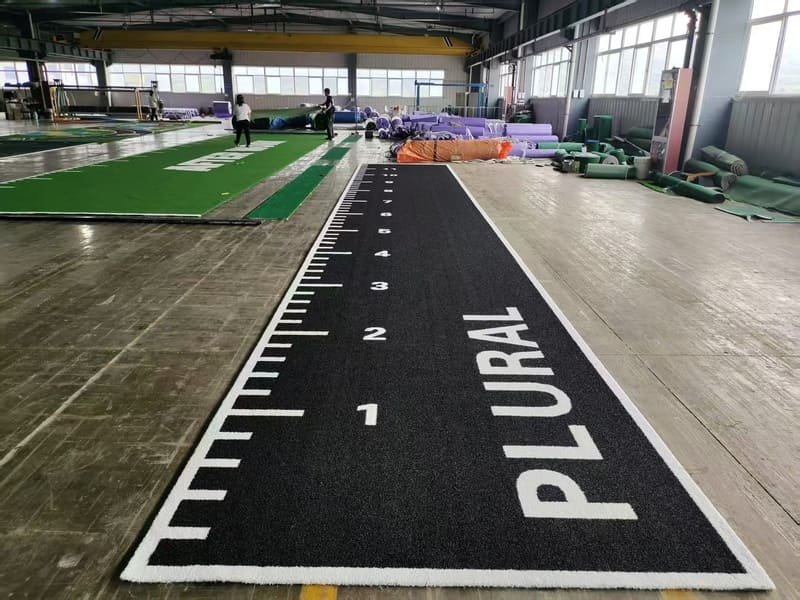
Understanding the basic mechanics is the first step, but to make a smart purchasing decision, we must analyze the raw materials.
How Does Material Composition Impact Durability?
Polymer choice acts as the DNA of the turf; Nylon offers superior heat resistance and memory but at a higher cost, while Polyethylene (PE) provides the best balance of durability and softness. Polypropylene (PP) lacks the resilience required for heavy sled zones and is prone to crushing.
When I formulate the chemical mix for a new batch of turf, the primary decision is always the polymer base. This is where many manufacturers cut corners that you won’t notice until the turf is installed. For high-traffic sled tracks, we are primarily looking at the material’s ability to resist "creep"—the tendency of a solid material to move slowly or deform permanently under the influence of mechanical stresses.
Material Comparison for Gym Applications:
| Material | Resilience (Memory) | Heat Resistance | Friction Coefficient | Verdict |
|---|---|---|---|---|
| Nylon (PA) | Excellent | High (220°C+) | Higher (Can burn skin) | The gold standard for ultra-heavy usage, but abrasive. |
| Polyethylene (PE) | Good to Very Good | Medium (120°C-130°C) | Low (Soft feel) | The best all-rounder. ideal for 90% of gyms. |
| Polypropylene (PP) | Poor | Low | Medium | Avoid for sled tracks; strictly for decorative borders. |
In practice, most commercial gyms should prioritize PE monofilament turf with structured fibers for the best balance of cost and performance. To see which specific fiber profiles and models perform best under extreme pressure, explore our detailed analysis on What is the best turf for sled pushes?. while elite performance facilities (like CrossFit Games training centers) may justify Nylon blends in their highest-load lanes to handle extreme friction.
In addition to the base polymer, the "secret sauce" lies in the additives. We add UV stabilizers and elasticity modifiers during the extrusion process. Without these, the plastic chains degrade under sunlight or repeated stress, becoming brittle. A fiber that snaps off is worse than one that lays flat. Therefore, a 100% PE fiber with the right additives will often outperform a generic Nylon blend that lacks proper stabilization.
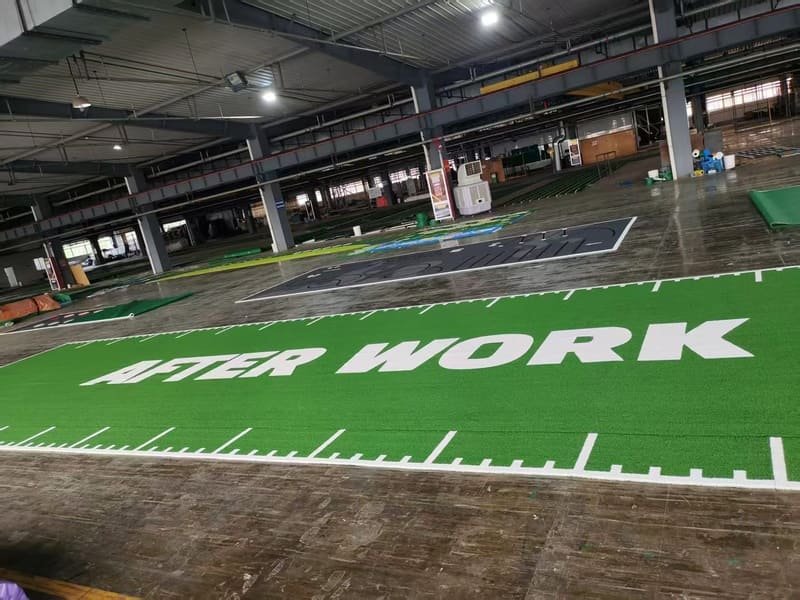
Material is vital, yet even the strongest plastic will fail if it is shaped incorrectly.
Why Is Fiber Geometry the Structural Skeleton?
Fiber geometry determines stiffness; flat fibers bend easily and stay flat, whereas structured fibers (C, S, W, or Stem shapes) utilize their curves as a structural spine to force the blade upright after compression, acting like a miniature spring.
Imagine holding a flat sheet of paper vertically and trying to place a small weight on it—it buckles instantly. Now, fold that paper into an accordion shape or curve it into a cylinder; it suddenly supports significant weight. This is the exact principle we apply to turf engineering. Flat fibers are cheap to extrude, but they have zero structural memory. Once they are mashed down by a 300lb sled, they have no mechanical reason to stand back up.
For gym turf, I always recommend specific profiles designed for vertical recovery:
- Stem Shape: Features a thick "spine" running down the center. This is the stiffest option and offers the most aggressive rebound.
- C-Shape / S-Shape: These curves create tension. When the sled pushes them down, the curve wants to snap back to its original arc.
- W-Shape: Offers multiple ridges for diffusing light (reducing shine) and splitting the mechanical load.
In the factory, we view the cross-section of the yarn under a microscope. A "fat" shape with consistent thickness throughout the curve indicates longevity. If the fiber is shaped but the edges are paper-thin, those edges will curl and fray, leading to a fuzzy, flat appearance. The geometry is not just for looks; it is the skeleton that keeps your gym floor functional.
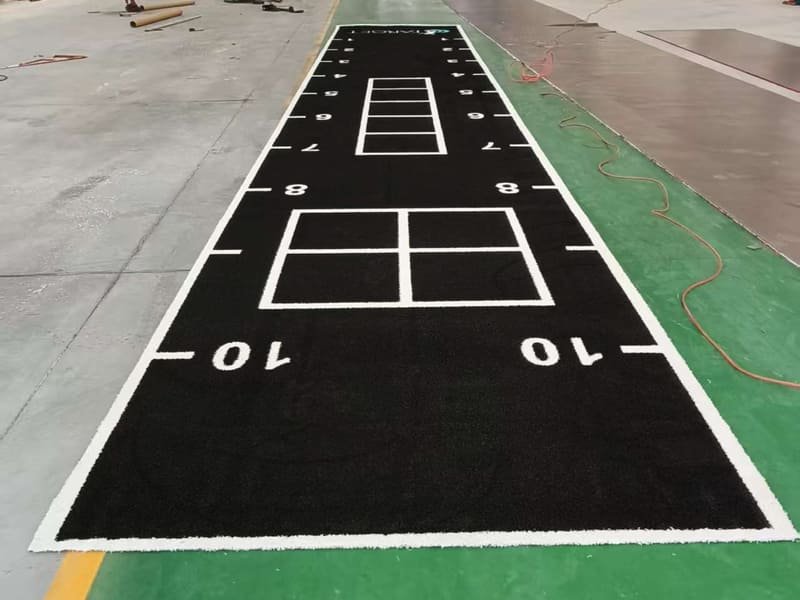
Shape provides the structure, but we also need to ensure there is enough physical mass to support that structure.
Do Dtex and Density Create the Muscle?
Dtex measures the mass of the fiber, with higher values (8,000+) indicating thicker, stronger blades, while high density provides lateral support ("strength in numbers") to prevent fibers from lying flat, though excessive density can increase sled friction too much.
Dtex (Decitex) is a term often thrown around in spec sheets, but few buyers understand it. It represents the weight in grams of 10,000 meters of yarn. Simply put: Higher Dtex = Thicker, Heavier Grass. For a decorative lawn, 5,000 Dtex is fine. For a gym sled track, anything under 8,000 Dtex is a liability. A low Dtex fiber is like a thin blade of grass—it folds effortlessly. A high Dtex fiber is like a reed—it resists bending.
However, density (stitches per square meter) is equally critical. It’s a balancing act.
- Too Sparse: The fibers have no neighbors to lean on. They get crushed individually and stay down.
- Too Dense: The friction becomes so high that pushing a sled feels like pushing it through mud, and the cost skyrockets unnecessarily.
For non-infill systems (which most gyms prefer for cleanliness), the Thatch Zone is the unsung hero. This layer of curly, textured yarn at the root acts as a permanent "suspension system." It physically holds the straight fibers up, doing the job that rubber crumb infill does on a soccer field. If you look at a sample and can easily see the black backing through the grass, the density is too low, and the thatch is insufficient. You need a dense, sponge-like thatch layer to ensure recovery.
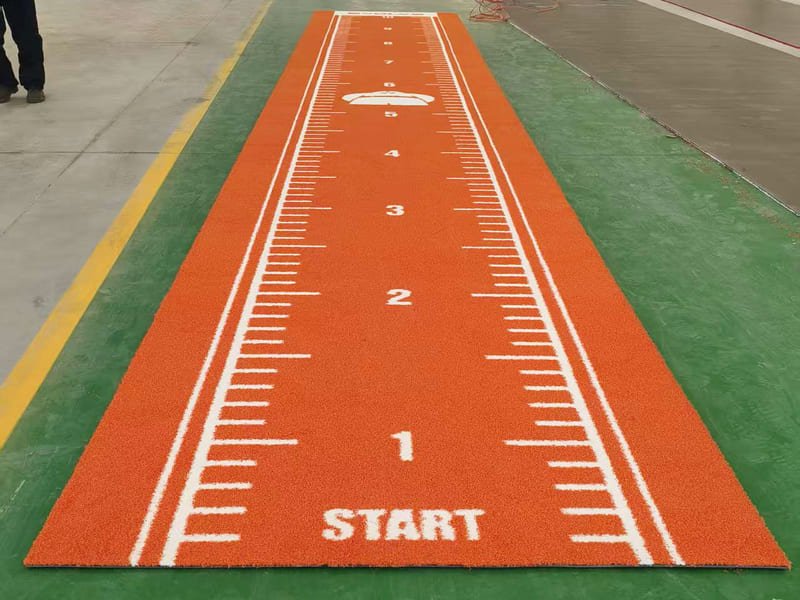
Even with the perfect product, external forces like heat and friction can compromise performance.
Can Heat and Maintenance Affect Recovery?
Heavy sleds generate significant friction heat that can soften fibers and cause "plastic memory loss," while regular mechanical brushing is essential to agitated the fibers and reset their orientation before matting becomes permanent.
We often ignore the thermodynamics of a sled push. When a weighted metal or plastic sled drags across synthetic turf, the localized temperature at the contact point can spike momentarily. If this temperature approaches the softening point of the polymer (around 120°C for some PE), the fiber doesn’t just bend—it chemically relaxes into that flat shape. Once it cools down in that flat position, it stays there. This is why Nylon (melting point >200°C) is preferred for extreme loads, though high-quality PE handles standard gym traffic well.
Maintenance is the other half of the equation. No turf is "maintenance-free." To maintain recovery, you must mechanically agitate the fibers.
- The Protocol: For high-traffic lanes, I recommend a power broom or a stiff-bristled manual push broom once a week.
- Traffic Management: If everyone pushes the sled in the exact same distinct "groove" every day, no fiber can survive. We advise gym owners to alternate the starting lanes or direction to distribute the wear.
The trend toward Non-Infill turf in gyms makes this even more critical. In an outdoor soccer field, the sand and rubber infill support the fiber. In a gym, the fiber stands alone. Therefore, the maintenance of brushing the fibers back upright is the only way to counteract gravity and traffic.
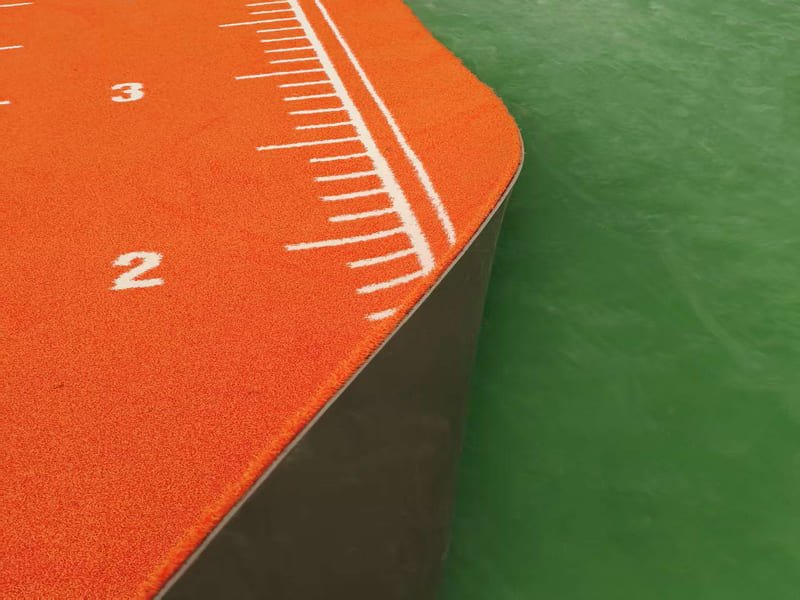
Now that we have covered the science and the maintenance, let’s condense this into a practical checklist for your next purchase.
What Is the Ultimate Buyer’s Checklist?
Prioritize specific features: structured fibers (Stem/C/S-shape), high Dtex (8,000+), and a heavy thatch layer for support. Always request a physical sample to perform the "Hand Press Test" before committing to a purchase.
As an engineer, I advise you to never buy based on photos alone. Manufacturers can make any low-density turf look lush in a studio shot. You need to get your hands on the material. When you are sourcing gym turf, use this specification sheet as your baseline to filter out low-quality options:
- Fiber Type: 100% Polyethylene (PE) or a PE/Nylon blend. Avoid 100% PP for the face yarn.
- Structure: Demand a "Monofilament" with a shape (Stem, C, S, or W). Reject "flat" yarns.
- Dtex: Minimum 8,000 Dtex for the straight yarn.
- Thatch: High-density, curled root zone that covers the backing completely.
The "Hand Press" Test:
When the sample arrives, place it on your desk. Push your palm down hard onto the fibers for 10 seconds, mimicking the weight of a sled. Release your hand.
- Fail: The fibers stay flat and look dead.
- Pass: The fibers slowly spring back up or recover instantly when you brush them once with your hand.
When you select these specific engineering standards, you aren’t just buying grass; you are buying longevity. For properly engineered gym turf, fiber recovery should remain consistent for 3–5 years under daily sled use, not weeks or months.
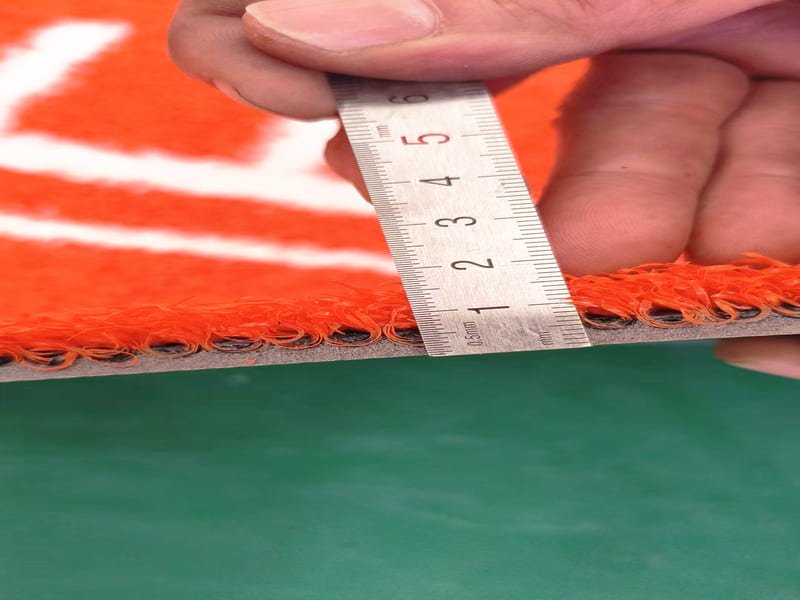
By following these technical guidelines, you ensure your investment lasts for years, not months.
Conclusion
Turf recovery is not magic; it is the result of engineering physics—combining the right polymer memory, geometric shape, and density. Investing in high-Dtex, structured fibers prevents the "flat carpet" look and ensures consistent training performance.
If you are unsure whether a specific turf spec fits your facility’s traffic levels, my engineering team can review your requirements or send you a sample kit to perform the "Hand Press Test" yourself.