


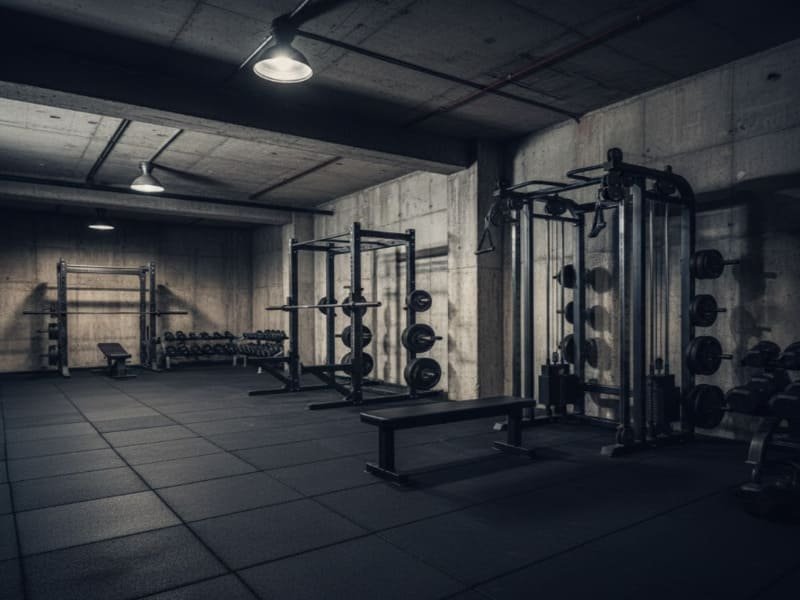
To fix a slippery gym floor immediately: remove fine dust with a dry microfiber mop, spot clean slick areas with plain water (no soap), and increase ventilation to dry surface moisture. If the issue persists, perform a deep clean using a pH-neutral degreaser and rinse thoroughly to remove invisible soap residue.
Quick Answer: The 30-Second Fix
If you are reading this because your athletes are slipping right now, ignore the chemistry lesson for a moment and follow this emergency protocol. This is the exact SOP I give to facility managers for immediate intervention:
- Dry Dust Mop: Immediately sweep the entire area with a clean microfiber mop to remove the "ball bearing" dust layer.
- Plain Water Spot Clean: Identify the slickest spots and mop them with hot, plain water only. Do not use detergent (it adds more slippery film).
- Ventilate: Turn on HVLS fans or crank up the HVAC system. You need to lower the surface humidity immediately.
- Traction Mats: If a specific area (like a lifting platform) is unsafe, cover it with a rubber mat until you can deep clean.
The Hidden Dangers of Low Traction
From my perspective as a quality control manager, a slippery floor is a critical safety failure, not just a cleaning issue. I have inspected high-end rubber floors that were labeled "defective" by the owner, only to find the surface was coated in layers of improper cleaning chemicals. When the Coefficient of Friction (COF) drops below safe standards, the risk of ACL tears and slip-and-fall lawsuits increases instantly. The problem is rarely the floor material itself; it is almost always what is sitting on top of it. This guide bridges the gap between emergency fixes and the long-term engineering maintenance required to keep your floor safe.
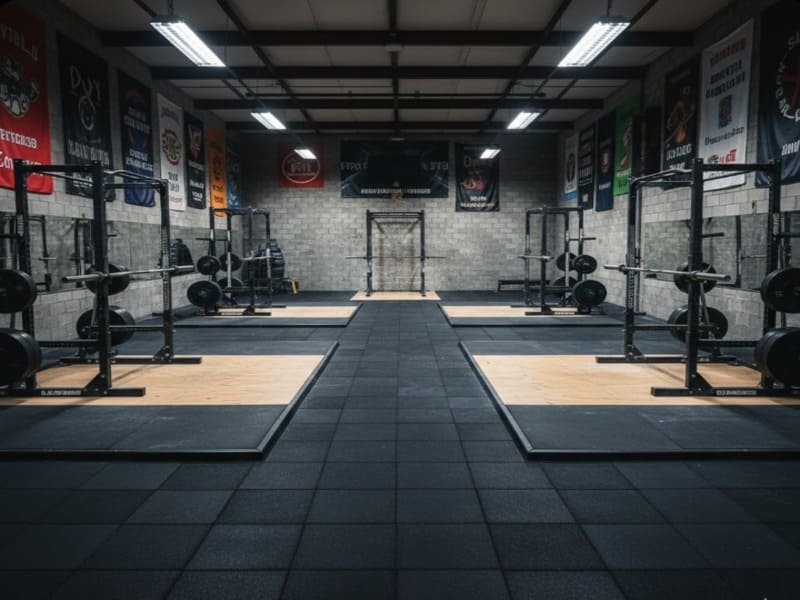
Before we start scrubbing, we need to know if the floor is dirty or dead.
Decision Matrix: Do You Need to Replace the Floor or Just Clean It?
Before spending money on new flooring, use this diagnostic table to determine if the issue is a maintenance failure or end-of-life wear. Most "slippery" issues are solved by removing residue, not by replacing the product.
Diagnosing the Root Cause
As an engineer, I believe in data-driven decisions. You should not rip out a $20,000 floor if a $50 bottle of degreaser can fix it. Use the table below to identify your specific situation, and if you discover small tears or gouges, refer to our guide on how to fix minor gym floor damage fast.
| Symptom | Likely Cause | The Solution |
|---|---|---|
| Slippery after mopping | Soap Scum Residue (The #1 Cause). You are leaving chemical film on the floor. | Deep Clean & Rinse. You must extract the soap residue. |
| Slippery during high humidity | Condensation. The floor is cooler than the dew point of the air. | HVAC Control. Dehumidify the air or increase airflow. |
| Slippery with visible dust | Particulate Interference. Dust acts like miniature ball bearings. | Dry Mop immediately. Upgrade entrance mats. |
| Shiny/Smooth spots (High Traffic) | Texture Loss. The material’s grain or finish has worn flat. | Refinish (Wood) or Replace (Rubber/Vinyl). |
| Sticky then slippery | Wrong Chemical. Use of oil soaps or enzymatic cleaners not meant for the material. | Strip/Degrease. Remove the contaminant layer. |
If your diagnosis points to maintenance issues (rows 1-3), the following steps will restore your traction.
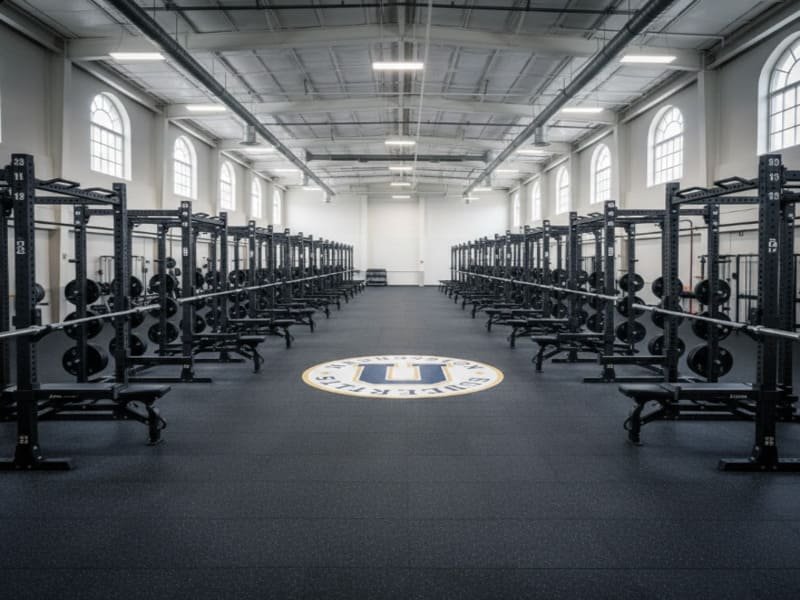
Now that we have diagnosed the problem, let’s look at why these issues happen chemically.
Phase 1: The "Why" – Understanding Traction Loss
Slippery floors are usually caused by three factors: the "ball bearing" effect of fine dust, a waxy film left by un-rinsed detergents (residue), or environmental moisture. Understanding these factors prevents you from making the problem worse during cleaning.
The Science of Surface Friction
In the lab, we test flooring for "slip resistance." However, real-world conditions change that rating. The most common enemy is residue buildup. Many cleaners believe "more soap cleans better." Chemically, this is false. If you use a detergent with high solids and do not rinse it off with fresh water, the water evaporates, but the soap solids remain. When a sweaty shoe hits that dried soap, it re-hydrates into a lubricant—like stepping on ice.
Another major factor is particulates. Fine dust, chalk, and dirt sit on top of the rubber or wood grain. When an athlete pivots, these particles roll between the shoe and floor, eliminating friction. Finally, consider hygroscopic properties. If your gym is humid (over 60%), microscopic water droplets form on the floor. This hydro-layer prevents the shoe rubber from gripping the floor surface. You aren’t slipping on the floor; you are slipping on the water and soap covering it.
If you are past the emergency phase, it is time to solve this permanently with a deep clean.
Phase 2: The Deep Clean (The Universal Solution)
To restore traction, you must break the bond of the residue layer. This requires sweeping, applying a pH-neutral degreaser (avoiding oil-based soaps), agitating the surface to lift dirt, and—most critically—rinsing to remove the dirty water.
The Engineering Protocol for Restoring Grip
This is the standard procedure I recommend for restoring the surface COF.
Step 1: Dry Soil Removal. You must vacuum or sweep first. Adding water to dust creates mud, which settles into the texture of rubber flooring.
Step 2: Chemical Selection. Use a pH-neutral cleaner or a specialized rubber degreaser. Avoid "gloss enhancers" or "mopping solutions" found in supermarkets; they contain oils.
Step 3: Mechanical Agitation. This is where most people fail. A mop just spreads dirt. You need to scrub. For commercial spaces, use an auto-scrubber with a red pad or soft nylon brush. For home gyms, use a deck brush. You need to physically lift the body oils and soap scum out of the floor’s pores.
Step 4: The Rinse (The Critical Step). If you do not remove the dirty, soapy water, you have achieved nothing. An auto-scrubber vacuums this up. If you are mopping, you must use a wet-vac or rinse with a clean mop and fresh water until the water is clear.

The deep clean works for everyone, but the specific material determines what chemicals will destroy or save your floor.
Phase 3: Solutions by Material Type (Targeted Advice)
Rubber floors need degreasers to remove body oils; hardwood courts require "screening and recoating" to restore finish texture; and vinyl floors often need old polish stripped and resealed to eliminate scuff-related slipping.
Material-Specific Maintenance
As a manufacturer, I see expensive damage caused by using the wrong approach for the specific material.
A. Rubber Flooring (Rolls/Tiles):
Rubber is porous. It traps sweat, skin lotion, and chalk. A simple mop often misses this. You need a degreaser to break down the lipid (fat) layer from body oils—a crucial step detailed in our complete tutorial on how do you clean rubber gym mats. Warning: Never use bleach (it makes rubber brittle) or wax (it fills the pores and creates a slide).
B. Hardwood Courts:
Wood relies on its finish for grip. If the finish is worn smooth, no amount of cleaning will help. You need a "Screen and Recoat." This involves lightly sanding the top layer and applying a new high-traction sport finish. This should happen annually.
C. Vinyl/PVC:
Vinyl often suffers from polish buildup. If you have applied layers of generic floor wax, you have created a smooth, slippery shell. You need to strip the old wax completely and apply a sealer specifically designed for sports vinyl, which has a higher friction rating than grocery store wax.
Once the floor is safe, we need to ensure it stays that way.
Phase 4: Prevention & "Don’t Do This" List
Prevent future slipping by using walk-off entrance mats, maintaining humidity between 35-50%, and strictly avoiding oil-based soaps, fabric softeners, or silicone sprays that leave permanent slick residues.
Proactive Engineering Controls
The most effective fix is prevention. Implement the "15-Foot Rule" for entrance mats: 15 feet of matting at the door traps 85% of incoming moisture and dirt.
Next, control your environment. Keep indoor humidity stable. If your humidity spikes, your floor becomes a condensation magnet.
Finally, audit your janitorial closet. Throw these away immediately:
- Oil Soaps: Any cleaner that promises to "shine" or "condition" usually contains oil. Oil is the enemy of friction.
- Fabric Softeners: Never add these to mop water for "scent." They coat the floor in silicone/wax.
- Silicone Lubricants: Be careful when greasing gym machines. Overspray on the floor creates invisible ice patches that are incredibly hard to remove.
Let’s address the most frequent questions I receive from gym owners.
FAQ (People Also Ask)
Common questions cover the use of vinegar (okay but not best), frequency of refinishing (annually for wood), and why floors remain slippery after cleaning (residue buildup).
Technical Answers to Common Issues
Can I use vinegar on rubber gym floors?
Technically, yes, vinegar is a mild acid that can remove salt deposits. However, I do not recommend it as a primary cleaner. It does not cut through body oils (grease) effectively. A pH-neutral degreaser is engineered to emulsify oils without drying out the rubber binder like acid does over time.
Why is my floor slippery after I mop it?
This is the classic "soap scum" sign. You likely used too much detergent or didn’t rinse the floor. When the water evaporated, it left a waxy layer of soap solids. You need to rinse the floor with hot, plain water and a wet-vac to remove this layer.
How do I know if my rubber floor is worn out?
Look at the texture. New rubber mats have a distinct grain or pore structure. If high-traffic areas (like under a squat rack) look shiny, smooth, and flat compared to the corners of the room, the texture has been physically worn down. Cleaning won’t fix this; you need to replace those tiles.

Proper maintenance is not just about cleanliness; it is about performance and safety.
Conclusion
Fixing a slippery gym floor usually requires a change in process, not a change in flooring. By following the "Sweep, Scrub, Rinse" protocol and avoiding oil-based residues, you can restore the safe grip your athletes need.
Author’s Note:
I hope this technical guide helps you solve your traction issues immediately. However, if you have followed these steps and the floor is still slick, or if you identified "Texture Loss" in the decision matrix, your flooring may have reached the end of its service life.
My team and I specialize in high-performance gym flooring manufacturing. If you are unsure if your floor needs replacement, or if you want to test a sample of our high-traction rubber surfacing, please contact us. We are here to help you ensure your facility is safe and competition-ready.