


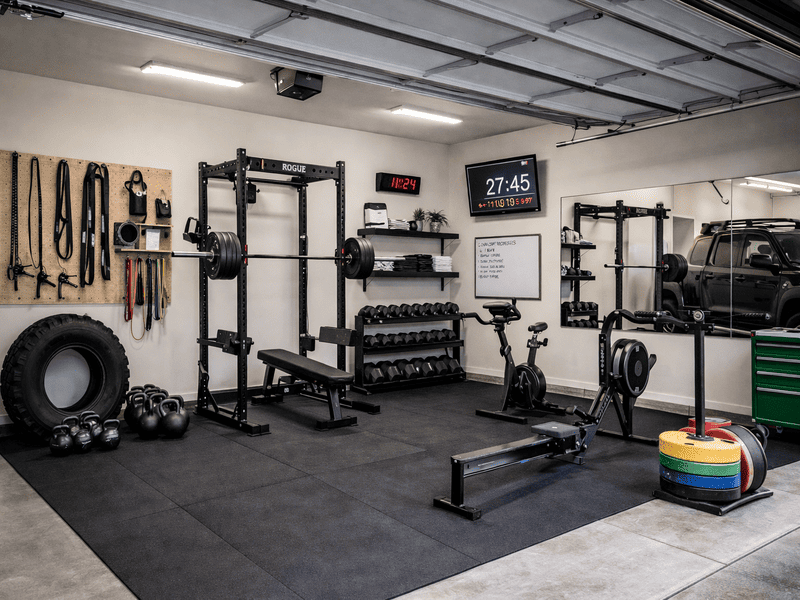
Converting a garage requires engineering a surface that handles vehicle weight, chemical leaching, and temperature swings. Rubber flooring is the superior solution, but success depends entirely on selecting the correct material composition and thickness for your specific application.
As a production manager, I see garage projects fail not because of the material, but because of the wrong choice of material. Rubber flooring isn’t a generic commodity; it’s an engineered product. Your garage floor faces unique challenges: 4,000-pound compressive loads, plasticizer migration from tires, and wild temperature fluctuations. This guide strips away the marketing fluff to give you the manufacturing realities—helping you choose between rolls and tiles, virgin and recycled rubber, and ensuring your installation survives for decades.
Can You Park Cars on Rubber Flooring?
Yes, high-density rubber easily supports vehicle weight, but you must address "Plasticizer Migration." Standard rubber binders react with tire chemicals, causing permanent yellow stains. Use black flooring, vulcanized rubber, or drip trays to prevent this reaction.
From a manufacturing standpoint, the issue is chemistry, not weight. Our standard 8mm rubber can withstand hundreds of PSI, easily supporting a truck. The real threat is the chemical reaction between the oils in your car tires and the polyurethane binder in the flooring. When hot tires sit on the floor, they leach plasticizers that turn the floor yellow.
- The Fix: We recommend choosing Vulcanized Rubber (which is heat-cured and less porous) or simply using black flooring to hide potential stains. For mechanic workshops, always seal the rubber, as standard recycled mats are porous and will absorb oil drips.
Which Flooring Type Suits Your Garage: Rolls, Tiles, or Mats?
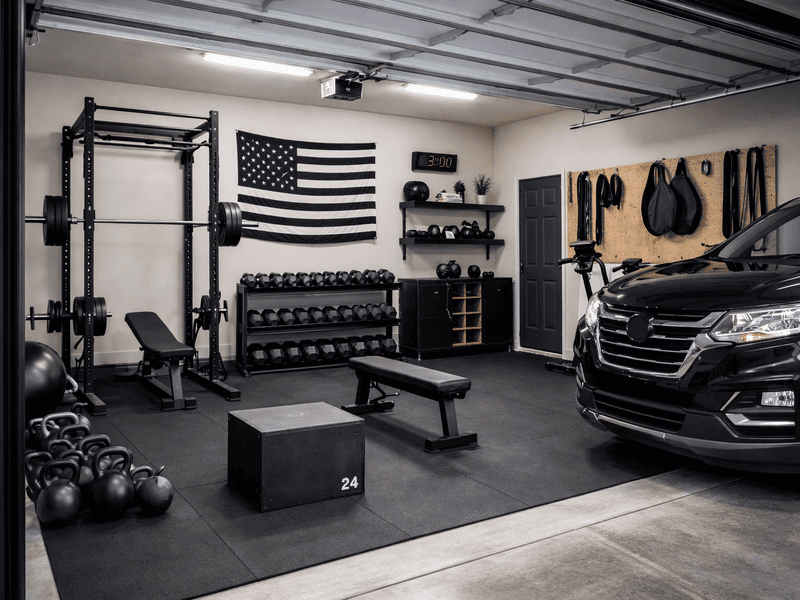
Rolls offer a seamless, water-resistant finish ideal for large areas; interlocking tiles are the best DIY option for irregular shapes; mats provide targeted protection. Choose based on your subfloor condition and willingness to perform heavy lifting.
We process rubber into three formats, which helps clarify are rubber garage flooring rolls the best solution for garage spaces, as each has a specific engineering trade-off:
- Rolls: Cut from massive cured logs. They offer the best water resistance (fewer seams) and a professional look but are heavy (200lbs+) and hard to install alone.
- Interlocking Tiles: Die-cut "puzzle pieces." Easiest for DIYers to install and replace, but liquids can seep through the seams.
- Mats: Stand-alone slabs for specific stations (e.g., under a workbench).
| Feature | Rubber Rolls | Interlocking Tiles | Stand-Alone Mats |
|---|---|---|---|
| Seam Visibility | Low (Seamless) | High (Visible lines) | N/A |
| Water Resistance | High | Low | Medium |
| Installation | Difficult (Heavy) | Easy (DIY) | Easiest |

How Thick Should Your Garage Flooring Be?
For parking and storage, 4mm-6mm is sufficient. For home gyms involving weightlifting, you need 8mm-12mm to dissipate impact energy and protect the concrete subfloor from cracking. Thicker isn’t always better for pure parking use.
Thickness is about force dissipation. For a parking-only garage, a 12mm mat creates an unnecessary tripping hazard. A 4mm-6mm roll provides ample abrasion resistance against tires.
However, if you drop a 45lb dumbbell, physics takes over.
- 8mm (Standard Gym): Absorbs general impact.
- 10mm+ (Heavy Duty): Essential for CrossFit or Olympic lifting. It allows the rubber to compress horizontally, preventing the shockwave from cracking your concrete foundation.
Virgin vs. Recycled Rubber: What About the Smell?
Recycled rubber (SBR) has a "new tire" smell that fades with ventilation. Virgin rubber (EPDM) is odorless and color-consistent but costs significantly more. Choose virgin rubber if your garage lacks airflow or windows. (34 words)
Recycled rubber is made from shredded tires bound with polyurethane (SBR). The sulfur from the tires creates a distinct odor that typically dissipates in 2-4 weeks. If your garage is enclosed or attached to your HVAC, this might be an issue.
Virgin Rubber (EPDM) is a synthetic elastomer synthesized specifically for flooring. It is chemically pure, sulfur-free, and virtually odorless right out of the box. It costs more, but for air-quality sensitive environments, it is the superior engineering choice.
Installation & Environment: The "Acclimatization" Rule
You must unroll the flooring and let it sit for 24-48 hours before cutting to allow for thermal relaxation. Failure to do so causes gaps and buckling. For parking, glue-down installation is recommended to resist tire shear forces.
Rubber is a thermal material—it expands in heat and contracts in cold, a physical property central to a professional guide to installing rubber roll flooring. If you cut it immediately after unrolling, it will shrink back, leaving ugly gaps. Acclimatization is mandatory.
Additionally, check your concrete for moisture. Rubber traps water. If your slab "sweats," you must apply a vapor barrier first to prevent mold. Finally, always leave a 1/4-inch expansion gap at the walls to allow the floor to breathe during temperature spikes.
Is Rubber Flooring Worth the Investment?
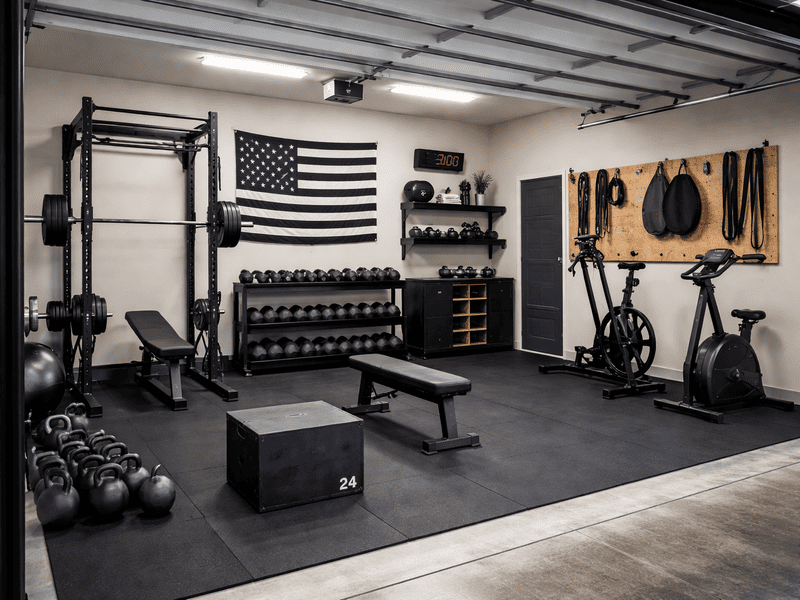
Yes. It creates a durable barrier that protects your concrete from cracking and oil damage while providing thermal insulation. Compared to epoxy (which scratches) or PVC (which feels plastic), rubber offers the best longevity and functional ROI.
Think of rubber flooring as asset protection. Repairing a cracked concrete slab is expensive; a rubber mat is a cheap insurance policy. It provides sound dampening, thermal warmth (removing the "cold garage" feel), and lasts 15-20 years with simple pH-neutral cleaning. It transforms a utility space into a premium, multi-purpose room.
FAQ Section
Does garage rubber flooring smell?
Yes, recycled rubber has a temporary "new tire" odor due to sulfur content. It fades in 2-4 weeks. Virgin rubber is odorless.
Is rubber flooring waterproof?
The material is waterproof, but the seams are not. Water can seep between tiles. For wet areas, seal the subfloor first.
Can I install rubber flooring over epoxy?
Yes. For glue-down applications, sand the epoxy for better bond. For loose-lay, it works perfectly fine.
Conclusion
Garage rubber flooring is the ultimate upgrade for protection and versatility, provided you account for tire chemistry and proper acclimatization.
Don’t guess on the thickness or the smell. Contact my team today to request a free sample kit—smell it, feel the density, and test it in your space before you buy.