


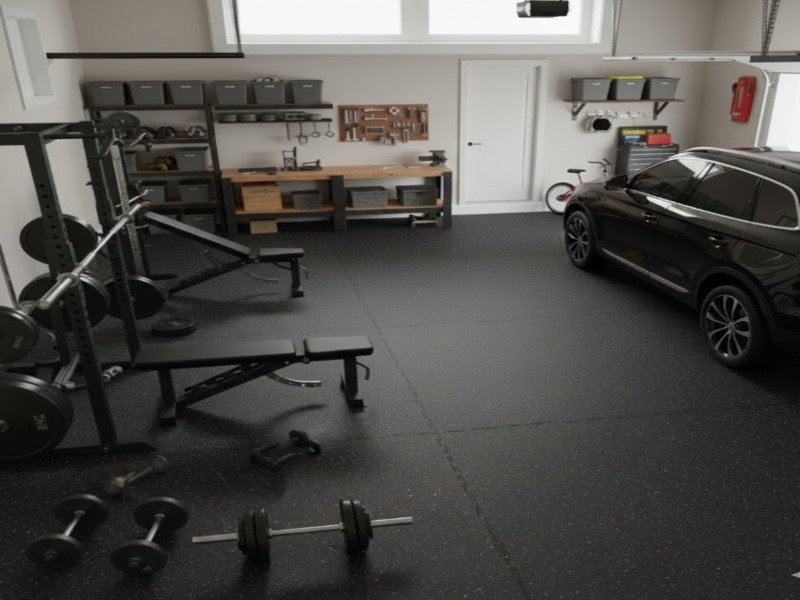
The best garage floor mat for general protection is a 75-mil+ Polyvinyl (PVC) Roll due to its seamless liquid resistance. However, for snow containment, a dedicated Containment Mat with raised edges is the only viable option, while Vulcanized Rubber (8mm+) is superior for gym-garage hybrids. Your choice must be dictated by your primary use case: parking, working, or lifting.
As a Quality Control Engineer who has stress-tested flooring materials against oil spills, road salts, and dropping weights, I know that "universal" mats are a myth. A mat designed to catch 50 gallons of melted snow is terrible for rolling a mechanic’s creeper on. Conversely, a beautiful rigid tile floor offers zero protection against liquids seeping into the concrete below.
To save you time, I have compiled my "Lab-Tested Top Picks" based on durability, chemical resistance, and cost-performance ratio.If you’re comparing mats versus full-coverage flooring systems (rolls, tiles, coatings) for a long-term upgrade, this 2025 guide lays out the best options clearly: What Is the Best Garage Floor Covering in 2025.
Quick Answer: The Engineer’s Top 5 Recommendations
| Rank | Best For… | Product Type | Key Spec to Look For | Est. Price |
|---|---|---|---|---|
| #1 | Overall Protection | Premium PVC/Vinyl Roll | 75-mil to 80-mil thickness | $$ |
| #2 | Winter/Snow | Containment Mat | 1.0" Raised Foam/Snap Edges | $ |
| #3 | Gym & Parking | Vulcanized Rubber Roll | 8mm+ High-Density Rubber | $$$ |
| #4 | Showroom Look | Rigid Interlocking Tiles | Vented (Free-Flow) Polypropylene | $$$$ |
| #5 | Budget/Renters | Peel-and-Stick Tiles | 45-mil Vinyl | $ |
Now, let’s break down why these specific materials made the list and the engineering pros and cons of each.
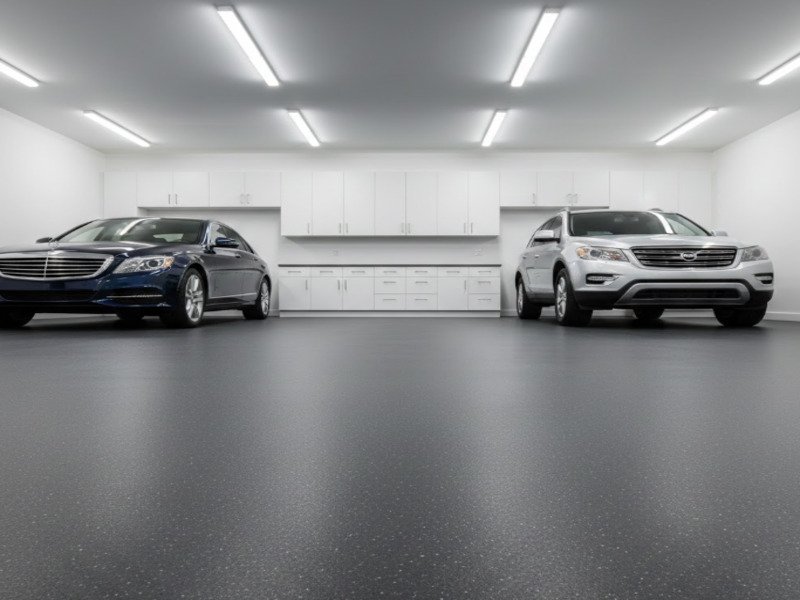
1. Best Overall: Premium Roll-Out PVC (Vinyl)?
Roll-out PVC is the industry standard because it creates a seamless, non-porous barrier over the entire concrete slab. It provides the best balance of liquid protection, ease of cleaning, and resistance to automotive fluids.
In the lab, PVC (Polyvinyl Chloride) consistently outperforms other materials in chemical resistance testing. If you spill oil, brake fluid, or gasoline on high-quality PVC, it simply sits on top until you wipe it up.
However, not all rolls are equal. The market is flooded with cheap 40-mil or 50-mil vinyl. In my experience, these are too thin; they wrinkle under tires and curl at the edges. For a "Best" designation, you must look for Commercial Grade (75-mil to 85-mil). This thickness provides enough weight to keep the mat flat without adhesive and enough density to resist "Hot Tire Pick-up."
Technical Verdict:
- Target Spec: 100% Polyvinyl, minimum 75-mil thickness.
- Best Texture: "Coin" or "Levant" (leather-like) for easy sweeping. Avoid "Diamond Plate" if you want to roll tool chests easily.
| Pros (The Good) | Cons (The Bad) |
|---|---|
| ✅ Seamless: No cracks for oil to seep through. | ❌ Trapped Moisture: Can cause mold if slab is wet. |
| ✅ Easy Install: Just roll it out and trim. | ❌ Heavy: A full roll can weigh 100lb+. |
| ✅ Chemical Safe: Impervious to gas/oil. | ❌ Tire Stains: Light colors may stain from tires over time. |
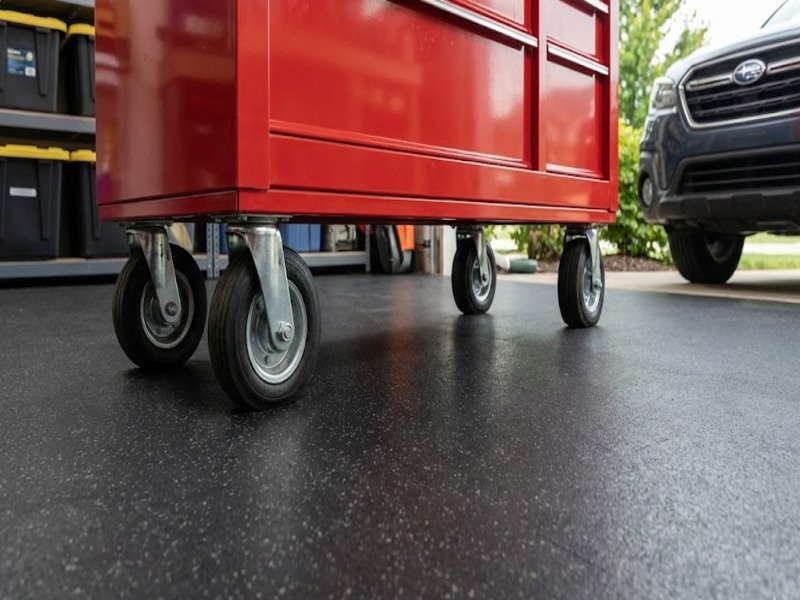
If you live in a region with heavy snowfall, a standard roll might not be enough. You need containment.
2. Best for Snow & Mud: Containment Mats?
Containment mats are essentially heavy-duty fabric trays with raised edges designed to hold gallons of water. They are not designed for aesthetics; they are designed to prevent salty slush from destroying your concrete.
Standard mats allow water to run off the sides. A containment mat uses a raised berm (usually dense foam or snap-on plastic clips) to hold the water until you can vacuum or squeegee it out.
From a quality control perspective, the failure point here is the seam welding. Cheap mats use stitching that rots with salt exposure. The "Best" mats use heat-welded seams (thermally bonded) on heavy-duty PVC-coated fabric (similar to truck tarp material).
Technical Verdict:
- Target Spec: Heat-welded seams, UV-resistant PVC fabric.
- Capacity: Look for mats rated to hold at least 40+ gallons for a standard SUV size.
| Pros (The Good) | Cons (The Bad) |
|---|---|
| ✅ Subfloor Safety: Prevents salt damage to concrete. | ❌ Aesthetics: Looks like a tarp, not a "floor." |
| ✅ Capacity: Holds massive amounts of slush. | ❌ Wrinkles: Does not lay perfectly flat like a roll. |
| ✅ Cleaning: easy to pull outside and hose off. | ❌ Trip Hazard: The raised edge can be a tripping risk. |
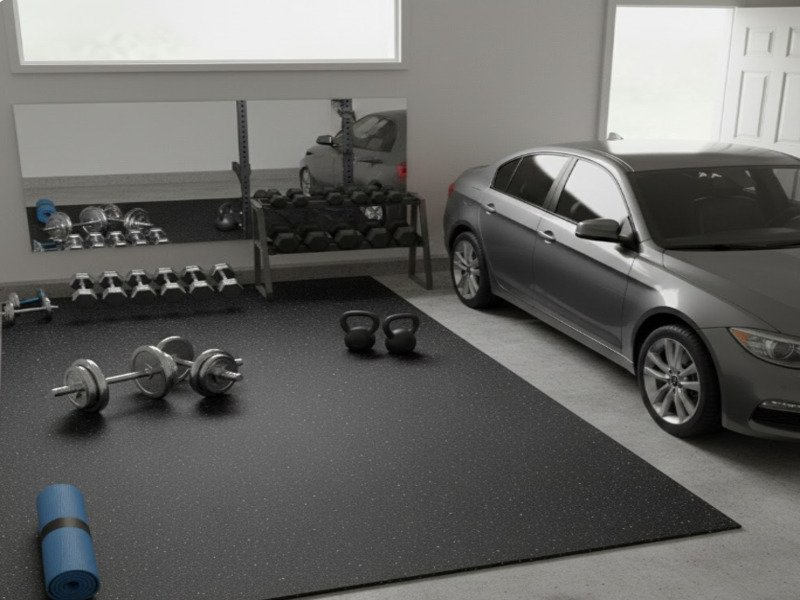
For those who use their garage as a fitness space, plastic and tarps won’t cut it. You need impact absorption.
3. Best for Gym & Multi-Use: Vulcanized Rubber?
Vulcanized rubber is the only material that can handle the crushing weight of a vehicle and the impact of dropped dumbbells. Unlike foam (which compresses permanently) or PVC (which is too hard for joints), rubber offers elasticity and durability.
There is a massive difference between "Recycled Crumb Rubber" and "Vulcanized Rubber." Crumb rubber is glued together and can break apart under power steering friction (turning tires). Vulcanized Rubber is heat-bonded under pressure, creating a non-porous, waterproof surface that is nearly indestructible.
If your garage is a true gym-garage hybrid (parking + lifting), choosing thickness, density, and material matters a lot. Here’s a dedicated selection guide: How to Choose Garage Gym Mats.
Technical Verdict:
- Target Spec: 8mm (approx 3/8") thickness is the sweet spot. 4mm is too thin for heavy weights; 12mm is overkill for parking.
- Warning: Expect a "rubber smell" for the first 2-3 weeks. This is normal off-gassing.
| Pros (The Good) | Cons (The Bad) |
|---|---|
| ✅ Impact Rated: Protects floor from dropped weights. | ❌ Odor: Strong rubber smell initially. |
| ✅ Grip: Superior slip resistance when wet. | ❌ Oil Sensitivity: Oil degrades rubber over long periods. |
| ✅ Flatness: Heavy enough to lay perfectly flat. | ❌ Price: Generally more expensive per sq ft. |

Finally, if your goal is pure aesthetics for a showroom or "Man Cave," modular tiles are the top contender.
4. Best for Showrooms: Rigid Interlocking Tiles?
Rigid Polypropylene (PP) tiles are the "Lego" of garage flooring. They allow for custom checkerboard patterns and offer a high-end, finished look. Their primary engineering advantage is the "floating" design which allows airflow underneath.
These tiles sit about 1/2 inch off the floor on a grid structure. This means if your concrete is damp, the moisture can evaporate through the vents (if you choose vented tiles) or flow underneath (solid tiles).
However, as an engineer, I must warn you about noise. Hard plastic tiles "clack" when you walk on them unless they have a rubber underlayment. They are also uncomfortable to kneel on for mechanics.
Technical Verdict:
- Target Spec: High-impact Polypropylene co-polymer. Look for a 4-point or 6-point locking system.
- Load Rating: Ensure they are rated for "Rolling Loads" of at least 40,000 lbs to handle heavy jacks.
| Pros (The Good) | Cons (The Bad) |
|---|---|
| ✅ Visuals: Best looking option (custom colors). | ❌ Liquid Permeable: Spills fall through the cracks. |
| ✅ Airflow: Prevents mold by letting slab breathe. | ❌ Noise: Can be loud/hollow sounding. |
| ✅ Repairable: Damaged a spot? Just replace one tile. | ❌ Cleaning: Hard to clean dirt trapped under the tiles. |

Now that you have your top candidates, let’s briefly cover the factors that apply to all of them.
Critical Buying Criteria: What "Quality" Looks Like?
Regardless of the type you choose, there are three non-negotiable quality indicators: Thickness (Mil), Hot Tire Resistance, and Surface Texture. Ignoring these will lead to product failure within 12 months.
1. The "Hot Tire" Test
Cheap plastic mats contain unstable plasticizers. When hot tires park on them, the heat causes a chemical reaction where the tire bonds to the mat. When you reverse, the mat rips.
- Engineer’s Tip: Avoid generic "Big Box Store" mats that feel waxy or overly soft. Stick to PVC or Vulcanized Rubber.
2. Surface Texture & Safety
- Diamond Plate: Classic look, provides traction, but traps dirt in the crevices. Hard to sweep.
- Coin Pattern: Easier to sweep (broom slides between coins), good traction.
- Smooth/Levant: Easiest to clean, but can be slippery when wet.
3. Sizing & Cuts
Always measure your garage width and order slightly more. Most garages are not perfectly square. A quality mat should be easy to cut with a sharp utility knife but resistant to tearing.
Conclusion
To summarize, here is my final recommendation based on your specific goal:
- Go with Heavy-Duty (80-mil) PVC Rolls if you want a waterproof, easy-to-clean floor that covers ugly concrete.
- Go with a Containment Mat if you battle slush and snow every winter.
- Go with Vulcanized Rubber if you need a gym floor that you can also park on.
Don’t settle for the cheapest option on the shelf; your garage floor endures more abuse than any other floor in your house.
About the Author
I am a Quality Control Engineer specializing in industrial polymer manufacturing. I spend my days testing tensile strength, abrasion resistance, and chemical stability of flooring materials to ensure they meet rigorous safety and durability standards.
Still unsure which material specs match your vehicle weight or gym equipment?
My team can help you review your floor plan and recommend the exact thickness and material type you need. [Contact us today for a free sample kit or technical consultation] to see the quality difference for yourself.