


Quick Answer
PVC tile flooring is one of the most resilient choices for damp areas because the material itself is hydrophobic and will not swell or rot. However, for basements and bathrooms, you must use a “Rigid Core” (SPC) click-lock system and install a proper vapor barrier. This prevents ground moisture from getting trapped underneath, which is the primary cause of mold failure in these environments.
In my years managing custom flooring projects, I have seen homeowners make the same mistake repeatedly: they assume “waterproof” on the box means “invincible.” It does not. While the polyvinyl chloride (PVC) material is chemically impervious to water, the ecosystem of your floor is vulnerable. When we engineer PVC tiles for commercial clients, we focus heavily on the dimensional stability of the core layer (often SPC – Stone Plastic Composite) to resist the expansion caused by humidity fluctuations.
For a damp spot like a basement or bathroom, the danger isn’t the tile absorbing water; it is hydrostatic pressure from below or standing water seeping through seams. A high-quality rigid core PVC tile acts as a shield, but if you ignore the vapor barrier on a concrete slab, you invite mold to grow in the dark space between the concrete and your flooring. The key is understanding that you are installing a system, not just a product.
Now that we understand the material basics, let’s look at the specific types of moisture that challenge these floors.
Is PVC Tile Flooring Actually Waterproof?
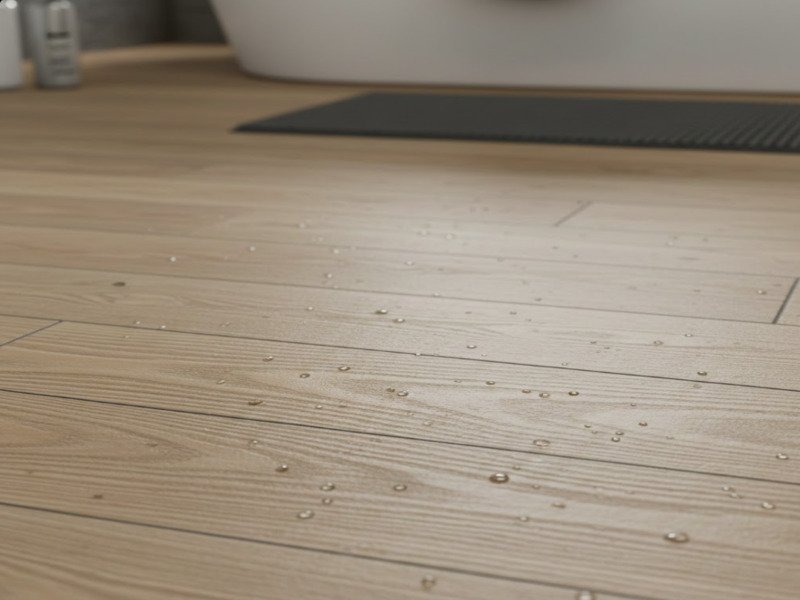
Yes, the PVC material itself is 100% waterproof and will never absorb liquid, swell, or warp from surface spills. However, the seams between tiles are water-resistant, not waterproof, meaning standing water can eventually seep through to the subfloor if the installation is not properly sealed at the perimeter. (47 words)
We need to distinguish between top-down moisture and bottom-up moisture. In our testing lab, PVC tiles handle top-down moisture—like a flooded bathroom floor or a spilled drink—perfectly. You can soak a piece of LVT (Luxury Vinyl Tile) in a bucket of water for a week, and it will come out with the exact same dimensions. This is why it is superior to laminate, which has a fiberboard core that swells like a sponge.
However, bottom-up moisture is the silent killer in basements. Concrete is porous. It breathes moisture vapor from the ground. If you trap that moisture under a non-breathable PVC tile without a proper path for it to dissipate or a barrier to stop it, the hydrostatic pressure can force the adhesive to release (in glue-down floors) or promote mold growth. When we consult on basement projects, we verify the moisture emission rate of the concrete first. If it is high, we simply cannot rely on the tile alone; the entire subfloor system must be addressed to ensure longevity.
Understanding water resistance is the first step, but selecting the correct installation method is even more critical for damp zones.
Performance by Type: Not All PVC Tiles Are Created Equal?
Click-lock (floating) PVC tiles are the superior choice for damp areas because they do not rely on adhesives that can fail when exposed to moisture. Conversely, peel-and-stick and glue-down options are risky in wet environments, as moisture vapor can emulsify the glue, causing tiles to lift, curl, or shift over time. (50 words)
In manufacturing, we formulate adhesives for specific environmental conditions, but few standard pressure-sensitive adhesives (used in peel-and-stick tiles) can withstand the high alkalinity and moisture found in damp concrete. This is why I almost always steer clients away from glue-down options for basements unless they are using expensive, specialized industrial epoxy.
The “Click-Lock” system, particularly with a Rigid Core (SPC), is an engineering marvel for damp spots. It creates a floating “raft” that sits on top of the subfloor. Because it is not attached to the ground, it can expand and contract slightly with temperature changes without buckling. More importantly, the tight locking mechanism prevents water from easily penetrating the seams.
| Feature | Click-Lock (Rigid Core) | Glue-Down LVT | Peel-and-Stick |
|---|---|---|---|
| Moisture Tolerance | High | Low to Medium | Low |
| Subfloor Requirement | Forgiving | Must be perfect | Must be perfect |
| Risk of Lifting | Low | High (if glue fails) | Very High |
| Best Application | Basements, Bathrooms | Dry Commercial Areas | Temporary Low-Traffic |
Once you have chosen the right type of tile, you need to address the common fears every homeowner has about installing vinyl in wet rooms.
Addressing the Major Pain Points: Will It Mold or Slip?
PVC tiles are inorganic and do not feed mold, but mold can grow on organic debris trapped underneath if moisture is present. Regarding safety, wet PVC can be slippery, so it is essential to choose a product with a textured wear layer and a high slip-resistance rating (R10 or higher) for bathrooms. (49 words)
Mold needs three things to grow: moisture, warmth, and food. PVC tile provides none of these, but the dust, drywall paper, or wood subfloor underneath it does. In my experience, when a client complains about a “moldy vinyl floor,” the vinyl is fine—it is the subfloor that is rotting. This is why using a 6-mil polyethylene vapor barrier over concrete is non-negotiable in basements. It stops the moisture from ever reaching the organic materials in your room.
Safety is another manufacturing focus. We create texture on the surface of the tile not just for looks, but for friction. For a bathroom or mudroom, I recommend looking for a “Registered Emboss” texture, where the texture matches the wood grain. Smooth, high-gloss finishes might look premium, but they become ice rinks when wet. Always check the technical data sheet for the slip resistance rating before buying for a wet zone.
Safety and mold are big concerns, but let’s look at how these floors perform in the specific rooms where you plan to install them.
Room-by-Room Breakdown: Where Does PVC Shine?
In basements, PVC tile provides warmth and waterproofing over cold concrete; in bathrooms, it handles steam and splashes effectively if the edges are sealed. For laundry rooms, its resistance to chemical spills and ease of cleaning makes it a durable workhorse that outperforms almost any other flooring option available today. (49 words)
Every room presents a unique stress test for flooring. In basements, the primary challenge is temperature and ground moisture. Ceramic tile is waterproof but makes a cold basement feel even colder. PVC tile, specifically those with an attached acoustic pad, provides a thermal break, making the floor feel warmer underfoot without the risk of rotting that carpet poses.
In bathrooms, the challenge is standing water. While the planks are waterproof, the perimeter—where the floor meets the wall or tub—is a vulnerability. I always advise engineers and installers to leave the required expansion gap but fill it with a flexible 100% silicone sealant. This “tanks” the room, preventing bathwater from sliding under the baseboards and soaking into the drywall or subfloor. It is a small detail that adds years to the floor’s life.
You might still be considering other materials, so let’s briefly compare PVC to its main competitors in these damp environments.
PVC vs. The Alternatives in Damp Areas?
PVC flooring outperforms laminate and engineered wood in damp areas because it contains no wood fibers that swell when wet. While ceramic tile offers equal or better waterproofing, PVC is significantly easier to install, warmer to walk on, and does not crack if the subfloor shifts slightly, making it the more practical choice. (50 words)
I have analyzed material failures for years, and laminate flooring in a bathroom is almost always a ticking time bomb. Laminate has a fiberboard core (essentially compressed sawdust and glue). Once moisture penetrates the seams, the core swells and the edges peak. This damage is irreversible. PVC, being a solid polymer or stone-polymer mix, eliminates this failure point entirely.
Against ceramic tile, the battle is closer. Ceramic is the gold standard for waterproofing. However, from a project management perspective, ceramic is heavy, requires difficult cutting, and messy grout. If a heavy object falls on ceramic, it cracks. If it falls on quality Rigid Core PVC, it might dent, but the floor remains intact. For a renovation where you want a fast turnaround and a durable result without the mess of mortar, PVC is the clear engineering winner.

Even the best product will fail if installed poorly, so here are the installation secrets we share with our professional partners.
Installation Secrets for Wet Zones: How to Do It Right?
To ensure a waterproof installation, you must let the planks acclimatize for 48 hours, install a vapor barrier over concrete, and seal all perimeter expansion gaps with silicone. These steps prevent buckling from temperature changes and stop water from migrating under the floor, securing the integrity of the entire system. (49 words)
Acclimatization is often skipped, and it is the number one cause of gapping. PVC is a plastic; it reacts to heat. If you bring cold planks into a warm house and install them immediately, they will expand as they warm up, causing your floor to buckle. We recommend stacking the boxes in the room where they will be installed for at least 48 hours to stabilize the material temperature.
Furthermore, the “silicone perimeter” is a technique I insist on for wet zones. Standard installation guides say “leave a gap.” I say, leave the gap, but fill it with a high-quality, flexible silicone caulk in bathrooms and laundry rooms. This maintains the necessary expansion space while creating a watertight gasket around the room. It turns a water-resistant floor into a waterproof system.
Finally, once your floor is down, keeping it in top condition requires very specific, yet simple, maintenance habits.
Maintenance and Longevity in Damp Conditions?
Maintain your PVC floor by using pH-neutral cleaners and avoiding steam mops, which can drive heat and moisture into the seams and damage the wear layer. Promptly wiping up spills and running a dehumidifier in basements will protect both the flooring adhesive and the air quality of your home. (48 words)
We design the wear layer (usually urethane-coated) to withstand abrasion, but it is not indestructible. Steam mops are the enemy of PVC flooring. The intense, directed heat can compromise the integrity of the layers and, in the case of glue-down floors, reactivate the adhesive, causing tiles to slide. A simple microfiber mop with a neutral cleaner is all that is required.
Longevity in damp spots is also about environment control. While the floor can handle humidity, your home handles it better if you keep the relative humidity between 35% and 55%. Using a dehumidifier in the basement not only protects your stored items but ensures the flooring material remains dimensionally stable for decades.
Before we conclude, here is a quick guide to help you choose the right product.
Buyer’s Cheat Sheet: Choosing the Right PVC for Damp Areas
If you are shopping for flooring for a bathroom or basement today, check the box for these four specifications. If a product misses one, skip it.
- Core Type: SPC (Stone Plastic Composite). Do not buy WPC (Wood Plastic Composite) for potentially wet basements if you can avoid it. SPC is denser and completely waterproof.
- Wear Layer: 20 mil (0.5mm) or higher. For high-traffic entryways or mudrooms, a 12-mil layer will wear through too fast. 20 mil is the industry standard for longevity.
- Attached Pad (IXPE). Look for tiles with pre-attached acoustic padding. It resists mold better than cork and saves you from buying separate underlayment.
- Texture: Registered Emboss. Ensure the surface has physical texture, not just a printed image, to prevent slipping when wet.
Frequently Asked Questions (FAQ)
Can I install PVC tile directly over damp concrete?
No. While the tile is waterproof, the trapped moisture will cause mold. You must install a 6-mil polyethylene vapor barrier sheet first, then install the floating PVC floor on top.
Will PVC flooring feel cold in a basement?
It will feel warmer than ceramic tile or bare concrete, but cooler than carpet. For added warmth, you can install specific low-voltage radiant heating systems designed for vinyl, but check the manufacturer’s temperature limits (usually max 85°F/29°C).
What happens if my washing machine floods the PVC floor?
If the water is removed quickly (within 24 hours), the floor will be fine. However, if water seeps under the planks and stays there, you may need to uninstall the affected planks to let the subfloor dry out before reinstalling them to prevent mold growth.
Conclusion
PVC tile flooring is an exceptional choice for damp areas, provided you select a rigid core click-lock product and prepare your subfloor with a proper moisture barrier. It offers the perfect balance of waterproofing, warmth, and durability.
Ready to Secure Your Flooring Project?
Don’t let moisture compromise your project’s quality or longevity. As experts in PVC tile manufacturing, we provide high-performance, water-resistant flooring solutions tailored to your specific needs.
Contact our team today to request free samples or get a competitive quote for your custom order.