


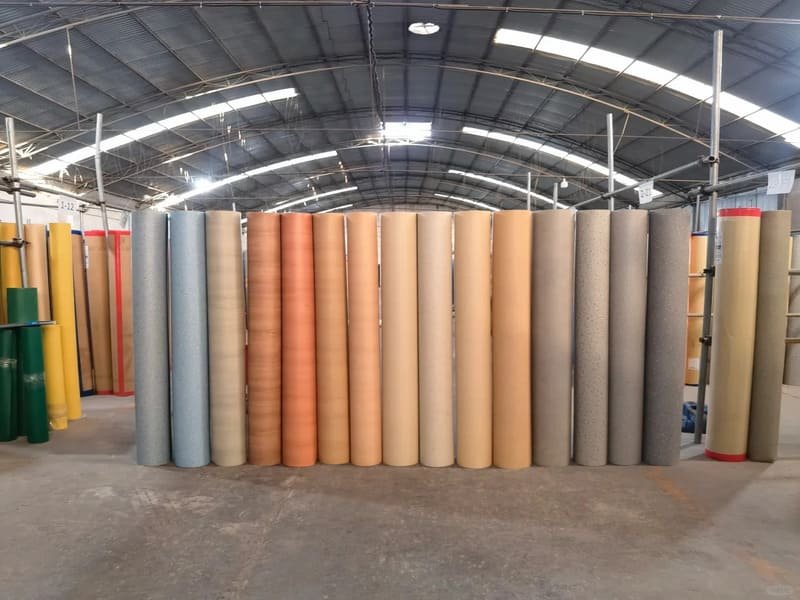
Most modern commercial LVT and many sheet or homogeneous vinyl floors do not require routine floor polish. Traditional VCT usually relies on an applied finish, but maintenance always depends on the specific product and manufacturer.
Facility teams often inherit a strip-and-polish routine from an older building, then apply it to every vinyl floor on the property. That habit made sense on older, uncoated VCT, which has no built-in protective layer and truly does need a finish to survive foot traffic. But commercial vinyl today spans several different constructions, and each one comes with its own maintenance system set by the manufacturer. "Wax" is still the term most people use on the job site, though what actually goes down today is almost always an acrylic floor finish or polish rather than true wax.
So the real question is not "is it vinyl," it is "what is this specific product built to handle." That comes down to two things: how the floor’s wear layer is constructed, and what the manufacturer’s maintenance guide actually says about polish.
Which Type of Commercial Vinyl Determines Whether You Need Floor Finish?
VCT construction, LVT/LVP wear layer, sheet vinyl surface treatment, and homogeneous vinyl formulation each call for a different maintenance approach.
Commercial vinyl is not one product category, it is several, and the maintenance answer changes with each one.
| Flooring Type | Typical Maintenance |
|---|---|
| Traditional VCT | Usually requires floor finish/polish |
| Commercial LVT/LVP | Usually no polish required; some manufacturers offer polish-optional systems |
| Heterogeneous Sheet Vinyl | Often no-polish with a factory surface treatment |
| Homogeneous Vinyl | Product-specific; many modern PUR-based systems are no-polish |
| Sports / Safety / ESD Vinyl | Follow the specific manufacturer’s maintenance system |
VCT and the Applied Finish
VCT is a PVC and mineral-filler composite, and most versions still rely on a facility-applied acrylic finish as a sacrificial protective layer. Some newer factory-finished VCT products allow reduced- or no-polish maintenance, so this is not a universal rule anymore, it is a product-specific one.
LVT/LVP: PUR Topcoat vs. PVC Wear Layer
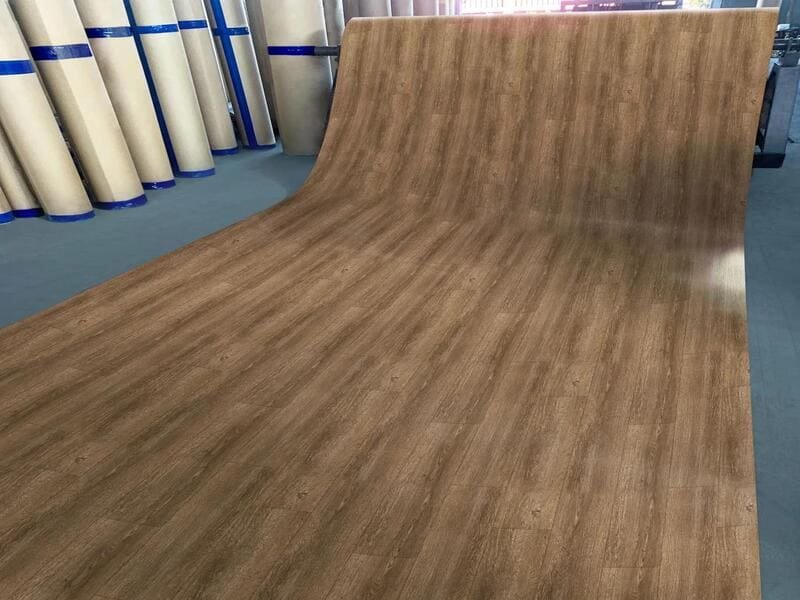
Most commercial LVT has a transparent PVC wear layer, and that layer is protected by a factory-applied urethane or PUR surface treatment. These are two separate things. The commonly quoted 20-, 28-, or 30-mil specification normally refers to the thickness of the PVC wear layer, not the thin PUR topcoat sitting on top of it.
Homogeneous Vinyl: Its Own Category
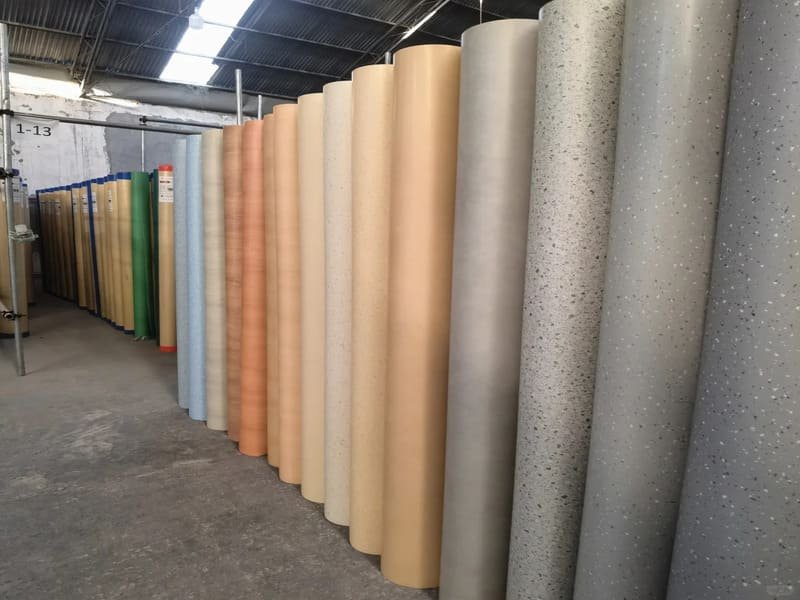
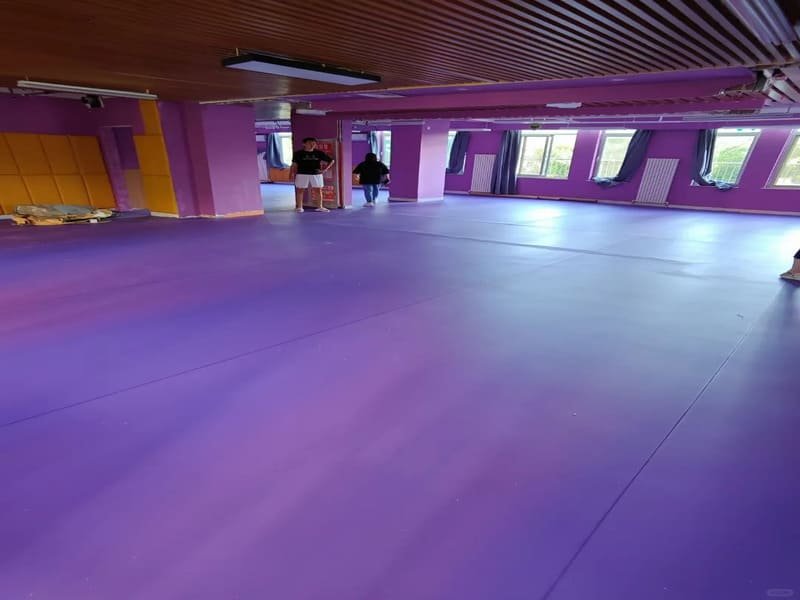
Homogeneous vinyl runs through in schools and hospitals, and it is not the same product as LVT or VCT. Many current homogeneous vinyl systems ship with a factory PUR treatment designed for no-polish maintenance, restored through dry buffing rather than finish. Others still specify periodic polish. Check the product line, not just the flooring type.
The construction tells you what the floor is built to handle. The manufacturer’s maintenance guide tells you what happens if you go against that design.
What Happens If You Apply the Wrong Maintenance System to a Vinyl Floor?
Applying an unapproved finish or stripper can affect a floor’s appearance and may affect warranty coverage, so match the product to its own maintenance guide.
Do not assume a factory-coated LVT or sheet vinyl can, or cannot, accept floor finish as a blanket rule. Some manufacturers advise against polish because it can cloud the surface. Others publish an approved polish-optional maintenance system that includes surface prep with a specific pad before applying finish. The chemistry is not the deciding factor by itself, the manufacturer’s approval is.
Why This Matters for Compliance
Using an unapproved polish, stripper, or maintenance procedure may damage the factory surface treatment and may affect warranty coverage. It is not accurate to say this will automatically void a warranty in every case, but it is accurate to say it introduces risk you do not need to take. The safer path is confirming the approved maintenance system before any product goes on the floor, not after.
Once you understand that risk, the next step is figuring out which maintenance system actually applies to your floor.
How Can You Identify the Right Maintenance System for Your Floor?
The manufacturer’s maintenance guide is the best evidence. Product age, construction, and existing finish buildup are useful secondary clues.
There is no single visual or physical test that reliably tells you whether a floor needs polish, because both VCT with a factory finish and LVT with a PUR topcoat can look and behave similarly at first glance.
Best Evidence: Manufacturer Documentation
Start with the product name or SKU on the original purchase order, then pull the manufacturer’s maintenance guide for that specific line. This document will state directly whether polish is required, optional, or not recommended, along with the approved pad, cleaner, and equipment speed.
Secondary Clues Worth Checking
When documentation is not available, look at the floor’s construction type, its age, and whether there is visible finish buildup at the edges or baseboards from previous maintenance. These clues narrow things down but are not conclusive on their own. If you are still unsure, test on a small, inconspicuous section, or contact the manufacturer directly before committing to a maintenance plan across the whole floor.
For floors confirmed as no-polish, the next question is how to keep them looking good without wax.
How Do You Maintain Shine on a No-Polish Vinyl Floor?
Use a pH-neutral cleaner, follow the manufacturer’s recommended pad for scrubbing, and consider an approved protective coating system if the surface loses its finish.
A dull no-polish floor does not mean the "no wax" instruction was wrong. It usually means the routine cleaning steps need adjusting.
Daily and Periodic Care
Dust mop daily to reduce grit that grinds into the surface, and use a pH-neutral cleaner rather than an alkaline or acidic product, which can degrade the factory surface treatment over time. For deeper cleaning, many manufacturers approve auto-scrubbing with a soft pad, such as a 3M red pad, at low speed, or the pad recommended in that product’s own maintenance guide. Sports, safety, and ESD flooring often carry their own exceptions to standard pad and speed recommendations.
If the Factory Finish Has Worn Down
Over time, heavy traffic can reduce the appearance and protective performance of the factory surface treatment, whether through micro-scratching, contamination, or gloss change. Some commercial vinyl floors can be restored with a manufacturer-approved polyurethane or protective coating system instead of conventional acrylic polish. This is not necessarily the same formulation as the original factory coating, so confirm the approved product line before applying anything.
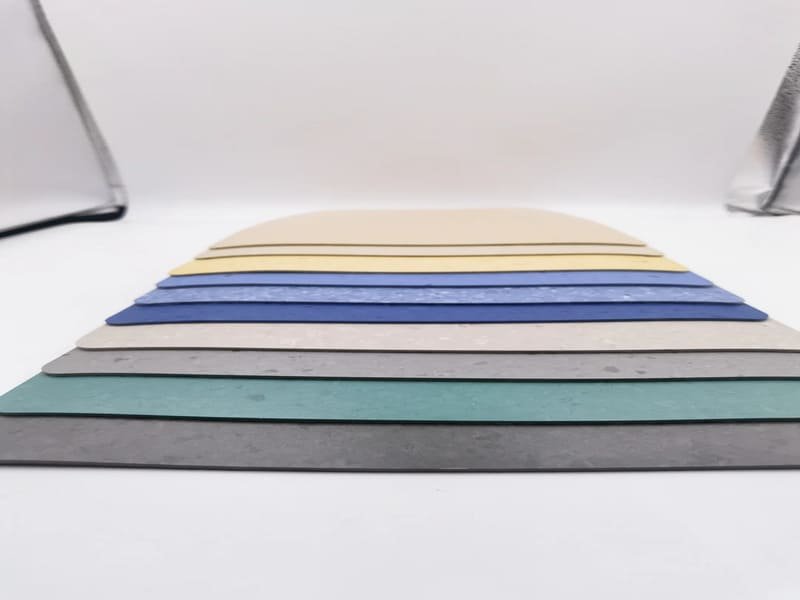
Maintenance frequency is also where the real cost difference between flooring types shows up.
Is Waxed or No-Polish Commercial Vinyl Cheaper Over Time?
No-polish vinyl usually costs less over 5 to 10 years, since it avoids the recurring finish cycle that traditional VCT relies on, though actual savings depend on traffic and facility conditions.
Traditional VCT requires recurring scrub-and-recoat maintenance, with full stripping and refinishing performed when finish buildup or wear makes it necessary, rather than on a fixed universal schedule. That said, high-traffic facilities tend to need this cycle more often than low-traffic ones.
| Cost Factor | Traditional VCT | No-Polish LVT/Sheet Vinyl |
|---|---|---|
| Labor cycle | Recurring scrub-and-recoat, periodic full strip | Routine cleaning only |
| Chemicals | Strippers and finish, ongoing | pH-neutral cleaner |
| Downtime | Hours per recoat cycle | Minimal |
| Upfront cost | Lower | Higher |
| 5–10 year TCO | Usually higher | Usually lower |
Over a 5 to 10 year lifespan, the labor and chemical savings on no-polish vinyl often outweigh the higher purchase price, particularly in large facilities or those with limited downtime windows. Actual results still vary with traffic level, maintenance program, and local labor costs.
Conclusion
Whether commercial vinyl needs polish depends on the specific construction and manufacturer’s maintenance system, not simply whether the floor is called vinyl.
If you are sourcing or specifying commercial vinyl flooring and want help matching the wear layer construction and maintenance system to your project, send me a message. I’m happy to walk through the options with you.