


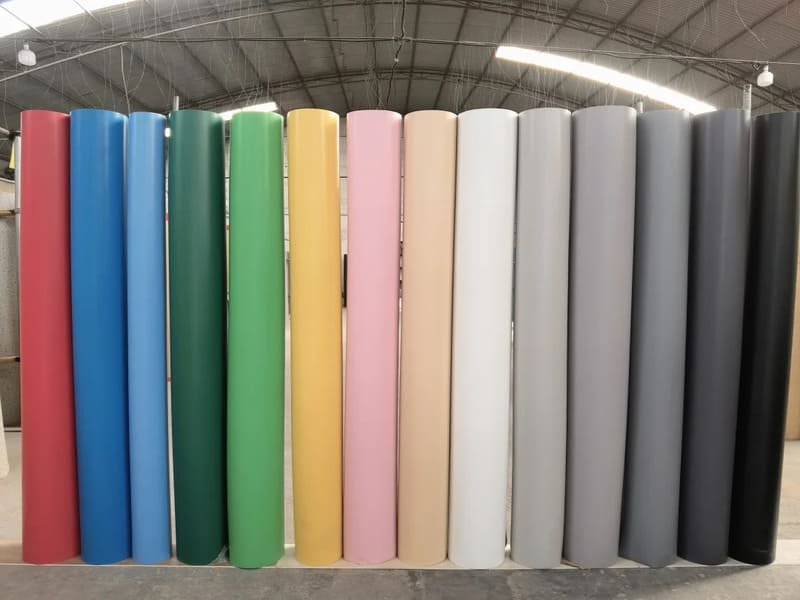
A small PVC flooring job can often be laid in about 4–8 working hours when the subfloor is already prepared. Larger residential or commercial projects may take several days, since glue-down systems add subfloor prep, adhesive setting, seam welding, and waiting time on top of the actual laying.
I get this question on almost every job site walkthrough, and I always split it into two separate answers. Clients want to know how long installers will be working in the space, and they also want to know when they can actually use the floor. Those are not the same number, so let me break down both.
| Project Size | Typical Space | Active Laying Time | Total Project Time (incl. prep & curing) |
|---|---|---|---|
| Small Space | Bathroom/Kitchen, 100–300 sq ft | 4–8 hours | 1–2 days |
| Medium Space | Living Room/Office, 300–800 sq ft | 1–2 days | 2–4 days |
| Large/Commercial Space | 1,000–3,000+ sq ft | 2–5 days | 3–7+ days |
The formula I use with every crew is: Total Time = Material Conditioning (if required) + Subfloor Prep + Layout & Laying + Curing/Waiting Time. Subfloor prep is often the phase that swings this the most, sometimes taking longer than laying the actual floor.
Most delays don’t come from the laying itself. They come from what happens before the first plank ever touches the floor, and from product-specific requirements that vary by manufacturer. Let me walk you through each phase so you know exactly where your time goes.
What Is the Step-by-Step Installation Timeline?
Installation generally runs through material conditioning, subfloor prep, layout planning, laying, and curing. The exact hours in each phase depend heavily on the specific product and manufacturer instructions, not a single industry standard.
Here is how I break down a typical job, phase by phase.
Phase 1: Material Conditioning — If Required
Some PVC flooring products need 24–48 hours of conditioning in the installation room before they go down, while others, especially many rigid-core SPC products, can be installed without a formal acclimation period if the material and room are already within the manufacturer’s specified temperature range. Ambient room temperature typically falls somewhere in the 18°C–27°C range, but this varies by manufacturer, so I always check the product’s own installation guide before scheduling this step. Skipping conditioning when it is required can cause buckling or gaps after installation.
Phase 2: Subfloor Inspection & Preparation — Often the Most Variable Phase
This includes removing old flooring or prepping over it, cleaning, checking flatness, and running moisture tests. If the substrate needs a self-leveling underlayment, dry time can range from a few hours for fast-setting products to 16–24 hours for standard products, and up to 48–72 hours or more for deep leveling pours, depending on thickness, temperature, and humidity. On some jobs subfloor prep takes longer than laying the flooring itself, especially when moisture mitigation is needed on top of leveling.
Phase 3: Measuring, Layout & Cutting (1–3 Hours)
This covers layout planning, pattern alignment, seam positioning, and, for floating floor systems like click-lock and SPC, perimeter expansion gaps. Fully adhered sheet vinyl and dry-back LVT don’t follow the same floating-floor expansion logic, though building structural expansion joints still need to be respected.
Phase 4: The Laying Process (2–8 Hours per Room)
Speed here depends on the system: floating floors go down fastest, glue-down systems take longer because of adhesive application and working time.
Phase 5: Adhesive Setting & Post-Installation Cleanup
For glue-down systems, the adhesive needs time to set and build bond strength before normal traffic, rolling loads, or furniture are introduced. This setting period continues after installation and is separate from the adhesive’s open/working time during laying.
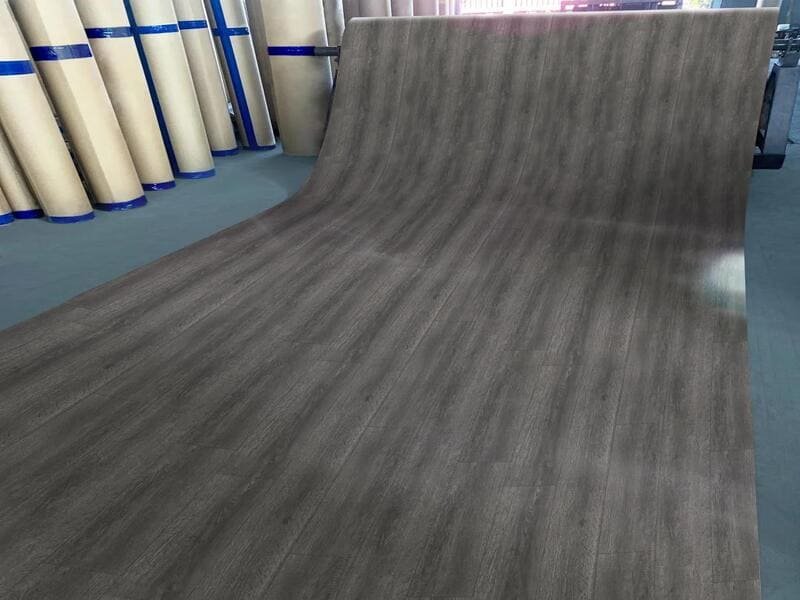
Once you understand these five phases, the next question becomes obvious: does the type of PVC flooring you pick change how fast each phase moves? It does, though the numbers below are planning estimates, not fixed production rates.
How Does Installation Time Compare by PVC Flooring Type?
Click-lock LVT and SPC planks generally install fastest since they float without adhesive. Glue-down sheet and dry-back LVT usually take longer because of adhesive application, working time, and precise plank positioning.
I have installed all four systems below on commercial and residential jobs. These are example times for an experienced crew working on a prepared, open 500 sq ft area, not industry-standard production rates.
| PVC Flooring Type | Example Time (Prepared 500 sq ft) | Level of Complexity |
|---|---|---|
| Click-Lock LVT / SPC Planks | 4–6 Hours | Fast (floating floor, no glue wait) |
| Glue-Down PVC Sheet / Rolls | Often one working day for laying, plus additional time for adhesive setting, seam welding, and detailing | Moderate to complex, depending on seam and coving work |
| Dry-Back Glue-Down LVT | 6–8 Hours | Moderate (individual plank positioning) |
| Interlocking PVC/Rubber Tiles | 2–4 Hours | Very Fast (minimal adhesive, modular) |
Commercial sheet vinyl deserves a closer look here. Laying the sheet and applying adhesive can be done in a day, but many commercial systems also involve seam trimming, grooving, and heat welding, and manufacturer guidance often calls for the adhesive to set, sometimes until the next day, before welding begins. So "laying the floor" and "finishing the installation" are two different milestones on a commercial job.
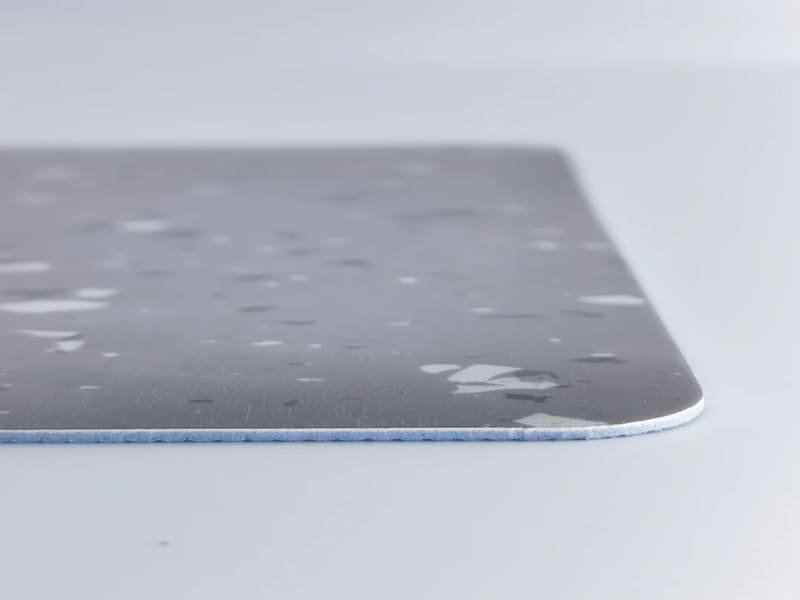
Picking the right flooring type only solves part of the puzzle. Even the fastest system on paper can slow down once real job site conditions get involved.
What Factors Can Extend Your PVC Flooring Installation Time?
Subfloor moisture, layout complexity, temperature, adhesive selection, crew size, and old floor removal are the factors I see extend timelines most often, and each one can add anywhere from hours to days depending on severity.
I flag these on every site visit, because catching them early saves a full day of rework later.
- Subfloor Moisture, Flatness & Repairs: Uneven substrates may need patching or self-leveling, while excessive concrete moisture may require a separate moisture-mitigation system before flooring goes down, which adds its own timeline on top of leveling work.
- Room Layout Complexity: Complex angles, pillars, stairs, coving, doorways, and pattern matching can meaningfully reduce installation productivity.
- Environmental Temperature & Humidity: Cold rooms slow adhesive curing and can make PVC stiffer and harder to cut cleanly.
- Adhesive Choice: Open time, working time, traffic restrictions, and final performance vary by adhesive chemistry and application method. The right choice depends on the specific flooring product and service conditions, not simply "faster adhesive vs. stronger adhesive."
- DIY vs. Professional Crew Size: A single DIYer working alone takes far longer than a 2 to 3 person professional crew working in parallel.
- Old Floor Removal & Disposal: Tearing out ceramic tile or nailed hardwood can add anywhere from several hours to several days, especially when stubborn adhesive residue, grinding, or moisture remediation is involved.
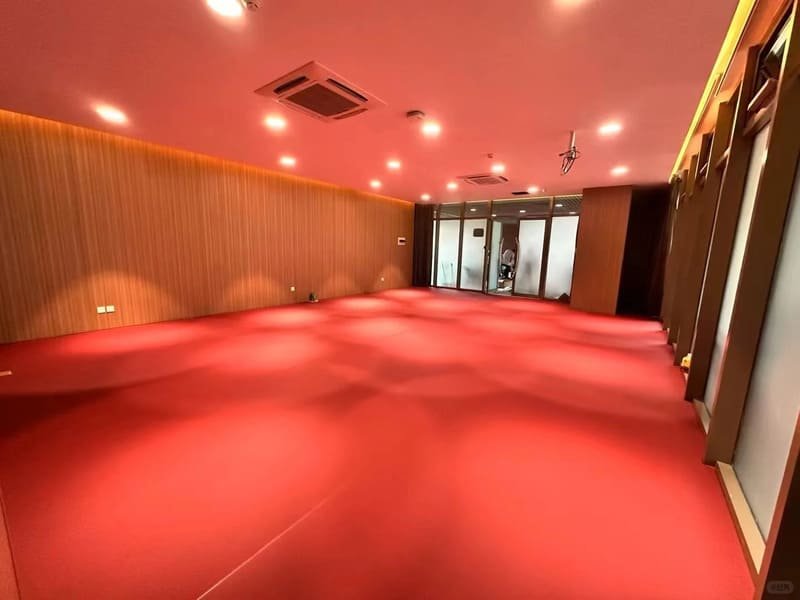
Knowing these risk points helps you plan your schedule, but timing doesn’t stop once the last plank is down. The waiting period after installation matters just as much.
How Long Should You Wait Before Using the Space After Installation?
Wait times vary by flooring type and manufacturer. Floating floors are usually ready for foot traffic right away, while glue-down floors typically need 24–48 hours before traffic and longer before heavy furniture or rolling loads.
Rushing this step is one of the most common mistakes I see, and manufacturer instructions should always be the final word here.
| Activity | Typical Guidance |
|---|---|
| Click-lock/Floating, light foot traffic | Often immediately |
| Glue-down, light foot traffic | Commonly 24–48 hours, product dependent |
| Heavy furniture / rolling loads | Often 48–72+ hours |
| First wet mopping/deep cleaning | Typically 48 hours to several days, depending on the flooring and adhesive |
Manufacturer instructions override these planning ranges, since setting speed depends on the specific adhesive and seam treatment used. Early wet cleaning matters more than people expect: it can introduce moisture and cleaning chemicals before the adhesive bond and seam treatment have fully stabilized, which weakens the installation over time.
Now that you know what to expect after the crew leaves, let’s look at what you can actually control before and during installation to shave time off the schedule.
How Can You Speed Up Your PVC Flooring Installation?
Pre-clear the room, confirm your material’s actual conditioning requirement, choose a floating click system where the project allows it, and hire experienced installers. These steps consistently cut real time off the schedule.
These are the same steps I recommend to every client working on a deadline, whether it’s a retail store reopening or a home renovation.
- Pre-clear the Room: Remove furniture, baseboards, and trim before the crew arrives.
- Check Conditioning Requirements Early: Confirm with the manufacturer whether your specific product needs acclimation, and for how long, so you’re not guessing on-site.
- Choose Interlocking/Click Systems Where Possible: A strong option when you’re working against a tight project deadline and the application allows a floating floor.
- Hire Experienced Installers: Skilled crews work faster on seam welding for commercial rolls and cut with more precision, which reduces rework.
Frequently Asked Questions
Can I install PVC flooring over existing tiles to save time?
Sometimes. PVC flooring can go over existing tile when the tile is firmly bonded, clean, dry, sufficiently flat, and approved by both the flooring and adhesive manufacturers. Grout joints may still need to be skim-coated or leveled first.
How long does seam welding take on commercial PVC sheet flooring?
Welding itself can be relatively fast on long, straight seams, but the full process includes grooving, welding, cooling, and trimming. More importantly, many commercial vinyl systems require the adhesive to set before welding can start, sometimes until the next day, so always follow the flooring manufacturer’s instructions rather than assuming welding happens same-day.
How long does PVC floor adhesive odor last?
It varies by adhesive chemistry, ventilation, temperature, and application rate. Many modern water-based, low-emission adhesives have relatively little odor, but odor level shouldn’t be used as a measure of how much VOC is present. Follow the adhesive manufacturer’s ventilation and occupancy guidance rather than judging by smell alone.
What happens if you don’t wait the recommended time after gluing PVC flooring?
Walking or placing furniture too early can shift planks, trap air pockets, or weaken the bond before it fully sets, which can show up later as visible seams, lifting, or indentation.
Conclusion
Installation time depends on product-specific requirements, subfloor condition, and flooring type, so plan around the full project schedule, not just the laying hours.
About the Author
I work as an engineering installation director in PVC flooring manufacturing, with hands-on experience across custom and bulk production runs for residential, commercial, and industrial clients. My background covers material behavior, subfloor engineering, and design optimization across click-lock, glue-down, and interlocking PVC systems. I focus on solving real installation and manufacturing challenges early, before they become costly problems on site.
Have a project with a tight timeline or a tricky subfloor situation? Send me a message and I’ll walk through the details with you directly.