


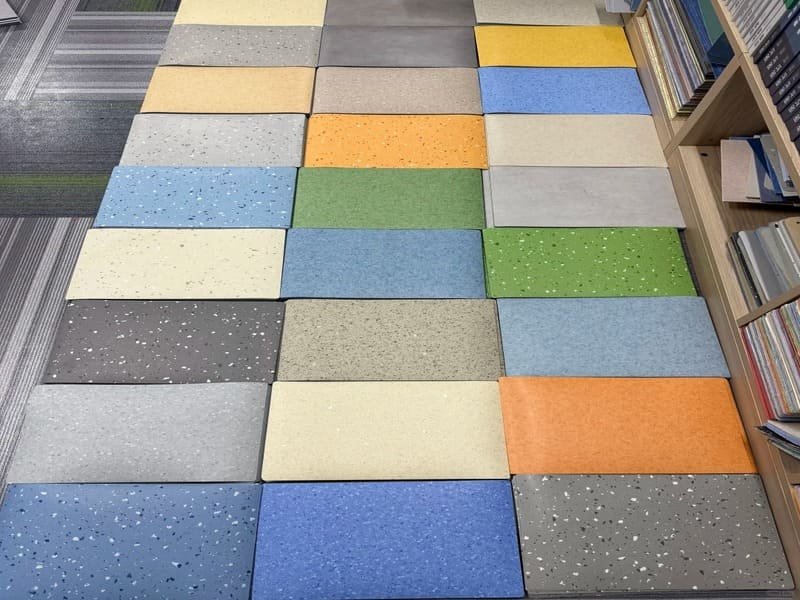
Replace commercial vinyl flooring when wear is widespread and irreversible, seam or bond failures cannot be reliably repaired, traction problems persist after proper cleaning, or recurring substrate issues keep causing failures. Age alone does not decide this — condition does.
I have spent years on the QC floor, checking rolls and tiles before they ship and walking job sites after install. What I see again and again is this: facility managers wait too long, or they assume one visible problem means the whole floor is done. Neither approach is right. In commercial spaces like retail stores, hospitals, and gyms, flooring is not decoration. It carries thousands of footsteps a day, spills, cart traffic, and heavy equipment. When it fails in the wrong way, the risk is not just an ugly floor — it is a slip-and-fall claim, a failed inspection, or a customer who does not come back.
There is no fixed replacement age for commercial vinyl. Some floors need attention after 7–10 years under heavy traffic, while a well-specified, properly maintained system can stay in service much longer. What matters is what the floor is actually doing today. Below, I will walk through the real diagnostic signs, how to weigh repair against replacement, and how to plan a swap that does not shut down your business.
What Are the Real Signs Your Commercial Vinyl Flooring Needs Replacement?
The signs that actually justify replacement are widespread irreversible surface wear, repeated or widespread bond and seam failure, persistent traction loss after correct maintenance, and recurring substrate or moisture problems. A single isolated symptom usually points to a repair, not a full replacement.
| Sign | What It Usually Means | Likely Action |
|---|---|---|
| Widespread surface wear through to the design layer | Wear capacity of the product is used up across large areas | Replace |
| Isolated lifted seam or edge | Local weld or bond failure | Inspect / repair |
| Widespread seam lifting | Adhesive, moisture, or installation issue affecting the system | Consider replacement |
| Persistent traction loss after cleaning | Surface wear or contamination has become unrecoverable | Diagnose, then decide |
| Recurring subfloor bumps, soft spots, or cracks | Moisture or structural issue beneath the floor | Replace after subfloor repair |
Wear Layer Behavior Differs by Product Type
Not all commercial vinyl is built the same way, and that changes how you read "wear." Many heterogeneous commercial vinyl products — including most commercial LVT and printed sheet vinyl — have a distinct transparent wear layer sitting above the printed design film. In heterogeneous LVT and sheet products, this layer is typically specified in mils or millimeters depending on the market; for example, around 20 mil (roughly 0.5 mm) is common in many commercial LVT lines. Once that layer wears through and the print film is exposed, the original structure cannot be restored by cleaning or refinishing.
Homogeneous vinyl works differently. Its wear-resistant compound runs through the full thickness of the product, so there is no separate "top layer" to wear away in the same sense — the visual and the wear performance carry through the whole slab. This is one reason homogeneous vinyl is often chosen for very high-traffic institutional spaces.

Seams and edges tell a similar story. An isolated lifted seam is usually a local repair — it does not mean the rest of the floor is failing. But if lifting shows up in multiple areas, that pattern often points to an adhesive, moisture, or installation problem running under the whole system, which is a stronger case for replacement. When you spot any of these signs, the right move is to inspect the broader floor plan for similar symptoms in other high-traffic or moisture-prone zones — not to assume the entire floor has reached end of life just because one area has.
Should You Repair or Replace Your Commercial Vinyl Flooring?
Repair makes sense for isolated, localized damage. Replacement becomes the better choice once problems are widespread, traction or safety performance cannot be restored, or repair and maintenance costs are no longer practical relative to the cost of a new floor.
When Repair Is the Right Call
If the damage is limited to one or two LVT planks, a single lifted seam, or a small gouge, patching is usually the smart move. A trained installer can cut out the damaged section, weld in a matching piece, and restore the surface without touching the rest of the floor. Standard sheet vinyl repair methods — including seam sealers for small splits and cut-and-weld patches for larger damage — are well established for exactly this kind of localized fix, provided the surrounding material and subfloor are still sound.
When Replacement Is the Better Investment
Once wear or bond failure spreads across multiple zones, or measured traction falls below the specification required for that space and cleaning or finish restoration cannot bring it back, patch repairs stop being a reliable fix. If traction is a concern, the right approach is to clean and inspect first, test if needed, and only consider the surface irrecoverably worn if the problem persists after correct maintenance — not to assume replacement is the answer the moment a floor feels less grippy than it used to.
Weighing the Real Costs
A documented traction problem that leads to a slip-and-fall incident can cost far more than the flooring itself. Add in the labor cost of extra cleaning on a degraded surface, plus the impression a patched, uneven floor leaves on clients or shoppers, and the case for replacement gets stronger. When repair frequency, downtime, and maintenance costs become substantial relative to the cost of a new floor, a lifecycle-cost comparison often favors replacement — though the right answer depends on your specific numbers, not a fixed rule of thumb.
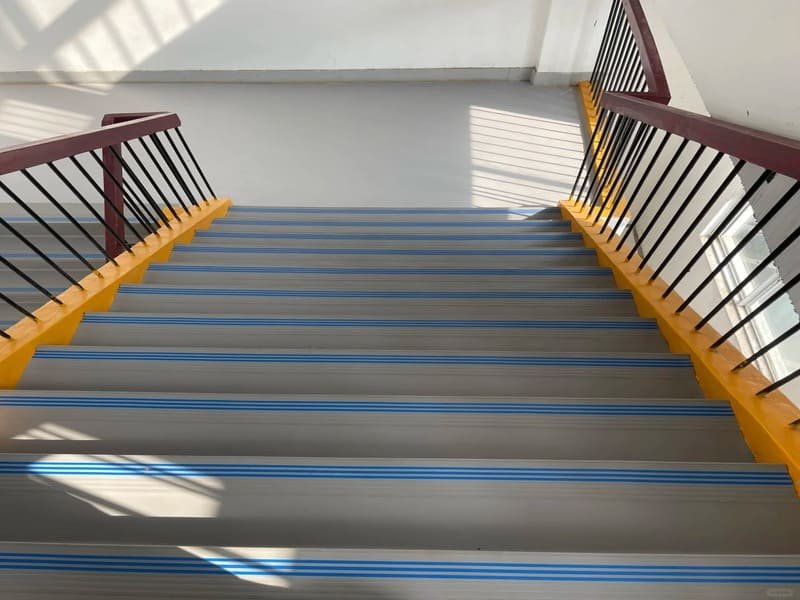
Cost is only half the equation. The material you started with, and how it has been maintained, plays a big role in why one floor lasts far longer than another under similar traffic.
What Factors Determine How Long Your Vinyl Flooring Lasts?
Lifespan depends on three things: the construction and quality of the material, the volume and location of foot traffic, and how the floor is maintained day to day. Get any one of these wrong and the floor ages faster than its rated potential.
| Factor | Supports Longer Service Life | Shortens Service Life |
|---|---|---|
| Material construction | Homogeneous vinyl or heavier-gauge heterogeneous systems suited to the traffic level | Under-specified material for the traffic it receives |
| Traffic pattern | Traffic distributed across the space | Concentrated in entryways, hallways, or gym zones |
| Maintenance | Cleaners and pads within manufacturer-recommended range | Chemicals or pads outside the recommended pH or abrasiveness range |
Material Construction Sets the Ceiling
A thinner, standard-grade vinyl and a heavy-duty homogeneous vinyl are built for different environments. Homogeneous vinyl carries its wear-resistant compound through the full thickness, so the visual and performance layer does not disappear the way a thin printed layer can. Heterogeneous LVT and sheet products rely on their transparent wear layer and print film construction, which performs very well when specified correctly for the traffic level, but can be a mismatch if a light-duty product is installed in a heavy-traffic zone. Choosing the wrong construction for the application is one of the most common reasons I see premature failure during QC review.
Traffic and Maintenance Compound the Effect
High-traffic zones — entryways, hallways, gym floors — accumulate wear far faster than the rest of a facility simply because they absorb more load cycles per day. Maintenance matters just as much: cleaners, pads, or stripping chemicals used outside the manufacturer’s recommended range can damage factory finishes, dull the surface, or accelerate deterioration, even on a well-built floor. This is different from any one chemical "eating through" the wear layer — it is cumulative damage from the wrong maintenance routine over time.

Understanding why your current floor is wearing the way it is puts you in a much better position to specify the right material and avoid repeating the same mismatch on the next installation.
How Can You Plan a Hassle-Free Commercial Vinyl Flooring Replacement?
A smooth replacement starts with matching the material spec to the use case, scheduling work to minimize business disruption, and properly preparing the subfloor before installation. Skipping any of these steps shortens the life of the new floor.
Selecting the Right Material for the Next Cycle
Match the spec to the space rather than defaulting to whatever was there before. For heterogeneous LVT in high-traffic commercial areas, a wear layer around 20 mil (about 0.5 mm) or greater is common, but traffic classification, product construction, warranty terms, rolling-load requirements, and the manufacturer’s own guidance should all factor into the decision. For specialized needs, consider ESD-rated vinyl for electronics or lab environments, or acoustic and shock-absorbing backing for gyms and multi-story buildings. This is where working with a manufacturer who understands both production and application pays off — the right spec upfront reduces the chance of an early second replacement.
Minimizing Business Disruption
Phased installation, overnight or weekend work, and quick-turnaround adhesive systems all reduce downtime. For a retail or hospital environment that cannot close for days, planning the install zone by zone keeps the rest of the facility operating normally.
Preparing the Subfloor Properly
A new floor is only as good as what is underneath it. For concrete substrates, moisture testing — such as ASTM F2170 — should be performed when required by the flooring and adhesive manufacturer, along with proper leveling. Getting this step right, and matching the test method to the actual substrate type, is a major factor in whether a new floor reaches its expected service life or fails again early from trapped moisture or an uneven base.
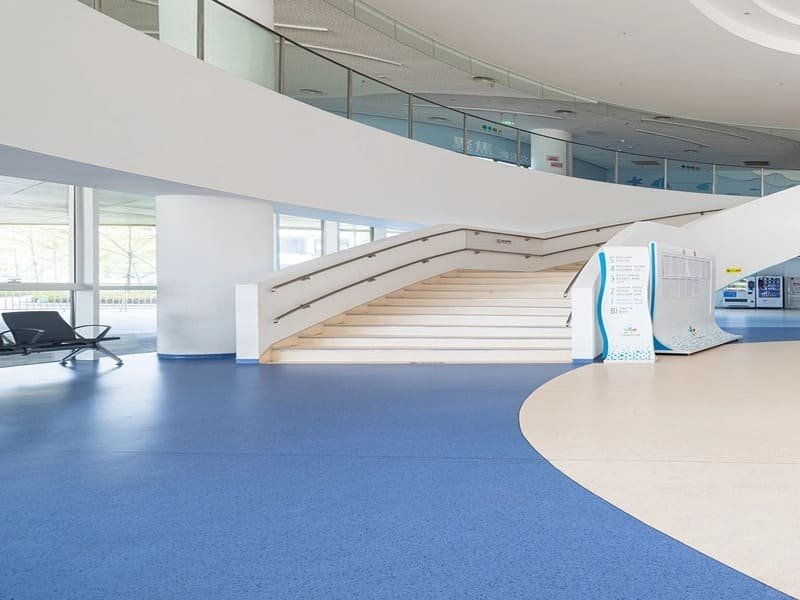
Getting these three steps right at the planning stage is what separates a flooring project that goes smoothly from one that turns into a repeated headache.
Conclusion
Diagnose before you decide: widespread wear, unresolved bond failure, or persistent traction and subfloor issues justify replacement.
Next Steps: Get a Professional Flooring Assessment
Walk your facility and check each zone against the patterns above — not just for isolated damage, but for whether problems are showing up repeatedly across similar areas. If traction, seam integrity, or subfloor stability are in question, it is worth getting a second opinion before assuming the whole floor needs to go. Based on years of hands-on QC and manufacturing experience with commercial and sports vinyl flooring, I can help you evaluate your current subfloor condition, review physical samples suited to your specific traffic and use case, and put together an accurate lifecycle cost comparison for your next installation.
Have questions about your specific flooring situation? Feel free to message me directly — I’m happy to help you figure out the right path forward.