


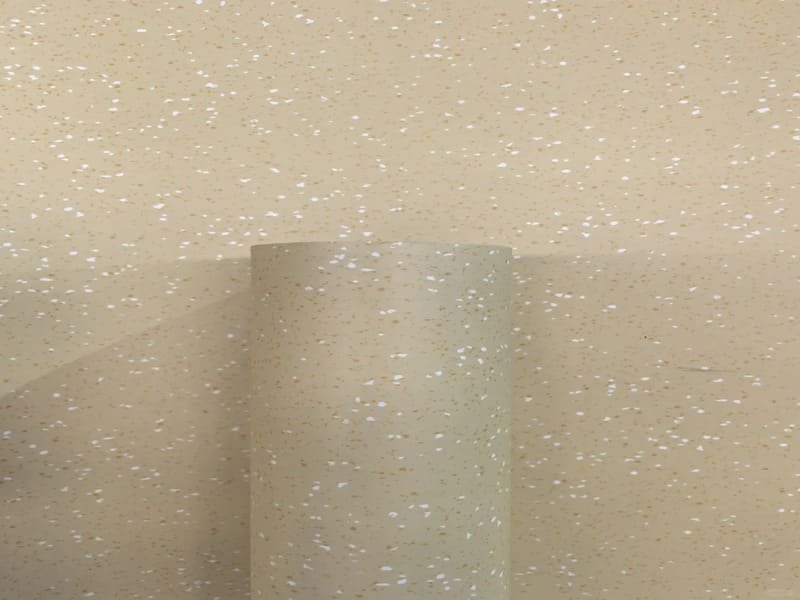
For many pharmaceutical cleanrooms, homogeneous PVC sheet flooring with heat-welded seams is one of the strongest options. The right choice ultimately depends on chemical exposure, ESD requirements, traffic loads, and the room’s contamination-control strategy.
I have spent years working directly with facility engineers on flooring projects for pharmaceutical plants, and I can tell you this: flooring is never "just a surface" in a controlled environment. It sits inside your Contamination Control Strategy (CCS), right alongside your HVAC design and your gowning protocol. When a floor cracks, peels, or builds up static charge, the consequences are not cosmetic. I have seen projects where a failed floor triggered an audit observation, forced a line shutdown, or complicated a batch investigation. This guide walks through what actually drives PVC selection for ISO-classified cleanrooms, how to read technical specs correctly, and where each type of PVC typically fits across a real facility.
Before I get into product selection, let’s look at the regulatory framework that actually shapes the decision. Once you understand what each standard does and does not require, the choice of flooring becomes much easier to defend during an audit.
What Standards Apply to Pharmaceutical Cleanroom Flooring?
cGMP and EU GMP Annex 1 require smooth, impervious, easily cleanable surfaces, while ISO 14644-1 classifies air cleanliness by particle concentration rather than specifying a flooring material.
This is a point I clarify with almost every client, because it gets misunderstood often. 21 CFR 211.42 requires that floors, walls, and ceilings in aseptic processing areas be smooth, hard surfaces that are easily cleanable. EU GMP Annex 1 goes further, stating that exposed surfaces should be smooth, impervious, and unbroken, and able to withstand repeated cleaning and disinfection, including sporicidal agents. ISO 14644-1, on the other hand, does not specify a flooring material, thickness, or wear rating at all. It classifies cleanrooms by airborne particle concentration. Flooring selection should support that classification indirectly, by minimizing particle generation, staying easy to clean, and maintaining sealed, durable transitions at walls and equipment bases. Project-specific VOC or AMC limits may also apply where chemical emissions could affect sensitive processes, but this is a project requirement rather than a universal ISO 14644-1 mandate.
| Requirement / Reference | Flooring Relevance |
|---|---|
| cGMP / 21 CFR 211 | Smooth, durable, easily cleanable surfaces |
| EU GMP Annex 1 | Smooth, impervious, unbroken; compatible with repeated cleaning and disinfection |
| ISO 14644-1 | Defines airborne particle cleanliness classes; flooring should support contamination control |
| Project VOC/AMC requirements | May apply where chemical emissions could affect processes or sensitive products |
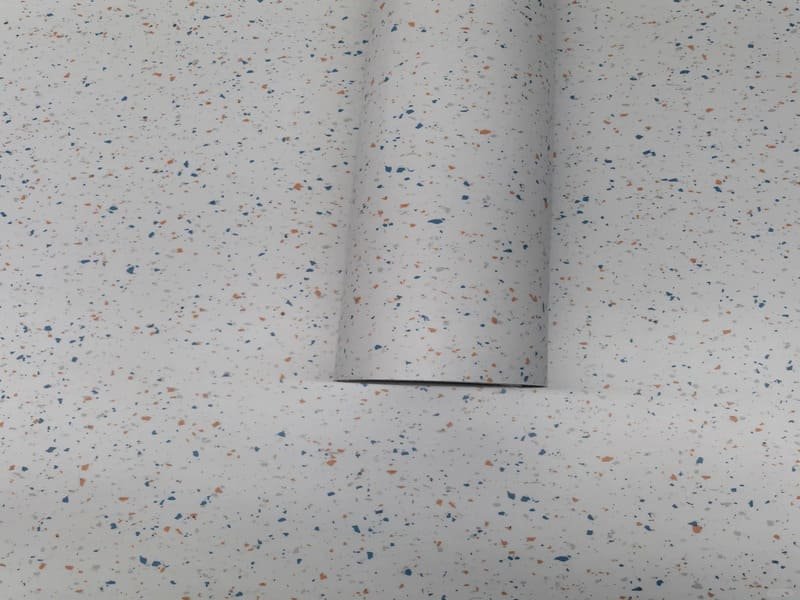
With the regulatory baseline clear, the next question I get asked most often is how PVC actually compares to epoxy in real installations.
PVC vs Epoxy: Which Is Better for Pharmaceutical Cleanrooms?
Both PVC and epoxy are established cleanroom flooring systems, and the better choice depends on the specific area. PVC offers resilience and repairability, while epoxy offers a fully seamless, poured surface suited to wet or heavy-duty zones.
I want to be honest here: neither material is universally superior, and any cleanroom flooring supplier who tells you otherwise is oversimplifying. PVC sheet flooring is softer underfoot, resilient under building movement, and easy to repair locally without disrupting the surrounding area. Because it is heat-welded rather than poured, a damaged section can be cut out and patched in hours. Epoxy and resin systems, by contrast, are applied as a liquid and cure into a genuinely seamless, jointless surface, which can be an advantage in wet processing zones, areas with heavy chemical splash, or spaces under constant heavy point loads. In my experience, PVC tends to suit dry to semi-dry cleanroom areas, gowning corridors, and zones where local repairability matters, while resin systems often get specified for wash-down bays or high-impact production floors. The right answer is almost always area-specific rather than facility-wide.
PVC advantages: resilient underfoot, repairable in hours, heat-welded sheet construction, low disruption during local repairs, suitable for many dry cleanroom zones.
Epoxy/resin advantages: truly seamless poured system, strong chemical resistance in wet areas, no sheet seams, well suited to heavy-duty or high-impact zones.
Whichever base material a zone calls for, the wall transition detail is just as important as the floor itself.
How Does PVC Handle Wall Transitions and Corners?
PVC sheet can be flash-coved at wall junctions and heat-welded to create a continuous, easily cleanable floor-to-wall detail without a hard 90-degree corner.
Flash coving is one of the details I spend the most time explaining to first-time cleanroom clients. Instead of a sharp floor-to-wall joint, the PVC sheet is bent upward and welded to a cove former, extending the flooring material several inches up the wall in one continuous piece. This removes the 90-degree corner where dust, moisture, and cleaning residue would otherwise collect, and it makes the room significantly easier to sanitize during routine cleaning. It is worth noting that epoxy and resin systems can also achieve an integral coved skirting through their own liquid application process, so this is not a capability unique to PVC. What matters most is that the coving detail, regardless of material, is continuous, properly sealed, and verified during installation rather than assumed from the product spec sheet alone.
Getting the coving right protects the room structurally, but daily performance also depends heavily on how the surface handles chemical exposure.
How Does Cleanroom PVC Handle Sterilization Chemicals?
Chemical resistance must be verified against the specific disinfectants, concentrations, contact times, and cleaning frequency used at the facility rather than assumed from a general product description.
Daily sterilization in a pharmaceutical plant is aggressive, often rotating between Vaporized Hydrogen Peroxide, Isopropyl Alcohol, sodium hypochlorite, and quaternary ammonium compounds, sometimes with sporicidal agents added periodically. This is where I see the most selection mistakes happen. A PUR or PU surface treatment can meaningfully improve stain resistance and reduce maintenance burden, but it should not be treated as automatic proof of compatibility with every disinfectant a facility uses. The concentration, dwell time, and frequency of exposure all affect long-term surface performance. My recommendation is always the same: ask the manufacturer for their actual chemical-resistance test data against the specific disinfectants your facility uses, at the concentrations and contact times specified in your SOPs, rather than relying on general marketing claims about PUR coatings.

Chemical exposure is one risk factor to verify carefully. Static control is another, and it deserves the same level of scrutiny.
What Does Static Control (ESD) Flooring Actually Require?
ESD flooring should not be selected by a generic "conductive" or "dissipative" label alone. The applicable standard, resistance-to-ground requirement, grounding system, and footwear-flooring combination all need to be specified together.
Static control is probably the area where I see the widest gap between product marketing and engineering reality. Under IEC 61340-4-5, flooring, footwear, and the person are treated as one system, and resistance measurements only mean something in the context of that full combination, not the flooring material in isolation. Broadly, conductive flooring and dissipative flooring are separated around the 10⁶ ohm range, with dissipative performance extending up toward 10⁹ ohms, but the exact thresholds depend on which standard the facility is designing against. For powder-handling and API areas specifically, I recommend an electrostatic and combustible-dust risk assessment first. Where that assessment identifies a need for static-control flooring, conductive or dissipative PVC should be selected as one component of a complete grounding system, alongside footwear, equipment bonding, and humidity control, not as a standalone fix.
Static control decisions connect closely to the broader question of material structure, which is where homogeneous and heterogeneous PVC come in.
Homogeneous or Heterogeneous PVC: Which Fits Your Cleanroom?
Homogeneous PVC is commonly specified in higher-control areas for its even wear and strong heat-welded seams, while validated cleanroom-grade heterogeneous PVC can suit adjacent or less critical zones. ISO classification alone does not determine which structure to use.
Homogeneous PVC runs the same color and composition through the full thickness of the sheet, so as it wears down over years of traffic, the surface pattern and performance stay consistent. That consistency is also why it heat-welds so cleanly, since the weld rod fuses into a chemically similar base material, creating a monolithic, non-porous seam. Heterogeneous PVC is built in layers, typically a printed design layer beneath a wear layer, and cleanroom-grade heterogeneous products do exist and are used in pharmaceutical settings, particularly in corridors or lower-classification zones. Homogeneous sheet is commonly the preferred choice in sterile or high-control areas because of its durable through-body construction, but the ISO class of a room is only one input into that decision; traffic load, chemical exposure, and budget all factor in as well.
Material structure decided, the next practical step is mapping flooring types to the actual zones inside a facility.
Which PVC Flooring Typically Fits Each Cleanroom Zone?
Sterile ISO 5 areas commonly use smooth homogeneous PVC with flash coving, powder-handling zones may require conductive or dissipative flooring based on a risk assessment, and ISO 7/8 corridors typically prioritize wear resistance.
I always walk clients through the facility zone by zone, since using one flooring spec everywhere is a common and costly mistake. In sterile manufacturing and aseptic processing areas classified ISO 5, the priority is usually a smooth, non-porous homogeneous PVC with carefully executed flash coving. Powder blending and API handling rooms depend on the outcome of an electrostatic and combustible-dust risk assessment, which may call for conductive or dissipative flooring as part of the facility’s grounding system. Packaging areas, corridors, and gowning rooms, typically ISO 7 or 8, see the heaviest daily foot and cart traffic. Here, a higher wear-resistance PVC with moderate slip resistance is commonly specified, since long-term durability tends to outweigh sterility as the driving factor in these zones.
| Zone | ISO Class | Common PVC Approach |
|---|---|---|
| Sterile / Aseptic Processing | ISO 5 | Homogeneous, flash-coved |
| Powder Blending / API Handling | Varies | Conductive/dissipative, based on risk assessment |
| Packaging / Corridors / Gowning | ISO 7/8 | Higher wear resistance |
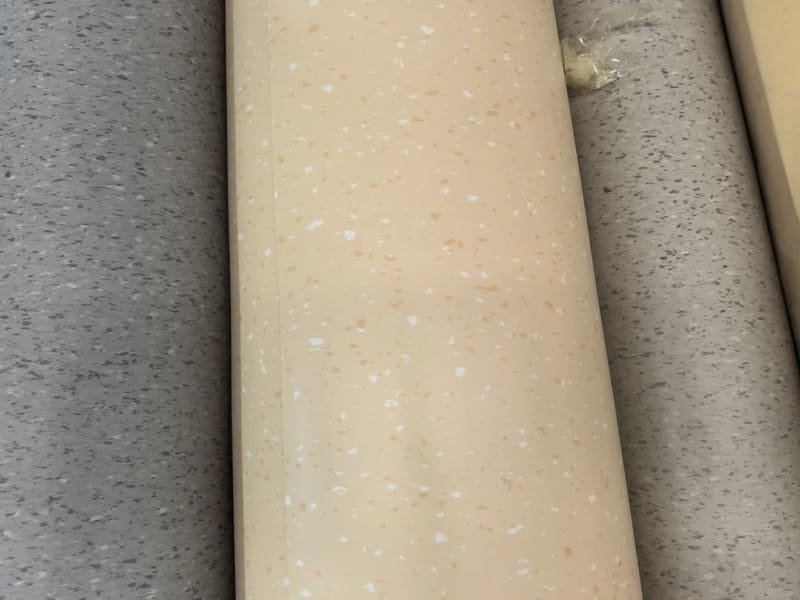
Matching material to zone is only useful if the subfloor beneath it is prepared correctly.
How Should the Subfloor Be Prepared for Cleanroom PVC?
Subfloor preparation typically requires moisture testing and vapor barriers, self-leveling compounds for a flat surface, and certified hot-welding installation to support pharmaceutical compliance.
In my experience, one of the most common causes of cleanroom flooring failure has nothing to do with the PVC itself. It is moisture coming up through the subfloor. Trapped moisture vapor pushes against the flooring from below, eventually causing bubbling, adhesive failure, or seam separation, all of which reopen the exact contamination pathways the floor was meant to close. This is why moisture testing before installation, followed by an epoxy moisture barrier when readings are high, is a step I never let clients skip. Self-leveling compounds come next, since even a slightly uneven subfloor creates low spots where cleaning liquids pool instead of draining, and pooled liquid is a microbial growth risk. Installation quality matters just as much as the product spec. Hot-welding and precision grooving require trained technicians, since a poorly executed weld seam undermines the value of choosing a high-performance PVC system in the first place.
Once the floor is properly installed, the final piece is knowing exactly what to check before you buy.
What Should You Specify When Buying Pharmaceutical Cleanroom PVC Flooring?
A complete specification should cover construction type, seam method, chemical and ESD requirements, wall transition detail, and validated cleaning compatibility, not just surface color and thickness.
This is the checklist I walk facility managers through before they sign off on a purchase order. It is easy to get a technical data sheet with a dozen numbers on it and still miss the details that actually matter for compliance.
| Item | What to Check |
|---|---|
| Construction | Homogeneous or validated cleanroom-grade heterogeneous sheet |
| Format | Sheet preferred where minimal joints are required |
| Thickness | Project-specific, commonly around 2 mm for compact commercial sheet |
| Surface | PUR/PU or manufacturer cleanroom surface treatment |
| Seams | Heat-weldable |
| Wall transition | Flash coving / coved skirting |
| Chemical resistance | Verified against actual disinfectants, concentrations, and contact times |
| ESD | Specified only where a risk assessment requires it, with applicable system standard |
| VOC/emissions | Relevant local or project certification |
| Fire performance | Applicable local building-code classification |
| Slip performance | Matched to dry or wet process conditions |
| Rolling load | Verified against carts, equipment, and point loads |
| Adhesive | Compatible with substrate, cleaning regime, and ESD system |
| Cleaning | Compatible with validated disinfectants and sporicides |
Getting through this checklist before installation is what separates a floor that passes its first audit from one that needs rework a year later.
What Maintenance Protocols Support Long-Term Compliance?
PUR-treated PVC can reduce the need for waxing, and daily maintenance with microfiber flat mops and validated cleaning dilution ratios helps keep the floor compliant without introducing new contaminants.
A well-specified PUR surface treatment changes the maintenance routine considerably. Standard PVC flooring often needs periodic waxing and stripping, and both processes introduce chemical fumes and particulate into a space that is supposed to stay contaminant-controlled, a contradiction I have seen trip up more than one facility’s own SOPs. PUR-treated PVC can reduce or eliminate that step, since the sealed surface resists staining and abrasion without relying on a sacrificial wax layer. For daily cleaning, microfiber flat mops are generally preferred over string mops, since they trap particulate rather than pushing it around the room, paired with cleaning agent dilution ratios that match what the manufacturer validated during testing. Getting the dilution wrong, even slightly, can leave the surface under-sanitized or gradually degrade the surface treatment over time.
Conclusion
The right PVC system supports cGMP hygiene, verified chemical resistance, and risk-based static control.
If you are specifying flooring for a new cleanroom build or evaluating an underperforming floor for replacement, send me a message. I am happy to walk through your facility’s zone requirements, share technical data sheets (TDS), and provide physical ESD PVC samples to support your compliance documentation.