



To stop water pooling, immediately clear surface debris with a power brush, identify if the puddle is caused by a sub-base dip, and ensure your perimeter drains are functional. Most issues are solved by removing organic silt or leveling small depressions in the stone base without needing a full replacement.
Standing water on your artificial lawn is usually a sign of a "bottleneck" in the drainage system rather than a failure of the grass itself. As an installation director, I approach this by analyzing the layers from the top down. If water sits on the surface, the perforated backing is likely clogged with fine dust or pet waste. If large areas remain submerged hours after rain, the issue is structural—either the sub-base has compacted into an impermeable layer or the garden’s natural water table is too high for the current stone depth. You must distinguish between "surface tension" and "ground saturation" to choose the right fix. Most homeowners over-complicate the solution; often, a simple aeration of the sand infill or a small perimeter trench is enough to restore a dry, usable lawn.

Before you call a contractor, use this guide to diagnose exactly why your grass is wet and how to fix it fast.
Is Your Lawn Drainage Normal? (The 2-Hour Rule)
Most artificial grass should drain at a rate of 50+ liters per minute per square meter. If rain stops and puddles remain after 2 hours, you have a drainage issue. If water persists for over 24 hours, your sub-base or soil gradient has likely failed completely.
| Time After Rain | Status | Zalecane działanie |
|---|---|---|
| 0 – 30 Minutes | Normal | No action; water is migrating through the base. |
| 30 Min – 2 Hours | Minor Lag | Check for surface debris or flattened fibers. |
| 2 – 12 Hours | Surface Block | Power brush the area and check for infill compaction. |
| Over 24 Hours | System Failure | Inspect sub-base for "dips" or clay saturation. |
How to Diagnose Your Specific Pooling Symptom
I tell my team to look for the "pattern" of the water. If you have a single, fixed puddle in the center of the lawn, you almost certainly have a sub-base depression (a "birdbath") where the stone has settled. If the water is only at the edges near a fence or wall, the water is likely trapped by the garden’s perimeter. If the entire lawn feels "spongy" but has no deep puddles, the weed membrane is likely clogged with silt. Knowing the difference saves you from digging up parts of the lawn that are perfectly fine.
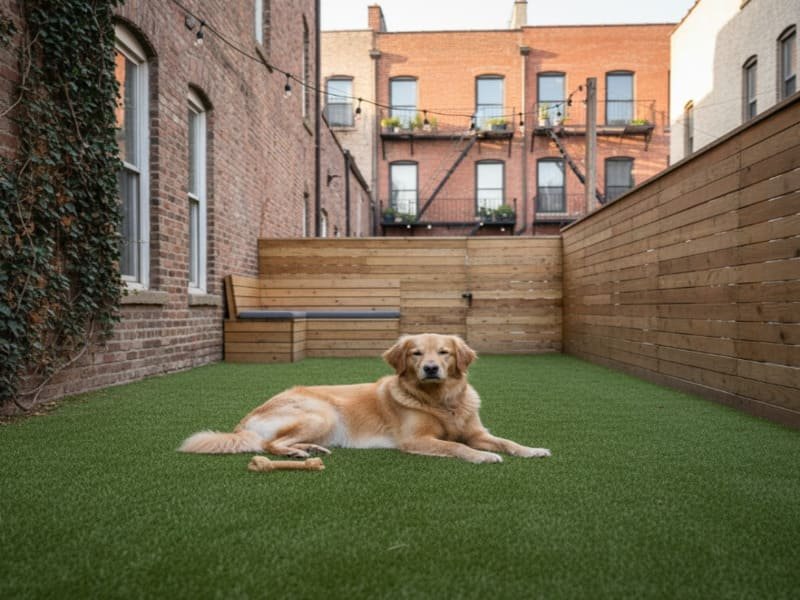
Once you know the symptom, follow this step-by-step path to stop the pooling.
Step 1: The Quickest Fixes (Surface & Debris)
The most common cause of pooling is "silt-lock." Over time, dust, leaves, and pet hair create a thin, waterproof crust at the base of the grass fibers. You can stop this pooling by using a power brush or a stiff broom to agitate the infill and reopen the drainage holes.
| Metoda | Dlaczego to działa | Poziom wysiłku |
|---|---|---|
| Szczotkowanie elektryczne | Lifts fibers and breaks the silt crust | Niski |
| Infill Raking | Loosens compacted sand for better flow | Niski |
| Hole Probing | Manually clears glue/debris from backing | Średni |
Restoring Vertical Drainage Fast
In my experience, 40% of pooling complaints are solved with a simple deep clean. Organic matter decomposes and turns into a "slime" that seals the drainage holes in the turf backing. Use a leaf blower first to remove loose material. Then, use a stiff brush against the grain of the grass. If you have pets, use a turf-safe enzyme cleaner to break down any crystallized waste that might be blocking the holes. If you can see the drainage holes are blocked by excess glue from the installation seams, you may need to carefully use a small tool to clear those specific points. This is the least expensive way to fix the problem.

If the surface is clear but water still sits in one spot, you need to look at the ground levels.
Step 2: Fixing Localized Dips (The Lift and Level)
If water pools in the same spot every time, the sub-base has settled. You must peel back the turf, add a porous leveling material like Grano dust or 6mm granite chippings, and compact the area to create a flat, draining surface again.
| Materiał | Drainage Capacity | Przypadek użycia |
|---|---|---|
| Grano Dust | Wysoki | Leveling small dips (0-20mm) |
| 6mm Granite | Bardzo wysoka | Filling deep holes or soft spots |
| Sharp Sand | Niski | Avoid; it compacts and blocks water |
How to Level a Sunken Sub-Base
When a sub-base fails, it is usually because the soil beneath it was not properly compacted. To fix this, we pull back the grass carpet. Look for the low spot in the stone base. We add crushed granite because it stays stable but lets water pass through easily. Use a straight edge to ensure the new patch is level with the rest of the yard. I always recommend a slight "fall" or slope—about 1cm for every 1 meter of length. This ensures that even if the ground is saturated, gravity pulls the water toward your garden’s lower exit point. Re-secure the turf once the base is firm and flat.

If your lawn is flat but the water has nowhere to go, you need to manage the perimeter.
Step 3: Managing Perimeter and Clay Soil Issues
For lawns on heavy clay soil, the sub-base acts like a tank that fills up. To stop pooling here, you must install a French drain—a gravel-filled trench with a perforated pipe—at the lowest edge of the lawn to redirect water to a soakaway or drain.
| Perimeter Solution | Najlepsze dla | Technical Need |
|---|---|---|
| French Drain | Heavy rain / Clay ground | 100mm perforated pipe |
| Gravel Border | Minor runoff / Aesthetics | 20mm clean stone |
| Swale | Large gardens | Shallow grass channel |
Solving the "Bathtub Effect"
Heavy clay soil is the enemy of artificial grass. Water goes through the grass, through the stone, and then hits the clay and stops. This is the "Bathtub Effect." I solve this by creating an escape route. We dig a trench along the edge where the water pools most. We fill it with "clean" stone (stone with no dust) and a pipe. This pipe takes the excess water away before it can back up into the sub-base. Also, check your roof gutters. If a downspout is pouring onto the turf, it will overwhelm the drainage. Redirect that pipe into a flower bed or a rainwater tank to protect your lawn.
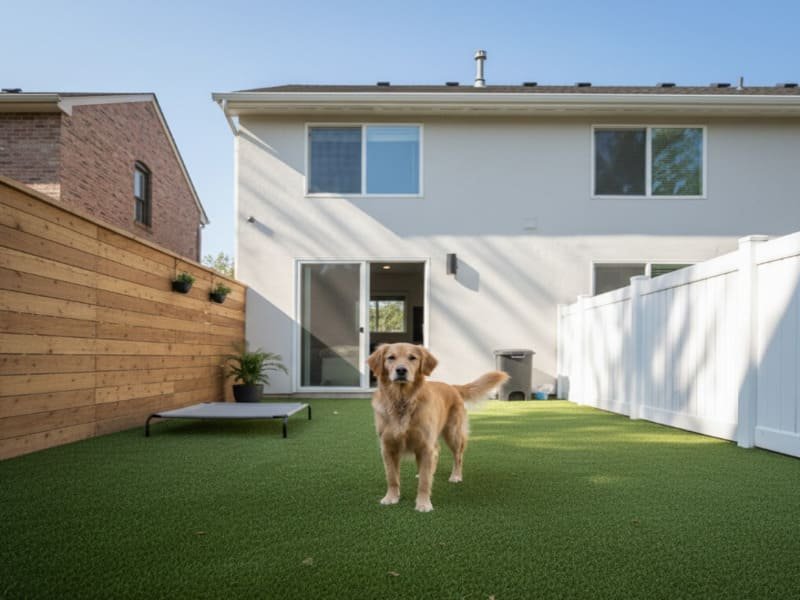
Properly managing the perimeter keeps the sub-base dry and prevents the grass from floating during heavy storms.
Wnioski
To stop water pooling, first brush away surface debris. If the water remains, level the sub-base dips with crushed stone or install a French drain to handle heavy clay runoff. Most drainage issues are fixable with targeted maintenance or minor perimeter adjustments.
Summary Checklist for a Dry Lawn:
- Brush your lawn monthly to prevent silt buildup.
- Identify puddles that last over 2 hours as "trouble spots."
- Use granite dust, never sand, for leveling repairs.
- Install edge drains if your garden sits on heavy clay soil.