


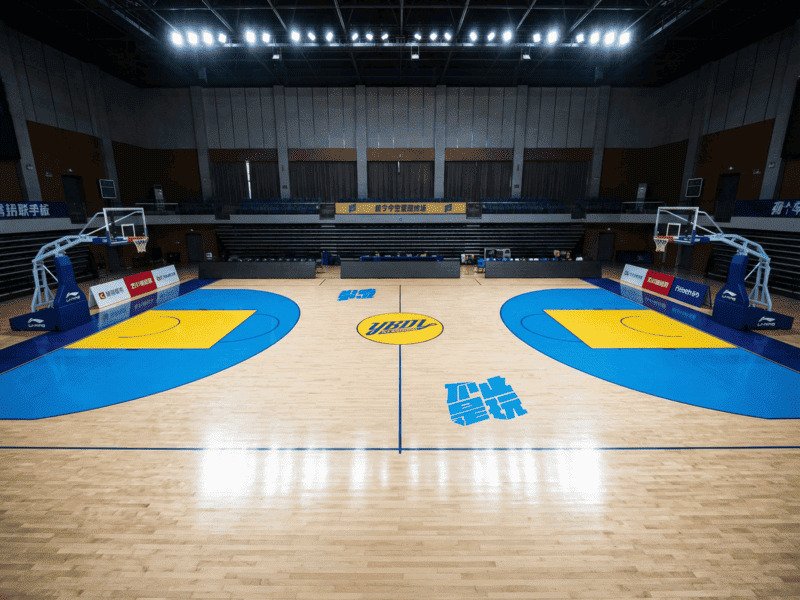
The best sports flooring is the one that matches your specific sport’s performance requirements while meeting EN 14904 safety standards. For professional indoor courts, 7mm+ PVC or Maple Hardwood is the gold standard; for outdoor durability, UV-stable Acrylic or Virgin EPDM rubber is the top choice to avoid premature failure.
Choosing the "best" floor is a technical engineering decision, not an aesthetic one. In my 15 years as an R&D engineer and contractor, I have seen many facility owners prioritize low upfront costs only to face surface delamination or athlete joint pain within 18 months. To make a truly professional choice, you must look beyond the top color and analyze the molecular stability of the wear layer and the force reduction of the shock-absorbing base. A high-performance floor is a safety investment that directly impacts player retention and facility insurance. In this guide, I will simplify the complex material science into a clear decision framework so you can select the right system without the risk of costly replacements.
You should read the following sections to understand the engineering behind the most reliable materials and how to avoid common industry traps.
Why Does Quality Indoor Flooring Require High-Level Engineering?
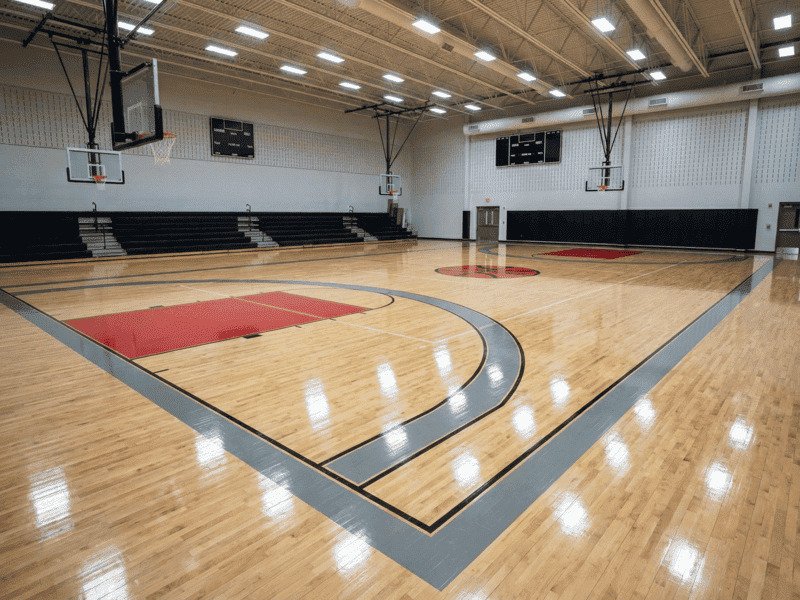
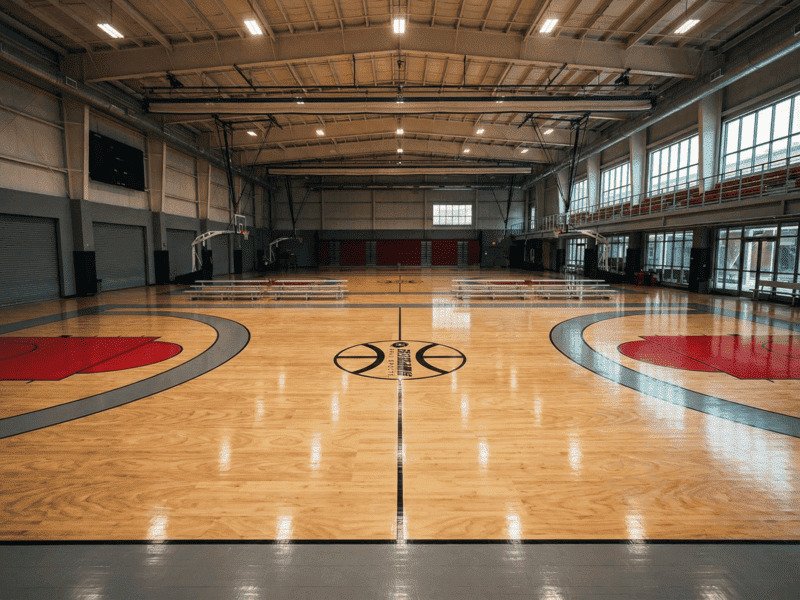
Indoor sports flooring like PVC and hardwood must provide consistent ball rebound and shock absorption while maintaining dimensional stability. High-quality PVC uses a multi-layer structure where a thick wear layer dictates the lifespan, and a fiberglass reinforcement layer prevents the floor from expanding or contracting during temperature changes.
In my years of manufacturing, I have found that the secret to a long-lasting indoor court is the balance between the foam backing and the top coating. If the foam is too soft, it loses resilience and collapses. If the wear layer is too thin, the friction levels drop quickly. For hardwood systems, maple is often the top choice because it has a tighter grain than beech, which offers better "Force Reduction" and durability. However, the sub-floor cushioning system is what actually protects the joints of the players. In our LaiYin production line, we use specialized surface treatments to ensure zero VOC emissions. This is vital because closed gym environments can trap toxic gases from low-quality adhesives and binders.
| Rodzaj materiału | Podstawowa korzyść | Oczekiwana długość życia | Poziom utrzymania |
|---|---|---|---|
| Professional PVC | Absorpcja wstrząsów | 10-15 lat | Niski |
| Drewno klonowe | Traditional Feel | 20+ Years | Wysoki |
| Beech Wood | Cost-Effective | 15-20 lat | Wysoki |
The wrong choice indoors can lead to poor air quality and high maintenance costs so you must look at the technical specs carefully.
How Do Outdoor Materials Defy Harsh Weather Elements?
Outdoor sports flooring must resist intense UV rays, moisture, and extreme temperature shifts without losing traction or elasticity. Acrylic is the standard for tennis because it provides a consistent pace, but it requires high-quality UV-stable pigments to prevent fading and heat absorption that can damage the base.
When I manage outdoor projects, the biggest debate is usually about EPDM rubber. The chemistry matters here because virgin EPDM rubber stays flexible and bright for years, while cheap recycled rubber often hardens and crumbles due to poor binder quality. Another great option is interlocking polypropylene (PP) tiles. These are engineered with drainage holes and expansion joints. These features prevent the "buckling" effect you see when cheap plastic tiles expand in the summer heat. If the engineering of the expansion joint is wrong, the whole court will warp. We focus on the polymer density to ensure the tiles do not become brittle after two winters.
| Outdoor Option | Odporność na promieniowanie UV | Drenaż | Najlepsze dla |
|---|---|---|---|
| Powłoka akrylowa | Wysoki | Zależy od bazy | Tennis / Pickleball |
| Virgin EPDM | Doskonały | Doskonały | Multi-sport / Playgrounds |
| PP Tiles | Umiarkowany | Best | Backyard Courts |
Outdoor courts are a major investment and you should pick materials that are tested for your specific climate zone.
What Is the Best Sports Flooring? (Quick Decision Guide)
The "best" floor depends on your primary sport and budget, but we can categorize the most reliable choices into four distinct winners. If you want a floor that maximizes both safety and longevity, your choice should fall into one of these professional-grade categories.
As a contractor, I always provide my clients with this "Decision Shortcut" to simplify the procurement process. If you are building an indoor multi-sport hall, a high-quality 7mm+ PVC system is the best overall choice due to its balance of cost and performance. For professional basketball, nothing beats Maple hardwood on a resilient sub-floor. Outdoors, if you have the budget, Virgin EPDM is the best for player comfort, while UV-stable Acrylic is the best for competitive tennis. If a supplier tries to sell you a product that doesn’t fit these use cases, they are likely pushing old inventory rather than a modern solution.
- Best Indoor Multi-Sport: High-density PVC with a fiberglass stability layer (EN 14904 compliant).
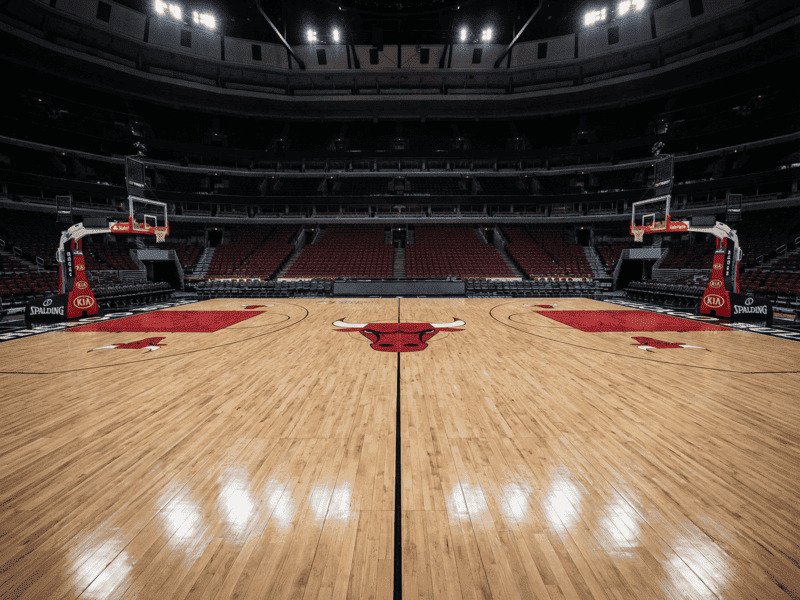
- Best Professional Basketball: North American Maple hardwood with a shock-absorbing sleeper system.
- Best Outdoor Performance: Virgin EPDM rubber granules with high-grade polyurethane binders.
- Best Budget Outdoor: Engineered PP interlocking tiles with built-in expansion joints.
Using this guide will help you narrow down your search and ensure you are investing in a system that won’t fail prematurely.
What Are the Engineer’s Red Flags to Watch For?
A "Red Flag" checklist helps you identify low-quality products before you sign a contract. You should check for a strong chemical smell, which indicates toxic binders, and perform a resilience test on the foam backing to see if it recovers its shape immediately after being pressed.
As an engineer, I look at the certifications first. If a supplier cannot show you a DIN or EN 14904 test report from a real lab, you should walk away. These standards are not just paperwork. They are proof that the floor will protect your athletes. Another red flag is a price that is 20% lower than the market average. Usually, this means the manufacturer cut costs by using "filler" materials in the wear layer or cheap recycled plastics that will break down in six months. I have seen many facility owners lose their insurance coverage because they installed flooring that did not meet fire safety or impact standards. Always ask for a sample and try to tear the fiberglass layer. If it breaks easily, the floor will not stay flat.
| Red Flag | Potential Risk | Engineering Cause |
|---|---|---|
| Pungent Odor | Health Hazards | Low-grade VOC Binders |
| Slow Recovery | Joint Pain | Poor Cell Foam Structure |
| No Certification | Legal Liability | Failure to meet safety norms |
Ignoring these warning signs might save you money today but it will lead to a total floor failure in the near future.
What Is the Real Total Cost of Ownership (TCO)?
The Total Cost of Ownership includes the initial purchase price, the installation fees, and the maintenance costs over a ten-year period. A floor that is 20% cheaper at the start often costs twice as much in the long run because it requires frequent repairs, recoating, or complete replacement much sooner than a premium product.
In my practice, I provide a TCO comparison to all my clients. For example, a high-quality PVC floor might have a higher upfront cost than a basic vinyl sheet, but the maintenance is almost zero. You only need a simple cleaning routine. On the other hand, a cheap floor might need professional resurfacing every two years to keep it safe. When you add up the labor costs and the downtime of your facility, the "expensive" floor actually becomes the cheaper choice. We engineer our LaiYin products to last over a decade under heavy use. This reliability is what saves you money over time.
| Współczynnik kosztów | High-Quality System | Budget-Grade System |
|---|---|---|
| Initial Price | $$$ | $ |
| Maintenance (10 yrs) | $ | $$$ |
| Replacement Needs | Brak | After 3-5 Years |
| Total 10-Year Cost | Niższy | Wyższy |
You should view your flooring as a long-term asset rather than a one-time expense to ensure your facility remains profitable and safe.
Często zadawane pytania (FAQ)
How to maintain friction levels over time?
You must keep the floor clean from dust and sweat using pH-neutral detergents. For some surfaces, a specialized screen-and-recoat process every few years can restore the original friction coefficient without replacing the whole floor.
Can I install indoor PVC floors over existing concrete?
Yes, but the concrete must be level and moisture-tested. We always recommend a self-leveling compound and a moisture barrier if the concrete is on the ground floor to prevent the adhesive from failing.
How does temperature affect outdoor EPDM elasticity?
Low-quality EPDM loses elasticity and becomes brittle in cold weather or soft in extreme heat. High-quality virgin EPDM is engineered with specific polymers that maintain a stable shore hardness across a wide temperature range.
Wnioski
Pick the best floor by matching proven engineering data to your specific sport.
Need Expert Guidance for Your Project?
Deciding between different professional flooring systems can be challenging when so many technical factors are involved. My team and I are happy to provide a technical consultation or send out high-resolution material samples for your evaluation. Feel free to contact us to discuss your venue’s specific needs or to receive a comprehensive quote for your next project.