


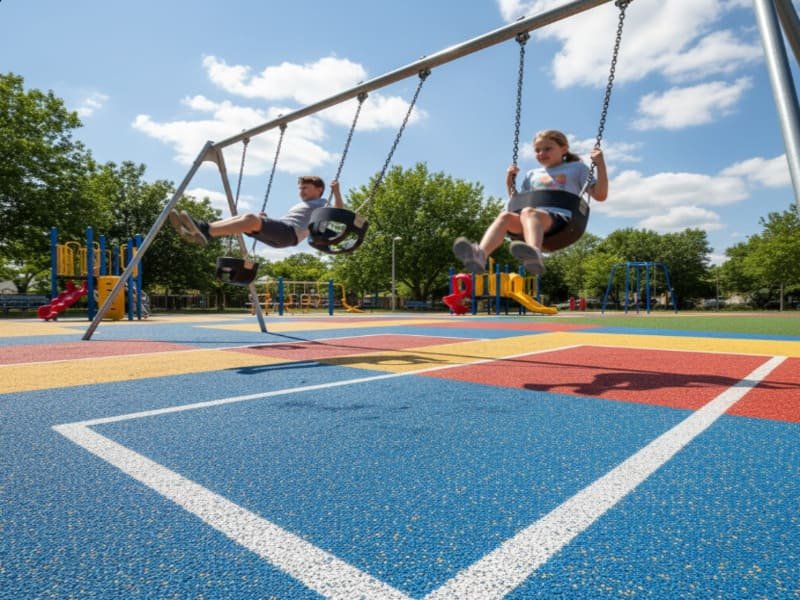
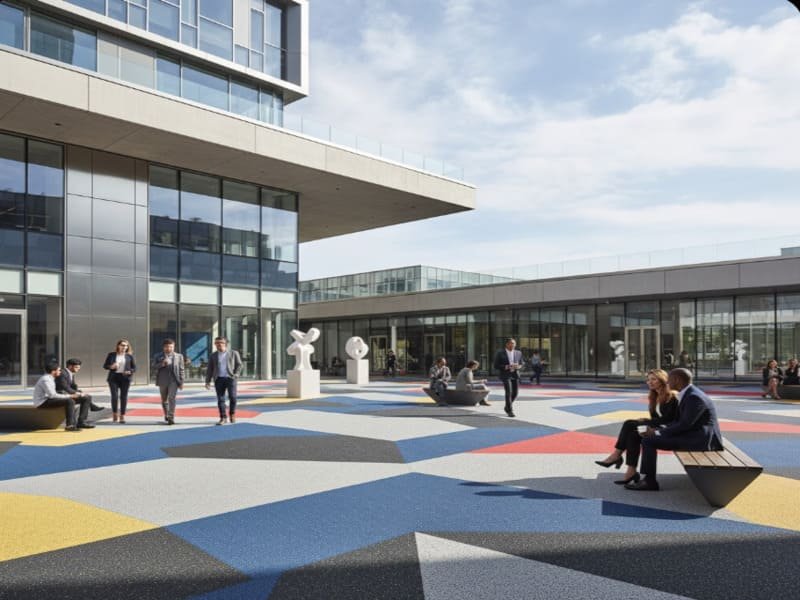
EPDM flooring is a seamless, wet-pour rubber system made from a recycled SBR cushion base and a colored EPDM top layer. It provides superior shock absorption, weather resistance, and unlimited design possibilities, making it the gold-standard solution for playgrounds, splash parks, running tracks, rooftop walkways, and commercial recreation areas.
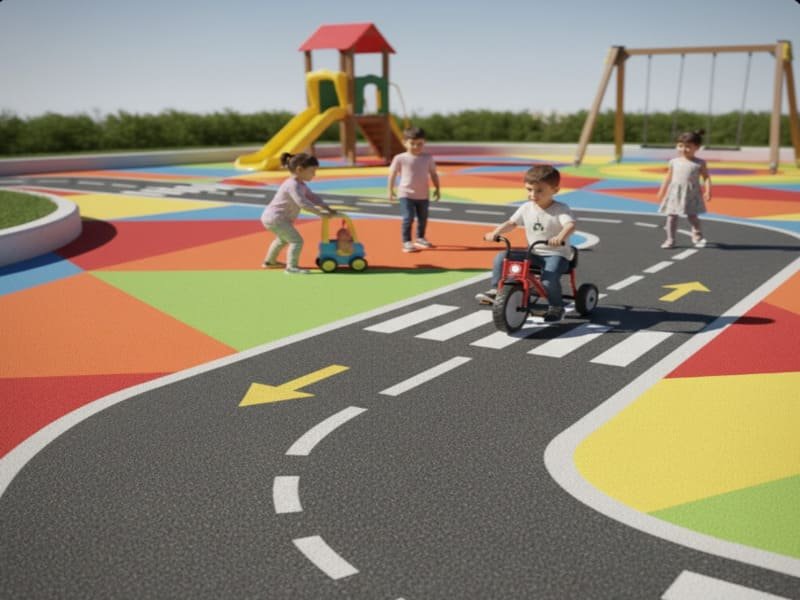
TL;DR (Quick Summary)
- Najlepsze dla: Playgrounds, sports areas, splash pads, gyms, pool decks
- Key Benefit: High Critical Fall Height (CFH) safety + seamless installation
- Main Drawback: Higher upfront cost; absorbs heat in direct sunlight
- Critical Decision: Wybierz Aliphatic binder to avoid yellowing
- Instalacja: Not DIY; must be installed by trained wet-pour professionals
Table of Contents
- Understanding the Wet Pour System
- Why Choose EPDM? (Benefits)
- Limitations & Disadvantages
- Where EPDM Is Best Applied
- Comparison With Other Flooring Types
- Binder Selection (Aromatic vs. Aliphatic)
- Proces instalacji
- Podział kosztów
- Podręcznik konserwacji
- Environmental & Safety Considerations
- Często zadawane pytania
- Wnioski
1. Understanding the Wet Pour System
Many clients confuse EPDM flooring with rubber tiles. In reality, EPDM is a two-layer engineered composite installed on-site and troweled by hand.
Two-Layer Structure
1. SBR Base Layer (Shock Absorption)
Made from recycled tire rubber. Thickness is engineered according to Krytyczna wysokość upadku (CFH) wymagania.
2. EPDM Top Layer (Protection + Color)
UV-resistant, durable colored granules bonded with PU binder.
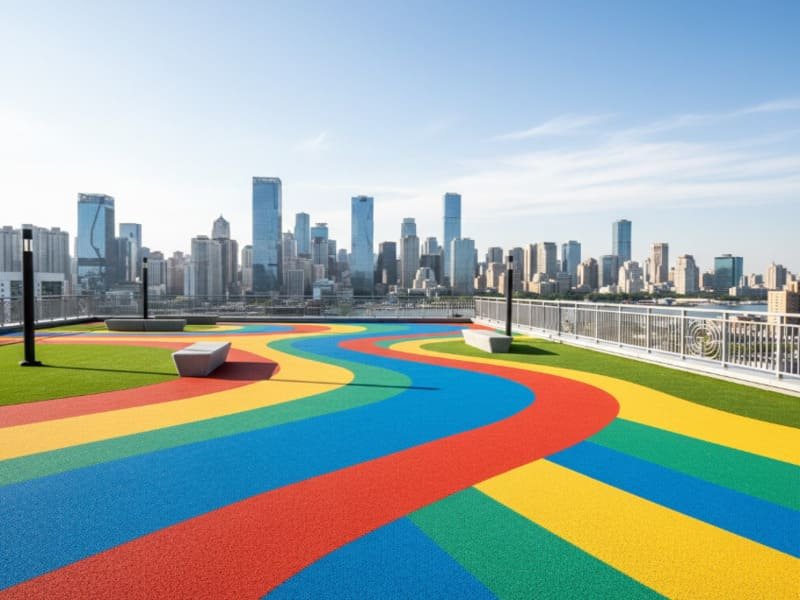
Wet-pour creates a monolithic, joint-free surface, eliminating trip hazards common in rubber tiles.
2. Why Choose EPDM? (Benefits)
Safety: Critical Fall Height (CFH)
EPDM significantly reduces head injury risks by absorbing kinetic energy.
Example: A 50mm SBR cushion under a 1.5m fall zone meets global safety standards.
Odporność na warunki atmosferyczne
EPDM is chemically stable:
- Does not crack in winter
- Does not soften in extreme heat
- Maintains elasticity under UV exposure
Slip Resistance + Drainage
The porous structure allows water to pass through, keeping surfaces drier and safer.
Komfort akustyczny
Ideal for gyms and walkways due to vibration and noise reduction.
3. The Honest Truth: Disadvantages
EPDM is excellent, but it’s not perfect.
- Higher upfront cost than loose fill or tiles
- Not DIY-friendly—requires skilled installers
- Dark colors get hot under direct sun
- Poor drainage preparation = potential bubbling
4. Where EPDM Works Best
- Playgrounds & Kindergartens
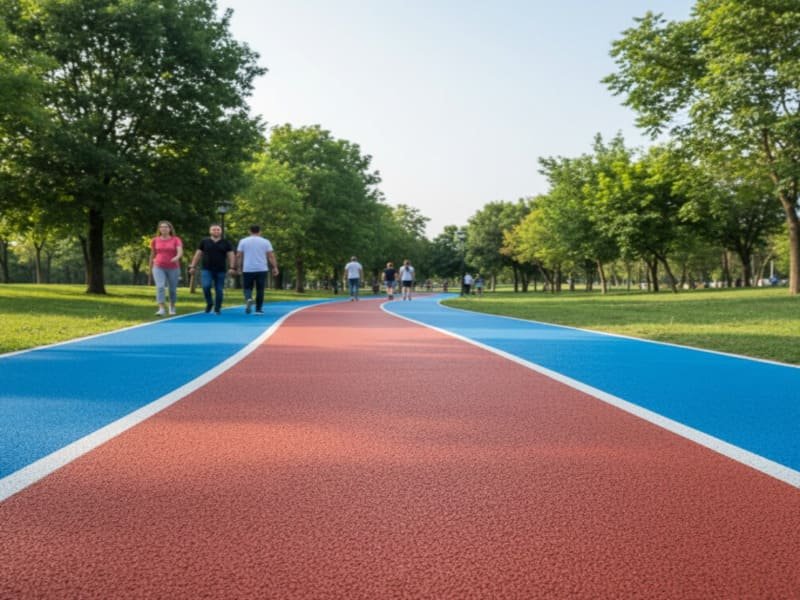
- Running Tracks & Multi-Sport Courts
- Pool Decks & Water Parks
- Commercial Walkways & Rooftops
- Indoor/Outdoor Gyms
5. EPDM vs. Tiles vs. PU vs. Acrylic
| Cecha | EPDM Wet Pour | Płytki gumowe | PU Sports Floor | Acrylic Court |
|---|---|---|---|---|
| Bezszwowy | Doskonały | Słaby | Doskonały | Doskonały |
| Absorpcja wstrząsów | Wysoki | Średni | Low–Medium | Niski |
| Personalizacja | Unlimited | Niski | Średni | Średni |
| Konserwacja | Niski | Średni | Niski | Niski |
| Long-Term Durability | Wysoki | Średni | Wysoki | Średni |
Rubber tiles often curl at edges, while acrylic courts have zero fall protection.
6. Binder Selection: The Critical Factor
Aromatic Binder (Budget)
- Strong bond
- Turns yellow under UV
- Only suitable for dark colors
Aliphatic Binder (Premium, UV Stable)
- No yellowing
- Essential for bright or light colors (blue, orange, grey, white)
7. Installation Process (Professional Only)
- Sub-base preparation (crushed stone or concrete)
- SBR base troweling to engineered depth
- EPDM top layer application using heated trowels
- Curing for 24–48 hours
Poor workmanship leads to granulation, bumps, and premature failure.
8. Cost Breakdown
Cost varies by:
- Required CFH thickness
- EPDM color selection
- Binder type (Aliphatic = premium)
- Project area size
Although CapEx is higher, OpEx is extremely low.
EPDM’s 10–15 year lifespan provides excellent long-term ROI.
9. Maintenance Guide
- Sweep or blow debris regularly
- Low-pressure wash as needed
- Remove gum via freezing
- Avoid solvents & metal scraping tools
- Repair vandalism cuts immediately
Think of EPDM as a weatherproof outdoor carpet.
10. Environmental & Safety Considerations
- EPDM granules certified to EN 71-3 (toy safety)
- SBR base uses recycled tires, reducing landfill waste
- Non-toxic when cured
- Choose light colors to reduce heat absorption
11. Frequently Asked Questions
Is EPDM waterproof?
No—it’s permeable by design to prevent puddles.
Jak długo to trwa?
10–15 years on average.
Can it be installed on concrete?
Yes, with proper priming and drainage slope.
Is it safe for children and pets?
Yes—non-toxic once cured.
What thickness do I need?
- Walkways: 15–20mm
- Tracks: 13–15mm
- Playgrounds: 20–100mm depending on fall height
Wnioski
EPDM flooring offers unmatched safety, durability, and design flexibility—making it the most reliable long-term surfacing choice for schools, sports facilities, and commercial outdoor spaces.
If you want a surface that meets safety compliance, lasts over a decade, and looks beautiful, EPDM is the engineered solution that checks every box.
Stop guessing. Choose a flooring system built on real engineering.
Contact our technical team for custom samples, material specifications, and free project consultation.