



Hospitals use vinyl flooring because it delivers seamless, non-porous surfaces that resist bacteria, withstand heavy rolling loads, and cost less to install and maintain than tile, terrazzo, or epoxy.
I’ve spent years working on the manufacturing and engineering side of vinyl flooring, supplying custom and bulk solutions to healthcare facilities across different climates and building codes. Healthcare flooring isn’t a small line item — it’s a multi-billion dollar category of decisions that directly affects patient outcomes, staff safety, and facility compliance. In this article, I’ll walk through the technical, safety, and cost reasons vinyl dominates hospital specifications, where it’s used (and where it isn’t), how it compares to alternatives, and how to choose the right type for a specific care environment.
Let’s start with the short answer, then get into the engineering behind it.
1. Quick Answer — The Top Reasons Hospitals Choose Vinyl Flooring
Hospitals choose vinyl flooring for infection control, seamless non-porous construction, load durability, slip resistance, low maintenance cost, and design flexibility.
From a manufacturing standpoint, these reasons aren’t marketing claims — they map directly to material properties I work with every day:
- Infection control / easy sanitation — non-porous PVC surface resists microbial growth
- Seamless, non-porous surface — heat-welded seams eliminate gaps
- Durability under heavy rolling loads — beds, carts, and wheelchairs don’t damage the wear layer
- Cost-effective vs. alternatives — lower material and labor cost than terrazzo or epoxy
- Odporność na poślizg — engineered surface texture meets ADA/ASTM friction standards
- Easy maintenance — no grout, no sealing, minimal chemical sensitivity
- Design versatility — printed and homogeneous options support wayfinding and branding
Each of these deserves a closer look, because the "why" behind them is what separates a good flooring spec from one that fails within a few years.
2. Infection Control & Hygiene
Vinyl flooring reduces infection risk because its non-porous, seamless surface leaves bacteria and moisture nowhere to hide.
2.1 Non-Porous, Seamless Surfaces
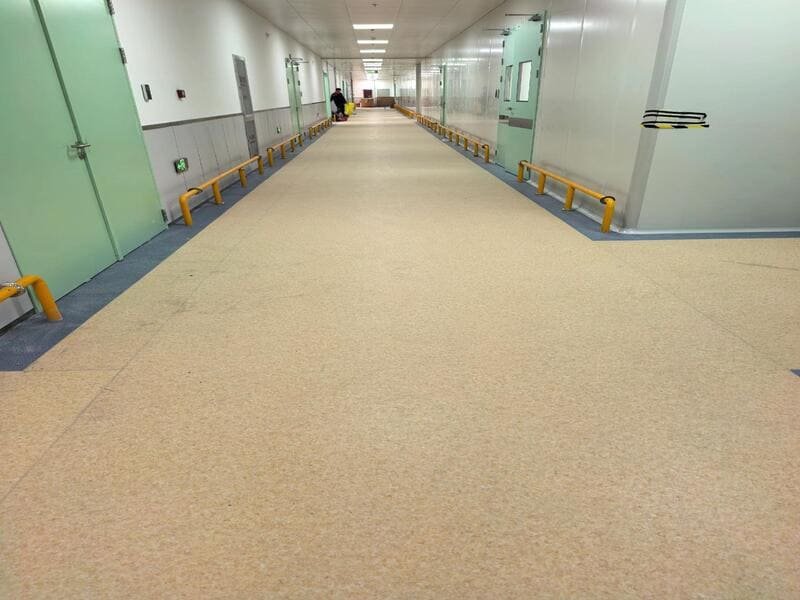
When we heat-weld vinyl sheet seams, we’re fusing the material at a molecular level using a vinyl weld rod melted into the seam groove. This creates a continuous, watertight surface with no gap for bacteria, blood, or fluids to penetrate. Compare that to ceramic or porcelain tile, where grout lines — even sealed ones — are porous and become long-term bacteria reservoirs. In clinical environments, grout degrades faster than the tile itself, and once it cracks or stains, it’s nearly impossible to fully sanitize.
This is one reason infection control teams push flooring decisions up to facility leadership rather than leaving them purely to design teams.
2.2 Resistance to Bacteria, Mold, and Pathogens (HAIs)
| Czynnik | Impact on HAI Risk |
|---|---|
| Non-porous PVC surface | Limits microbial colonization |
| Antimicrobial additives | Actively inhibit bacterial growth on contact |
| Seamless installation | Removes joints where pathogens accumulate |
Hospital-Acquired Infections (HAIs) remain one of the top patient safety concerns in any facility, and flooring is part of the broader surface-hygiene strategy alongside countertops and wall protection. Many manufacturers, including the products I’ve worked on, integrate antimicrobial additives directly into the vinyl compound during extrusion — not just as a surface coating that wears off.
2.3 Compatibility with Hospital-Grade Disinfectants
Hospitals don’t clean with mild soap — they use bleach solutions, quaternary ammonium compounds, and hydrogen peroxide-based disinfectants multiple times per day. A properly formulated hospital-grade vinyl wear layer is engineered to resist chemical degradation from these agents without discoloring, cracking, or losing its slip-resistant texture over years of aggressive cleaning cycles.
2.4 Coving (Wall-to-Floor Transition)
Integral cove base — where the sheet vinyl is turned up the wall 4–6 inches instead of meeting it at a 90-degree seam — eliminates the corner where dust, moisture, and bacteria typically collect. This detail alone is often required by code in operating rooms and sterile processing areas.
Infection control gets vinyl in the door, but it wouldn’t stay there without the durability to survive daily hospital operations.
3. Durability & Performance Under Hospital Conditions
Hospital vinyl flooring is engineered to withstand constant rolling loads, 24/7 foot traffic, and dropped equipment without cracking or delaminating.
3.1 Heavy Rolling Load Resistance
Hospital beds alone can weigh 400–600 lbs with a patient, and that weight moves on small, hard casters multiple times a day, alongside medical carts, IV poles, and wheelchairs. A well-engineered vinyl wear layer distributes this point-load pressure without denting or cracking, which is why backing layer construction matters as much as the surface layer.
3.2 High Foot Traffic Tolerance
Corridors in a busy hospital can see thousands of footsteps daily, around the clock. Homogeneous vinyl in particular is built to tolerate this because its color and pattern run through the full thickness — so even significant surface wear doesn’t expose a different-colored substrate.
3.3 Resistance to Impact and Dropped Equipment
Dropped trays, instruments, and equipment are inevitable. A quality wear layer resists indentation and cracking on impact — something rigid materials like ceramic tile can’t claim, since a hard impact on tile often results in cracked or chipped units requiring replacement.
3.4 Long Lifespan and Wear Layer Thickness
| Wear Layer Thickness (mil) | Typowe zastosowanie |
|---|---|
| 12–20 mil | Light-traffic admin areas |
| 20–28 mil | Patient rooms, corridors |
| 28+ mil | ORs, ERs, high-traffic zones |
Higher mil ratings correlate directly with longer service life under heavy use — this is one of the first specs I review when a facility asks for a durability recommendation, since undersizing wear layer thickness is the most common reason hospital flooring fails early.
Durability keeps the floor performing — but in a hospital, safety is non-negotiable, and that’s where vinyl earns its place in the most sensitive rooms.
4. Safety Considerations
Vinyl flooring supports hospital safety through engineered slip resistance, static control in ORs, cushioned comfort for staff, and sound dampening in patient areas.
4.1 Slip Resistance
Hospital vinyl is tested against ADA and ASTM wet and dry slip-coefficient standards. Surface texture is engineered — not accidental — using embossed or aggregate finishes that maintain traction even when floors are wet from cleaning or spills.
4.2 Static-Control (ESD) Vinyl Flooring for Operating Rooms
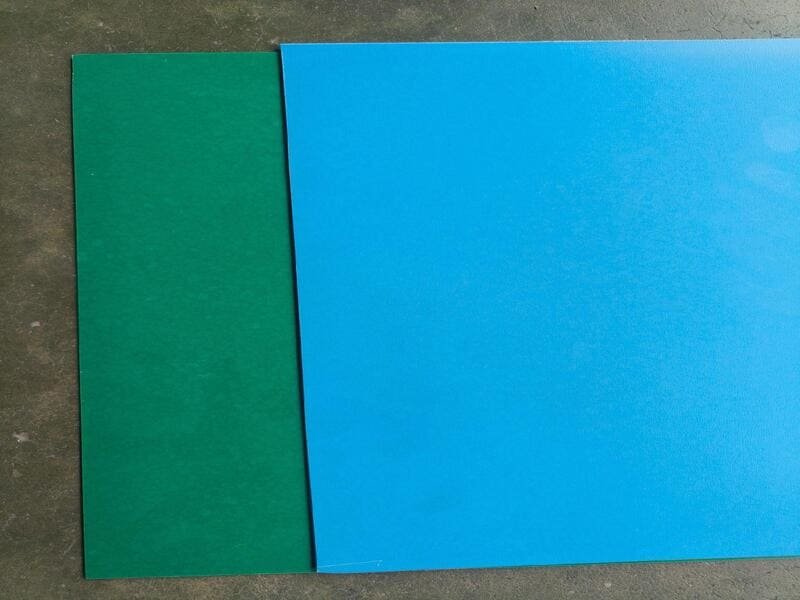
Operating rooms use oxygen and sensitive electronic equipment, where static discharge poses real risk. Static-dissipative (SD) and conductive vinyl formulations include conductive fillers that safely ground static charge, a critical safety layer that standard vinyl doesn’t provide.
4.3 Cushioned/Comfort Flooring for Staff
Nurses and surgeons can stand for 10–12+ hour shifts. Cushioned vinyl backing (often foam or fiberglass reinforced) reduces joint fatigue compared to rigid flooring — a factor increasingly requested by facilities focused on staff retention and workplace injury reduction.
4.4 Acoustic Properties
Cushioned vinyl construction also dampens footstep and equipment noise, contributing to quieter patient rooms and better rest — a factor tied to HCAHPS patient satisfaction scores in many U.S. facilities.
Safety earns vinyl its spec in sensitive rooms — but for facility managers, the budget conversation is just as important.
5. Cost-Effectiveness & Lifecycle Value
Vinyl flooring costs less upfront and over its lifecycle than terrazzo, epoxy, or natural stone, while requiring less installation downtime.
5.1 Lower Upfront Material & Installation Cost
Vinyl sheet and LVT installation is significantly less labor-intensive than terrazzo pours or epoxy resin systems, which require longer cure times and specialized crews.
5.2 Lower Long-Term Maintenance Costs
No grout sealing, no stripping and waxing required for most modern vinyl (with polyurethane-reinforced wear layers), and simpler daily cleaning protocols all reduce facilities’ labor costs over time.
5.3 Faster Installation = Less Facility Downtime
Active hospitals can’t shut down a wing for weeks. Vinyl installation timelines are typically measured in days, not weeks, minimizing disruption to patient care during renovations.
6. Types of Vinyl Flooring Used in Hospitals
Hospitals use homogeneous sheet vinyl, heterogeneous sheet vinyl, LVT/LVP, and static-dissipative vinyl, each matched to different traffic and risk zones.
6.1 Homogeneous Sheet Vinyl
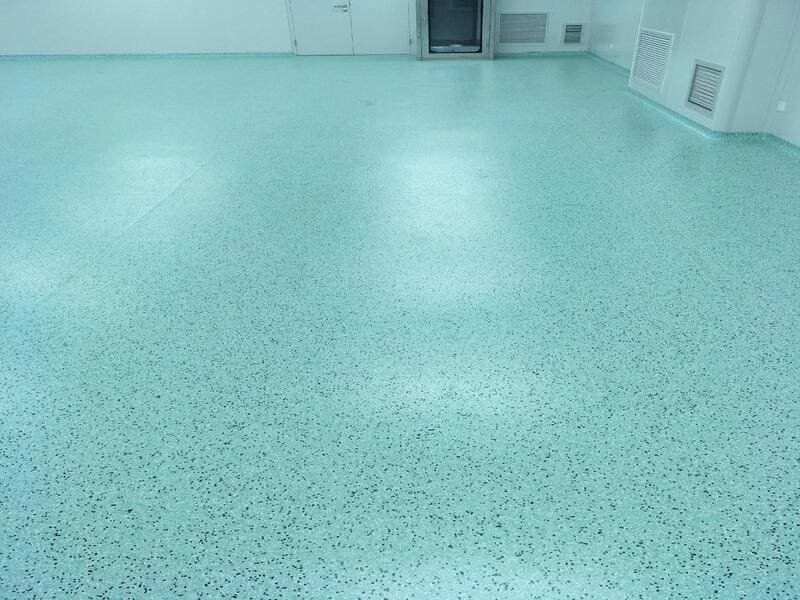
Color and pattern run through the entire thickness, so heavy wear doesn’t expose a different substrate underneath. This makes it the go-to choice for high-wear corridors and ORs.
6.2 Heterogeneous Sheet Vinyl
A printed design layer sits under a clear wear layer, offering more design flexibility (wood-look, stone-look patterns) — commonly used in patient rooms and lower-traffic clinical areas where aesthetics matter more.
6.3 Luxury Vinyl Tile (LVT) / Luxury Vinyl Plank (LVP)
| Strefa | Zalecane? |
|---|---|
| Offices, waiting rooms | Tak |
| Admin areas | Tak |
| Operating rooms | Nie |
| Labs | Nie |
LVT/LVP offer strong aesthetics but typically use seamed click-lock or glue-down installation rather than heat-welded seams, making them less suitable for zones requiring maximum infection control.
6.4 Static-Dissipative (SD) and Conductive Vinyl
Specialized for ORs, imaging rooms, and any electronics-sensitive environment where static discharge could interfere with equipment or ignite oxygen-rich air.
Matching the right vinyl type to the right room is where I spend most of my consulting time with facility teams — because a beautiful LVT in an OR is a compliance failure waiting to happen.
7. Where Vinyl Flooring Is Used in Hospitals (Area-by-Area Breakdown)
Vinyl flooring is used in patient rooms, ORs, corridors, labs, EDs, nurses’ stations, and waiting areas — but not in every space.
- Patient rooms — heterogeneous or homogeneous sheet vinyl, cushioned backing for comfort
- Operating rooms — static-dissipative homogeneous vinyl with integral coving
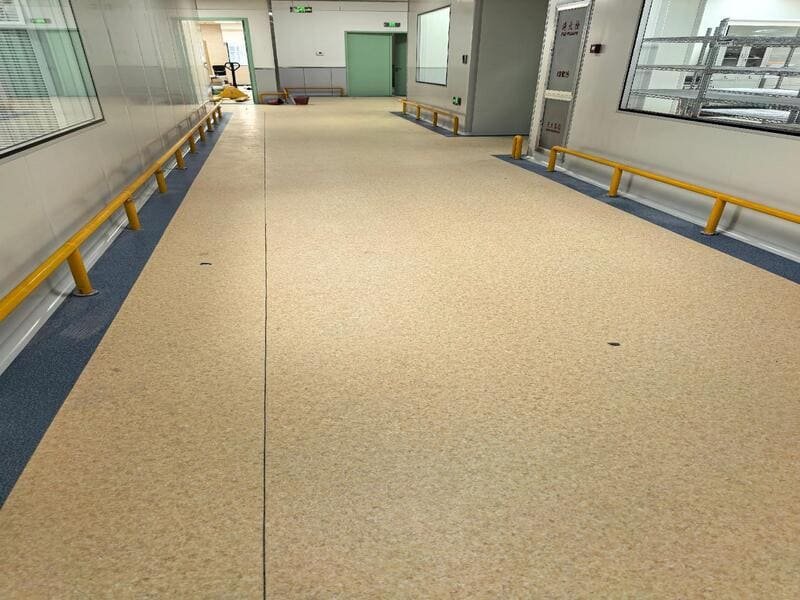
- Corridors & hallways — high-mil homogeneous vinyl for rolling load durability
- Laboratories — chemical-resistant homogeneous vinyl
- Emergency departments — heavy-duty, high-slip-resistance vinyl
- Nurses’ stations — LVT or heterogeneous vinyl acceptable
- Waiting/reception areas — LVT/LVP for aesthetics
- Cafeterias & kitchens — often require slip-rated, grease-resistant flooring (sometimes vinyl, sometimes quarry tile)
- Niezalecane: sterile processing/decontamination rooms with heavy chemical exposure sometimes favor epoxy instead
Understanding where vinyl fits — and where it doesn’t — sets up the natural next question: how does it actually stack up against the alternatives?
8. Vinyl Flooring vs. Other Hospital Flooring Options
Vinyl generally outperforms tile, carpet, and epoxy on install speed and hygiene, while terrazzo wins on lifespan and epoxy wins on chemical resistance.
8.1 Vinyl vs. Ceramic/Porcelain Tile
Vinyl wins on seamless hygiene and installation speed; tile wins on scratch resistance in select high-abrasion zones.
8.2 Vinyl vs. Epoxy/Resinous Flooring
Epoxy offers superior chemical resistance for labs, but requires longer cure time and is harder to repair in sections; vinyl is faster to install and easier to patch.
8.3 Vinyl vs. Rubber Flooring
Rubber offers excellent cushioning and slip resistance but at a higher material cost and sometimes strong odor during installation.
8.4 Vinyl vs. Terrazzo
Terrazzo lasts significantly longer (40+ years) but at a much higher upfront cost and longer installation timeline — often reserved for lobbies and high-visibility areas.
8.5 Vinyl vs. Carpet
| Czynnik | Winyl | Dywan |
|---|---|---|
| Higiena | Wysoki | Low (traps allergens/fluids) |
| Koszt | Niski-średni | Low upfront, high replacement |
| Trwałość | Wysoki | Niski-średni |
| Komfort | Medium (cushioned options) | Wysoki |
| Czas instalacji | Szybko | Szybko |
| Hałas | Low (cushioned) | Niski |
| Estetyka | Wysoki | Wysoki |
Beyond performance and cost, hospital flooring decisions also have to satisfy a strict web of regulatory requirements.
9. Regulatory Standards & Compliance
Hospital vinyl flooring must meet ASTM slip and wear standards, NFPA flame-spread ratings, FGI guidelines, and ADA slip-resistance requirements.
9.1 Relevant Standards (ASTM, NFPA, FGI Guidelines, ADA)
Facility and Guidelines Institute (FGI) guidelines are the most commonly referenced standard for U.S. healthcare flooring specification, alongside ASTM wear and slip testing and ADA accessibility requirements.
9.2 Fire Safety and Flame-Spread Ratings
NFPA 101 and related flame-spread classifications determine which vinyl products are approved for use in specific occupancy types within a hospital.
9.3 Indoor Air Quality Certifications (FloorScore, GREENGUARD)
FloorScore and GREENGUARD certifications confirm low-VOC emissions, which matter for immunocompromised patients and air quality-sensitive environments like NICUs.
9.4 Joint Commission / Accreditation Considerations
Flooring condition and cleanability are part of what accreditation surveyors assess during facility inspections — damaged or non-compliant flooring can become a citation during a Joint Commission survey.
Meeting these standards addresses compliance, but I also get asked honest questions about vinyl’s downsides — so let’s address those directly.
10. Addressing Common Concerns & Criticisms
Vinyl flooring has valid environmental and durability limitations, but low-VOC formulations and proper specification address most concerns.
10.1 Is Vinyl Flooring Environmentally Friendly?
PVC production and end-of-life recyclability remain legitimate industry debates, and phthalate plasticizers have drawn scrutiny in some vinyl formulations. Many manufacturers now offer phthalate-free, low-VOC vinyl lines specifically to address these concerns for healthcare buyers focused on sustainability.
10.2 Does Vinyl Flooring Really Reduce Infections? (Evidence-Based Look)
Vinyl’s non-porous, seamless properties are well-documented to limit surface bacterial harboring compared to grouted tile, though flooring alone doesn’t eliminate HAI risk — it’s one layer within a broader infection control protocol including hand hygiene and surface disinfection routines.
10.3 How Long Does Hospital Vinyl Flooring Actually Last?
Properly specified and maintained hospital vinyl typically lasts 10–20 years, depending on wear layer thickness and traffic level.
10.4 Can Vinyl Flooring Get Damaged by Hospital Equipment?
Extreme point loads — like a heavy cart pivoting sharply on a small caster — can indent or tear lower-mil vinyl. This is why wear layer selection by zone traffic level matters so much.
10.5 Vinyl Flooring and Odor/Chemical Sensitivity Concerns
New vinyl installations can off-gas VOCs briefly after installation; low-VOC, FloorScore-certified products significantly reduce this for chemically sensitive patients and staff.
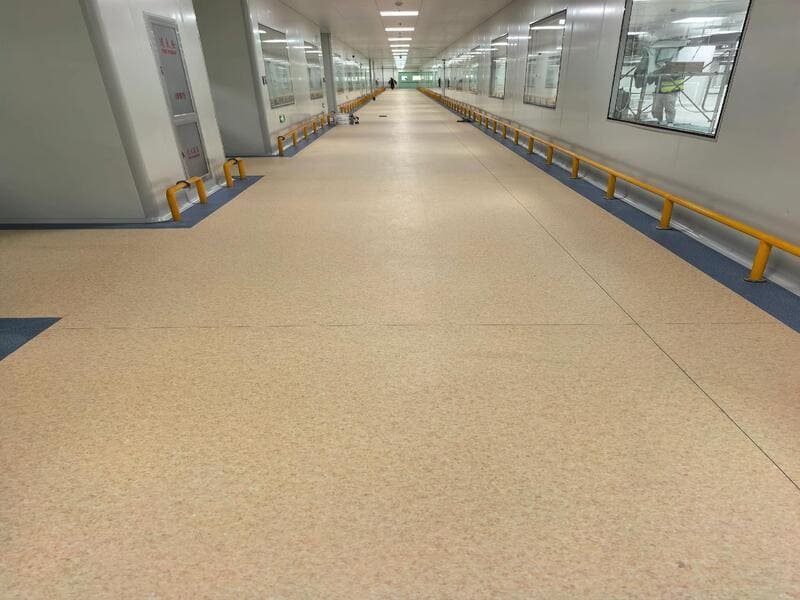
Choosing the right product only pays off if it’s installed and maintained correctly — which brings us to best practices.
11. Installation & Maintenance Best Practices
Proper hospital vinyl installation requires precise subfloor prep, heat-welded seams, and disciplined cleaning protocols to protect its lifespan.
11.1 Subfloor Preparation Requirements
Moisture testing and leveling the subfloor are critical — trapped moisture under vinyl can cause bubbling, adhesive failure, or mold growth beneath the surface.
11.2 Heat-Welding Seams — Why It Matters
Heat-welding fuses seams into a single continuous surface, which is the single biggest factor separating hospital-grade installation from residential-grade vinyl work.
11.3 Daily/Weekly/Monthly Cleaning Protocols
Daily damp mopping with approved disinfectants, weekly deep cleaning of high-traffic zones, and periodic inspection of seams and coving keep the floor performing as designed.
11.4 Recommended Cleaning Products (What to Avoid)
Avoid abrasive scrubbing pads and solvent-based strippers not rated for the specific wear layer, as these can degrade the surface prematurely and void manufacturer warranties.
11.5 Signs It’s Time to Replace Hospital Vinyl Flooring
Persistent seam separation, worn-through wear layer exposing substrate color, and recurring adhesive failure are the clearest signs a section needs replacement.
12. How to Choose the Right Vinyl Flooring for a Healthcare Facility
Choosing hospital vinyl flooring depends on the zone, traffic level, static control needs, budget, and installation timeline.
Checklist I walk facility teams through:
- Area/zone — OR vs. hallway vs. office each need different specs
- Traffic level — determines required wear layer mil thickness
- Budżet — upfront vs. lifecycle cost tradeoffs
- Static control needs — required in ORs and imaging suites
- Aesthetic/branding requirements — patient-facing areas often prioritize design
- Installation timeline constraints — active facilities need fast-cure, low-disruption products
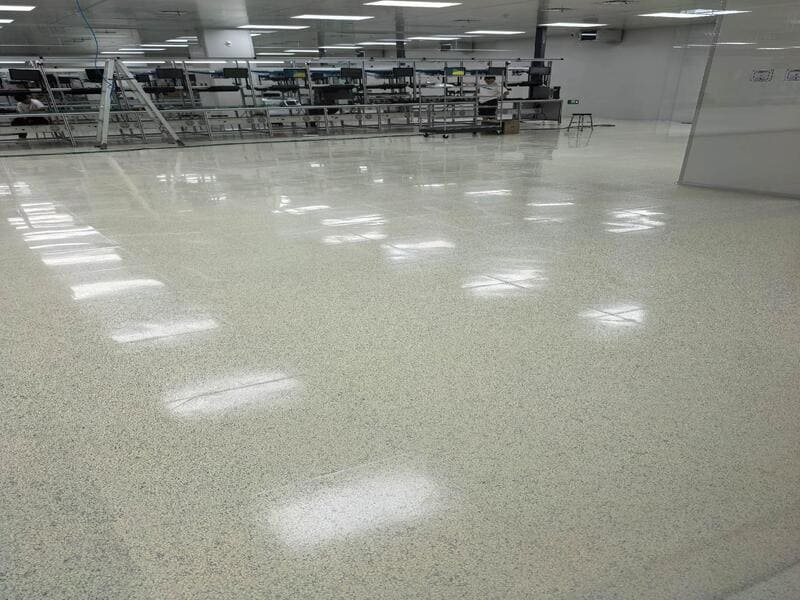
Getting this checklist right upfront avoids costly re-specification down the line — something I’ve seen play out in real renovation projects.
13. Real-World Examples
Hospitals that switch to hospital-grade vinyl frequently report lower cleaning labor time, fewer flooring-related maintenance calls, and improved corridor slip-safety scores.
While specific facility case studies vary by manufacturer and region, the consistent pattern across renovation projects I’ve supported is a measurable drop in flooring-related maintenance tickets and improved staff feedback on comfort in cushioned-vinyl patient care areas within the first year post-installation.
14. Frequently Asked Questions
Is vinyl flooring better than tile for hospitals?
Vinyl is generally preferred over tile for clinical areas because its seamless surface eliminates grout lines that harbor bacteria, though tile can still suit some low-risk decorative zones.
How much does hospital-grade vinyl flooring cost per square foot?
Costs vary by product type and region, but hospital-grade vinyl is typically less expensive per square foot than epoxy, terrazzo, or natural stone installations.
Is vinyl flooring waterproof?
Sheet vinyl with heat-welded seams is effectively waterproof at the surface level when properly installed over a prepared subfloor.
How often should hospital vinyl flooring be replaced?
Most hospital vinyl lasts 10–20 years depending on wear layer thickness, traffic level, and maintenance quality.
What is the difference between LVT and sheet vinyl for medical use?
LVT offers stronger design aesthetics but has seams that aren’t heat-welded, making full sheet vinyl the preferred choice for high-infection-risk zones like ORs.
Is vinyl flooring safe for operating rooms?
Yes, when specified as static-dissipative or conductive vinyl designed to safely ground static discharge near oxygen and electronic equipment.
Can vinyl flooring cause allergies or health issues?
Low-VOC, FloorScore or GREENGUARD-certified vinyl minimizes off-gassing concerns, though sensitive individuals should confirm certification before installation.
15. Conclusion
Vinyl flooring remains the dominant hospital choice because it balances hygiene, durability, safety, and cost better than most alternatives — though it isn’t the only right answer for every zone.
If you’re evaluating flooring options for a healthcare facility, patient room, or specialized clinical zone, send me a message — I’m happy to walk through your project’s traffic levels, compliance requirements, and budget to help you land on the right vinyl specification for your space.