


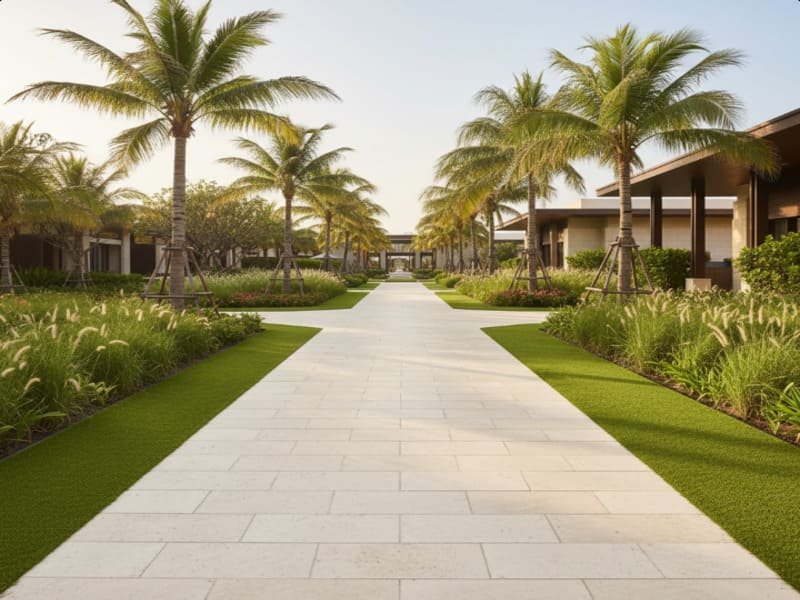
Aby wybrać najlepszą podłogę zewnętrzną dla klimatu Dubaju, należy preferować materiały o wysokiej bezwładności cieplnej i odporności na promieniowanie UV, takie jak jasny trawertyn lub kostka brukowa R11 20 mm. Unikaj ciemnych kompozytów i standardowego gęstego betonu, które pochłaniają ciepło; zamiast tego wybierz porowate lub odblaskowe powierzchnie, po których można chodzić w szczytowych letnich temperaturach.
Deep Dive: Zrozumienie dynamiki termicznej podłóg
Wybór podłogi do Dubaju to nie tylko wybór koloru; to fundamentalne wyzwanie inżynieryjne obejmujące przewodność cieplna oraz pojemność cieplna właściwa. Jako producent widzę, że wielu właścicieli domów ponosi porażkę, ponieważ wybierają materiały w oparciu o estetykę salonu, a nie wydajność w bezpośrednim świetle słonecznym o temperaturze 45°C+. Standard "DubaiProof" wymaga, aby materiał był nie tylko odporny na degradację UV (blaknięcie), ale także radził sobie z absorpcją ciepła.
Na przykład gęste materiały, takie jak standardowy ciemny granit lub kompozyty o standardowej gęstości, działają jak "pochłaniacze ciepła", magazynując energię słoneczną i wypromieniowując ją z powrotem, sprawiając, że patio staje się bezużyteczne do późnych godzin wieczornych. I odwrotnie, Trawertyn (w szczególności typ osadowy utworzony przez źródła mineralne) ma naturalnie porowatą strukturę. Te mikroskopijne puste przestrzenie działają jak naturalne izolatory, zakłócając przenoszenie ciepła na powierzchnię. Podobnie, nowoczesne Porcelana 20 mm do zastosowań zewnętrznych została zaprojektowana z wykorzystaniem specjalnych technik szklenia, które odbijają promieniowanie IR (podczerwone). Kiedy projektujemy linie produkcyjne dla kompozytów "cool-touch", wytłaczamy specjalną warstwę wierzchnią zawierającą odblaskowe pigmenty wyłącznie w celu zwalczania gromadzenia się ciepła. Dlatego też matryca decyzyjna musi uwzględniać Temperatura powierzchni vs. Konserwacja vs. Estetyka.

Wybór odpowiedniego materiału to pierwszy krok, ale zrozumienie dlaczego niektórych materiałów na Bliskim Wschodzie wymaga przyjrzenia się konkretnym kryteriom, które definiują trwałość w środowisku pustynnym.
Jakie są krytyczne kryteria dla podłóg "odpornych na Dubaj"?
Trzy niepodlegające negocjacjom kryteria dla podłóg zewnętrznych w Dubaju to odporność na ciepło (niska retencja ciepła), stabilność UV (odporność na fotodegradację) i odporność na ścieranie (odporność na burze piaskowe). Materiały muszą przejść "test bosych stóp", a jednocześnie być odporne na korozyjne działanie wilgotności wybrzeża i ściernego pyłu pustynnego.
Deep Dive: Inżynieria dla żywiołów
Kiedy definiujemy specyfikacje techniczne dla materiałów zewnętrznych przeznaczonych dla Zjednoczonych Emiratów Arabskich, zwracamy uwagę na trzy konkretne punkty awarii. Pierwszy z nich to Stabilność UV. Wskaźnik nasłonecznienia w Dubaju jest ekstremalny. Standardowe polimery w taniej sztucznej trawie lub niskiej jakości kompozytach ulegną zniszczeniu. fotoutlenianiepowodując rozpad łańcuchów molekularnych, co skutkuje kredowaniem i kruchością w ciągu 12 miesięcy. Aby temu zapobiec, w naszych zaawansowanych technologicznie produktach stosujemy stabilizatory światła z aminami halogenowymi (HALS).
Drugi to Odporność na wilgoć i poślizg. Pomimo pustynnych upałów, w Dubaju panuje wysoka wilgotność powietrza. Podłogi wokół basenów muszą spełniać minimalne wymagania Ocena poślizgu R11 lub R12 (norma DIN 51130), aby zapewnić bezpieczeństwo na mokrej nawierzchni. Wreszcie, jest Odporność na ścieranie. A Shamal (burza piaskowa) działa jak papier ścierny. Miękkie kamienie lub niskiej jakości błyszczące wykończenia zostaną bardzo szybko zmatowione.
| Kryteria | Wymagania techniczne | Dlaczego ma to znaczenie w Dubaju |
|---|---|---|
| Przewodność cieplna | Niski (porowaty lub odblaskowy) | Określa, czy można chodzić boso w lipcu. |
| Odporność na promieniowanie UV | Testy łuku ksenonowego > 3000 godzin | Zapobiega blaknięciu koloru i pękaniu strukturalnemu. |
| Absorpcja wody | < 0,5% (dla płytek) | Zapobiega krystalizacji soli i pękaniu pod wpływem wilgoci. |
| Klasa ścieralności | PEI IV lub V | Odporny na zarysowania przez piasek nawiewany przez wiatr. |

Teraz, gdy ustaliliśmy kryteria inżynieryjne, przeanalizujmy konkretne materiały, które dominują na rynku i jak wypadają w porównaniu z tymi rygorystycznymi standardami.
Które materiały najlepiej sprawdzają się w klimacie Dubaju?
Najlepsi rywale to kamień naturalny (trawertyn/piaskowiec) zapewniający chłód, porcelana zewnętrzna zapewniająca niskie koszty utrzymania oraz wysokiej klasy WPC zapewniający estetykę drewna. Każdy z nich ma określone kompromisy: Kamień wymaga uszczelnienia, porcelana może być gorąca w ciemnych kolorach, a WPC oferuje bezpieczeństwo, ale wymaga zarządzania termicznego.
Szczegółowa analiza: Wiedza o materiałach i produkcji
Przeanalizujmy najlepsze opcje z perspektywy produkcji i inżynierii.
1. Kamień naturalny (trawertyn): Jest to złoty standard komfortu cieplnego. Jako materiał geologiczny, jego kalcytowa struktura i naturalna porowatość pozwalają na efektywne rozpraszanie ciepła. Wgląd w produkcję: Zalecamy wykończenia "honed and filled" lub "tumbled". Polerowany kamień jest niebezpieczny na zewnątrz ze względu na ryzyko poślizgnięcia. Wadą jest jego porowatość; wymaga wysokiej jakości uszczelniacza penetrującego, aby zapobiec plamom z tłuszczu z grilla lub czerwonego wina.
2. Porcelana 20 mm do zastosowań zewnętrznych: Są to rektyfikowane, monolityczne płyty wypalane w temperaturze 1200°C. Są one praktycznie nieprzepuszczalne (absorpcja wody <0,1%). Korzyści inżynieryjne: Ponieważ są drukowane cyfrowo, możemy odtworzyć wygląd drewna lub kamienia bez słabości materiału. Są praktycznie niezniszczalne w kontakcie z piaskiem i słońcem. musi wybieraj jasne kolory (kremowy, jasnoszary), aby zminimalizować absorpcję ciepła.
3. Deski tarasowe kompozytowe (WPC): Nie wszystkie kompozyty są sobie równe. W przypadku Dubaju potrzebna jest technologia "Capped" - współwytłaczana twarda plastikowa powłoka otaczająca rdzeń. Powłoka ta zawiera inhibitory UV i jest odporna na zarysowania. Ostrzeżenie: Standardowe "nieobudowane" deski WPC będą blaknąć i plamić się. Nawet w przypadku wysokiej klasy marek, WPC będzie cieplejsze niż kamień, dlatego często projektujemy profile z pustym rdzeniem, aby umożliwić cyrkulację powietrza i chłodzenie wewnątrz samej deski.
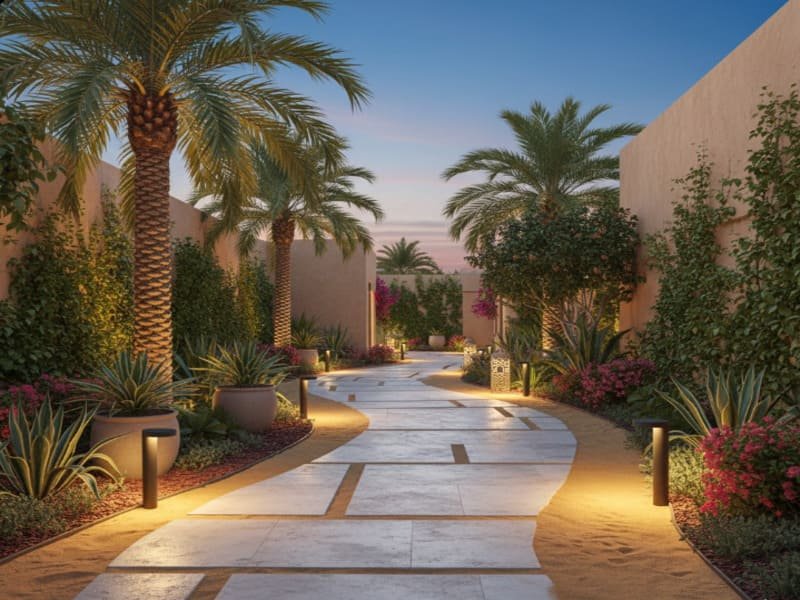
Chociaż specyfikacje techniczne są ważne, prawdziwym testem dla każdego właściciela domu jest prosta użyteczność. Jak wypadają te materiały w bezpośrednim kontakcie z południowym słońcem?
Jak różne materiały wypadają w "teście bosej stopy"?
W "teście bosych stóp", jasny trawertyn konsekwentnie osiąga najlepsze wyniki, pozostając zdatnym do chodzenia nawet w południe. Jasna porcelana i beton plasują się na kolejnych miejscach, podczas gdy standardowe deski kompozytowe i sztuczna trawa mogą stać się niebezpiecznie gorące, często przekraczając 55°C bez cienia lub chłodzenia wodą.
Głębokie zanurzenie: Rankingi temperatury powierzchni
Przeprowadziliśmy testy terenowe mierzące temperaturę powierzchni różnych materiałów wystawionych na identyczne obciążenia słoneczne. Wyniki mają kluczowe znaczenie dla bezpieczeństwa, zwłaszcza dla rodzin z dziećmi lub zwierzętami.
- Jasny trawertyn/kamień wapienny (najfajniejszy): Utrzymywała się na poziomie 38-42°C, gdy temperatura powietrza wynosiła 40°C. Jasny kolor odbija światło widzialne, a masa termiczna rozprasza energię.
- Jasna porcelana/beton: Zakres od 42-48°C. Można chodzić przez krótki czas, ale może to być niewygodne.
- Ciemna porcelana/kamień: Podwyższona temperatura do 55°C+. Nie używaj ciemnego łupka lub czarnego granitu w odkrytych obszarach.
- Sztuczna trawa: Co zaskakujące, jest to często najgorętsza temperatura, osiągająca ponad 60°C. Plastikowe ostrza zatrzymują ciepło i nie mają masy termicznej, która buforowałaby zmiany temperatury. Przed użyciem należy spłukać je wodą.
- Standardowy kompozyt: Ciemne deski tarasowe z tworzywa sztucznego mogą powodować oparzenia (65°C+).
Moja profesjonalna rekomendacja: Jeśli uwielbiasz wygląd trawy lub drewna, ale nie znosisz ciepła, użyj Konstrukcja hybrydowa. Użyj kostki brukowej Travertine do głównych ścieżek spacerowych i krawędzi basenu (gdzie stopy są odsłonięte) i użyj sztucznej trawy lub desek kompozytowych do estetycznych wstawek lub wizualnych granic, gdzie bezpośredni ruch pieszy jest rzadszy.
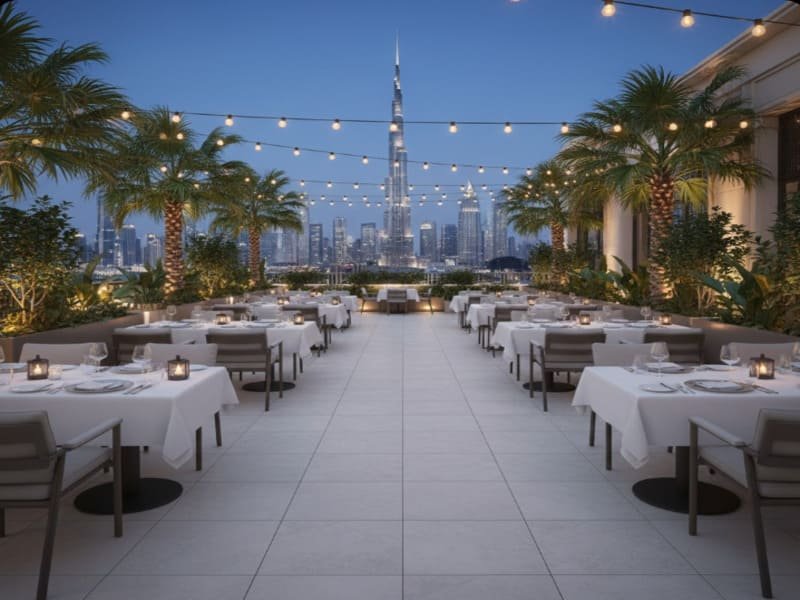
Teraz, gdy wiemy już, które materiały pozostają chłodne, zastosujmy tę wiedzę w konkretnych strefach domu, aby zmaksymalizować użyteczność i komfort.
Jaka jest najlepsza podłoga dla określonych obszarów willi?
Dopasuj materiał do funkcji: użyj trawertynu Cool-Touch na pokłady basenowe, aby chronić gołe stopy, odpornej na plamy porcelany na miejsca do grillowania, aby walczyć z tłuszczem, i lekkiego kompozytu Capped na balkony. Sztuczna trawa jest idealna do stref zabaw, ale wymaga cienia.
Głębokie zanurzenie: Zalecenia dla poszczególnych stref
Jako wykonawca nie sprzedaję tylko jednego materiału; projektuję strefy. Każdy obszar willi w Dubaju jest narażony na unikalne czynniki stresu, od wycieków tłuszczu po ryzyko poślizgnięcia. Oto zestawienie optymalizacji układu:
- Pokład basenu: Jasny trawertyn (wykończenie bębnowe)
Dlaczego: Jest to najchłodniejszy materiał pod stopami, niezbędny dla bezpieczeństwa bosych stóp. Porowata natura natychmiast wchłania rozpryski wody, zapobiegając powstawaniu kałuż, a bębnowe wykończenie zapewnia naturalną przyczepność bez ścierania. - Grill i jadalnia: R11 Outdoor Porcelain
Dlaczego: Odporność na tłuszcz. Jeśli upuścisz kotlet jagnięcy na kamień naturalny, olej wniknie głęboko. Porcelana jest nieporowata; olej osiada na wierzchu i ściera się mydłem. To jedyny higieniczny wybór dla stref z żywnością. - Balkony i tarasy: Deski kompozytowe (WPC)
Dlaczego: Waga i ciepło. Płyty WPC są znacznie lżejsze niż płyty kamienne, co ma znaczenie dla obciążenia strukturalnego na wyższych piętrach. Zapewnia również bardziej miękki, "salonowy" charakter, który łączy przestrzenie wewnętrzne i zewnętrzne. - Ścieżki ogrodowe: Jasny kamień naturalny lub kostka brukowa
Dlaczego: Trwałość. Ścieżki wytrzymują duże ścieranie przez piaszczyste buty. Jasny kamień ukrywa kurz lepiej niż ciemne materiały i jest odporny na zużycie. - Plac zabaw dla dzieci: Sztuczna trawa (z cieniem)
Dlaczego: Bezpieczeństwo przed uderzeniami. Zapewnia miękką amortyzację podczas upadków. Uwaga krytyczna: To musi można zainstalować pod pergolą lub żaglem zacieniającym. Bez cienia plastikowe ostrza będą zbyt gorące, aby dzieci mogły się na nich bawić w ciągu dnia.
Wybór odpowiedniego materiału dla właściwej strefy rozwiązuje 80% problemy, ale trudne pustynne środowisko wymaga specjalnych technik instalacji, aby zapobiec awariom w czasie.
Jakie są krytyczne zasady instalacji i konserwacji?
Należy zainstalować złącza kompensacyjne, aby poradzić sobie z rozszerzalnością cieplną, zapewnić odpowiednie nachylenie w celu odprowadzenia pyłu i użyć specjalnych klipsów montażowych do WPC. Konserwacja obejmuje regularne usuwanie piasku ściernego i coroczne ponowne uszczelnianie kamienia naturalnego w celu utrzymania jego "chłodnych" właściwości.
Deep Dive: Zapobieganie awariom strukturalnym
Z moich wieloletnich konsultacji dotyczących awarii na budowach wynika, że 90% pękniętych płytek w Dubaju nie jest spowodowanych złymi płytkami, ale złymi Złącza kompensacyjne. Różnica temperatur (Delta T) między dniem a nocą na pustyni powoduje, że materiały znacznie się rozszerzają i kurczą.
- Dla płytek/kamienia: Nie można łączyć materiałów na styk. Potrzebna jest 3-4-milimetrowa linia fugi i elastyczna szczelina dylatacyjna co 4-5 metrów. W przeciwnym razie ciśnienie będzie rosnąć, a płytki będą "namiotować" lub odskakiwać od podłoża.
- Dla kompozytów: Plastik rozszerza się bardziej niż kamień. Zaprojektowaliśmy specjalne "ukryte elementy mocujące", które pozwalają deskom przesuwać się w przód i w tył, gdy się nagrzewają. Jeśli płyta zostanie przykręcona na wylot, wypaczy się.
- Kwestia piasku: Drobny pył pustynny działa jak materiał ścierny. Podczas konserwacji nigdy nie wycieraj na sucho zakurzonej porcelany lub błyszczącej powierzchni; oznacza to w zasadzie szlifowanie podłogi. Pył należy zawsze najpierw zmyć wodą, a następnie wyczyścić. W celu odwodnienia zalecamy nachylenie od 1,5% do 2%, aby zapewnić, że po zmyciu piasku woda (i błoto) szybko spłynie, a nie osadzi się i odparuje, pozostawiając osady soli.
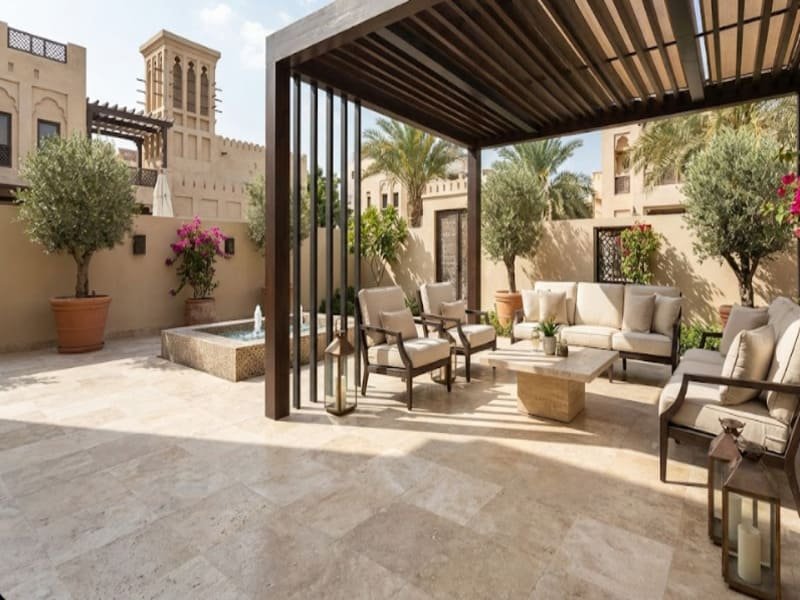
Zrozumienie technicznych wymagań instalacyjnych prowadzi nas do ostatecznej kwestii praktycznej: Ile należy przeznaczyć na projekt spełniający te wysokie standardy?
Jaki budżet należy przeznaczyć na podłogi zewnętrzne w Dubaju?
Budżetowanie podłóg zewnętrznych w Dubaju wymaga uwzględnienia zarówno materiałów, jak i wysokiej jakości instalacji. Ceny wahają się od 100 AED/mkw. za podstawowy beton do ponad 400 AED/mkw. za wysokiej jakości trawertyn lub wysokiej klasy kompozyt. Nigdy nie należy iść na kompromis w kwestii materiałów montażowych (kleje/ fugi), ponieważ to one decydują o długowieczności.
Dogłębna analiza: Analiza kosztów i korzyści
Jako znawca branży mogę powiedzieć, gdzie naprawdę leżą koszty.
- Niski zakres (80-150 AED/m2): Wytłaczany beton lub podstawowa ceramika. Ryzyko: Wysokie prawdopodobieństwo pękania i zatrzymywania ciepła.
- Średni zakres (150-300 AED/m2): Wysokiej jakości sztuczna trawa, standardowa porcelana 20 mm lub lokalny kamień naturalny. Jest to najlepsze rozwiązanie dla większości willi.
- High Range (AED 350+ za m2): Wysokiej jakości importowany trawertyn (turecki/włoski), wysokiej klasy kompozyt (marki amerykańskie) lub wielkoformatowe płyty porcelanowe.
Gdzie wydawać, a gdzie oszczędzać?
Do nie zaoszczędzić pieniądze na kleju lub przygotowaniu podłoża. Użycie taniego kleju do wnętrz na tarasie basenu zewnętrznego to gwarancja niepowodzenia. Wydać dodatkowe pieniądze na Elastyczny klej klasy S2 i fuga odporna na promieniowanie UV. Ty puszka zaoszczędzić pieniądze, wybierając standardowy format (np. płytki 60x60 cm) zamiast niestandardowych płyt wielkoformatowych, które wymagają specjalistycznej pracy i obsługi.
Wnioski
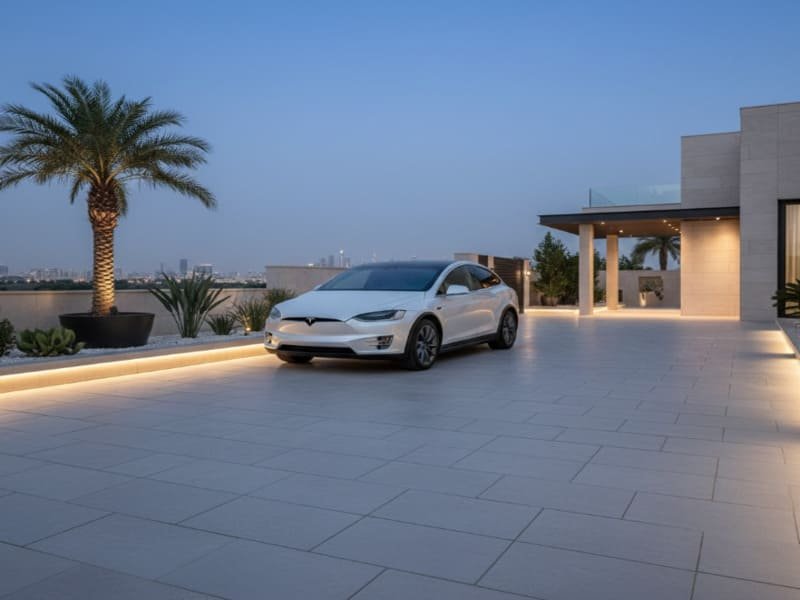
Podsumowując, najlepsze podłogi zewnętrzne dla Dubaju to Jasny trawertyn lub Jasna porcelana 20 mm dla maksymalnego komfortu termicznego i trwałości. Chociaż kompozyt i sztuczna trawa oferują doskonałą estetykę, wymagają cienia lub zarządzania wodą w celu zwalczania upałów. Zawsze stawiaj na stabilność UV i prawidłową instalację ze szczelinami dylatacyjnymi, aby upewnić się, że Twoja inwestycja przetrwa surowy pustynny klimat.
Gotowy do przekształcenia swojej willi w Dubaju za pomocą podłogi, która pozostaje chłodna i trwa przez lata?
Mój zespół specjalizuje się w produkcji i montażu wysokiej jakości rozwiązań podłogowych "DubaiProof".
[Skontaktuj się z nami już dziś] aby uzyskać bezpłatną konsultację lub zamówić nasz ekskluzywny Zestaw próbek "Cool-Touch" przetestować we własnym ogrodzie przed zakupem.